Top Attractions in Xi’an
Tap a landmark for its full 2026 guide — tickets, hours and how to get there.
Few cities on earth carry the weight of history quite like Xi’an. As the eastern terminus of the ancient Silk Road and the capital of thirteen dynasties across more than a thousand years, this sprawling city in China’s Shaanxi Province was once the largest and most cosmopolitan metropolis in the world. Today Xi’an blends that staggering heritage with the energy of a modern city of nine million people: buried armies of clay soldiers, a fully intact Ming-dynasty city wall you can cycle around, minaret-topped mosques hidden in labyrinthine bazaars, and neon-lit “Tang-style” streets that glow until midnight. This 2026 guide walks you through the very best things to do in Xi’an, along with everything you need to know about getting around, what to eat, where to stay, and when to go.
Whether you come for a whirlwind day trip from Beijing on the high-speed train or settle in for three or four days of slow exploration, Xi’an rewards curiosity at every turn. Below you’ll find the city’s headline attractions, each with its own section, followed by practical advice to help you plan a smooth and memorable trip.
Last updated: July 25, 2026. Disclosure: This post contains affiliate links, including Klook. If you book a tour, ticket, or hotel through them, we may earn a small commission at no extra cost to you — it helps keep this site running, and we only recommend services we believe will genuinely help you plan a better trip. Prices, hours and venues in this guide were verified on this date and are shown in local currency with an approximate USD conversion.
Quick Cost Overview
Prices as of 25 Jul 2026 — rates change by season/demand, confirm current price before booking. Amounts shown are the official or gate-listed CNY (¥) price with an approximate USD conversion at ¥6.78 = US$1 (open.er-api.com, checked 25 Jul 2026).
| Attraction | Price (CNY) | Price (USD) | Checked / Source |
|---|---|---|---|
| Terracotta Army (adult, off-peak / peak) | ¥120–150 | ≈ $18–22 | 25 Jul 2026 · chinadiscovery.com |
| Terracotta Army internal shuttle bus | ¥10 | ≈ $1.5 | 25 Jul 2026 · chinaxiantour.com |
| Xi’an City Wall (adult, online ticket) | ¥54 | ≈ $8 | 25 Jul 2026 · travelchinaguide.com |
| Big Wild Goose Pagoda — Da Ci’en Temple grounds | ¥50 | ≈ $7.4 | 25 Jul 2026 · travelchinaguide.com |
| Big Wild Goose Pagoda — climb the pagoda (extra) | ¥20–30 | ≈ $3–4.4 | 25 Jul 2026 · travelchinaguide.com (off-peak/peak) |
| Bell Tower & Drum Tower (combined ticket) | ¥50 | ≈ $7.4 | 25 Jul 2026 · chinadiscovery.com |
| Shaanxi History Museum (main halls) | Free | Free | Timed reservation required — check official site before visiting |
| Mount Hua (Huashan) West Peak cable car, round trip (Mar–Nov) | ¥280 | ≈ $41 | 25 Jul 2026 · travelchinaguide.com |
| Mount Hua (Huashan) North Peak cable car, round trip | ¥150 | ≈ $22 | 25 Jul 2026 · travelchinaguide.com |
| High-speed rail, Xi’an → Beijing (2nd class) | ¥461–578 | ≈ $68–85 | 25 Jul 2026 · travelchinaguide.com |
The Terracotta Army
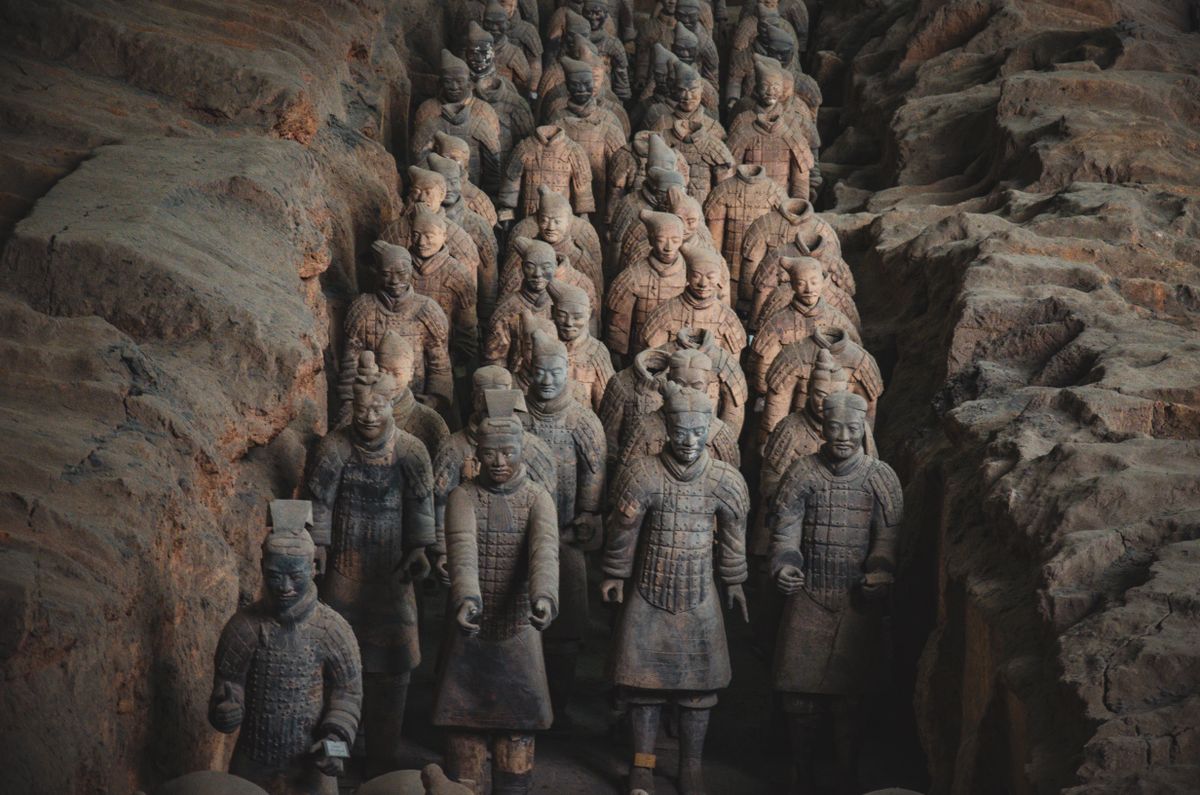
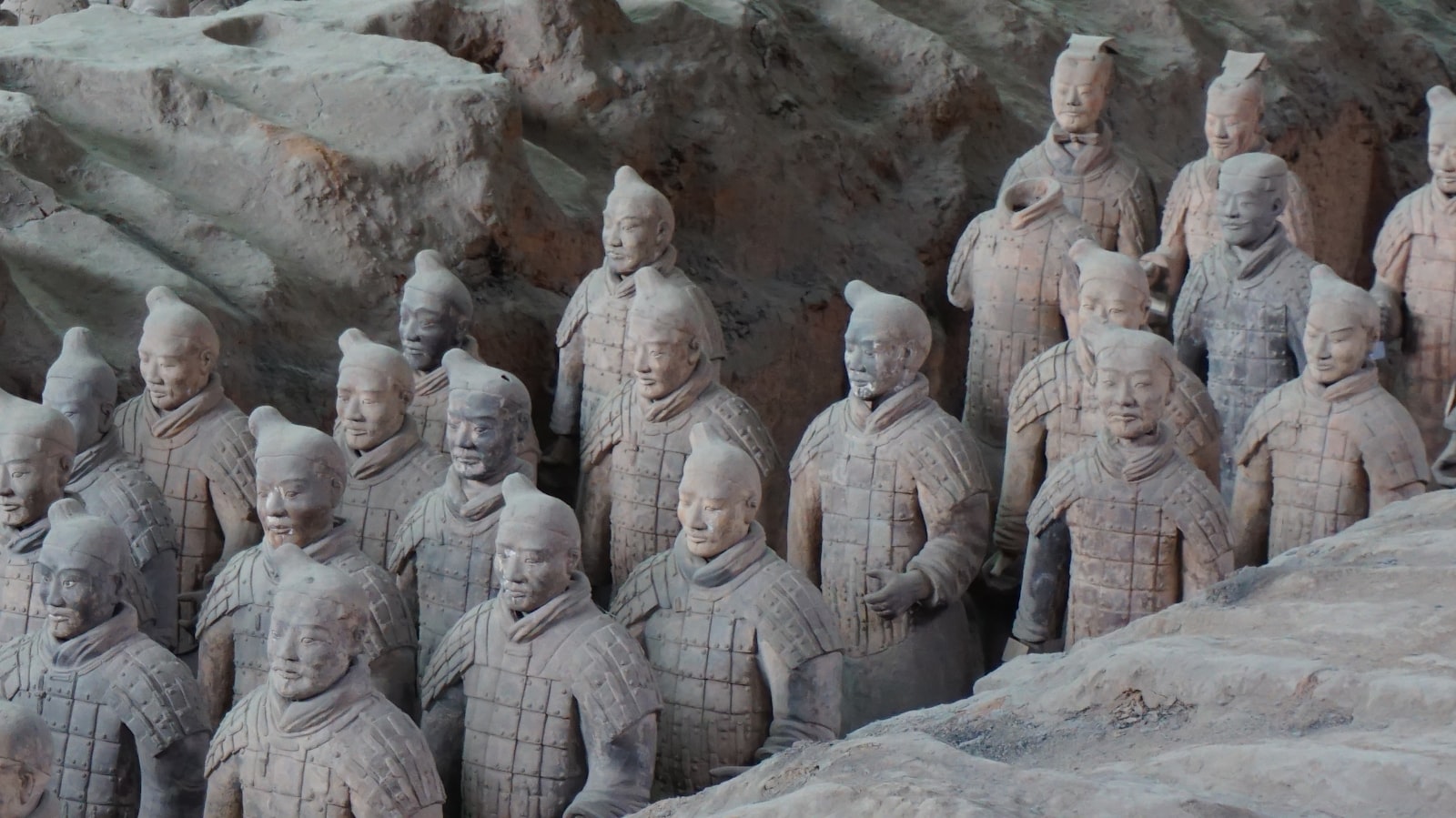
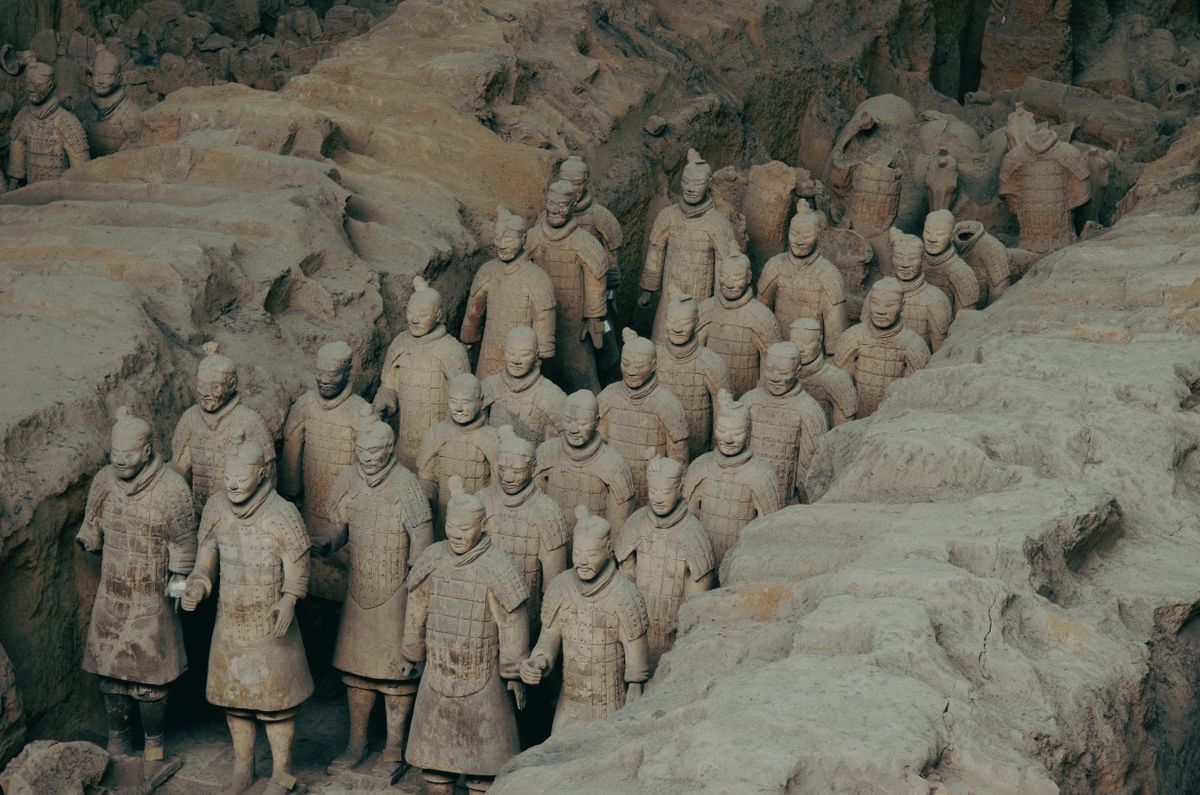
No visit to Xi’an is complete without standing before the Terracotta Army, one of the most astonishing archaeological discoveries of the twentieth century. Buried around 210 BCE to guard the tomb of Qin Shi Huang, China’s first emperor, this silent army of more than 8,000 life-sized clay soldiers, horses, and chariots was accidentally unearthed by farmers digging a well in 1974. Each warrior has a unique face, hairstyle, and rank, and traces of the original bright pigments still survive on a few figures. The site is arranged around three excavation pits, with Pit 1 the largest and most breathtaking, a vast covered hangar filled with rank upon rank of infantry. Located about 40 km northeast of the city, the museum deserves at least half a day, and hiring a guide or joining a tour transforms rows of statues into a gripping story of empire, ambition, and immortality.
The Ancient City Wall
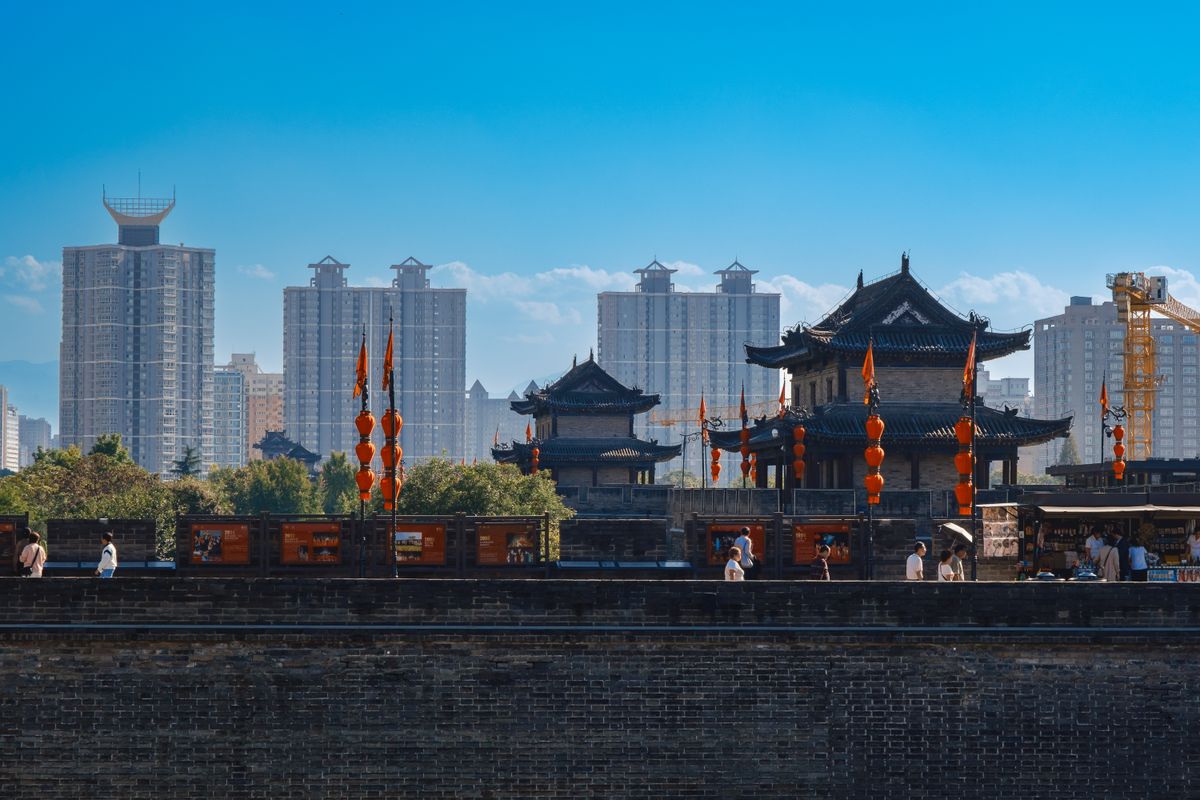
Xi’an is one of the only cities in China where the historic wall still completely encircles the old town, and cycling its ramparts is a highlight for many visitors. Built in the late fourteenth century on Tang-dynasty foundations, the wall runs 13.74 km around the city center and rises about 12 meters high, wide enough at the top for several bicycles abreast. You can rent a bike at the South Gate and complete the full loop in roughly ninety minutes, pausing to look down over moats, watchtowers, and the modern city beyond. At dusk the wall’s red lanterns switch on and the whole circuit glows, making an early-evening ride especially atmospheric. It’s the best possible introduction to the city’s layout and a reminder of just how mighty imperial Xi’an once was.
The Muslim Quarter
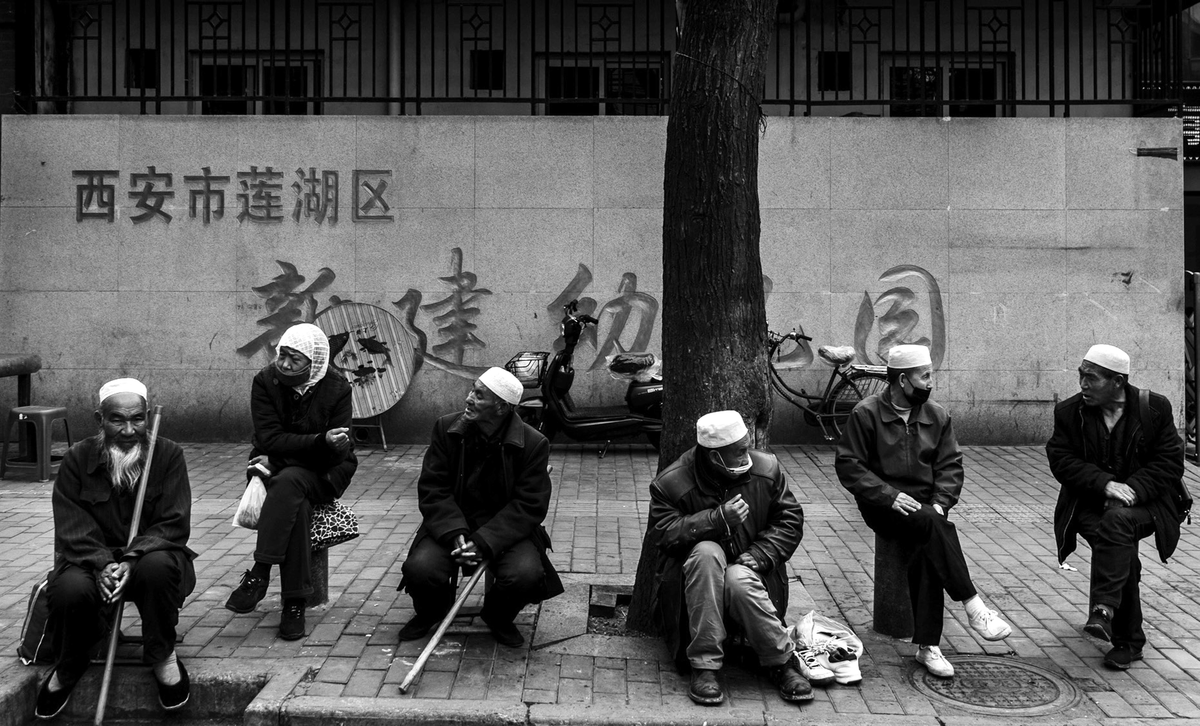
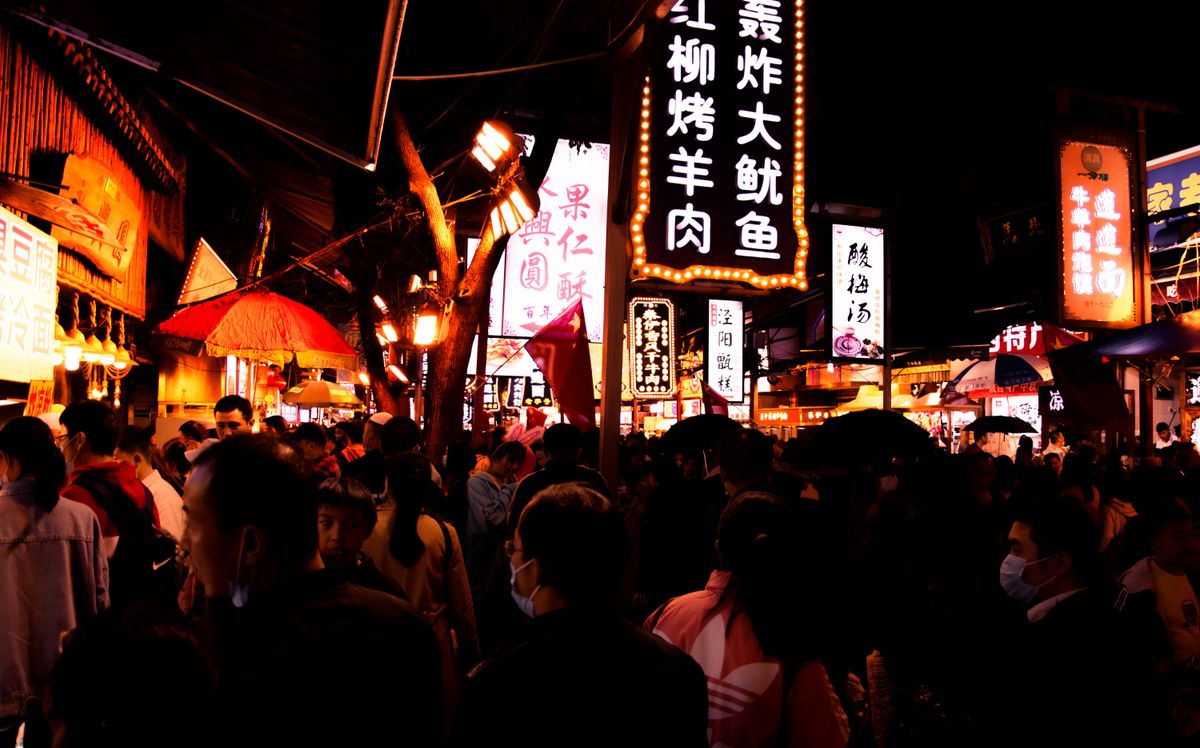
Tucked behind the Drum Tower, the Muslim Quarter is the beating heart of Xi’an’s food scene and the historic home of the city’s Hui Muslim community, whose roots here stretch back more than a millennium to Silk Road traders. The main lane, Beiyuanmen, and its surrounding alleys are packed with nearly 300 kinds of street food: hand-pulled biang biang noodles, spiced lamb skewers grilled over open coals, sticky persimmon cakes, and the famous roujiamo, often called the “Chinese hamburger.” Come hungry and graze your way through, watching vendors pound peanut brittle with giant wooden mallets and stretch dough into ribbons. After 6 p.m. the whole quarter lights up and the crowds swell into a joyful, aromatic night market. It’s chaotic, delicious, and utterly unforgettable.
The Bell Tower and Drum Tower
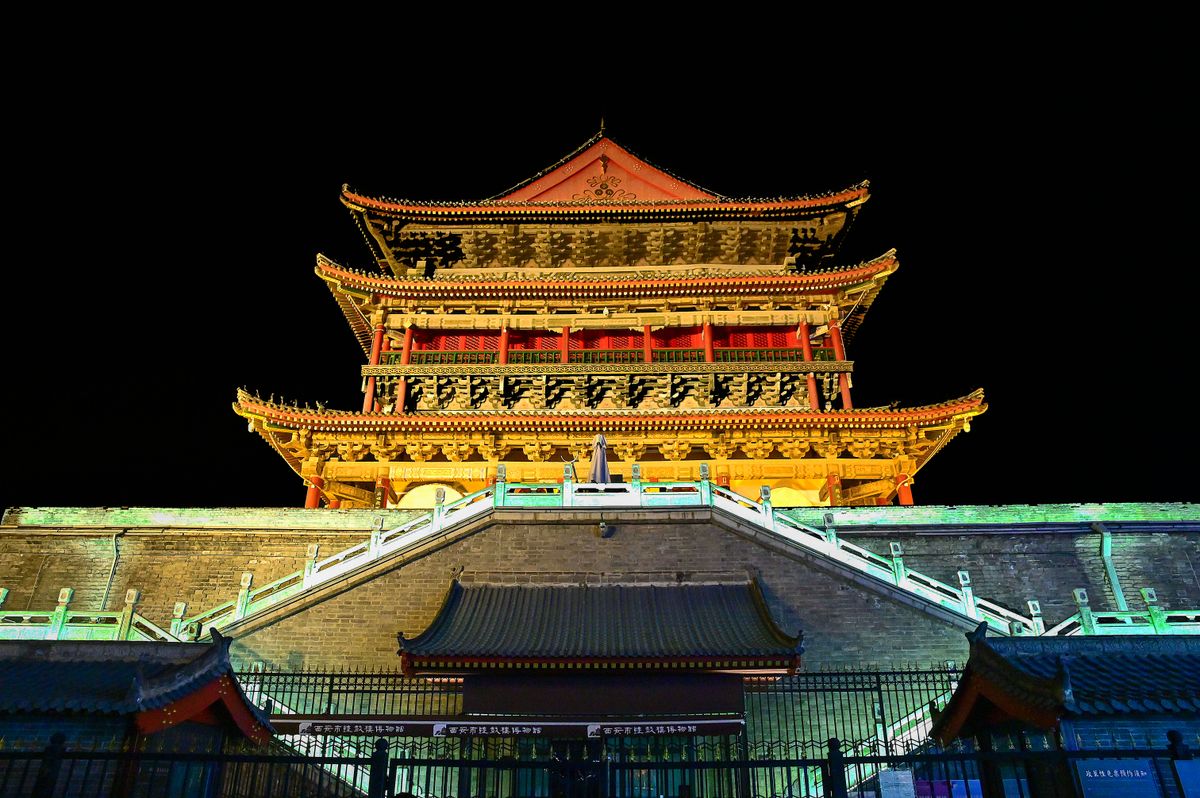
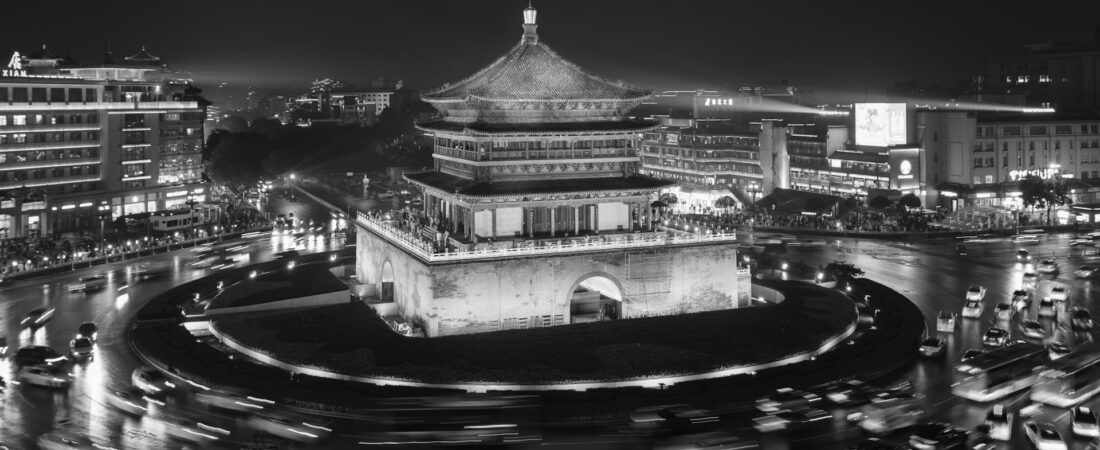
Standing at the exact geographic heart of the walled city, the Bell Tower is Xi’an’s most recognizable landmark, a triple-eaved wooden pavilion first built in 1384 and later moved to its current position. In imperial times a great bell was rung here each dawn to open the city gates, while its sibling, the nearby Drum Tower, sounded the drum at dusk to mark curfew. Both towers can be climbed for views over the surrounding traffic circle and rooftops, and the Drum Tower still hosts scheduled drumming performances throughout the day. At night the pair are dramatically floodlit and make one of the city’s finest photo opportunities. The Drum Tower also serves as the gateway into the Muslim Quarter, so the two experiences pair perfectly.
The Great Mosque of Xi’an
Hidden in the alleys of the Muslim Quarter, the Great Mosque of Xi’an is one of the oldest and most fascinating mosques in China, founded in the eighth century during the Tang dynasty. What makes it so remarkable is its architecture: rather than domes and arches, the complex looks like a classical Chinese temple, with courtyards, pagoda-style minarets, wooden pavilions, and stone archways inscribed with both Arabic calligraphy and Chinese characters. Four tranquil garden courtyards lead worshippers toward the prayer hall, offering a peaceful contrast to the din of the market just outside. Non-Muslim visitors are welcome in the grounds though not the prayer hall itself, and the shaded gardens are a lovely place to slow down. It’s a moving symbol of how deeply Islam has woven itself into Chinese culture along the Silk Road.
The Giant Wild Goose Pagoda
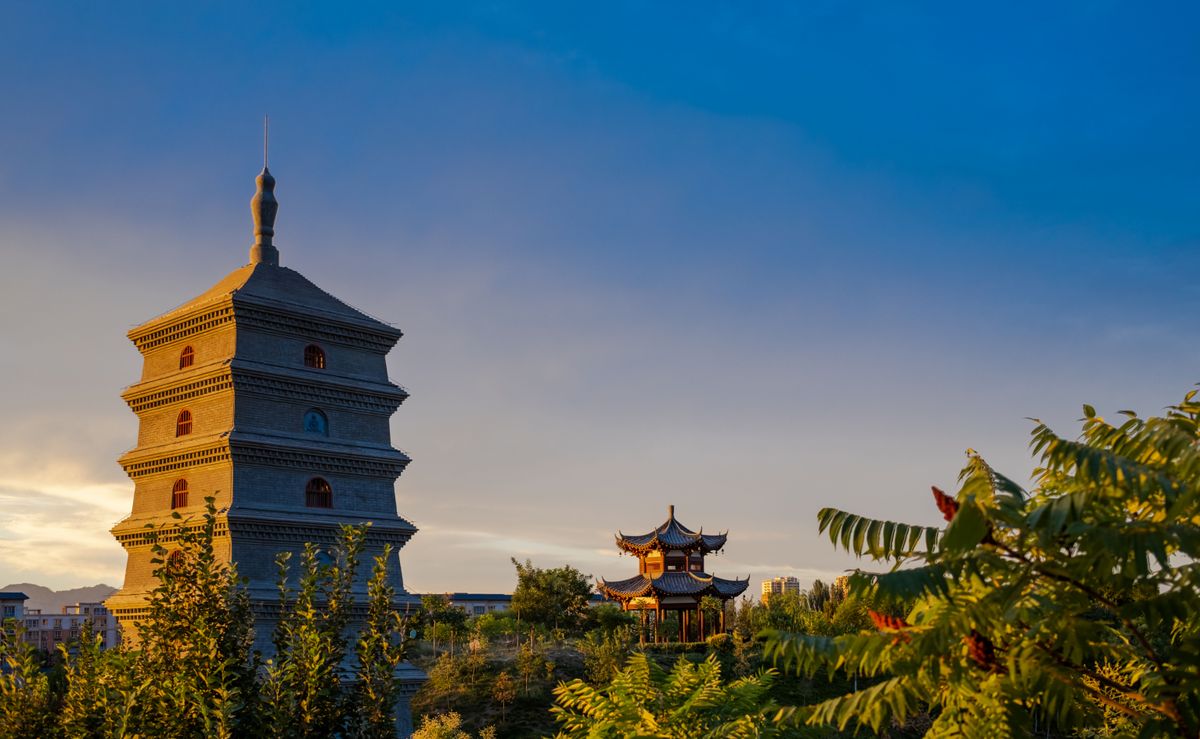
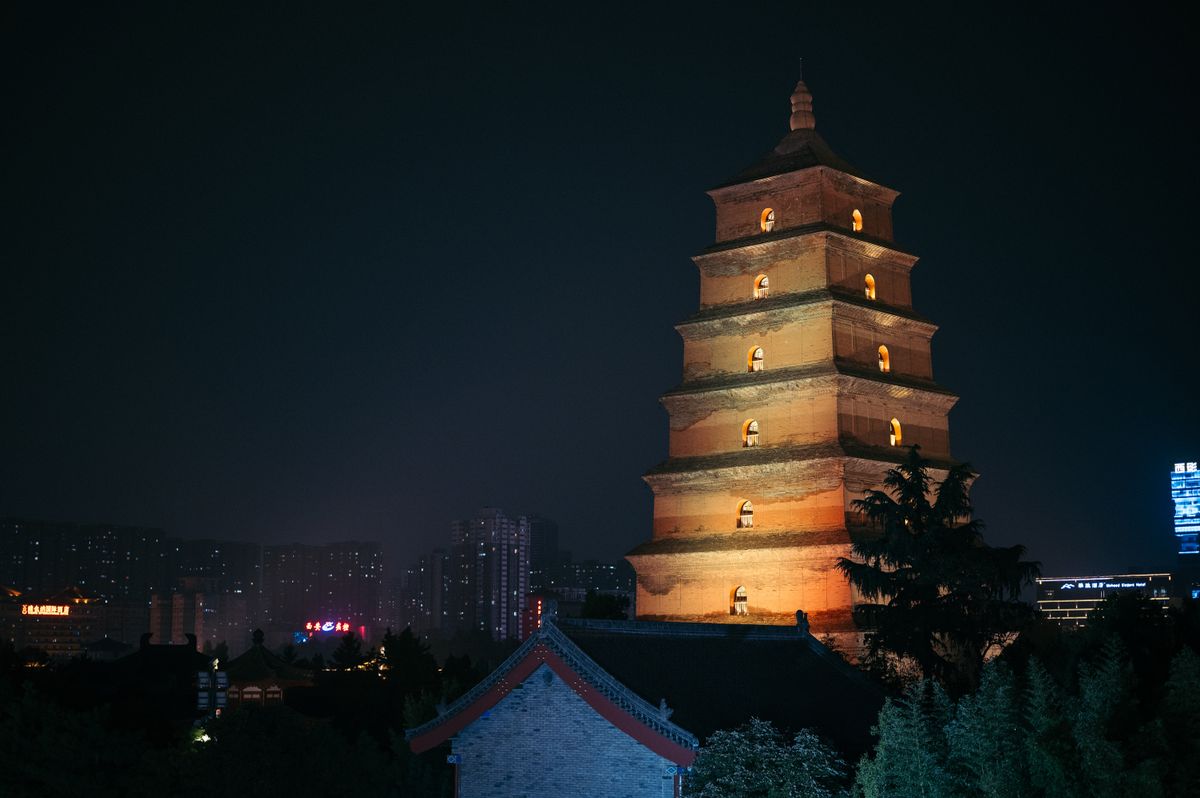
Rising above the leafy grounds of Da Ci’en Temple in the city’s south, the Giant Wild Goose Pagoda is one of Xi’an’s most sacred and enduring monuments. Built in 652 CE to house Buddhist scriptures brought back from India by the monk Xuanzang, whose epic journey inspired the classic novel Journey to the West, the seven-story brick pagoda has survived earthquakes and dynastic upheaval for nearly 1,400 years. Visitors can climb the interior staircase for sweeping views across the city, then wander the surrounding temple halls and gardens. The plaza to the north hosts one of Asia’s largest musical fountain shows, which erupts in the evenings to great fanfare. It’s an easy and rewarding half-day, especially when combined with the nearby Shaanxi History Museum.
Shaanxi History Museum
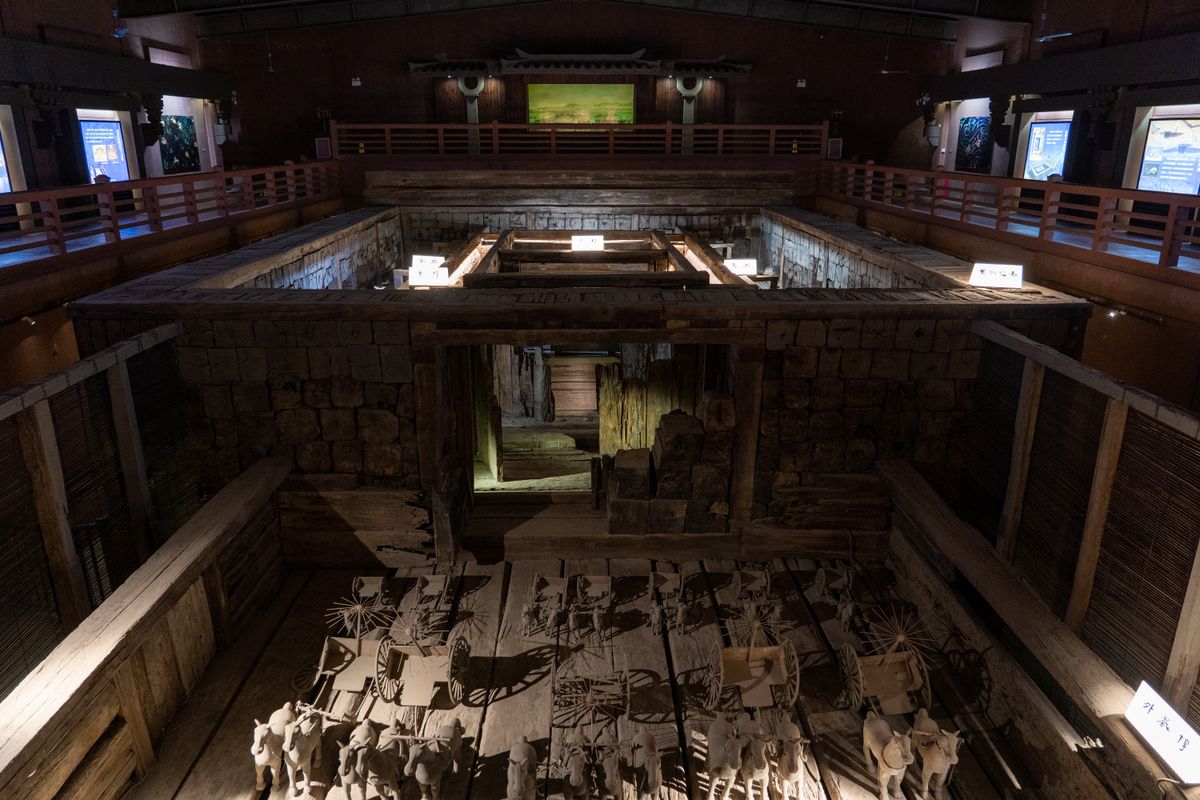
For anyone wanting to understand the layers of civilization beneath Xi’an, the Shaanxi History Museum is essential and, remarkably, admission to the main halls is free. Housed in an elegant Tang-style building, its collection of more than 370,000 artifacts spans over a million years of regional history, from prehistoric tools to bronze ritual vessels, Tang-dynasty gold and silver, and vivid tomb murals. Highlights include exquisitely detailed ceramic figurines and a gallery of Silk Road treasures that trace the flow of goods and ideas between East and West. Because free tickets are capped daily and sell out fast, it’s wise to reserve online in advance or arrive early. Give yourself two to three hours to do the museum justice; it turns the ruins scattered around the city into a coherent, living narrative.
Tang Paradise (Datang Furong Garden)
Tang Paradise, or Datang Furong Garden, is a sprawling cultural theme park built on the site of an actual imperial garden from the Tang dynasty. Spread across a large lake and dotted with reconstructed pavilions, palaces, and pagodas, it re-creates the splendor of Xi’an’s golden age with landscaped courtyards, costumed performers, and traditional music. By day you can stroll the waterside paths and watch dance and poetry performances; by night the whole park is illuminated and hosts a spectacular water-and-light show projected onto fountains and screens of mist. It’s polished and unabashedly theatrical, but for visitors who want to imagine what cosmopolitan Chang’an felt like at its height, it offers an immersive and beautiful experience. Evenings are the most magical time to visit.
Datang Everbright City
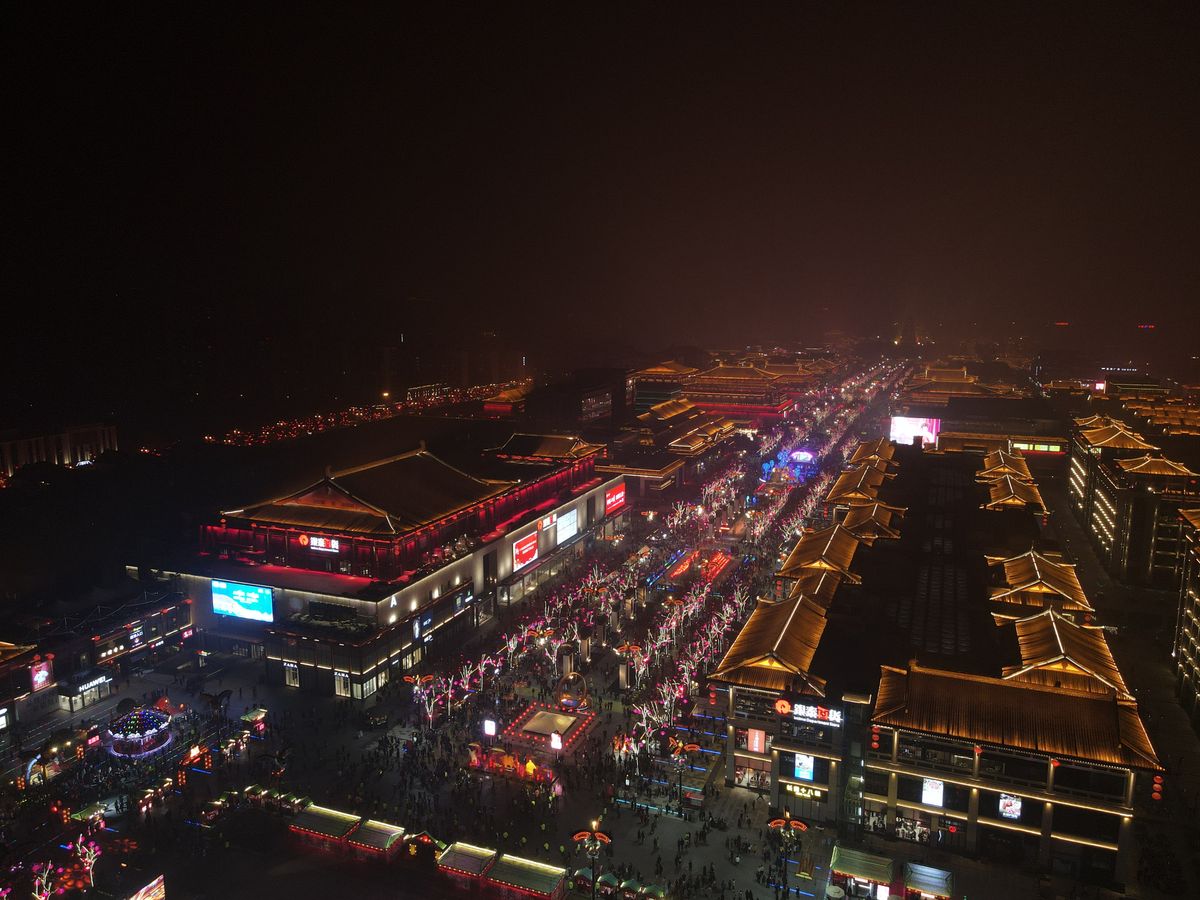
Running between the Giant Wild Goose Pagoda and Tang Paradise, Datang Everbright City (often called the Great Tang All Day Mall) is a broad pedestrian boulevard that has become one of China’s most photographed night spots. Lined with grand Tang-style buildings bathed in golden light, the promenade is filled with street performers, costumed dancers in flowing hanfu robes, statues of celebrated Tang poets, shops, and restaurants. In recent years it has gone viral for its “living statue” performers and immersive historical shows that draw enormous evening crowds. The atmosphere is festive and free to wander, making it an ideal way to round off a day of sightseeing. Arrive around sunset to see the lanterns flicker on and the boulevard transform into a river of light.
Mount Hua (Huashan)
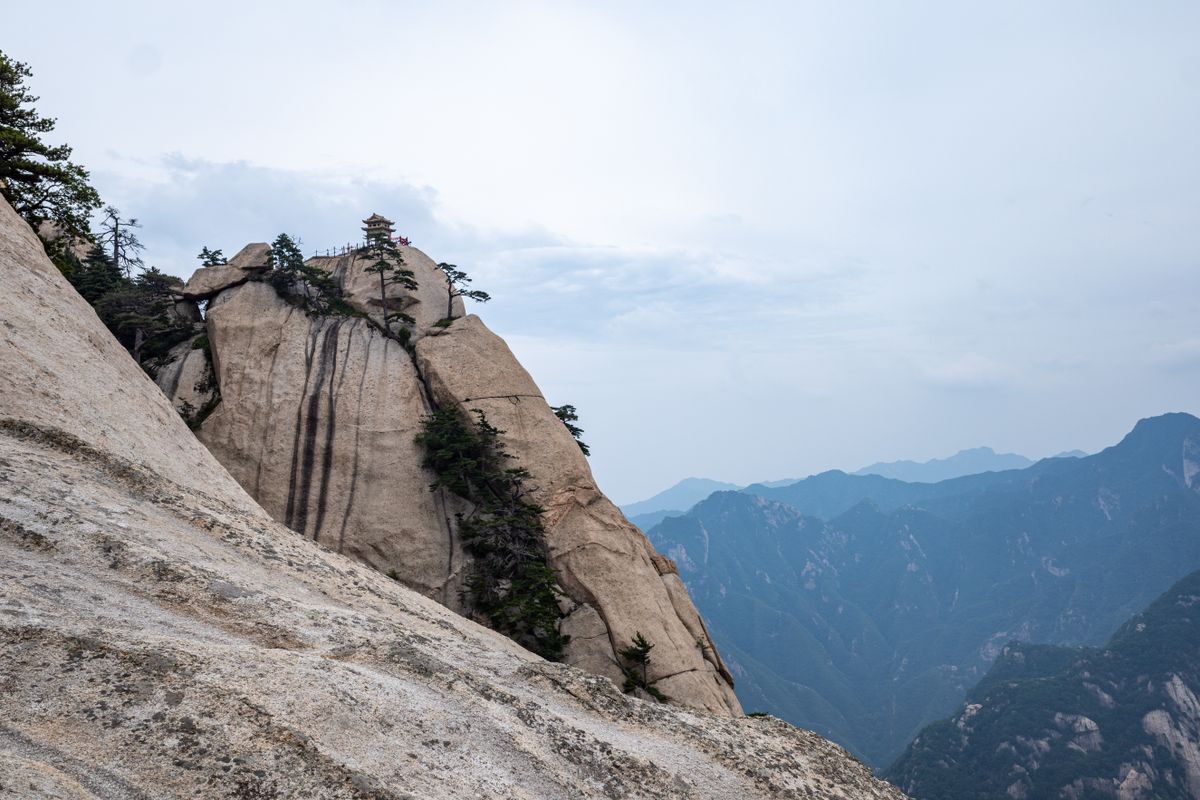
If you have an extra day and a head for heights, Mount Hua is one of the most exhilarating day trips in all of China. One of the country’s five great sacred Taoist mountains, Huashan is famous for its sheer granite cliffs, knife-edge ridges, and the notorious plank walk bolted to a vertical rock face high above the valley. The high-speed train reaches the base in around 30 minutes from Xi’an, and a network of cable cars carries visitors up to the North and West Peaks, from where marked trails link the mountain’s five summits. Sunrise from the East Peak is legendary, and even a half-day on the cable cars rewards you with jaw-dropping scenery. Wear sturdy shoes, bring water, and check cable-car schedules before you set out.
What to Eat in Xi’an
Xi’an is one of China’s great food cities, and its cuisine reflects centuries of Silk Road exchange with hearty, wheat-based, boldly spiced dishes unlike anything in the country’s rice-growing south. The signature dish is yangrou paomo, a warming mutton stew into which you tear pieces of flatbread by hand. Don’t miss biang biang noodles, wide as belts and slicked with chili oil; roujiamo, slow-cooked meat stuffed into a crisp griddled bun; and cold liangpi noodles dressed in vinegar and garlic. The Muslim Quarter is the easiest place to sample it all, but the city’s small noodle shops and morning markets are just as rewarding. Wash it down with local persimmon cakes or a bowl of sweet fermented rice wine.
Getting Around Xi’an
Xi’an is well connected and easy to navigate. The city’s modern metro system links the railway stations, Bell Tower, Big Wild Goose Pagoda, and many major sights, and it’s cheap, fast, and signposted in English. For the Terracotta Army, take Metro Line 1 to Fangzhicheng and transfer to a bus, or catch the dedicated tourist bus from the East Square of Xi’an Railway Station; a taxi or Didi ride-hail runs roughly 100–150 RMB each way. Within the walled city, walking and cycling are often the most pleasant options. Xi’an’s two high-speed rail stations connect it to Beijing, Shanghai, Chengdu, and beyond in a matter of hours, making the city an easy addition to any China itinerary. A rechargeable transit card or mobile-pay QR code makes buses and the metro seamless.
Best Time to Visit Xi’an
The most comfortable seasons to visit Xi’an are spring (March to May) and autumn (September to November), when the skies are clearest and temperatures are mild and pleasant for walking the city wall or climbing Huashan. Summers can be hot and humid with occasional heavy rain, while winters are cold and dry but atmospheric, with far thinner crowds at the Terracotta Army and a chance of snow dusting the ancient rooftops. Try to avoid the major Chinese public holidays, particularly the early-October Golden Week and Lunar New Year, when domestic tourism peaks and the top sights become extremely crowded. If you do come in the off-season, you’ll trade a little warmth for shorter queues and a more peaceful experience at the city’s headline attractions.
Where to Stay in Xi’an
The best base for most visitors is inside or just around the city wall, where you’re within walking distance of the Bell Tower, Drum Tower, and Muslim Quarter and close to a metro line. This central area offers everything from international five-star hotels to stylish boutique guesthouses set in restored courtyard homes. Travelers who prefer a quieter, more modern setting often choose the area around the Big Wild Goose Pagoda and Datang Everbright City in the south, which is leafy, spacious, and lively at night. Budget travelers and backpackers will find plenty of well-run hostels near the South Gate, while those catching early trains may prefer a hotel near Xi’an North Railway Station. Whatever your style, booking ahead through Klook’s Xi’an page makes it easy to line up hotels, day tours, and skip-the-line attraction tickets in one place.
Final Thoughts
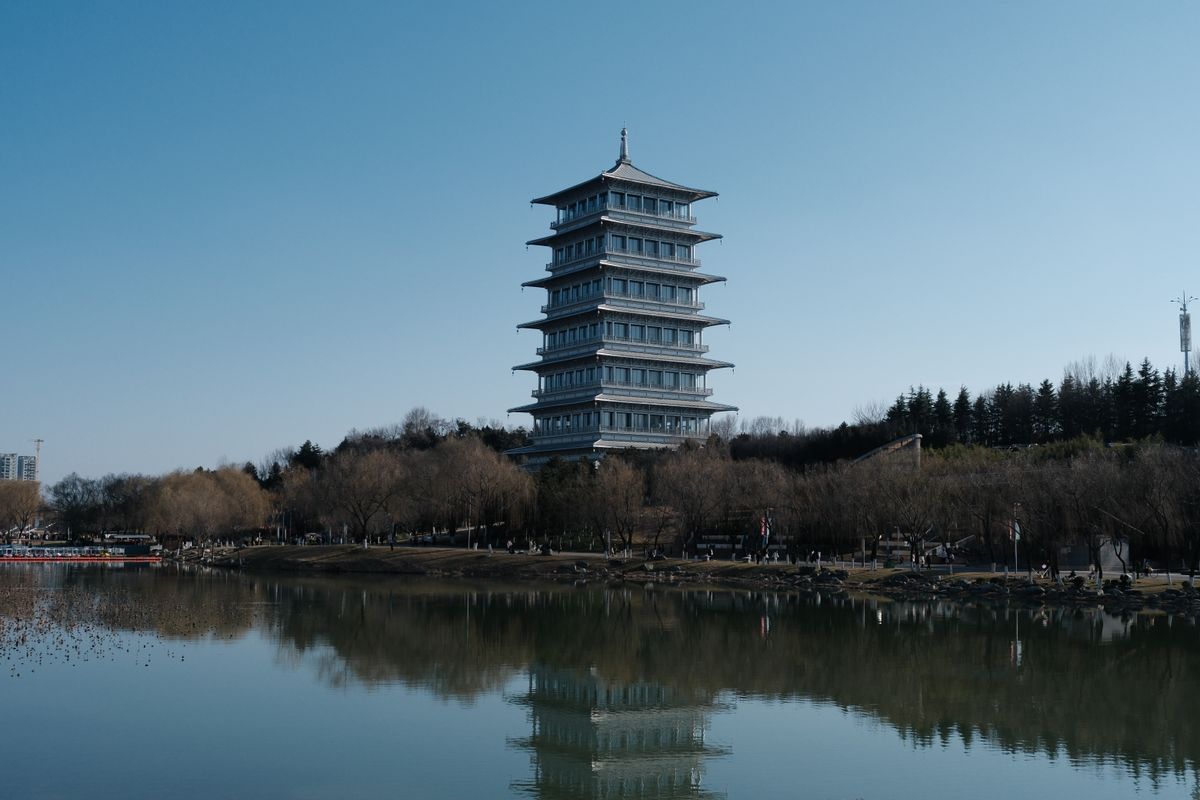
Xi’an is a city that collapses the distance between past and present like almost nowhere else. In a single day you can stand before an emperor’s clay army, cycle atop a 600-year-old wall, eat your way through a thousand-year-old bazaar, and watch costumed dancers glide beneath golden Tang-style eaves. It’s endlessly rewarding, refreshingly affordable, and easy to reach from anywhere in China thanks to its high-speed rail links. Give it at least two or three full days, keep an appetite, and let this ancient capital reveal its layers one by one. To make planning simple, you can browse tours, tickets, and activities in Xi’an on Klook and book the essentials before you arrive.
Affiliate disclosure: This article contains affiliate links to Klook. If you book tours, activities, or accommodation through these links, we may earn a small commission at no extra cost to you. This helps support the running of Trip My Journey. We only recommend services we believe will genuinely help you plan a better trip.
Related Guides
- Best Things to Do in Suzhou
- Best Things to Do in Shanghai
- Best Things to Do in Chongqing
- Best Things to Do in Guangzhou
- How to Use DiDi in China
- How to Ride Taiwan's High-Speed Rail
Xi’an Prices at a Glance — as of July 14, 2026 (USD)
Attractions & museums (incl. zoo)
| Item | Price (local · ≈ USD) |
|---|---|
| Terracotta Army (adult · off-peak / peak) | ¥120–150 (≈ $18–22) |
| Terracotta Army internal shuttle bus | ¥10 (≈ $1.5) |
| Xi’an City Wall (adult, online only) | ¥54 (≈ $8) |
| Big Wild Goose Pagoda — Da Ci’en Temple grounds | ¥40–50 (≈ $6–7.4) |
| Big Wild Goose Pagoda — climb the pagoda (extra) | ¥30 (≈ $4.4) |
| Bell Tower & Drum Tower (combined ticket) | ≈ ¥50 (≈ $7.4) |
| Shaanxi History Museum | Free (timed reservation; special halls extra) |
| Qinling Wildlife Safari Park (zoo, adult) — approx. | ≈ ¥100 (≈ $15); confirm on site |
Getting around
| Item | Price (local · ≈ USD) |
|---|---|
| Metro single ride (distance-based) | ¥2–9 (≈ $0.3–1.3) |
| Taxi flag-fall (first 3 km, then ≈¥2.3/km) | ¥9 (≈ $1.3) start |
| Xianyang Airport by Metro Line 14 | ¥2–7 (≈ $0.3–1) |
| Xianyang Airport by shuttle bus | ≈ ¥25–30 (≈ $3.7–4.4) |
| Xianyang Airport by taxi / ride-hail | ≈ ¥120–150 (≈ $18–22) |
| High-speed rail to Beijing (2nd class) | ≈ ¥461–578 (≈ $68–85) |
Signature activities
| Item | Price (≈ USD) |
|---|---|
| Guided Terracotta Army + city day tour (per person, varies by group size & inclusions) | from ≈ $40–90 |
| Self-guided Terracotta Army day (bus 游5/306 + entry) | from ≈ $25–35 all-in |
Food per person
| Item | Price (local · ≈ USD) |
|---|---|
| Roujiamo (Xi’an “burger”) | ¥8–15 (≈ $1.2–2.2) |
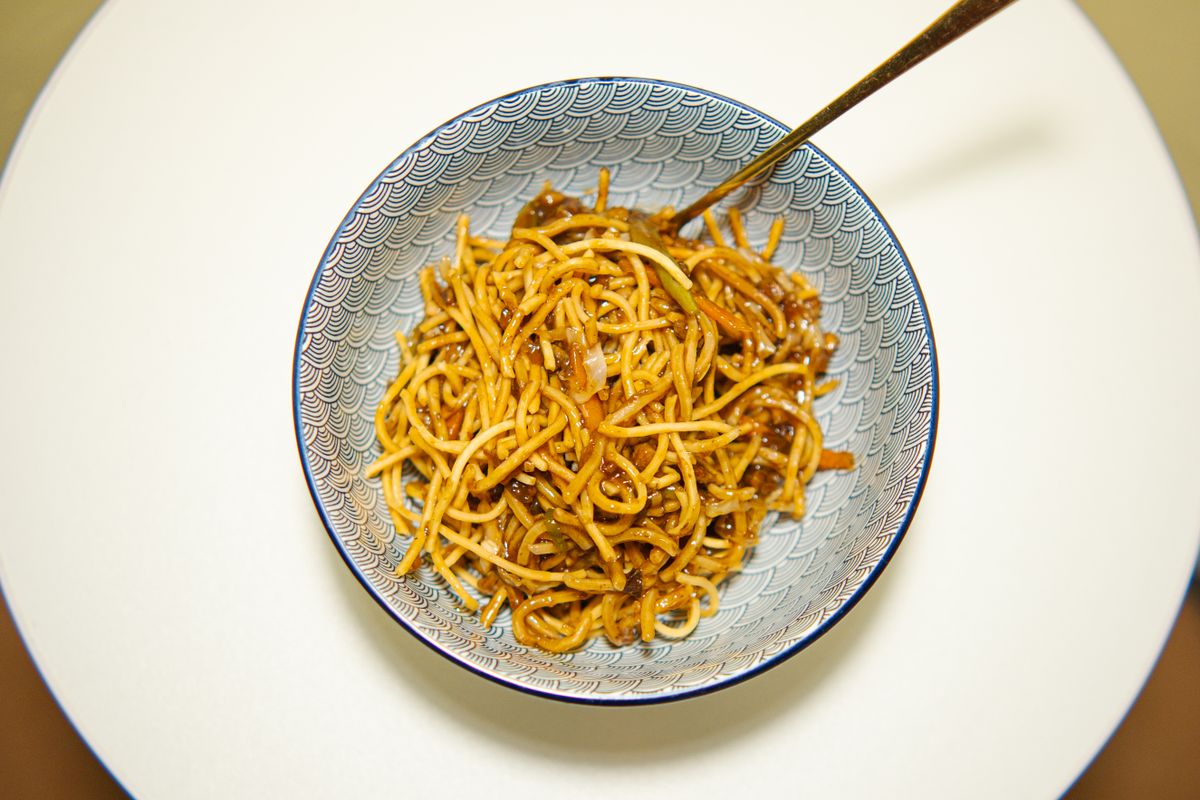
| Biangbiang / hand-pulled noodles (a bowl) | ¥15–35 (≈ $2.2–5.2) |
| Muslim Quarter street-food grazing | ¥40–80 (≈ $6–12) |
| Mid-range Shaanxi restaurant (per person) | ¥60–120 (≈ $9–18) |
Accommodation per night
| Item | Price (≈ USD) |
|---|---|
| Hostel dorm bed | from ≈ $7–12 |
| 3–4 star hotel | ≈ $45–80 |
| 5-star hotel | from ≈ $110 |
Prices confirmed on July 14, 2026 (USD conversions at ≈ ¥6.79 = $1). Rates vary by season, day of the week, and demand — always check the current price before you book. Sources include the official Terracotta Army and Xi’an City Wall ticketing sites, Trip.com, Klook, TravelChinaGuide and Booking.com.
Book Tours & Activities in Xi’an
Where to Eat in Xi’an (Updated July 14, 2026)
Lao Sun Jia (老孙家) — A century-old Xi’an institution famous for yangrou paomo — crumbled flatbread you tear by hand into a rich mutton soup.
Jia San Guan Tang Baozi (贾三灌汤包子) — A landmark of the Muslim Quarter, known for delicate soup-filled steamed buns.
Defachang (德发长) — A historic restaurant near the Bell Tower renowned for its dumpling banquet of dozens of shapes and fillings.
Wei Jia Biangbiang Noodles — A local favourite for wide, hand-slapped biangbiang noodles topped with chilli and vinegar.
Muslim Quarter (回民街) — Xi’an’s most famous food street for grilled skewers, persimmon cakes, roujiamo and cold noodles under the lanterns.
Related Guides
- Mutianyu Great Wall Travel Guide
- Best Things to Do in Suzhou
- Best Things to Do in Shanghai
- Best Things to Do in Chongqing
- How to Use DiDi in China
🎟️ Book Tours, Activities & Food Experiences
Search and book top attractions, tours and food experiences on Klook — official best price, instant confirmation.
Klook.com