Last updated: July 2026. This post contains affiliate links — if you book through them, we may earn a small commission at no extra cost to you.
Book Tours & Activities in the Terracotta Army
Book Tours & Activities in the Terracotta Army
Hand-picked Terracotta Army experiences you can book online — half-day guided tours, skip-the-line tickets and combined day trips:


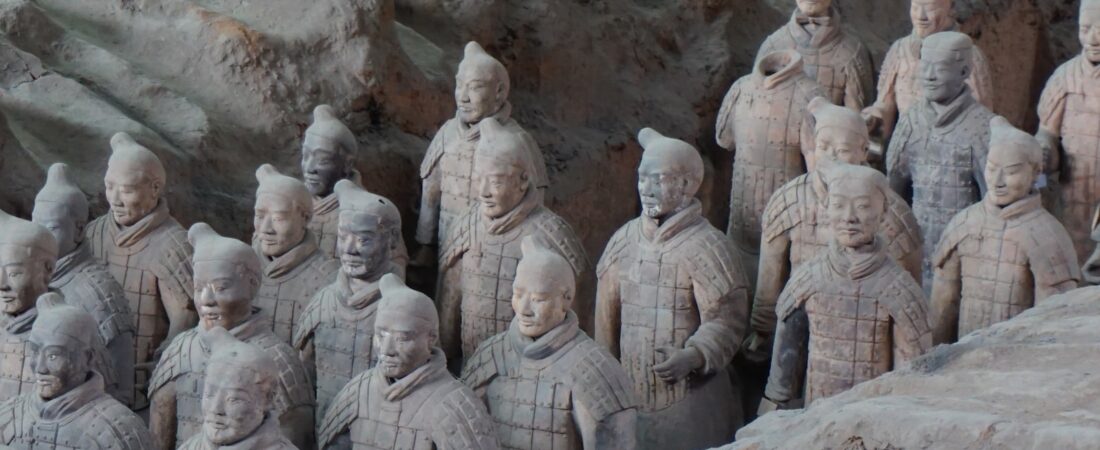
Buried for over two thousand years and rediscovered by accident, the Terracotta Army outside Xi’an is one of the great “wow” moments of travel in China. Row after row of life-sized clay soldiers stand guard in underground pits the size of aircraft hangars, each one carrying a slightly different face, hairstyle and expression — an army of individuals, not clones. Often called the “Eighth Wonder of the World,” this UNESCO World Heritage site is easy to visit as a half-day trip from central Xi’an. Here’s exactly what it costs, how to get there, and what not to miss once you’re inside.
💡 Prices checked July 2026. Fees, hours and rules can change seasonally and around holidays — always confirm on the official site (bmy.com.cn) or the booking widget above before you visit.
| Item | Cost | Notes & source (checked) |
|---|---|---|
| Adult admission — peak season (16 Mar–15 Nov) | ¥120 (≈ $17.7) | Real-name ticketing — passport required at entry. Covers all three pits + Bronze Chariot Exhibition Hall. — official museum info, travel-guide aggregation, checked Jul 2026 |
| Adult admission — off-peak (16 Nov–15 Mar) | ¥90 (≈ $13.3) | Lower winter rate. — checked Jul 2026 |
| Students / seniors 65+ / disabled visitors | Half-price or free | ID required; confirm current eligibility rules on the official site. |
| Children under 1.2m / under 6 | Free | Confirm exact height/age cut-off on the official site. |
| Tourist Bus 306 (游5) from Xi’an Railway Station | ¥7 (≈ $1.0) one-way | Cash only, pay after boarding; ~1 hour including a Huaqing Palace stop. |
| Shuttle from Xi’an North Railway Station | ≈ ¥30 (≈ $4.4) or free with same-day HSR + attraction ticket | Departs Chengbei Coach Station near North Plaza Exit B, roughly every 15 min, ~1 hour. |
| Audio guide / electric cart inside the site | Confirm on official site | Available on-site; price not fixed here — check current rate before paying. |
Please read before you go: Opening hours below are aggregated from official museum information current as of July 2026. Hours extend in peak summer weeks — reconfirm close to your visit date, especially around national holidays when the museum can adjust hours or temporarily cap visitor numbers.
| Period | Opening hours | Last admission |
|---|---|---|
| Peak season (16 Mar – 15 Nov) | 08:30 – 17:00 | 16:00 |
| Summer extension (11 Jul – 21 Aug 2026) | 08:00 – 19:30 | 17:30 |
| Off-peak season (16 Nov – 15 Mar) | 08:30 – 16:30 | 15:30 |
The Farmer Who Found an Army

In March 1974, during a severe drought, farmer Yang Zhifa and his neighbors were digging a well in a persimmon orchard east of Xi’an when their shovels struck something hard about three meters down: fragments of a life-sized clay head. Villagers first assumed they’d unearthed a “pottery god” and were unsettled enough to consider filling the hole back in. Archaeologists were called in instead, and what emerged over the following years reshaped the world’s understanding of the Qin dynasty (221–206 BCE) — an entire underground army, built to guard China’s first emperor, Qin Shi Huang, in the afterlife.
Just as remarkable: the emperor’s actual burial mound, roughly 1.5 km away, has never been excavated. Ancient texts describe rivers of mercury and booby traps inside, and modern soil surveys have detected unusually high mercury concentrations around the mound — but out of respect for preservation science (and possibly the old stories), archaeologists have left the tomb chamber itself untouched. What’s on display today is “only” the guard army; the emperor himself still rests, unseen, nearby.
When French President Jacques Chirac visited in 1978, he reportedly remarked that no visit to China was complete without seeing “the eighth wonder of the world” — a nickname that stuck and is now used almost as often as the site’s official name.
Skip the ticket line — book entry or a guided tour in advance:
Terracotta Army entrance ticket + guided tour on Klook — check price →
How to Get There
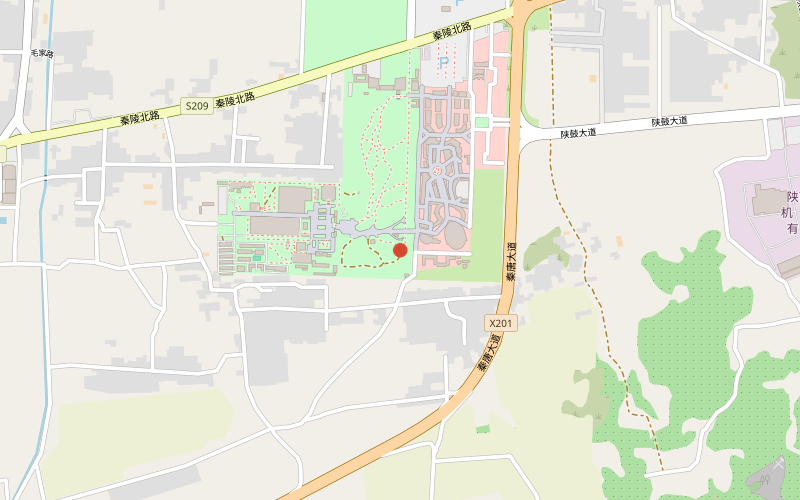
The museum sits in Lintong District, about 40 km (an hour’s drive) east of central Xi’an. Most visitors go independently by bus or high-speed rail, or simply book a guided day tour that includes hotel pickup — the easiest option if you don’t want to navigate ticket counters or transfers yourself.
| Getting there | Details (checked Jul 2026) |
|---|---|
| Tourist Bus 306 (游5) | Board outside Xi’an Railway Station (east side, near the China Post building — look for a blue “游5(306)” sign). ~1 hour including one stop at Huaqing Palace. ¥7 (≈ $1.0) cash, pay after boarding. Only board large official tourism buses — small or oddly colored “306” buses are unofficial. |
| High-speed rail + shuttle | Take the HSR to Xi’an North Railway Station, exit via North Plaza Exit B, walk ~100 m to Chengbei Coach Station, and catch the Terracotta shuttle (~¥30 / ≈ $4.4, ~1 hour, roughly every 15 min, 08:30–20:30). May be free with a same-day HSR ticket plus Lintong attraction tickets — ask at the station’s tourist service counter. |
| Taxi / private car | ~45–60 minutes each way from central Xi’an; agree a return time and fare, or book a round-trip private transfer in advance. |
| Guided day tour | Small-group or private tours include hotel pickup, an English-speaking guide and skip-the-line entry — worth it if your time is limited (see tour cards above). |
What to See Inside: Pit 1, Pit 2, Pit 3 & the Bronze Chariots

The site is laid out as the buried army once stood — facing east toward Qin’s ancient rivals, in strict military formation. A comfortable visit works through the pits in this order:
- Pit 1 — the headline act. At 14,260 sq m (roughly the size of two football fields), it holds an estimated 6,000+ soldiers and horses arranged in battle columns, with around 2,000 currently excavated and on view. This is where the famous wide-angle photo comes from.
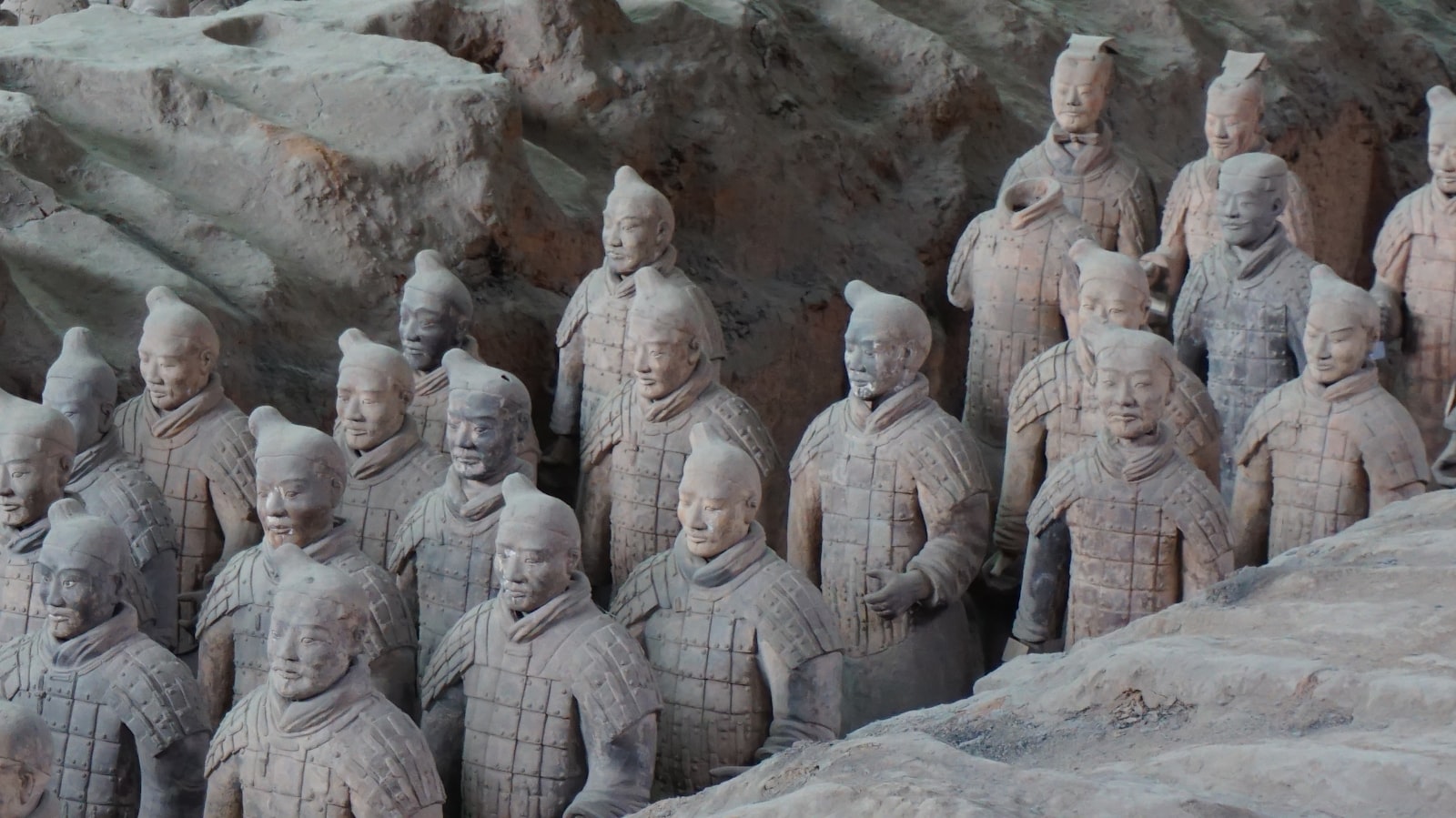
- Pit 2 — smaller (about 96m × 84m) but arguably more varied, with cavalry, infantry, kneeling archers and chariot units, plus close-up display cases where you can study individual faces at eye level — this is the best pit for appreciating that no two soldiers are truly alike.
- Pit 3 — the smallest vault (520 sq m), thought to be the command post, containing 68 figures, a war chariot and four horses arranged around what may have been a war-council ritual.
- Bronze Chariot Exhibition Hall — home to two exquisitely detailed half-scale bronze chariots and horse teams, discovered in 1980 just west of the burial mound; a quieter, air-conditioned contrast to the open pits.
Look closely at the soldiers as you go: hairstyles, mustaches, armor plating, footwear tread patterns and facial expressions all differ from figure to figure. Historians still debate whether individual craftsmen modeled real soldiers or simply mixed and matched a kit of parts — either way, the effect up close is startlingly human for 2,000-year-old clay.
Practical Tips
- Arrive early (right at opening) or in the last two hours before closing to avoid the worst of the tour-bus crowds, especially in Pit 1.
- No flash photography inside the pits — it’s allowed for personal photos, but tripods and flash are generally restricted.
- An electric cart can shuttle you between the ticket gate and the pits if you’d rather save your legs for walking the vaults themselves; audio guides in multiple languages are also available on-site.
- Bring your passport — tickets are issued by real-name registration and checked at entry.
- Combine the visit with nearby Huaqing Palace (imperial hot-spring gardens) if you’re taking Bus 306, since it’s a single stop along the same route.
- Download Baidu Maps or a translation app — Google services are limited in mainland China.
Where to Stay Near Xi’an
Almost everyone bases themselves in central Xi’an rather than out in Lintong, since it’s a straightforward half-day trip from the city.
Inside the Bell Tower / City Wall area puts you within the historic core, close to the Muslim Quarter, the Bell and Drum Towers, and easy transport connections for the day trip out to the Terracotta Army.
Near Xi’an Railway Station is convenient if you plan to catch Bus 306 first thing in the morning, though it’s slightly less central for evening dining and sightseeing.
Frequently Asked Questions
How much time do you need at the Terracotta Army?
Budget 2–3 hours to walk all three pits and the Bronze Chariot Hall without rushing; add travel time (about 2 hours round-trip from central Xi’an).
Is the Terracotta Army worth visiting?
Yes — it’s one of the most significant archaeological finds of the 20th century and genuinely striking in person, especially Pit 1’s scale.
Can you take photos inside?
Yes, personal photography is generally allowed (no flash); tripods and commercial filming usually require separate permission.
Do I need to book tickets in advance?
It’s recommended in peak season and around Chinese holidays, since visitor numbers can be capped. Real-name registration (passport) is required either way.
Is the emperor’s tomb itself open to visitors?
No — the nearby burial mound of Qin Shi Huang has never been excavated and is not open to the public; only the surrounding terracotta army pits are.
Final Word
The Terracotta Army earns its “eighth wonder” reputation the moment you step up to the railing above Pit 1 and take in row after row of individually sculpted faces, stretching into the distance. Give yourself a full morning or afternoon, go early if you can, and don’t rush past Pit 2 — that’s where the details that make this army feel almost alive are easiest to see.
This post contains affiliate links. If you book or buy through them, we may earn a small commission at no extra cost to you. Hours and prices can change — always confirm on official sources before you visit.
Related Guides
- Best Things to Do in Xi’an
- China’s Top 100 Attractions Ranked
- Forbidden City Travel Guide
- Mutianyu Great Wall Travel Guide
🎟️ Book Tours, Activities & Food Experiences
Search and book top attractions, tours and food experiences on Klook — official best price, instant confirmation.
Klook.com