Last updated: July 2026
Disclosure: This post contains affiliate links. We may earn a commission if you book through them, at no extra cost to you. Hours and prices can change — always confirm on official sources before you visit.
Book Tours & Activities in Temple of Heaven
Book Tours & Activities in Temple of Heaven
Hand-picked Temple of Heaven experiences you can book online — a straightforward admission ticket, a full-day combo tour that pairs the altar complex with the Forbidden City, and a private half-day tour that adds a hands-on tai chi lesson inside the park:
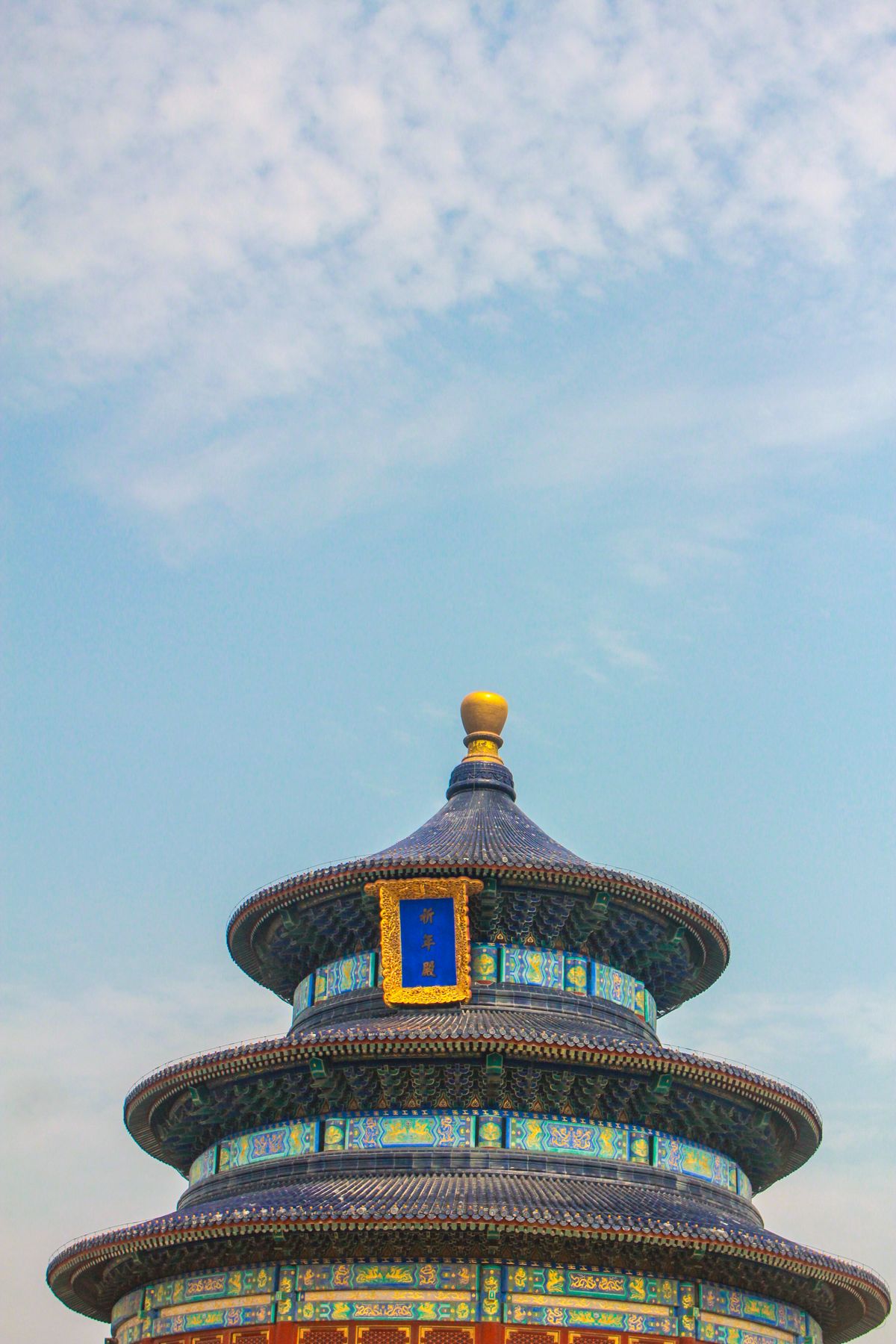
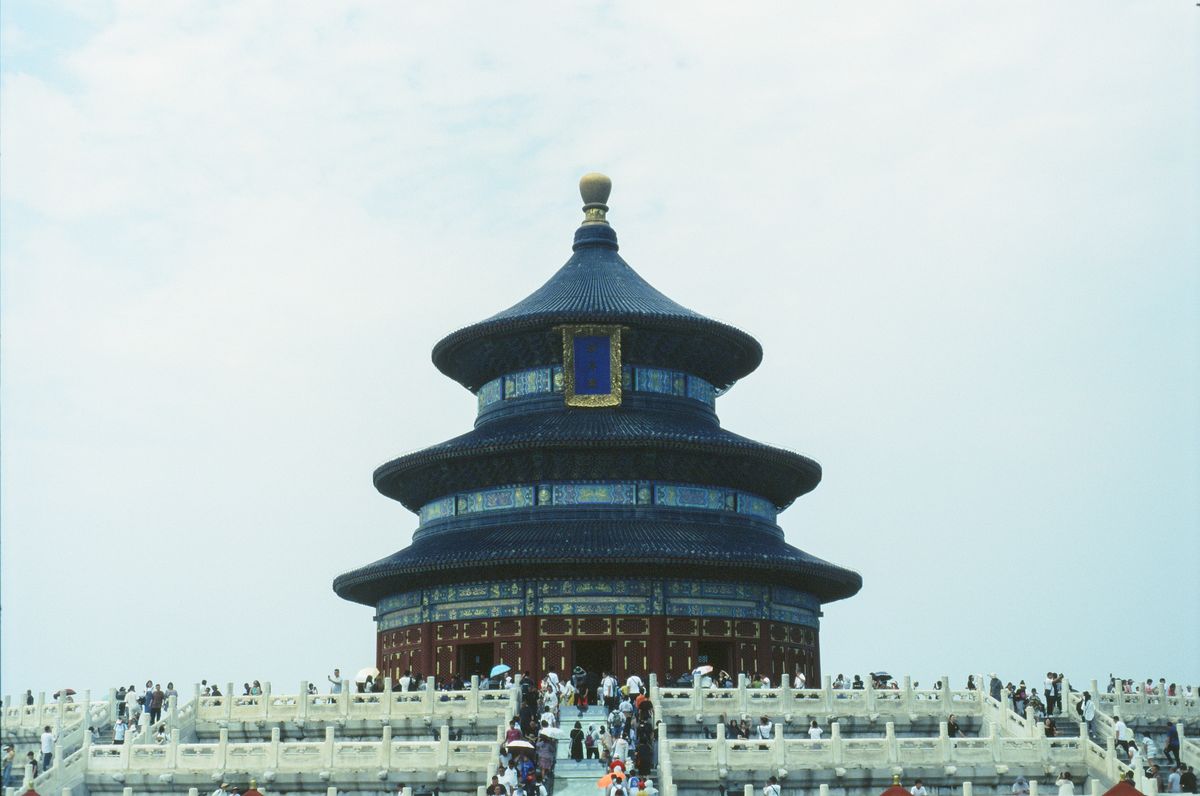
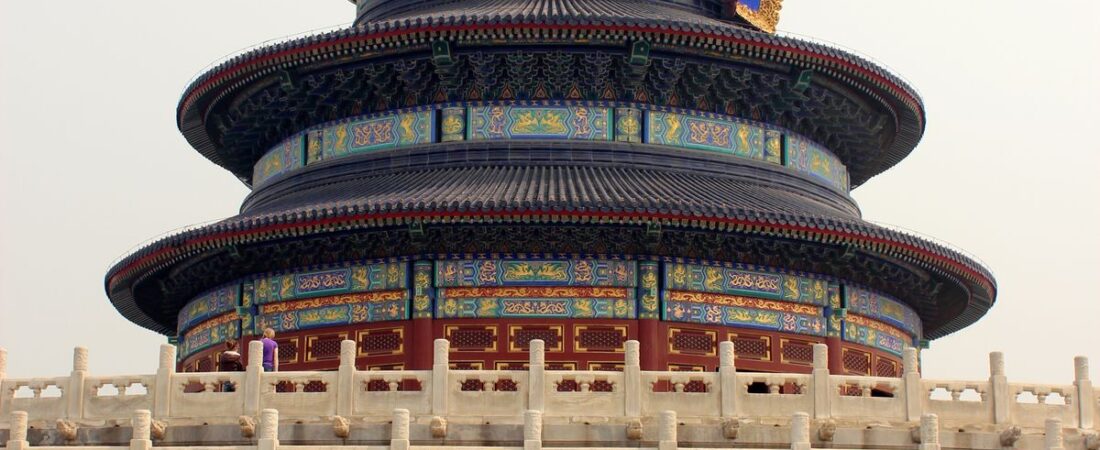
Covering nearly 270 hectares in the south of the capital — a larger footprint than the Forbidden City itself — the Temple of Heaven (天坛, Tiāntán) is where Ming and Qing emperors came twice a year to perform sacred rites for good harvests and the favor of Heaven. Anchoring any Beijing city guide, the complex’s round, triple-eaved Hall of Prayer for Good Harvests is one of the most photographed buildings in China and a UNESCO World Heritage Site since 1998. Here is what it costs, how to reach it, and what to actually see once you are inside the park.
A Little Context
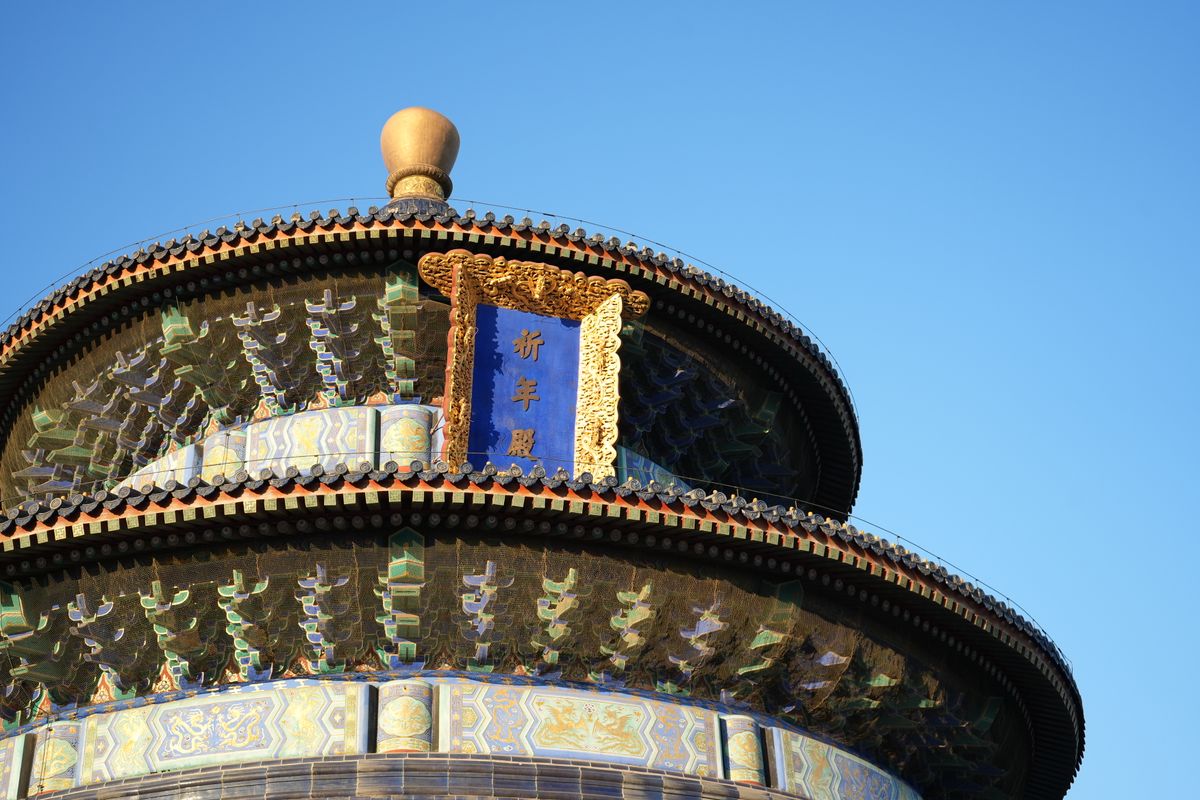
The Yongle Emperor, the same Ming ruler who built the Forbidden City, ordered construction of the Temple of Heaven complex between 1406 and 1420, relocating the imperial rites for Heaven from Nanjing to the new capital. The site originally held separate altars to Heaven and Earth; in 1420 Yongle merged the ceremonies and raised a round hall — precursor to today’s Hall of Prayer for Good Harvests — where the emperor, ruling as the “Son of Heaven,” prayed each spring on behalf of the empire for a good harvest.
Every design element encodes classical Chinese cosmology: round shapes and the number 9 (and its multiples) represent Heaven, while square shapes represent Earth — the complex’s outer wall is even built with a rounded northern edge and a square southern edge for exactly this reason. Twice a year, at the winter solstice, the emperor and his retinue processed south along the central axis in total silence to the open-air Circular Mound Altar, where he alone climbed to the top tier to sacrifice to Heaven; any misstep in the ritual was believed to risk Heaven’s mandate to rule.
Lightning burned the original Hall of Prayer for Good Harvests to the ground in 1889; the structure standing today is a faithful 1890 reconstruction, built — like the original — entirely of interlocking wooden brackets and posts, without a single nail. The last imperial sacrifice here was performed in 1914 by Yuan Shikai, and the grounds opened to the public as a park not long after. UNESCO inscribed the Temple of Heaven as a World Heritage Site in 1998, calling it a masterpiece of architecture and landscape design that illustrates a cosmogony of great importance to world civilization.
Quick Facts & Costs for 2026
💡 Prices checked 25 July 2026. A basic park-entry ticket does not include the three main historic halls — you need the combo (through) ticket for those. Fees and hours shift seasonally; always confirm on the official Beijing park administration site or the booking widgets on this page before you visit.
| Item | Cost | Notes & source (checked) |
|---|---|---|
| Park-only entry, adult | ¥15 (≈ $2.2) | Grounds, gardens and the Long Corridor only — no access to the three main halls. — TravelChinaGuide, checked 25 Jul 2026 |
| Combo / through-ticket, adult | ¥34 (≈ $5.0) | Covers park entry plus the Hall of Prayer for Good Harvests, Imperial Vault of Heaven (Echo Wall) and Circular Mound Altar. — TravelChinaGuide & ChinaHighlights, checked 25 Jul 2026 |
| Park grounds hours | 6:00 AM–9:00 PM (Apr–Oct); 6:30 AM–9:00 PM (Nov–Mar) | Gates close later than the historic buildings inside. — ChinaHighlights, checked 25 Jul 2026 |
| Historic halls hours | 8:00 AM–5:30 PM (Apr–Oct); 8:00 AM–5:00 PM (Nov–Mar) | Last entry roughly 30 min before close. Normally closed Mondays except public holidays — note: 4 Jul–31 Aug 2026 the historic core is being kept open daily as a summer exception. Confirm current status on the official site. — Beijing Municipal Government / TravelChinaGuide, checked 25 Jul 2026 |
| Digital ticket requirement | Mandatory since 2024 | Foreign passport holders should book a timed ticket online in advance, or book a Klook activity that handles the reservation — same-day walk-ups without a valid digital ticket can be turned away. — TravelChinaGuide, checked 25 Jul 2026 |
How to Get There
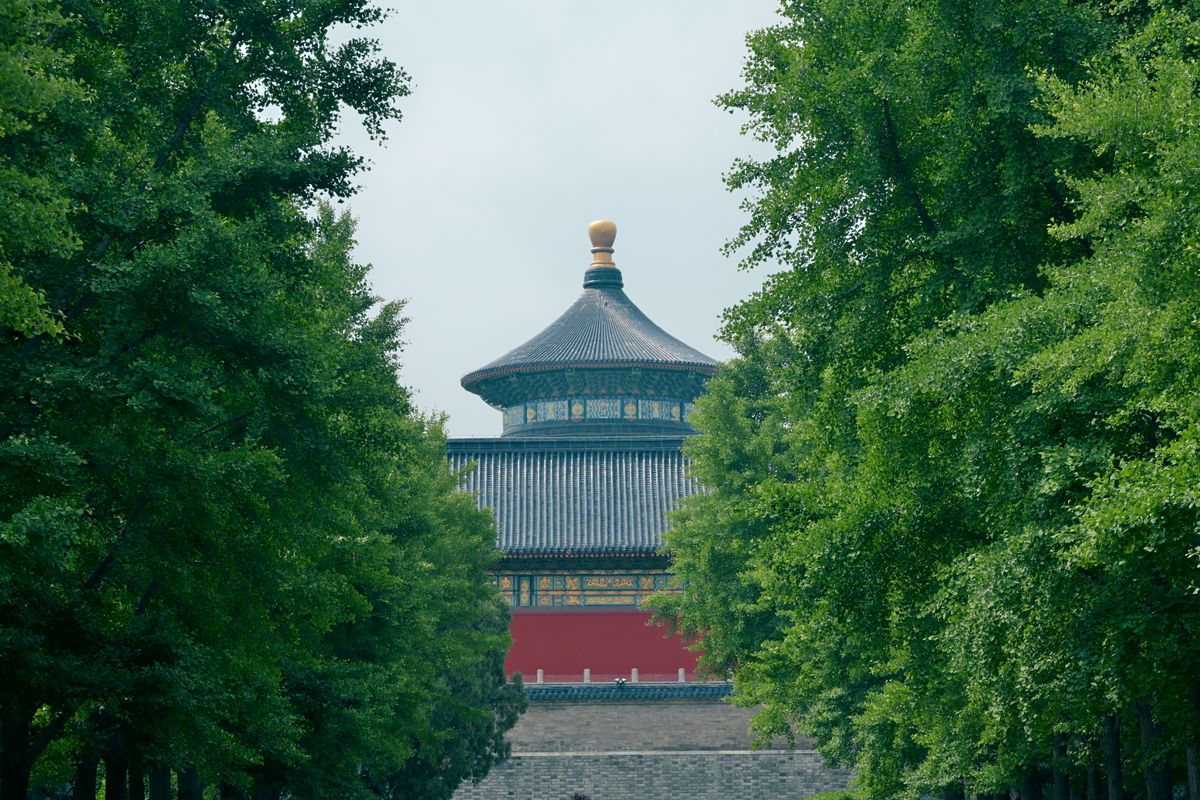
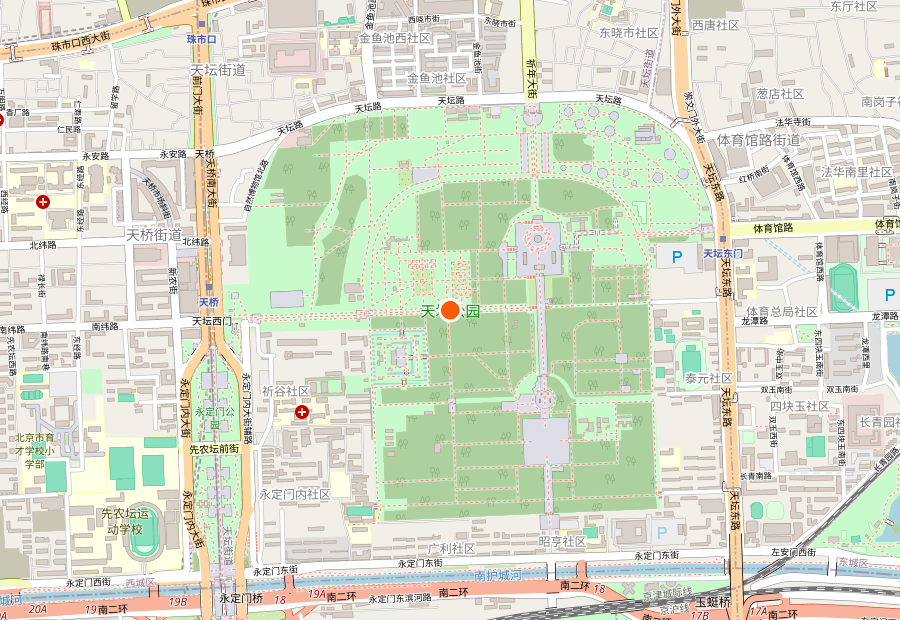
The Temple of Heaven sits inside its own walled park in Dongcheng District, with four gates (north, south, east, west) opening onto the grounds. The East Gate is the most common entrance for visitors, sitting directly across the street from a subway exit.
| Station | Details (checked 25 Jul 2026) |
|---|---|
| Tiantandongmen (Temple of Heaven East Gate) | Beijing Subway Line 5, Exit A — comes out directly across from the East Gate, the main and most-used entrance; the station has been in operation since 2007. |
| Tianqiao Station | Beijing Subway Line 8, the closest stop for the West Gate side of the park. |
| By taxi/DiDi | Give the driver “Tiantan Dongmen” (East Gate) as the standard drop-off point; expect central-Beijing traffic during rush hour. |
Hall of Prayer for Good Harvests
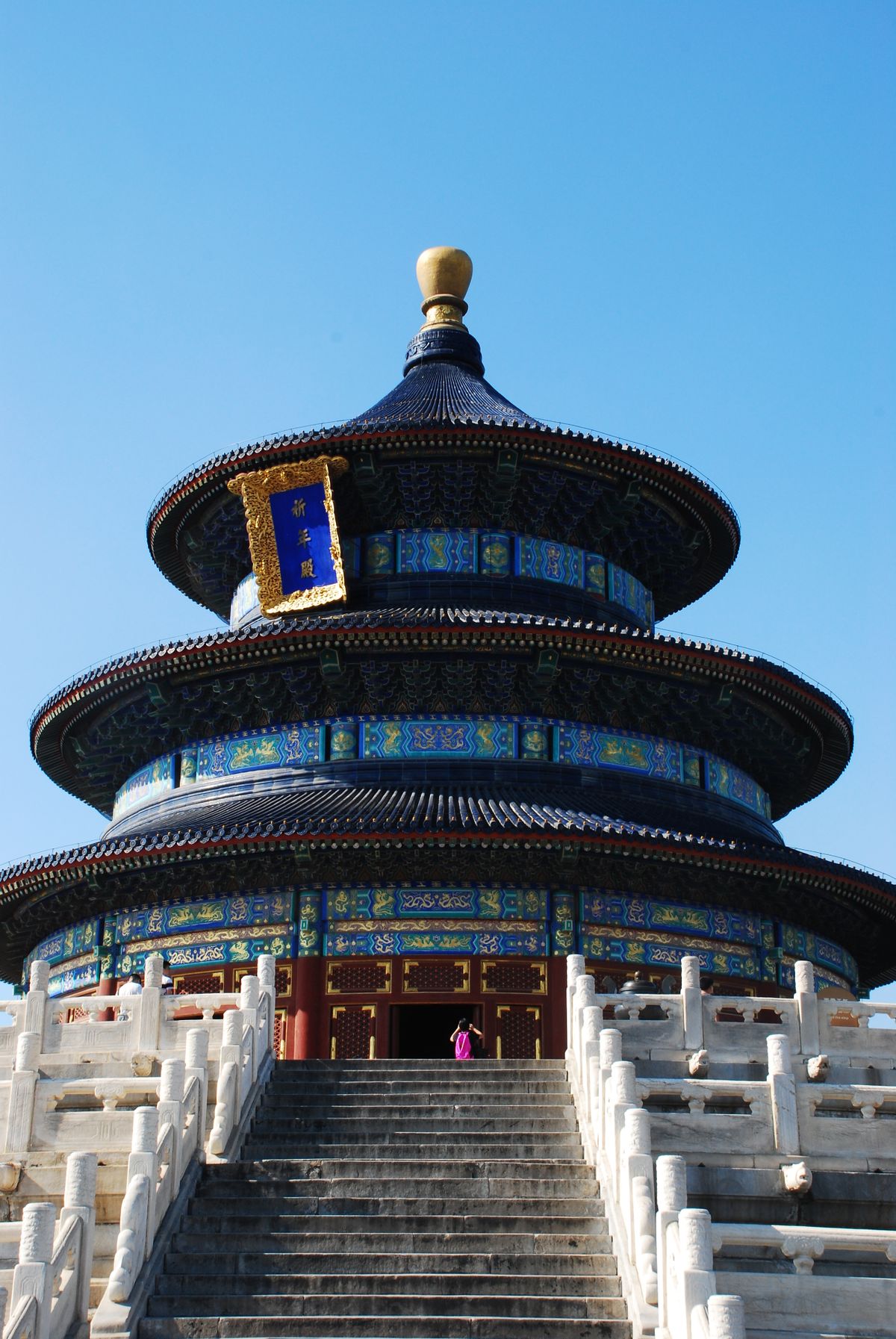
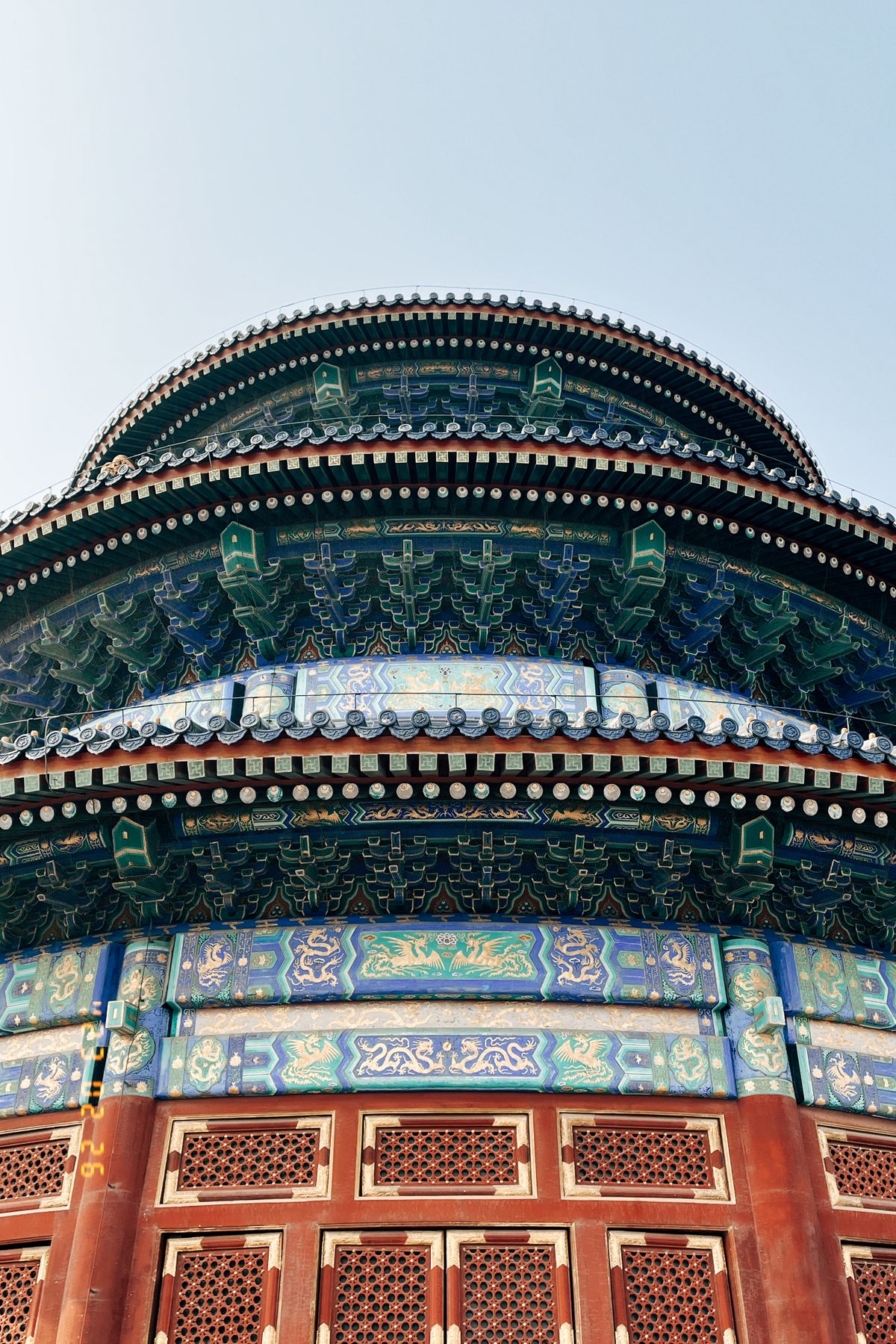
Rising 38 meters on a three-tiered white marble terrace at the north end of the complex, the circular Hall of Prayer for Good Harvests is the building most people picture when they think of the Temple of Heaven. Its three deep-blue, glazed-tile eaves and gilded finial sit atop 28 massive nanmu (cedar) pillars and 36 interlocking rafters, assembled without a single nail — hence its nickname, the “Beamless Hall.” The symbolism is deliberate: the four central pillars represent the four seasons, the middle ring of 12 pillars the twelve months, and the outer ring of 12 pillars the traditional twelve two-hour “watches” of the day; together, all 28 columns are said to echo the 28 constellations of classical Chinese astronomy.
Book combined access to the halls and altar (live prices):
Echo Wall & the Triple-Sound Stones
South of the Hall of Prayer, the smaller Imperial Vault of Heaven once stored the memorial tablets used in the winter-solstice rites, and is enclosed by the circular Echo Wall — a perfectly smooth, perfectly curved masonry wall roughly 65 meters across that carries a whisper spoken close to one side clearly to a listener on the opposite side, a “whispering gallery” effect produced entirely by the geometry of the stone. On the paved path just outside the vault’s gate, the Three Echo Stones (also called the Heaven, Earth and Human stones) produce a similar trick: clap while standing on the first stone and you hear one echo, the second stone returns two, and the third returns three, because each sits at a different distance from the surrounding circular walls. A few steps south, at the heart of the open-air Circular Mound Altar, the single central flagstone is known as the Heavenly Center Stone — stand on it and speak, and your own voice is said to sound unusually resonant, amplified by the surrounding rings of marble balustrades.
The Surrounding Park: Tai Chi, Fan Dancing & Local Life
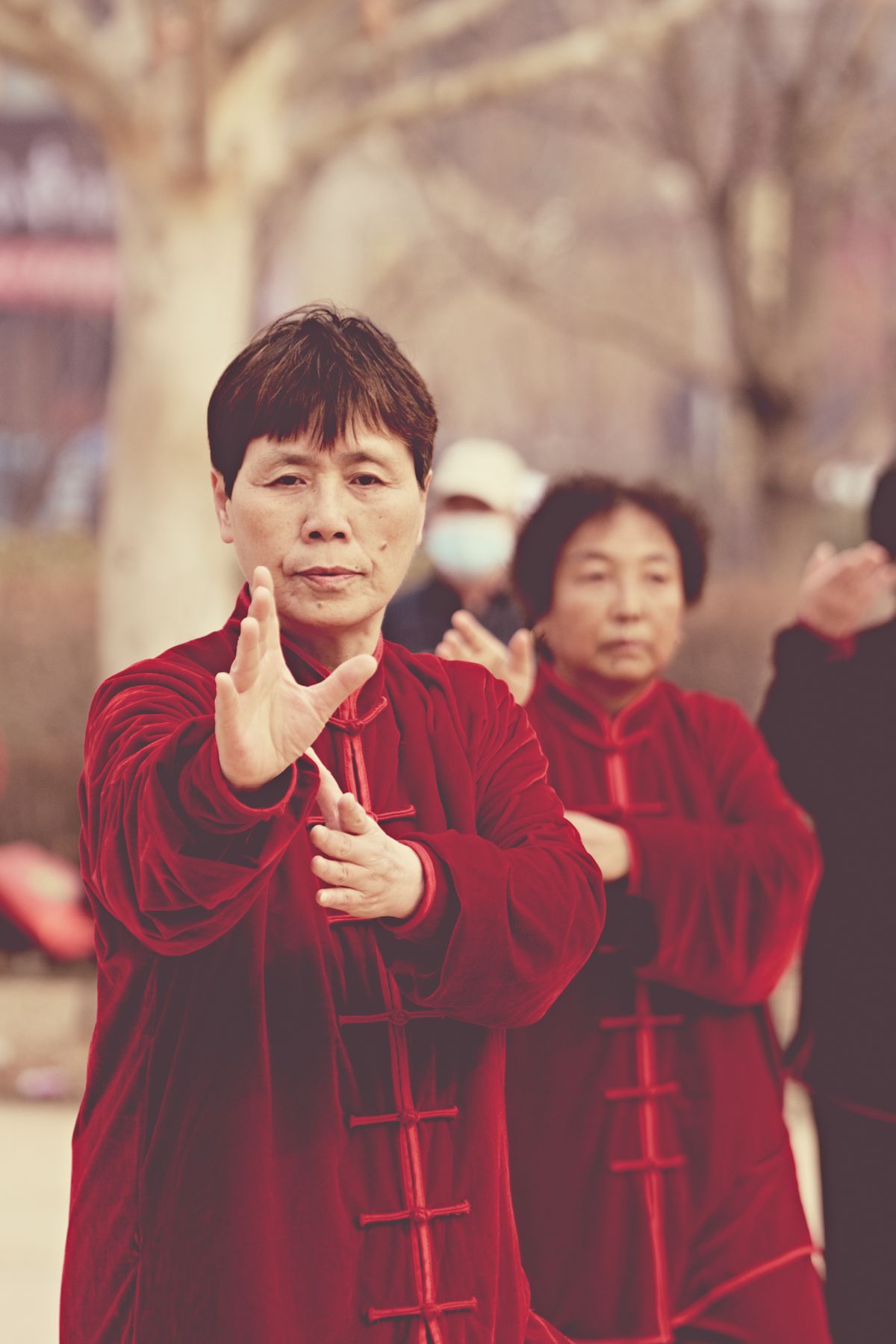
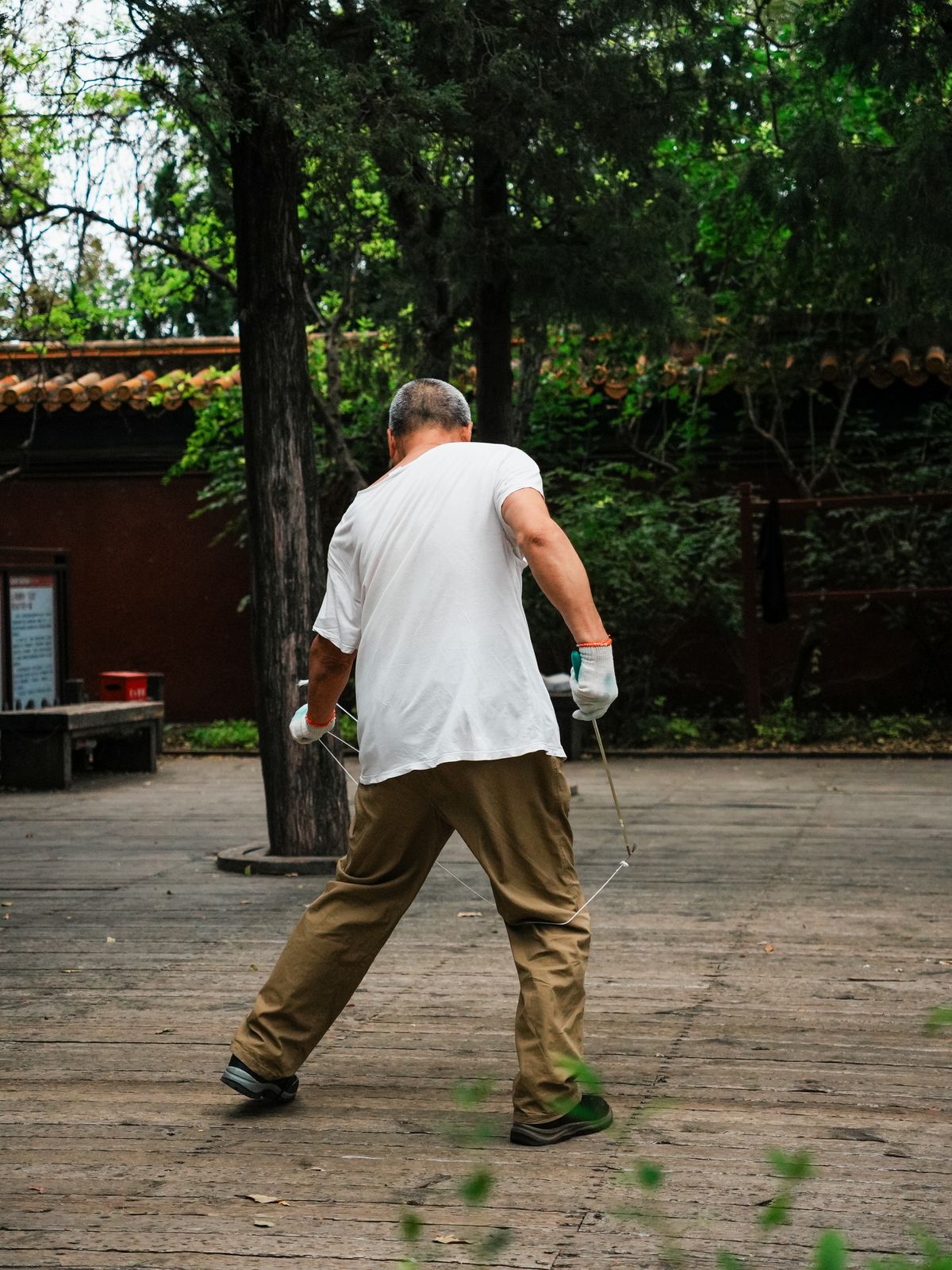
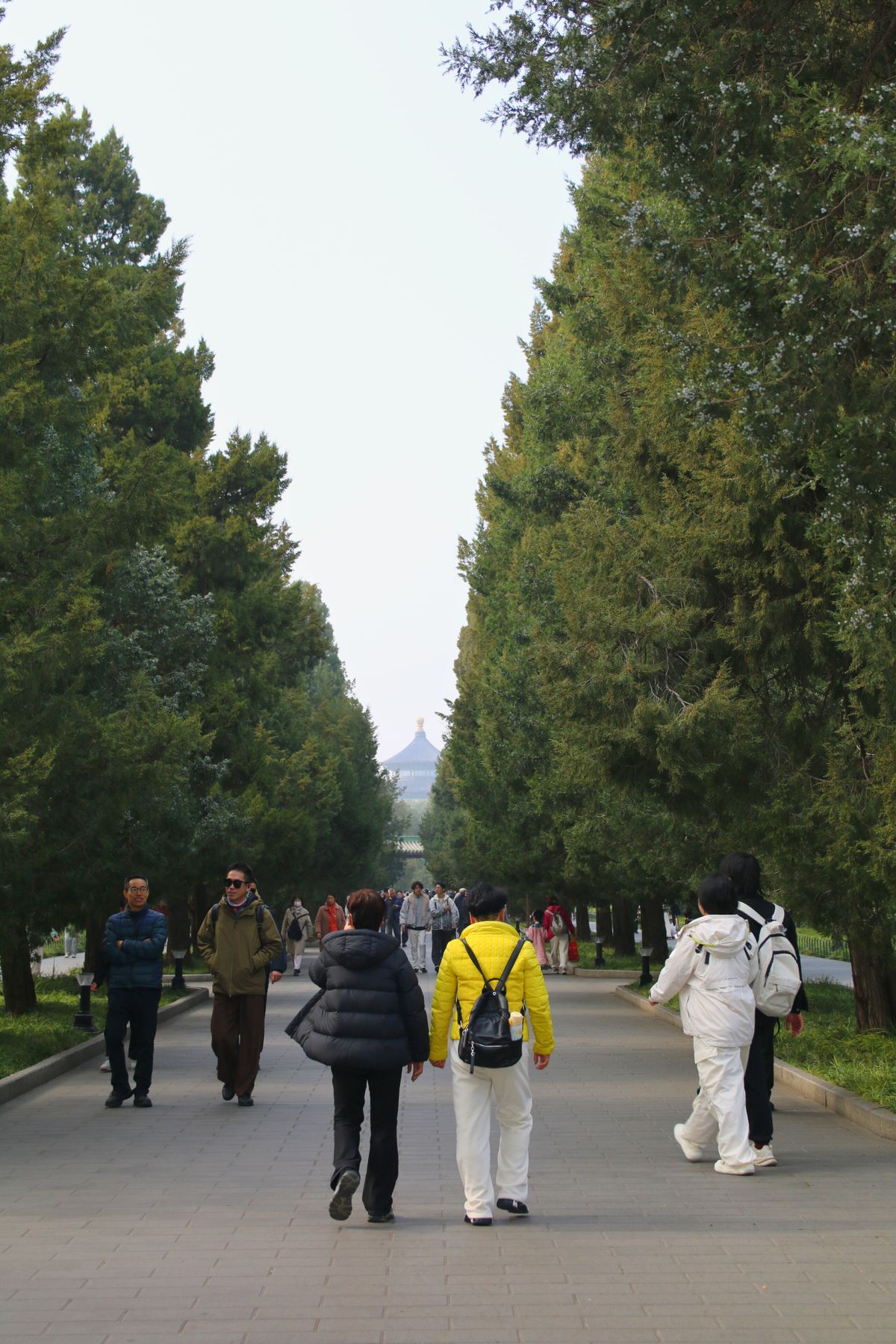
Beyond the ticketed halls, the Temple of Heaven’s grounds are a working neighborhood park, and the daily rhythm of ordinary Beijing life is arguably as memorable as the imperial architecture. The park opens well before the historic buildings do, and locals — many of them retirees — arrive at dawn to practice tai chi, sword forms and fan dancing under the ancient cypress trees (some planted over 500 years ago), while others sing opera, play traditional instruments, spin diabolos or gather over cards and mahjong along the covered Long Corridor. Walking the park’s wide lawns and tree-lined paths costs nothing beyond the ¥15 grounds ticket, and arriving early is the single best way to see this side of the complex before tour groups fill the main axis.
Map: Temple of Heaven at a Glance
Practical Tips
- Enter through the East Gate if you are coming by subway — it is a straight walk from Tiantandongmen Station (Line 5, Exit A) and puts you closest to the Hall of Prayer for Good Harvests.
- Arrive at or before 8:00 AM to see the park’s morning local life — tai chi groups, fan dancers and card games — before the historic buildings open and tour groups arrive.
- Book your digital ticket in advance; since 2024 the park has required a valid online ticket for entry, and same-day walk-up purchases (especially for foreign passport holders) are not guaranteed.
- The central axis from the South Gate’s Circular Mound Altar to the North Gate near the Hall of Prayer is roughly a kilometer — comfortable shoes help, especially in summer heat.
- Weekday mornings are noticeably quieter than weekends and Chinese public holidays, when the main halls and Echo Wall path can get crowded fast.
Where to Stay
The blocks immediately north of the park, around Qianmen and Chongwenmen, are the most convenient base — many hotels here are a 10–15 minute walk or one subway stop from the East or North Gate, and the area doubles as an easy walk to Tiananmen Square and the Forbidden City. Staying near Wangfujing or Dongdan puts you a short taxi or two subway stops away with far more dining and shopping options, while budget travelers often base themselves near Beijing South Railway Station, a few subway stops from the park’s West Gate.
Frequently Asked Questions
Is the Temple of Heaven park free to enter?
Grounds-only entry costs ¥15 (≈$2.2) and lets you walk the gardens and Long Corridor. To enter the three main halls — the Hall of Prayer for Good Harvests, Imperial Vault of Heaven and Circular Mound Altar — you need the ¥34 (≈$5.0) combo ticket.
How much time do you need at the Temple of Heaven?
Budget 2–3 hours to walk the full north-south axis and see all three main halls plus the Echo Wall; add 30–60 minutes if you want to linger in the park for the morning tai chi and fan-dancing scene.
What is the closest subway station to the Temple of Heaven?
Tiantandongmen (Temple of Heaven East Gate) Station on Beijing Subway Line 5, Exit A, lets out directly across from the park’s East Gate.
When is the best time to visit?
Early morning (before 8:00 AM) is best for local life and cooler temperatures; spring and autumn avoid Beijing’s summer heat and winter cold, though the historic core stays open with extended summer hours in July–August 2026.
Final Word
The Temple of Heaven distills six centuries of imperial ambition, cosmology and craftsmanship into a single walk along one axis — from the nail-free Hall of Prayer for Good Harvests down to the open-air Circular Mound Altar where emperors once stood alone before Heaven. Come early enough to catch the park’s living side, too: the tai chi groups and fan dancers under the cypress trees are, for many visitors, just as memorable as the architecture they came to see.
This post contains affiliate links. If you book or buy through them, we may earn a small commission at no extra cost to you. Hours and prices can change — always confirm on official sources before you visit.
Related Guides
🎟️ Book Tours, Activities & Food Experiences
Search and book top attractions, tours and food experiences on Klook — official best price, instant confirmation.
Klook.com