Last updated: July 2026
Disclosure: This post contains affiliate links. We may earn a commission if you book through them, at no extra cost to you. Hours and prices can change — always confirm on official sources before you visit.
Book Tours & Activities in the Summer Palace
Hand-picked Summer Palace experiences you can book online — a skip-the-line admission ticket, a half-day boat tour along the old imperial waterway, and a combo tour pairing the Summer Palace with the Forbidden City:
Spread across the northwestern edge of the city, the Summer Palace (颐和园, Yiheyuan) is the best-preserved royal garden in China and the single most popular escape from the crowds of central Beijing — a 2.9-square-kilometer world of covered corridors, marble bridges and an enormous man-made lake, three-quarters of which is open water. It is the 8th-ranked attraction on our China’s Top 100 Attractions Ranked list and one of the essential stops in our Beijing city guide, and a natural pairing with the Forbidden City or the Temple of Heaven if you only have a day or two in the capital. Here is what it costs to visit in 2026, how to get there, and what to prioritize once you are inside the gates.
A Little Context
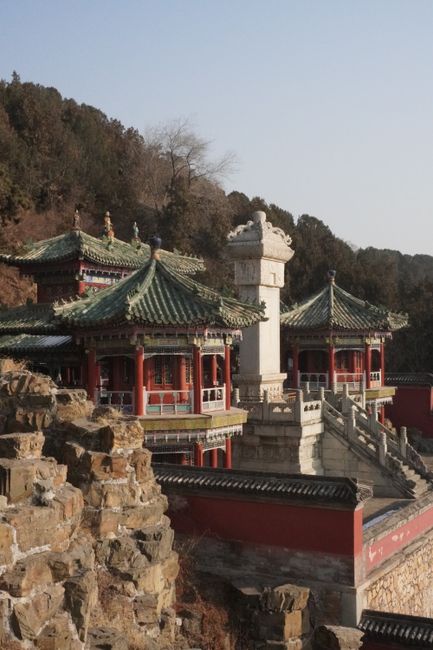
The site has been an imperial retreat in one form or another since the Jin dynasty moved its capital to present-day Beijing in the 12th century, but the garden visitors see today dates to 1750, when the Qianlong Emperor ordered the existing West Lake expanded to mark his mother’s 60th birthday. The excavated earth was piled up to enlarge a nearby rise into Longevity Hill, the lake was renamed Kunming Lake after a training lake built by the Han dynasty navy, and the completed garden — finished in 1764 at a cost of nearly five million silver taels — was named Qingyiyuan, the “Garden of Clear Ripples.” Its design borrows deliberately from famous sites elsewhere in China: the three islands in the lake represent the three immortal mountains of Chinese mythology, the lake itself was modeled on Hangzhou’s West Lake, and Suzhou Street inside the grounds was built to resemble a Jiangnan canal town, complete with palace eunuchs and maids playing shopkeeper for the emperor’s amusement.
The garden did not survive the 19th century intact. British and French forces burned Qingyiyuan along with the nearby Old Summer Palace in 1860 during the Second Opium War, and what the fires left standing was looted again by the Eight-Nation Alliance in 1900. Between 1884 and 1895, Empress Dowager Cixi rebuilt the grounds using funds nominally earmarked for the Qing navy, gave it the name it carries today — Yiheyuan, the “Garden of Nurtured Harmony” — and used it as her primary residence and seat of informal power for the rest of her life; the Guangxu Emperor was famously confined for years in the Hall of Jade Billows on her orders. The palace was restored again after the 1900 destruction, opened to the public as a park in 1924 after the fall of the imperial family, and has been continuously maintained since. UNESCO inscribed the Summer Palace as a World Heritage Site in December 1998, calling it “a masterpiece of Chinese landscape garden design” that combines natural hills and open water with pavilions, halls, temples and bridges into what the citation calls a harmonious ensemble of outstanding aesthetic value.
Today the Summer Palace is administered as a public park and ranks among the five or six most-visited attractions in China, drawing roughly ten million visitors a year — locals doing tai chi and card games along the Long Corridor as much as tour groups working through the highlight list. That dual identity, part living neighborhood park and part imperial monument, is part of what makes it worth the trip out from central Beijing.
Quick Facts & Costs for 2026
💡 Prices checked on 27 July 2026. Ticket prices are fixed by season, not dynamic like a museum audio-guide fee — but always confirm on the official Summer Palace WeChat account or ticketing portal before you visit, since park rules and fees do change.
| Item | Cost | Notes & source (checked) |
|---|---|---|
| Entrance ticket, peak season (Apr 1–Oct 31) | ¥30 (≈ $4.4) | Grounds admission only, does not include Wenchang Gallery, Dehe Garden, Tower of Buddhist Incense or Suzhou Street. — Beijing Municipal Government tourism portal (english.beijing.gov.cn), cross-checked with TravelChinaGuide, checked 27 Jul 2026 |
| Entrance ticket, off-season (Nov 1–Mar 31) | ¥20 (≈ $2.9) | Same grounds-only admission at the lower winter rate. — cross-checked 27 Jul 2026 |
| Through ticket (联票), peak season | ¥60 (≈ $8.8) | Combined ticket covering grounds plus Wenchang Gallery, Dehe Garden (opera house), Tower of Buddhist Incense and Suzhou Street. — cross-checked 27 Jul 2026 |
| Through ticket, off-season | ¥50 (≈ $7.4) | Same combined coverage at the winter rate. — cross-checked 27 Jul 2026 |
| Student discount ticket | ¥15 (≈ $2.2) | Half-price entrance ticket for university, high-school and international students with valid student ID (park-only, not the through ticket). — Beijing local tourism portal (bendibao.com), checked 27 Jul 2026 |
| Seniors & children | Free / half-price | Beijing residents 65+ enter free with an elderly ID card; non-local visitors 70+ get 50% off. Children under 1.2m tall and visitors with a disability card enter free. — bendibao.com, checked 27 Jul 2026 |
| Opening hours | 6:30 AM–8:00 PM (Apr–Oct); 7:00 AM–7:00 PM (Nov–Mar) | Last admission is two hours before closing in both seasons; some interior halls close earlier than the park gates. — cross-checked via Beijing Municipal Government portal and TravelChinaGuide, checked 27 Jul 2026 |
| Address | No. 19 Xinjiangongmen Road, Haidian District, Beijing 100091 | New Palace Gate area; the park also has Eastern and Northern gates. — checked 27 Jul 2026 |
| Phone | +86-10-6288-1144 | General park information line. — checked 27 Jul 2026 |
How to Get There
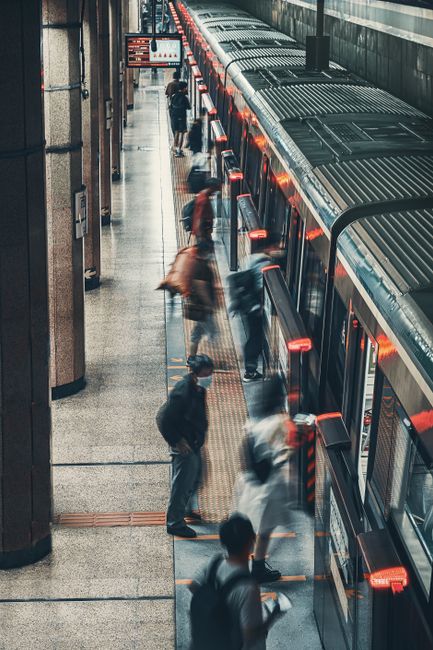
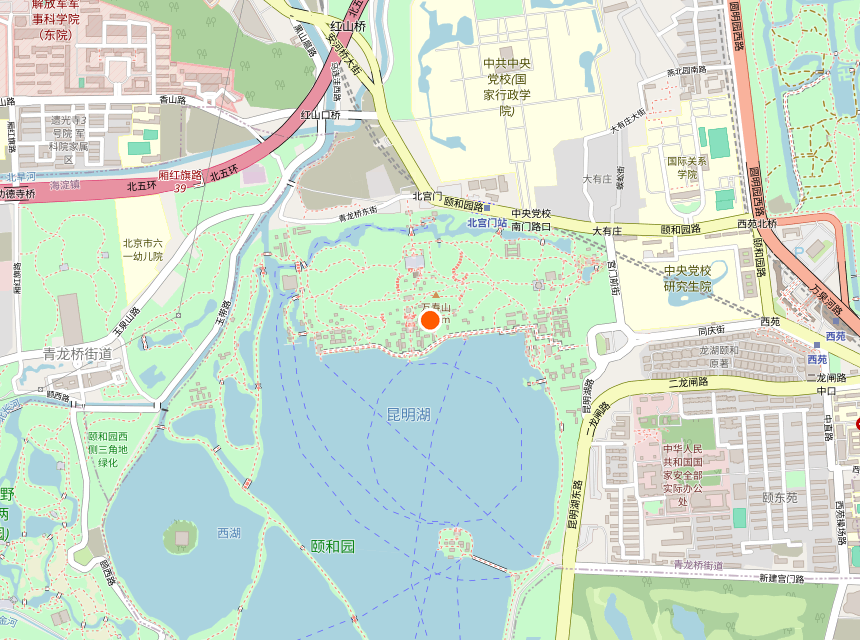
The Summer Palace sits about 15 km northwest of central Beijing, near Tsinghua and Peking universities, and is one of the easiest major sights in the city to reach by subway.
| From | Details (checked 27 Jul 2026) |
|---|---|
| Beigongmen Station (Line 4), Exit D | Walk about 5 minutes south to the North Gate — the simplest single-line route from most parts of central Beijing. |
| Xiyuan Station (Line 4) | Walk about 10 minutes to the New Palace Gate, the main entrance most tour groups use. |
| Summer Palace West Gate Station (Xijiao Line) | Connects to the West Gate; useful if you are coming from the Fragrant Hills side of the city. |
| Public bus | Routes 209, 330, 331, 332 and 346, among others, serve the East, North and New Palace gates directly. |
| By car / taxi / rideshare (DiDi) | Metered taxis and DiDi are inexpensive from most central districts; expect 30–45 minutes depending on traffic, with paid parking near the East and New Palace gates. |
Must-See Highlights
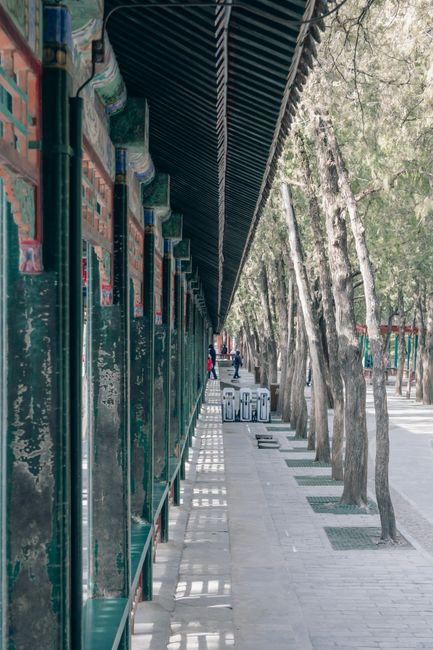
The Summer Palace rewards a plan rather than aimless wandering — the grounds are large enough that first-time visitors often run out of time before they run out of sights. These are the highlights worth building a route around:
- Long Corridor (长廊) — a covered wooden walkway running 728 meters along the lakeshore between the Hall of Joy and Longevity and the western end of the park, painted with more than 14,000 individual scenes drawn from Chinese legend, history and classic novels. Guinness recognizes it as the longest painted corridor in the world.
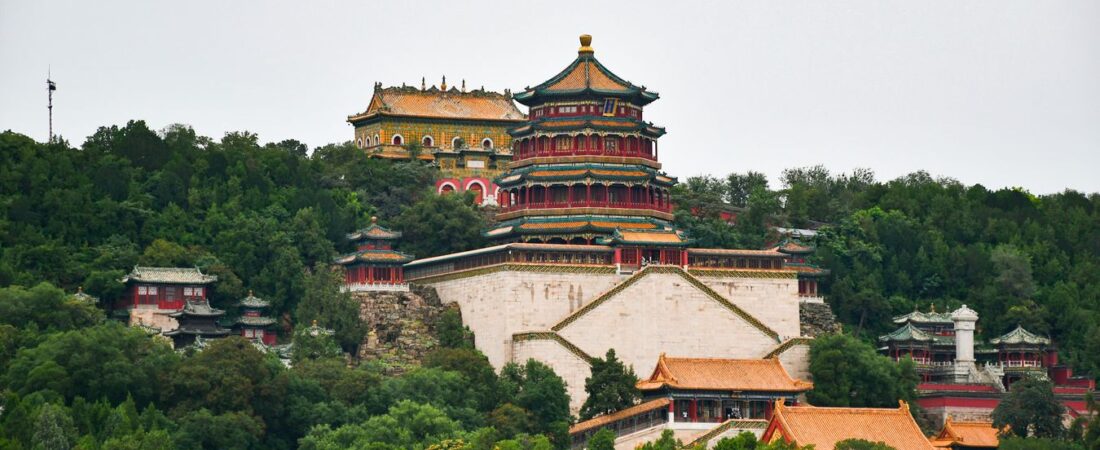
- Tower of Buddhist Incense (佛香阁) — a 41-meter, three-story pagoda perched on a stone base partway up Longevity Hill, visible from almost everywhere on the lake. Empress Dowager Cixi used it as a private place of worship; today it is the best viewpoint over Kunming Lake and worth the climb.
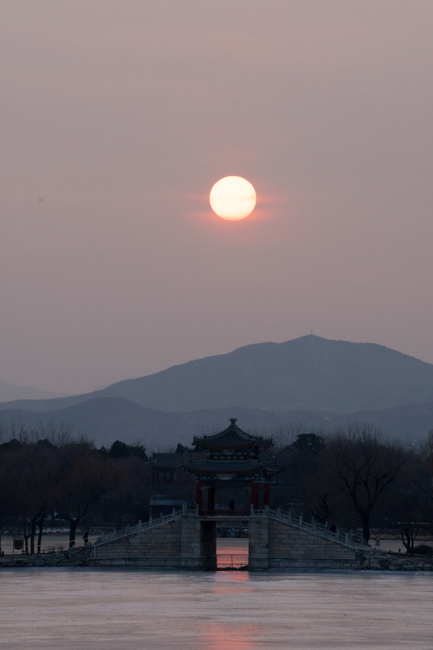
- Seventeen-Arch Bridge (十七孔桥) — a 150-meter granite bridge linking the eastern shore to Nanhu Island, lined with more than 500 carved stone lions, each one slightly different. It is at its most photographed in mid-to-late November, when the setting sun aligns with the arches for a few minutes each evening.
- Suzhou Street (苏州街) — a reconstructed canal-side shopping street on the back side of Longevity Hill, built to resemble Jiangnan towns like Suzhou, where palace eunuchs and maids once played shopkeeper for the emperor’s entertainment. It is quieter than the lakefront and a good place to slow down.
- Marble Boat / Stone Boat (石舫) — a 36-meter lakeside pavilion carved to resemble a paddle-wheel steamer, originally built in wood and rebuilt in marble after the 1860 fire. It never sailed anywhere, and its cost has long been a point of historical controversy given the state of the Qing navy at the time.
Kunming Lake by Boat, and the Best Time to Visit
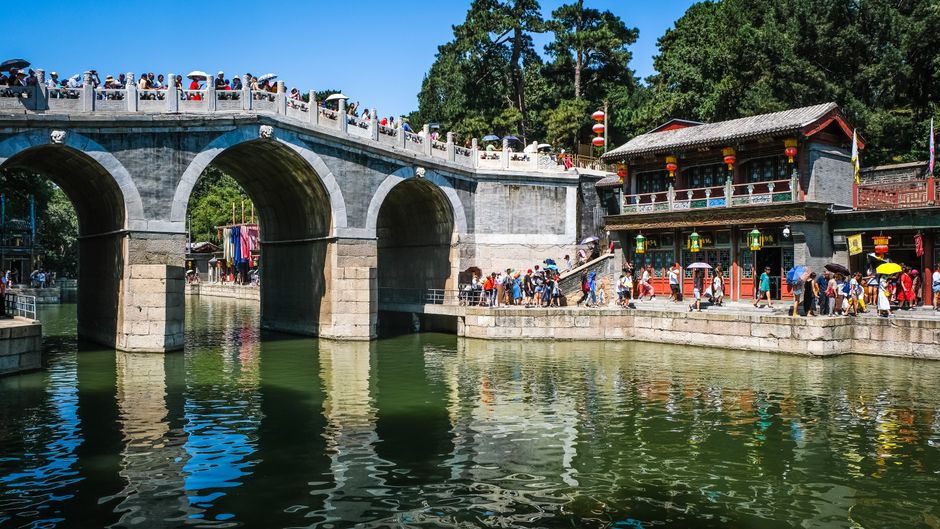
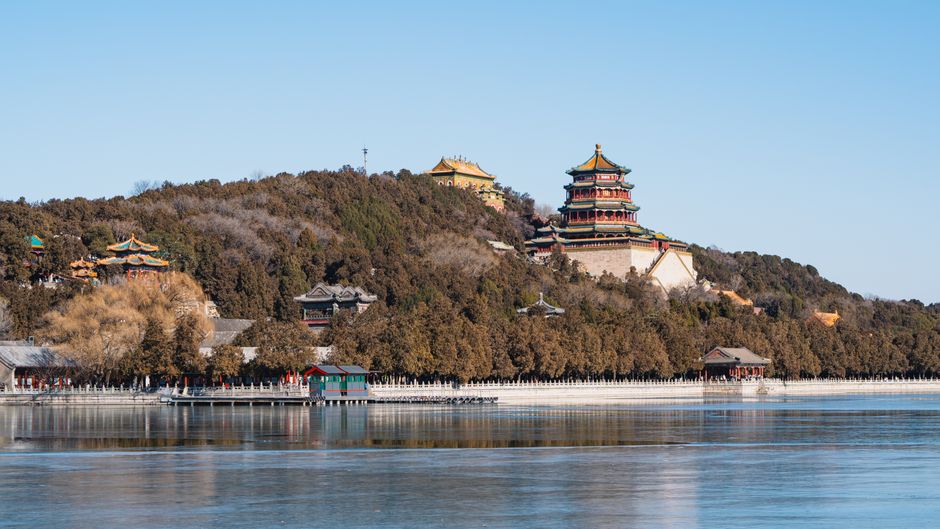
Kunming Lake covers about 2.2 square kilometers — three-quarters of the entire site — and is entirely man-made, dug in the 18th century to supply water to the capital and to build up Longevity Hill with the excavated earth. From spring through autumn, dragon-style tour boats and rental pedal boats cross between the New Palace Gate dock and Nanhu Island near the Seventeen-Arch Bridge, and a short lake crossing is one of the more relaxing ways to see the Tower of Buddhist Incense and Longevity Hill from a distance rather than fighting the crowds on land. Boating stops entirely in winter once the lake freezes, at which point ice-skating and ice-sledding activities sometimes take over the frozen surface instead.
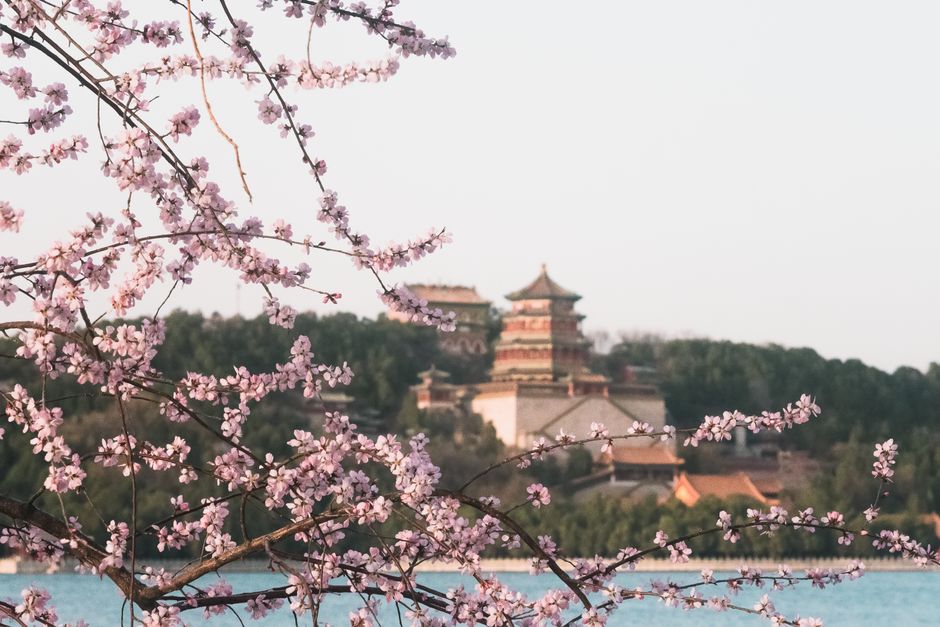
September and October are widely considered the best months to visit: the summer heat and rain have passed, the Long Corridor and lakeside paths are less crowded than in July and August, and the autumn light suits the Seventeen-Arch Bridge and Longevity Hill especially well. Spring brings blossoming trees near the New Palace Gate and Suzhou Street; summer is the most popular season for boating despite the heat; and winter, while cold, turns the frozen lake and snow-dusted rooflines into one of the quietest and most photogenic versions of the park, with a fraction of the crowds.
Map: Summer Palace at a Glance
Practical Tips
- Arrive at opening or after 3:00 PM to avoid the tour-group crush that builds from mid-morning through early afternoon, especially at the New Palace Gate and along the Long Corridor.
- Enter through the East Gate or North Gate (Beigongmen) rather than the New Palace Gate if you want to see Renshou Palace and the Long Corridor before the big group tours arrive.
- Wear comfortable shoes — the full classic route, including the climb up Longevity Hill to the Tower of Buddhist Incense, covers several kilometers and multiple staircases.
- Budget at least 3 hours for the classic route (Long Corridor, Longevity Hill, Seventeen-Arch Bridge); a full half-day if you also want Suzhou Street and a lake crossing.
- The through ticket is worth it if you plan to enter the Tower of Buddhist Incense, Wenchang Gallery, Dehe Garden opera house or Suzhou Street — buying separate entry fees for each adds up quickly.
- Boat rides across Kunming Lake run roughly April through October only; the lake is closed to boats and frequently frozen from December through February.
- Bring cash or a Chinese mobile payment app (Alipay/WeChat Pay with a linked international card) for snacks and souvenir stalls inside the park — foreign cards are not always accepted on-site.
Where to Stay
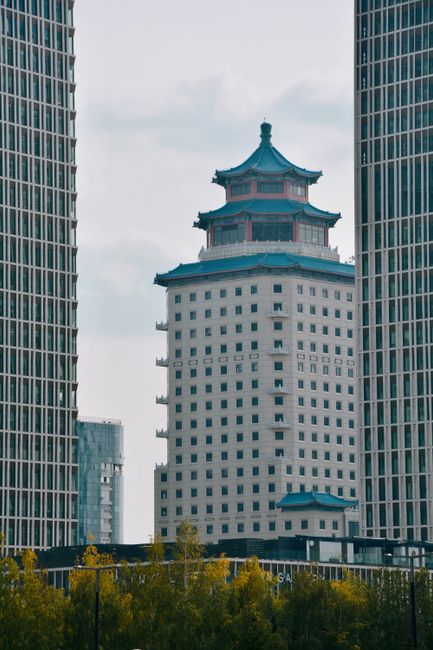
Most first-time visitors base themselves in central Beijing — around Wangfujing, Dongcheng or Chaoyang — for easy access to the Forbidden City, Tiananmen Square and Temple of Heaven, then take the subway or a taxi out to the Summer Palace for a half or full day. If the Summer Palace, the university district and a quieter, more local feel are higher priorities, staying in Haidian District near Beigongmen or Xiyuan station puts the park itself within a 10–15 minute walk or short ride, at the cost of a longer trip back to the downtown sights.
Frequently Asked Questions
How much does it cost to visit the Summer Palace?
A grounds-only entrance ticket costs ¥30 (≈$4.4) in peak season (Apr–Oct) or ¥20 (≈$2.9) off-season. The through ticket, which also covers the Tower of Buddhist Incense, Wenchang Gallery, Dehe Garden and Suzhou Street, costs ¥60 (≈$8.8) in peak season or ¥50 (≈$7.4) off-season. See the price table above for discounts.
Is the Summer Palace worth visiting alongside the Forbidden City?
Yes, though they are usually done on separate days or as a full-day combo tour — the Forbidden City is a walled palace complex in the city center, while the Summer Palace is a large lakeside garden about 15 km northwest, and covering both properly in one day is tight unless you use a guided combo tour.
What is the closest subway station to the Summer Palace?
Beigongmen Station on Line 4 is right at the North Gate, about a 5-minute walk. Xiyuan Station, also on Line 4, is about 10 minutes from the New Palace Gate, the main entrance most tour groups use.
How much time should I budget for a visit?
At least 3 hours for the classic route covering the Long Corridor, Longevity Hill and the Seventeen-Arch Bridge. Budget a half-day or more if you also want to see Suzhou Street, take a lake crossing by boat, or avoid rushing between sights.
Final Word
The Summer Palace rewards patience more than almost any other sight in Beijing — it is easy to see the Long Corridor and the Tower of Buddhist Incense in an hour and call it done, but the park only really opens up once you slow down: a boat across Kunming Lake, a walk through the quieter Suzhou Street, an early morning among the locals doing tai chi along the lakeshore. Budget real time, bring good shoes, and pick your gate strategically to get ahead of the tour groups.
This post contains affiliate links. If you book or buy through them, we may earn a small commission at no extra cost to you. Hours and prices can change — always confirm on official sources before you visit.
Related Guides
🎟️ Book Tours, Activities & Food Experiences
Search and book top attractions, tours and food experiences on Klook — official best price, instant confirmation.
Klook.com