This post contains affiliate links. If you book or buy through them, we may earn a small commission at no extra cost to you.
Last updated: July 2026
Book Tours & Activities in Itsukushima Shrine (Miyajima)
Book Tours & Activities in Itsukushima Shrine (Miyajima)
Hand-picked Miyajima experiences you can book online – day tours, ferry rides and Hiroshima combos:
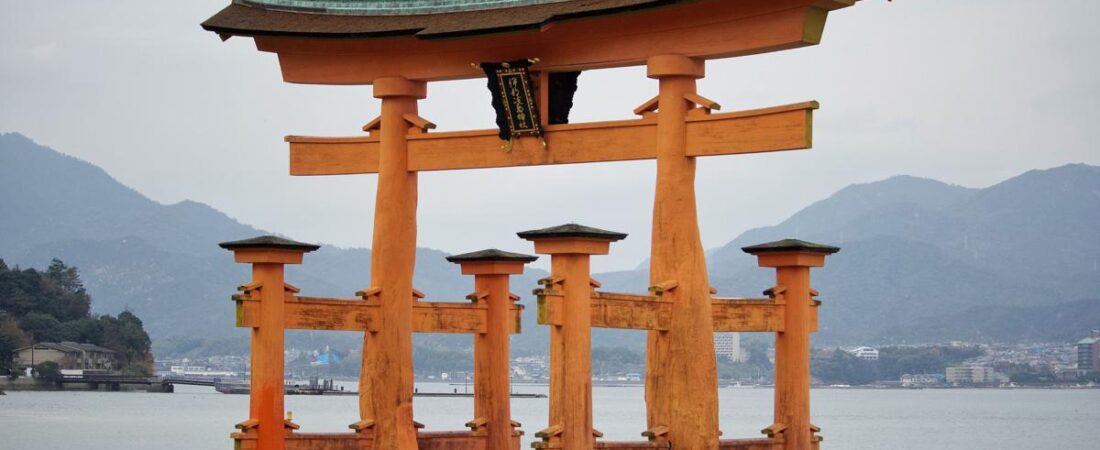
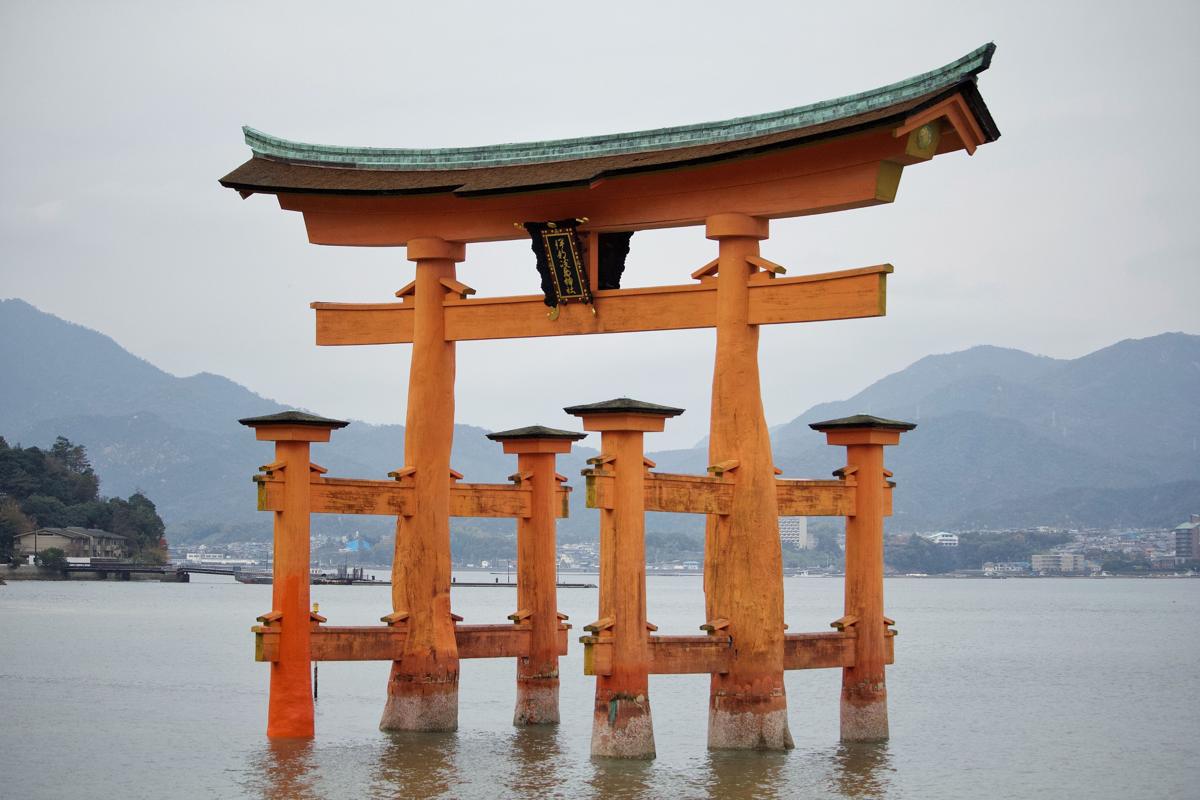
Rising from the Seto Inland Sea off the coast of Hiroshima, Itsukushima Shrine is one of the most photographed sights in Japan – a vermilion Shinto shrine built on stilts over the tideline, fronted by a giant floating torii gate. It sits on Miyajima (“Shrine Island”), a UNESCO World Heritage Site since 1996 and officially ranked among Japan’s Three Views (Nihon Sankei), the trio of scenic spots prized above all others since the 17th century. Here’s everything you need: tickets, tide times, the ferry crossing, and what to actually see once you’re there.
💡 Prices checked July 2026. Fees, hours and tide times change – always confirm on the official site (itsukushimajinja.jp) before you visit.
| Item | Cost | Notes & source (checked) |
|---|---|---|
| Shrine admission (adult) | ¥300 (≈ $1.8) | High school ¥200 (≈ $1.2); elementary/junior high ¥100 (≈ $0.6). – Itsukushima Shrine official site |
| Shrine + Treasure Hall combined ticket | ¥500 (≈ $3.1) | Sold only at the shrine entrance; HS ¥300 (≈ $1.8), elem/JHS ¥150 (≈ $0.9). – official site |
| Senjokaku (Hokoku Shrine) hall fee | ¥100 (≈ $0.6) | Elem/JHS ¥50 (≈ $0.3). Separate from the main shrine ticket. – official site |
| JR Miyajima Ferry (one-way, adult) | ¥180 (≈ $1.1) | Child ¥90 (≈ $0.6). IC cards accepted. – JR West Miyajima Ferry official site |
| Miyajima Matsudai Kisen ferry (one-way, adult) | ¥200 (≈ $1.2) | Round trip ¥400 (≈ $2.5). – Miyajima Matsudai Kisen official site |
| Miyajima Visitor Tax | ¥100 (≈ $0.6) | Charged separately when you land on the island (either ferry line); preschoolers exempt. – official ferry sites |
Please read before you go: hours and fees below are from the official Itsukushima Shrine site (itsukushimajinja.jp), checked July 2026. The shrine is open year-round but closes earlier in winter – always confirm the current schedule and same-day tide times before you travel.
| Period | Shrine hours |
|---|---|
| January 1 | 12:00 AM – 6:30 PM |
| January 2 – 3 | 6:30 AM – 6:30 PM |
| January 4 – end of February | 6:30 AM – 5:30 PM |
| March 1 – October 14 | 6:30 AM – 6:00 PM |
| October 15 – November 30 | 6:30 AM – 5:30 PM |
| December 1 – 31 | 6:30 AM – 5:00 PM |
The wooden corridors have small gaps between the floorboards – a design that lets seawater pressure escape at high tide without damaging the structure. Wear flat, comfortable shoes; thin heels can get caught.
Why It “Floats”: High Tide vs Low Tide
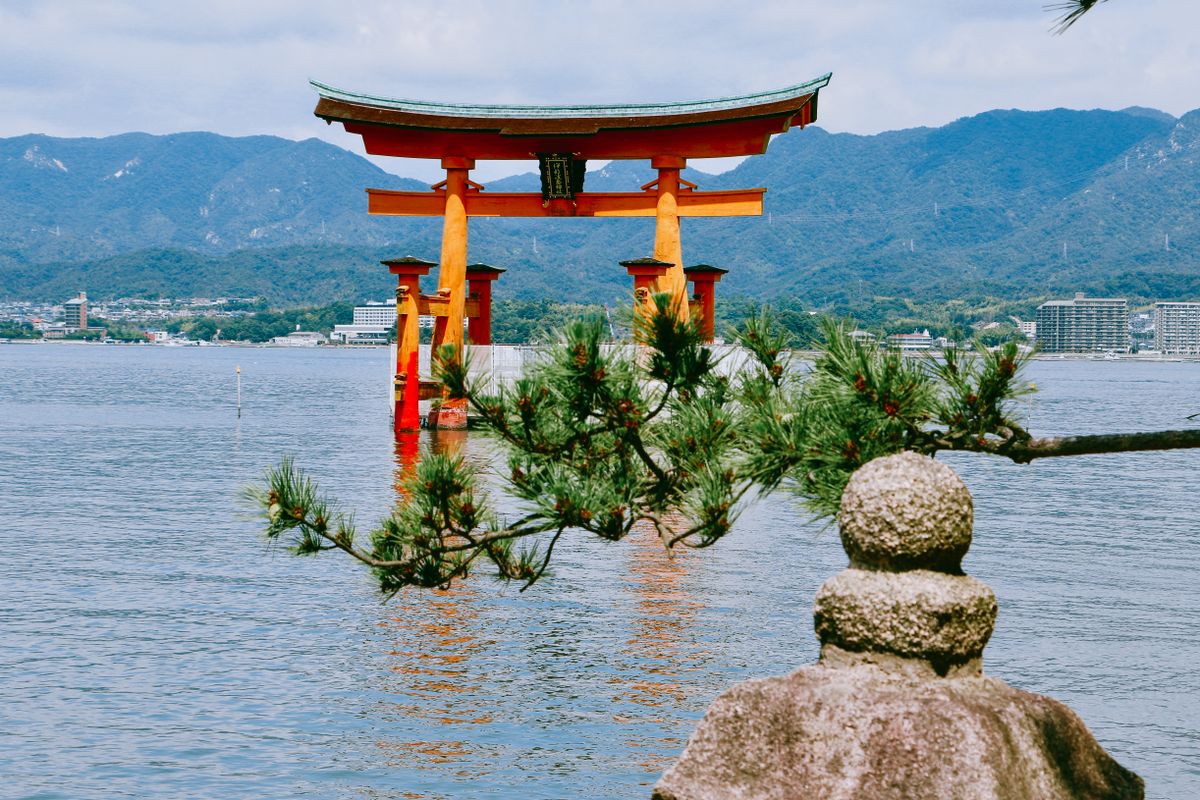
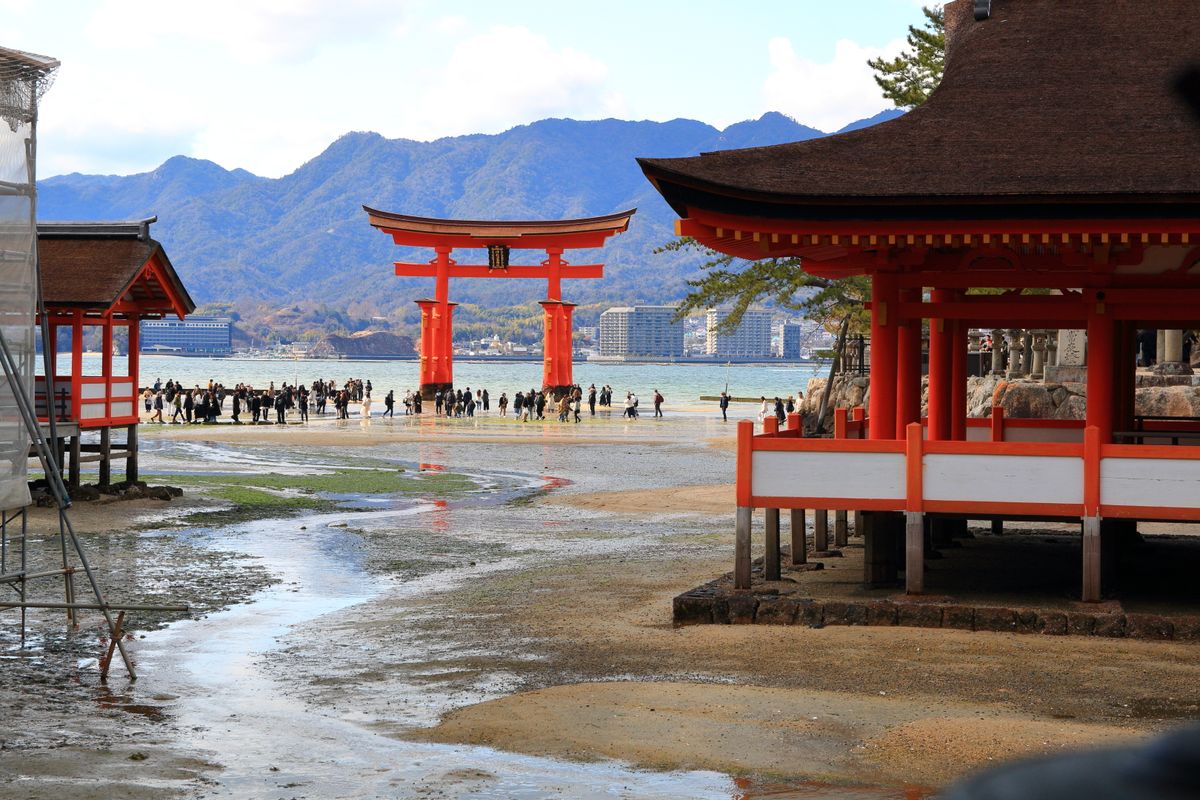
Miyajima has two high tides and two low tides a day, and the times shift by roughly 50 minutes daily, so there is no fixed “best hour” – it changes every single day. As a rule of thumb: when the tide level is above about 250cm the Otorii and the shrine’s stilted halls appear to float on the water, an effect strongest 15-30 minutes either side of the day’s highest tide. When the tide drops below about 100cm, the sea pulls back far enough that you can walk out across the sand flats to touch the gate’s base – a completely different, equally worthwhile experience. Always check the same-day tide table on the official Itsukushima Shrine site or the Miyajima Tourist Association site before you plan your visit, since the ideal viewing window moves throughout the day and across seasons.
A Shrine Built by a Warlord, Reborn on the Water
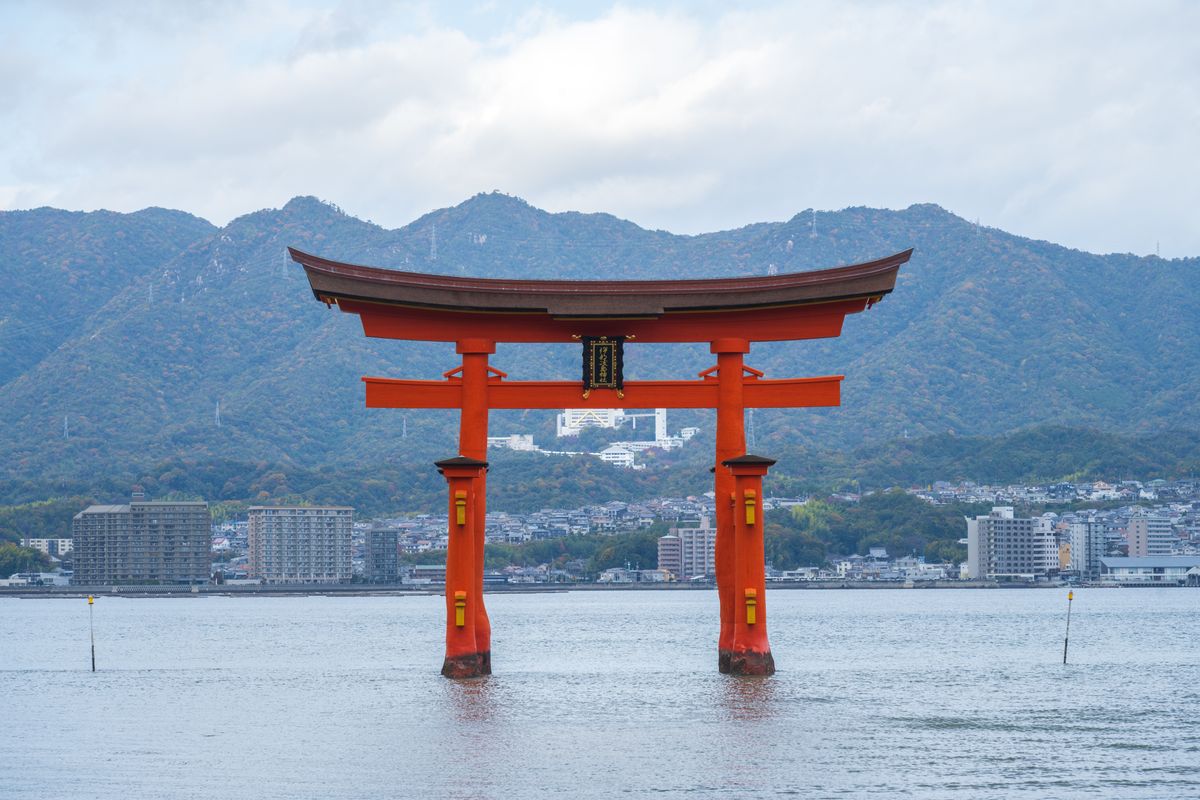
Itsukushima Shrine’s roots go back to 593 CE, but the shrine you see today – the sprawling, pier-like halls connected by covered corridors – dates to 1168, when it was rebuilt on a grand scale by Taira no Kiyomori, the most powerful warlord of the late Heian period. Kiyomori was a devout worshipper of the shrine’s three goddesses and used his fortune to turn a modest island shrine into an architectural statement: because the whole of Miyajima was considered too sacred to be touched by construction, the shrine was built out over the tidal flats on stilts instead, connected by boardwalks so that it would never technically “stand” on the holy ground itself. The result is the striking optical effect that gives Miyajima its nickname, “the shrine that floats on the sea.” The Otorii gate itself is a later addition (the current gate dates to 1875) but follows the same principle – it stands unattached, held upright purely by its own weight, driven a few meters into the seabed.
A Gate 150 Years in the Making – and Recently Restored
The current Otorii, one of Japan’s largest wooden shrine gates, was erected in 1875 using camphor wood chosen for its rot- and insect-resistance. Even so, more than a century of saltwater and termite exposure eventually took a toll on its main pillars. Between June 2019 and December 2022, the gate underwent a major three-and-a-half-year restoration: the main pillars were reinforced, the cypress-bark roof was replaced, and the vermilion lacquer was fully repainted. During the work the gate stood wrapped in white scaffolding sheeting – visible but softly glowing at night – before a Shinto ceremony marked its reopening in December 2022. Today it stands fully restored, so any photo you take now shows the gate at its best in decades.
Getting There from Hiroshima
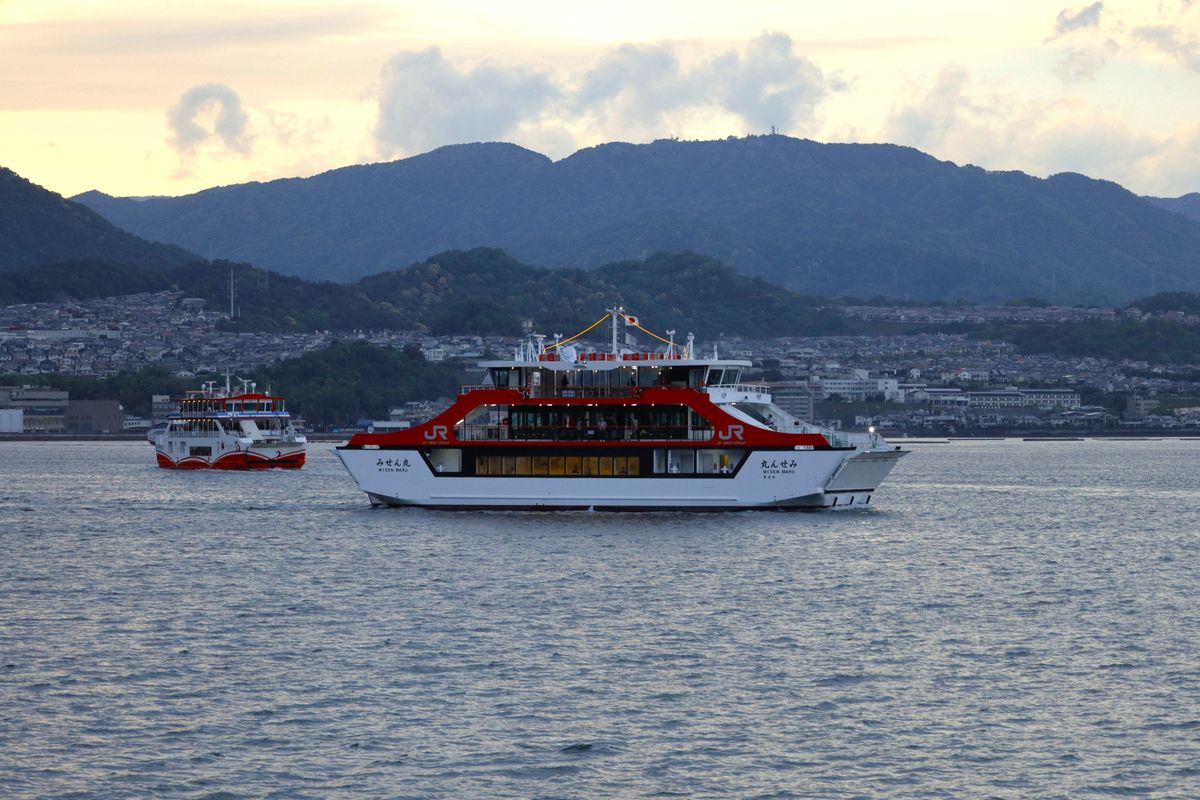
Miyajima is a train-plus-ferry trip from central Hiroshima, and it’s simple even for first-timers.
| Leg | Details (checked July 2026) |
|---|---|
| Hiroshima Station → Miyajimaguchi Station | JR Sanyo Line (local/rapid), about 25-30 minutes; covered by the JR Pass and JR West regional passes |
| Miyajimaguchi Pier → Miyajima Pier (ferry) | JR West Miyajima Ferry or Miyajima Matsudai Kisen, both about 10 minutes, departing roughly every 15-20 minutes; JR Pass holders ride the JR ferry free |
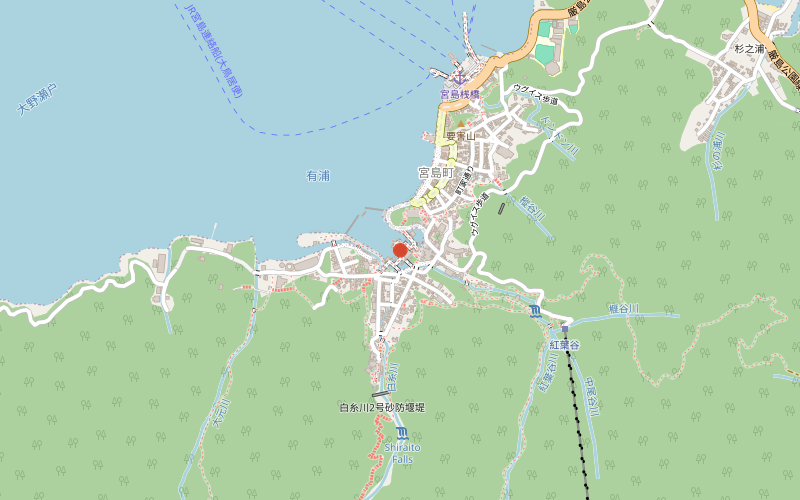
| Miyajima Pier → Itsukushima Shrine | About 10 minutes on foot along the waterfront and through Omotesando shopping street |
| Direct high-speed ferry option | “World Heritage Sea Route” boats run directly from Hiroshima Peace Park/Port to Miyajima in about 45 minutes, skipping the train – convenient but pricier than the train+ferry combo |
Suggested Route Through the Shrine
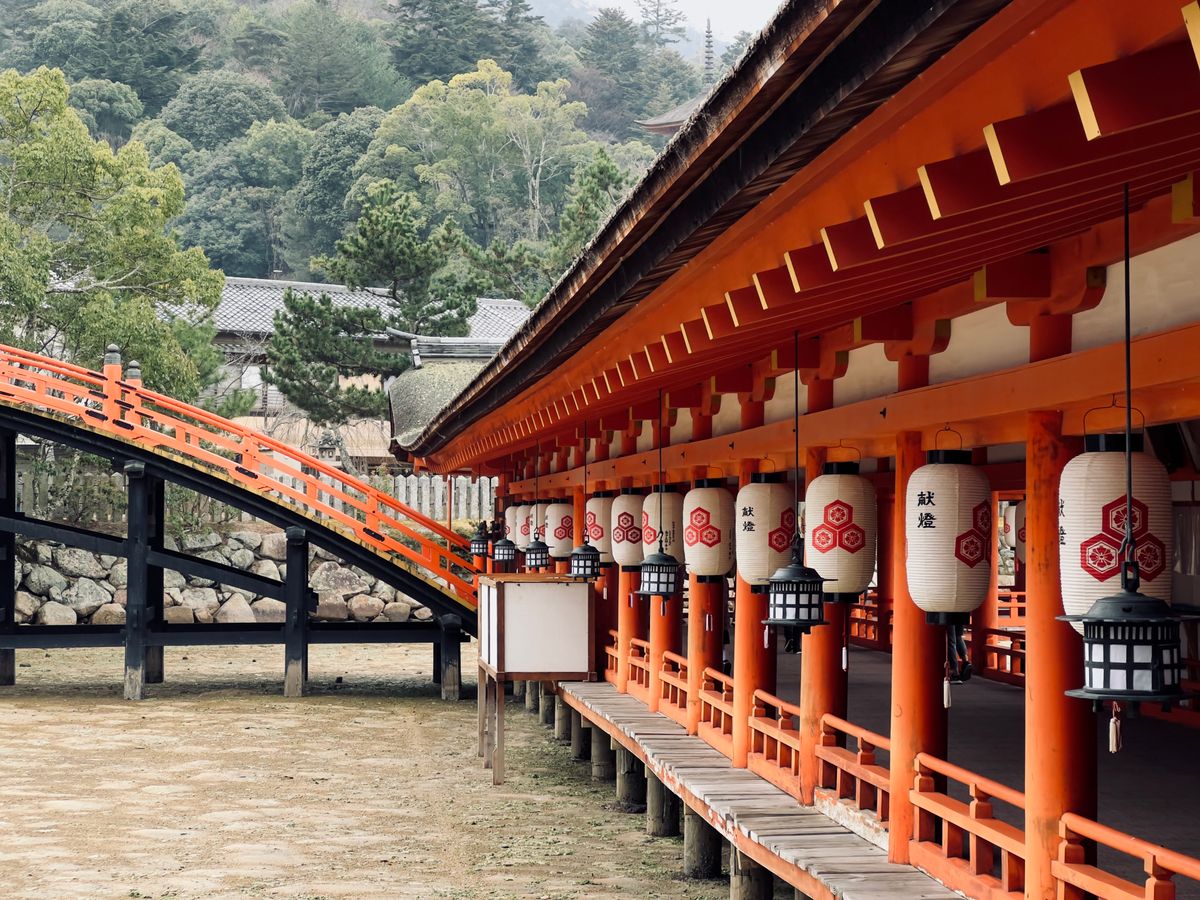
The shrine complex is designed to be walked in one direction, and the official route (posted on itsukushimajinja.jp) runs roughly like this:
- Omotesando shopping street – the arcade from the pier lined with shops, momiji-manju bakeries and grilled-oyster stalls; also where most deer congregate
- Shrine entrance (Konomura Gate) – buy your ticket here; combined Treasure Hall tickets are sold only at this gate
- Maroudo Shrine & Asazaya – the first hall and open-air pavilion inside the entrance
- East Corridor → Main Shrine (Honsha) – the central worship hall enshrining the three goddesses; the best “floating” views over the water are from here at high tide
- Daikoku Shrine & Tenjin Shrine – smaller subsidiary shrines along the West Corridor
- Soribashi Bridge & Noh Stage (Nogakudo) – Japan’s only Noh theater built over the sea, still used for the annual Noh festival
- Exit & Otorii viewpoint – the shoreline just past the exit is the classic photo spot looking back at the gate
- Senjokaku & the Five-Story Pagoda – a short uphill walk from the exit (see below)
Miyajima’s Sacred Deer
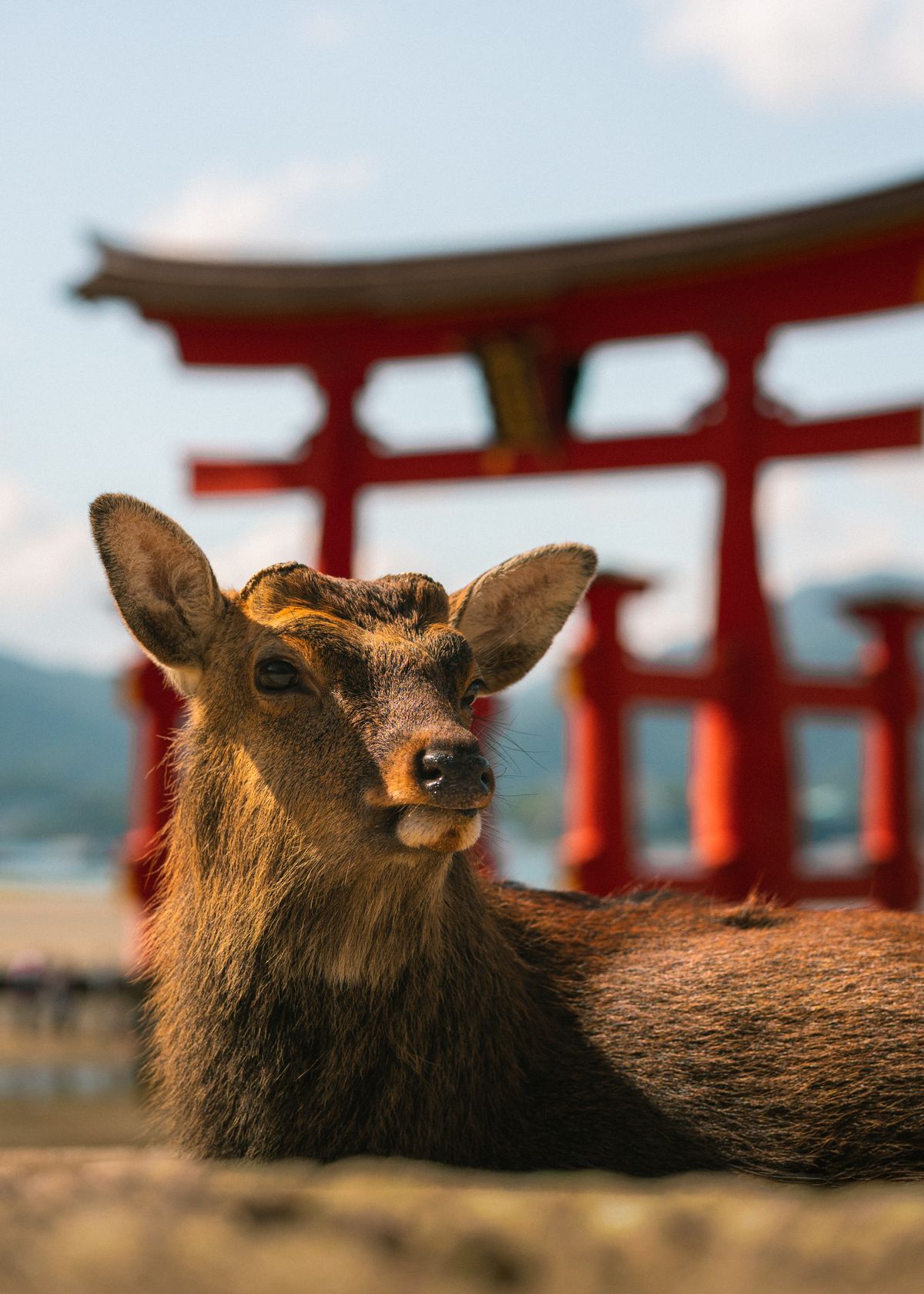
Alongside the torii, Miyajima’s other icon is its wild sika deer, which have lived on the island for centuries and were traditionally revered in Shinto belief as messengers of the gods. Around 500 roam the island today, and you’ll meet them mostly around Omotesando and the shrine approach. Unlike Nara’s deer, feeding Miyajima’s deer has been prohibited since 2008 to protect their health and keep them wild – don’t offer them food, maps or paper (they will try to eat it), and avoid touching them.
Senjokaku and the Five-Story Pagoda
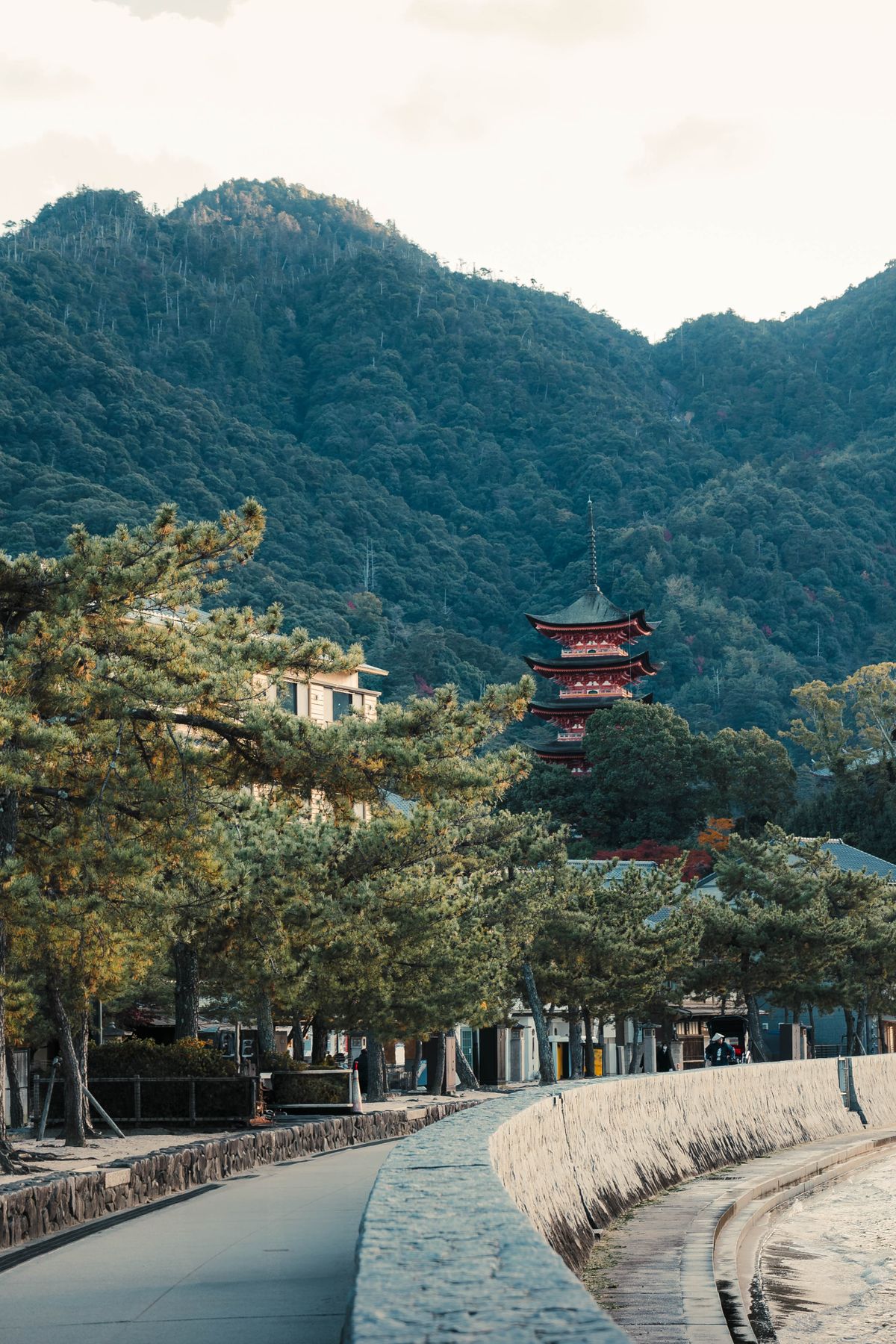
On the hill just past the shrine exit stands Senjokaku (“Pavilion of a Thousand Mats”), officially Hokoku Shrine – a huge, unfinished wooden hall commissioned in 1587 by warlord Toyotomi Hideyoshi to pray for fallen soldiers. It was left without walls or a ceiling at his death and remains open-sided today, giving sweeping views over the shrine roofs to the sea. Right beside it rises the vivid Five-Story Pagoda (Gojunoto), built in 1407, blending Japanese and Chinese architectural styles. Both are separate from the main shrine ticket and make an easy 10-minute add-on.
Where to Stay
Most visitors day-trip from Hiroshima, but staying overnight on Miyajima is one of the best upgrades you can make – it lets you see the Otorii lit up after dark and quiet again at sunrise, once the day-trippers are gone. Ryokan near the shrine and waterfront put you within a five-minute walk of everything; if island lodging is booked up or over budget, central Hiroshima (near the station or Peace Park) keeps you close to the JR line and ferry.
Practical Tips
- Check the tide table for your exact date before you go – it determines whether you’ll see the “floating” gate or the walk-out-to-the-base experience.
- Arrive early morning or stay overnight to avoid the midday crowds around the Otorii viewpoint.
- The Miyajima Ropeway up Mt. Misen (Seto Inland Sea views) pairs well with a shrine visit – bookable via the widget above.
- Grilled oysters and momiji-manju (maple-leaf cakes) from Omotesando stalls are the local snacks to try.
- Cash is still useful for small stalls and the ferry visitor tax, though IC cards are accepted on both ferry lines.
Frequently Asked Questions
Is Itsukushima Shrine worth visiting?
Yes – it’s one of Japan’s most iconic sights and one of the Three Views of Japan; most visitors rank it among the highlights of a Hiroshima trip.
Do I need to book tickets in advance?
No, tickets are sold at the shrine entrance gate; no advance booking is required for general admission.
Is it better to visit at high tide or low tide?
Both are worthwhile and completely different: high tide gives the “floating” postcard view, low tide lets you walk out to the Otorii’s base. Check the same-day tide table and, if you have time, try to see both.
How do I get from Hiroshima to Miyajima?
Take the JR Sanyo Line from Hiroshima Station to Miyajimaguchi (about 25-30 minutes), then the JR or Matsudai Kisen ferry (about 10 minutes) to Miyajima Pier.
Can I feed the deer?
No – feeding the deer has been banned since 2008 to protect their health.
Final Word
Itsukushima Shrine earns its reputation the moment you step off the ferry: a vermilion shrine floating over the tide, framed by forested mountains, with wild deer wandering the approach and a giant torii gate that somehow looks just as striking in photos as it does in person. Time your visit around the tide table, budget an extra hour for Senjokaku and the pagoda, and – if you can – stay the night to see the gate lit up after the crowds leave.
This post contains affiliate links. If you book or buy through them, we may earn a small commission at no extra cost to you.
Related Guides
- Best Things to Do in Hiroshima
- Top 100 Places to Visit in Japan
- Senso-ji Temple (Asakusa) Travel Guide
- Fushimi Inari Taisha Travel Guide
🎟️ Book Tours, Activities & Food Experiences
Search and book top attractions, tours and food experiences on Klook — official best price, instant confirmation.
Klook.com