Last updated: July 23, 2026. Disclosure: this guide contains affiliate links — if you buy through them we may earn a small commission at no extra cost to you. Fares and rules change, so always confirm on official sources before you travel.
Seoul has one of the world’s best subway systems: fast, spotless, cheap, and signed in English at every station. This guide covers the one card you need (T-money), 2026 fares, how to ride step by step, and the free official Seoul Metro app built just for foreign travelers — plus a few smart-travel services that make a Seoul trip easier and safer.
Meet “Seoul Subway” — the free official app for foreign travelers
In April 2023 Seoul Transportation Corporation (Seoul Metro) launched “Seoul Subway”, Korea’s first subway app made specifically for foreign residents and tourists. It is free, works in English, and covers the entire Seoul and Greater Seoul metro network. If you download one app before your trip, make it this one.
Search by where you want to go — not the station name
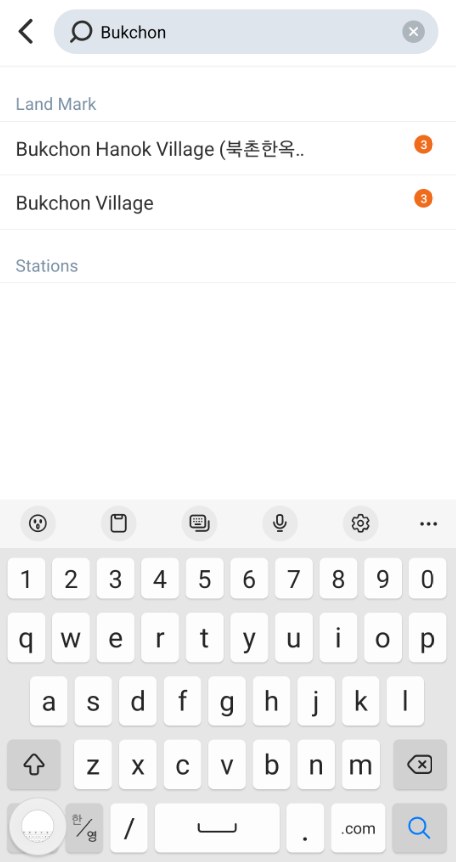
You don’t need to know Korean station names. Type a landmark — say Bukchon — and the app finds the nearest station and builds a route from your current location, which it fills in as your start automatically.
Fastest route with travel time, transfers and fare
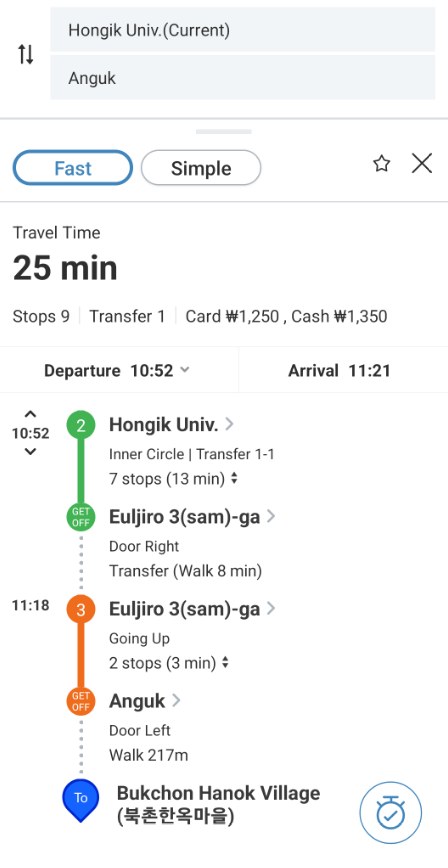
Each result shows total time, number of stops, exactly where to transfer, which exit to leave from, and the card/cash fare for the trip — so there are no surprises at the gate.
Which direction? The app knows where you are standing
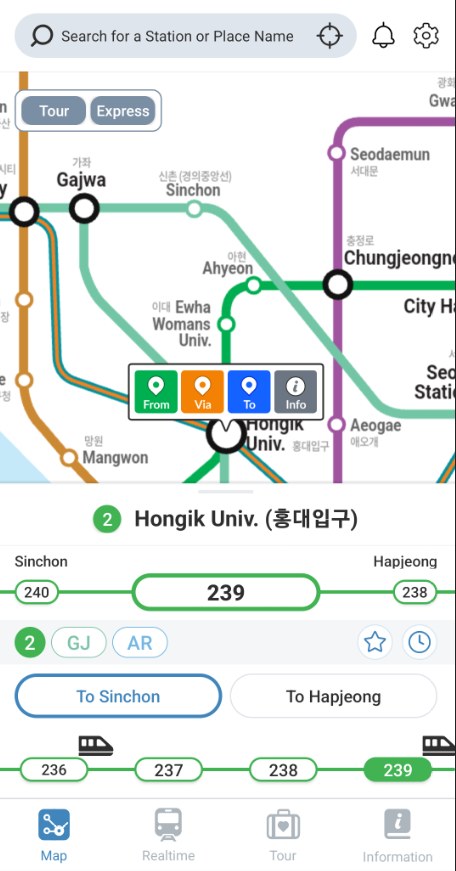
On the platform, the app uses your location to tell you which direction train to board. Get on the wrong way after a transfer and it sends a “wrong direction” alert so you can hop off at the next stop.
Step-by-step navigation inside big stations
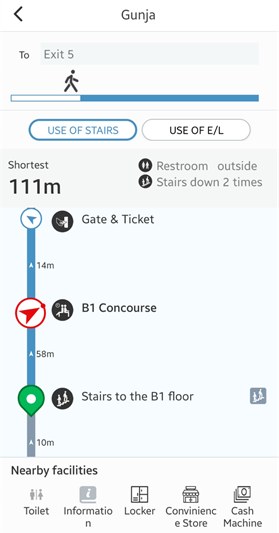
For the 14 stations most used by foreign visitors — including Gunja, Hongik University, Myeong-dong and Itaewon — the app maps the walking route to the right exit, a restroom, lockers, a convenience store or the ticket gate, floor by floor.
Skip the crowded car — and find things to do
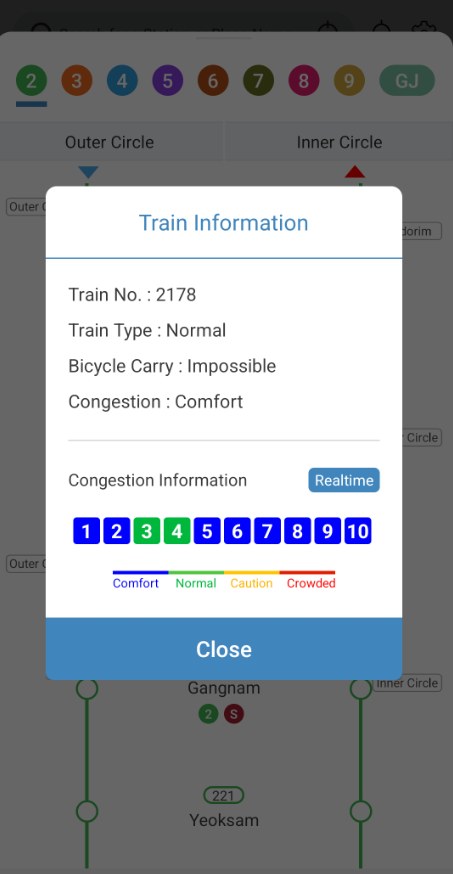
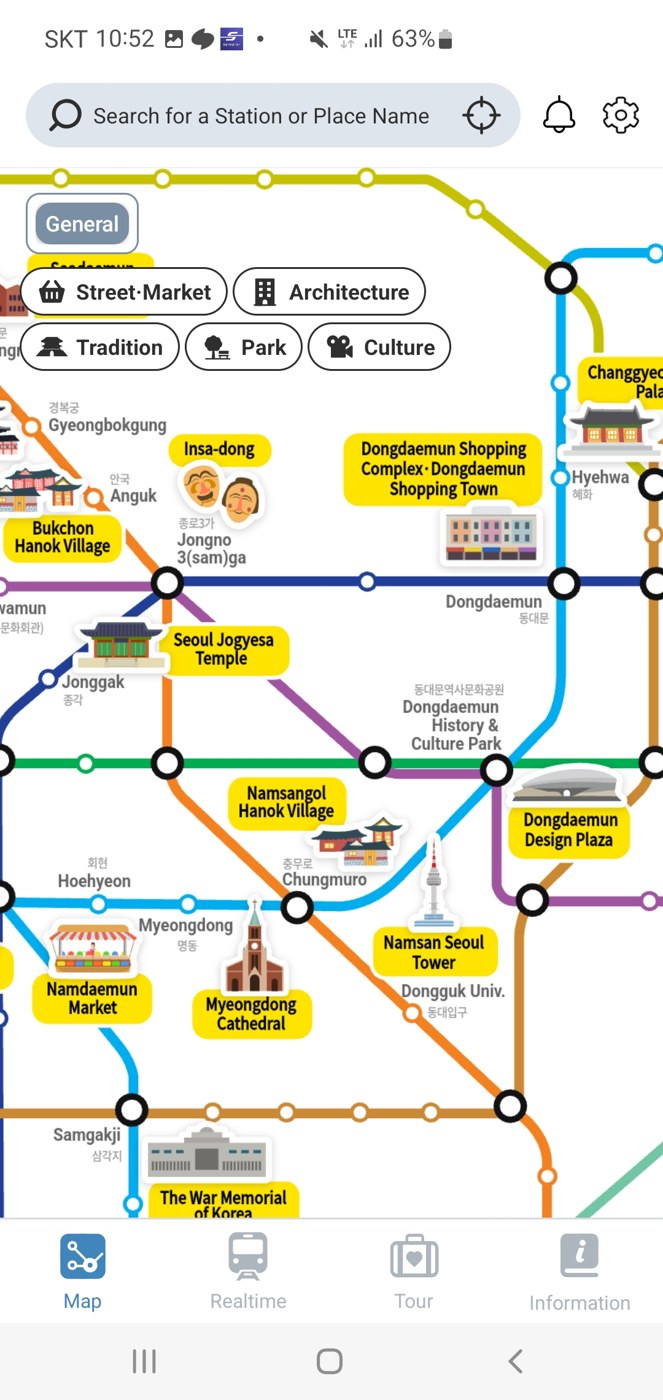
Select an approaching train to see car-by-car congestion (comfortable / normal / crowded) and pick a quieter carriage. A built-in tourist subway map highlights around 30 major attractions and shows which station each is nearest to.
Seoul subway fares (2026)
Fares below are from Seoul’s official tourism site (VisitSeoul), checked July 13, 2026. Prices can change — reconfirm before you travel. Paying with a transport card (T-money) is cheaper than a single-journey ticket and lets you transfer between subway and bus for free within the time window.
| Rider | Transport card (T-money) | Single-journey ticket |
|---|---|---|
| Adult (19+) | ₩1,400 (≈ $0.9) | ₩1,500 (≈ $1.0) |
| Youth (13–18) | ₩800 (≈ $0.5) | ₩1,500 (≈ $1.0) |
| Child (6–12) | ₩500 (≈ $0.3) | ₩500 (≈ $0.3) |
Base fare covers roughly the first 10 km. After that a distance surcharge applies: +₩100 per 5 km from 10–50 km, and +₩100 per 8 km beyond 50 km. A few lines charge a separate premium — the AREX express independent section (Cheongna–Incheon Airport), the Sinbundang Line (Sinsa–Gwanggyo), Yongin EverLine and the Uijeongbu LRT. Trains run about 05:30 to midnight (varies by station), and every station is signed in Korean, English and Chinese.
T-money: the one card that pays for everything
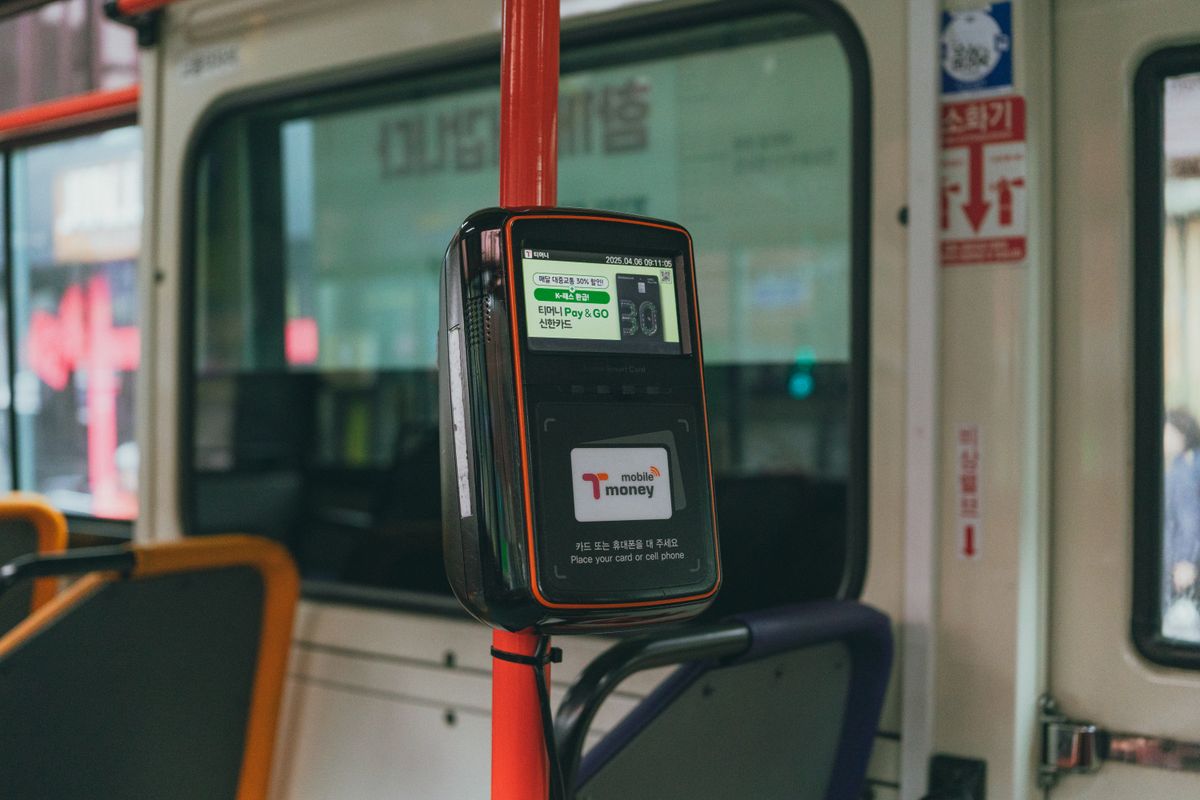
T-money is a rechargeable tap card that works on the subway, city buses, most taxis and even convenience stores nationwide. Buy a blank card (a few thousand won) at any convenience store (GS25, CU, 7-Eleven) or station machine, then top it up with cash at the same machines or counters. Tap in and out; unused balance is refundable at convenience stores (small fee). Prefer to skip the queue? Reserve a card or a Seoul pass online and pick it up on arrival:
How to ride, step by step
With a T-money card: tap the card reader at the gate to enter, follow the color-coded signs to your line, transfer inside the paid area if needed, and tap out at your destination — the exact fare is deducted automatically.
With a single-journey ticket: at the ticket machine choose the English menu → “Single Journey” → your destination → number of passengers, then pay. A ₩500 deposit is added; get it back by inserting the card into the Deposit Refund machine after you exit.
Smart & safe travel in Seoul
Seoul’s official tourism site partners with several apps and services that make getting around easier and safer (VisitSeoul, “Seoul Smart Travel”):
- Getting a taxi: use a hailing app (Kakao T is the standard) so your destination is set in Korean and the fare is estimated up front.
- Restaurants: reserve or join a remote waitlist with CatchTable; order in for delivery with Creatrip (supports several languages).
- Multilingual help: the 1330 Korea Travel Hotline gives free 24/7 travel help and interpretation in English, Chinese, Japanese and more — save it before you go.
- Mobile Passport & smart services: Seoul is rolling out mobile-passport check-in and even autonomous-shuttle trials for visitors.
- Emergencies: dial 112 (police) or 119 (fire/ambulance); both handle English.
Seoul’s subway is very safe, but keep the usual habits: mind the gap, stand right on escalators, give up the clearly marked priority seats, and use the women-only or safety carriages late at night if you prefer.
T-money & Seoul Subway Prices at a Glance — as of July 23, 2026 (USD)
Subway base fare (T-money card, first ~10km)
| Rider | T-money fare | ≈ USD |
|---|---|---|
| Adult (19+) | ₩1,550 | ≈ $1.0 |
| Teen (13–18) | ₩900 | ≈ $0.6 |
| Child (6–12) | ₩550 | ≈ $0.4 |
| Single-journey ticket (adult, no card) | ₩1,650 | ≈ $1.1 |
T-money card & passes
| Item | Cost |
|---|---|
| Blank T-money card (non-refundable card fee) | ₩2,500 (≈ $1.7) |
| Balance top-up | ₩1,000–90,000 per load (max ₩500,000/day) |
| T-money Mpass, 1-Day (unlimited rides) | ₩15,000 (≈ $10.1) |
| T-money Mpass, 3-Day | ₩30,500 (≈ $20.6) |
| T-money Mpass, 7-Day | ₩64,500 (≈ $43.6) |
| Discover Seoul Pass / WOWPASS | Varies by duration — check current price |
Fares and pass prices can change by season, policy and provider — always confirm the current price before you book or travel (checked July 23, 2026).
Book your trip with live prices
Frequently Asked Questions
Do I need cash for the Seoul subway?
Barely. A T-money card covers transit, and most shops take cards. Keep a little cash for small vendors.
Is the “Seoul Subway” app really free?
Yes — it’s the official Seoul Metro app for foreign visitors, free on the App Store and Google Play.
How much is the Seoul subway now, and did fares go up?
Yes. The adult base fare rose to ₩1,550 with T-money (₩1,650 for a paper single-journey ticket) after the June 2025 fare increase — about $1.0 and $1.1 respectively at current exchange rates.
How much does a T-money card cost, and can I get a refund?
A blank card costs ₩2,500 at any convenience store or station machine. Unused balance is refundable at convenience stores for a small fee, or at T-money headquarters for larger amounts; the card fee itself is non-refundable.
Does T-money work on buses and taxis, not just the subway?
Yes. T-money works on the subway, city buses, most taxis and many convenience stores nationwide, with free transfers between subway and bus within 30 minutes of tapping out.
What’s the difference between T-money and the Discover Seoul Pass?
T-money is a pay-as-you-go transit card. The Discover Seoul Pass bundles transport credit with free or discounted entry to 100+ attractions, which is better value if you plan to sightsee heavily.
🎟️ Book Tours, Activities & Food Experiences
Search and book top attractions, tours and food experiences on Klook — official best price, instant confirmation.
Klook.com