This post contains affiliate links. If you book or buy through them, we may earn a small commission at no extra cost to you.
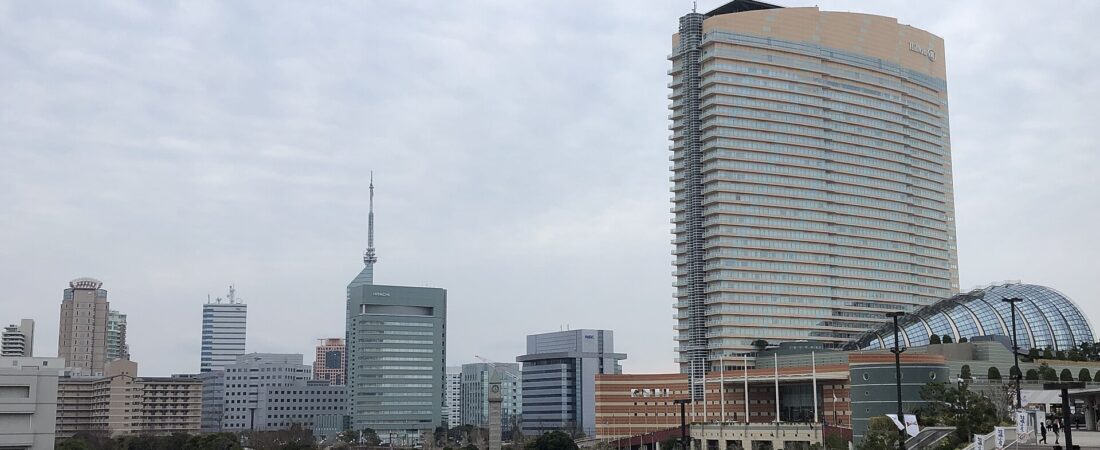
Fukuoka is the biggest city on the southern island of Kyushu and one of Japan’s fastest-rising destinations. In 2024 it drew a record 3.9 million foreign arrivals through Fukuoka Airport and Hakata Port, making it the country’s sixth most-visited prefecture and its fastest-growing major destination. Compact, relaxed, and obsessed with good food, Fukuoka offers big-city energy without Tokyo-scale crowds, plus an airport just five minutes from downtown. This 2026 guide covers the best things to do, what to eat, easy day trips, how to get around, and where to base yourself.
Book Tours & Activities in Fukuoka
Why Visit Fukuoka in 2026
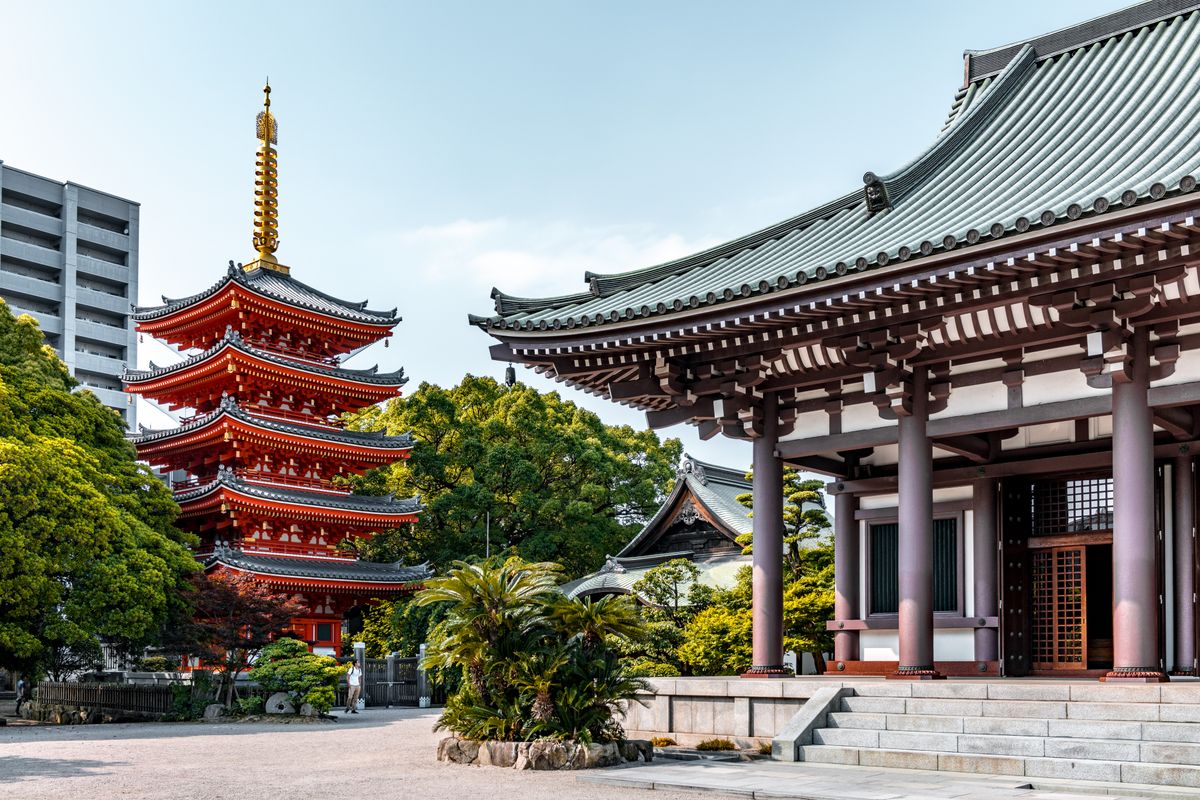
Fukuoka packs a lot into a small footprint. You can land, drop your bags, and be eating a bowl of ramen within half an hour. The city pairs modern shopping districts and a breezy seaside with centuries-old shrines and one of Japan’s most famous street-food cultures. It is also the natural gateway to the rest of Kyushu, with the shinkansen and Nishitetsu railways fanning out to hot-spring towns, castle towns, and coastal scenery. Two to three days is enough to enjoy the core sights at a comfortable pace, and the flat, walkable center makes it easy for first-time visitors.
Please read before you book: Prices below were checked on 16 July 2026 from official and booking sources. Admission fees and fares change over time — treat these as a planning baseline and confirm the live price on the official site or the booking widget below before you go.
| Item | Price (adult) | Notes | Checked / source |
|---|---|---|---|
| Kyushu National Museum admission | ¥430 (≈ $2.7) | Under-18 and 70+ free; university students ¥130. Special exhibitions cost extra. | Jul 2026 · kyuhaku.jp (official) |
| Fukuoka Tower observation deck | ¥1,000 (≈ $6.2) | High-school age and up; closed for maintenance 29–30 June 2026 | Jul 2026 · fukuokatower.co.jp (official) |
| Fukuoka City Subway 1-day pass | ¥640 (≈ $3.9) | Unlimited rides on all subway lines for one day | Jul 2026 · subway.city.fukuoka.lg.jp (official) |
| Dazaifu Tenmangu shrine | Free | Main shrine grounds are free; the Treasure Hall and Kanko Historical Museum charge separately | Jul 2026 · city.dazaifu.lg.jp (official) |
| Ohori Park & Fukuoka Castle ruins (Maizuru Park) | Free | Park and castle ruins are free; the Japanese Garden inside Ohori Park has a separate small paid admission | Jul 2026 · confirmed free entry to park/ruins |
| Canal City Hakata / Ramen Stadium | Free entry | No admission fee; pay per ramen bowl ordered | Jul 2026 · canalcity.co.jp (official) |
Best Things to Do in Fukuoka
Stroll Ohori Park and the Fukuoka Castle Ruins
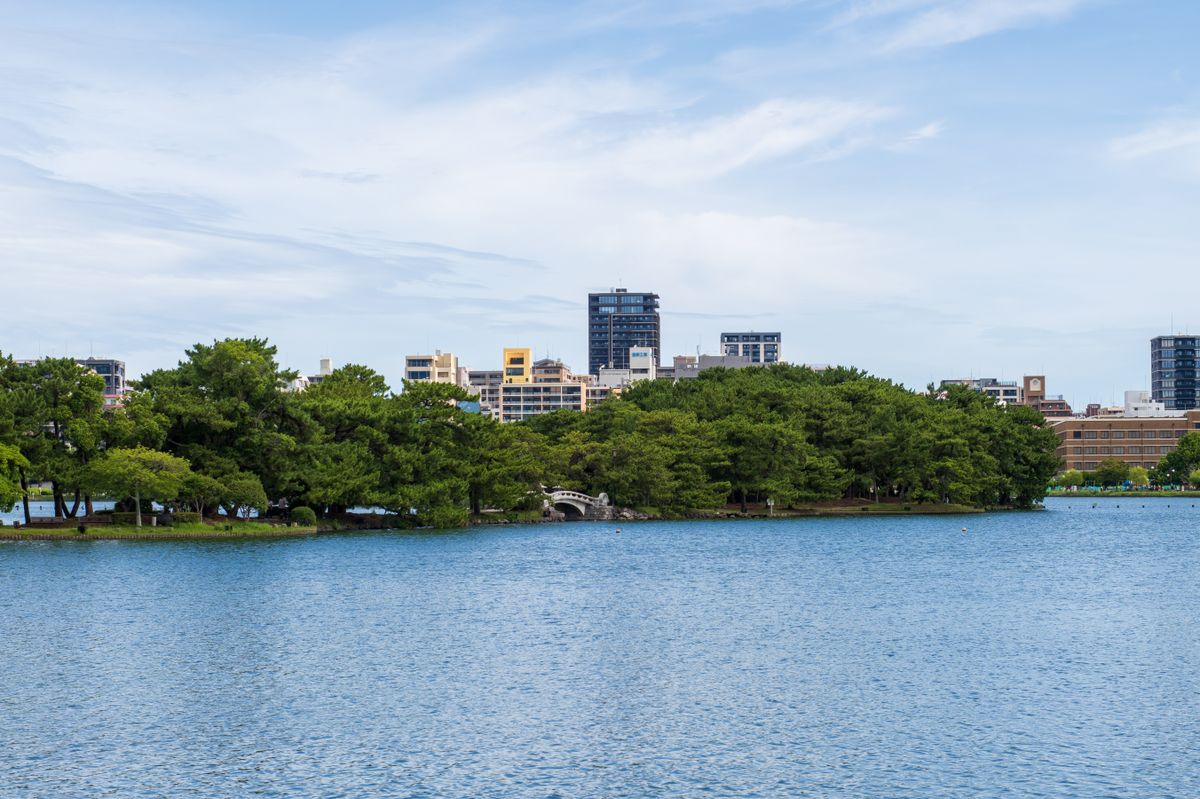
Ohori Park is the green heart of the city, built around a large lake that was once part of the moat of Fukuoka Castle. A flat two-kilometer path loops the water, crossing stone bridges between small islands, and you can rent swan boats for a leisurely paddle. Next door, the traditional Japanese garden and the stone walls and turrets of the Fukuoka Castle ruins (Maizuru Park) are especially beautiful during the late-March cherry blossom season. It is an easy, free way to spend a morning and a quick subway ride from the center.
Pay Your Respects at Dazaifu Tenmangu
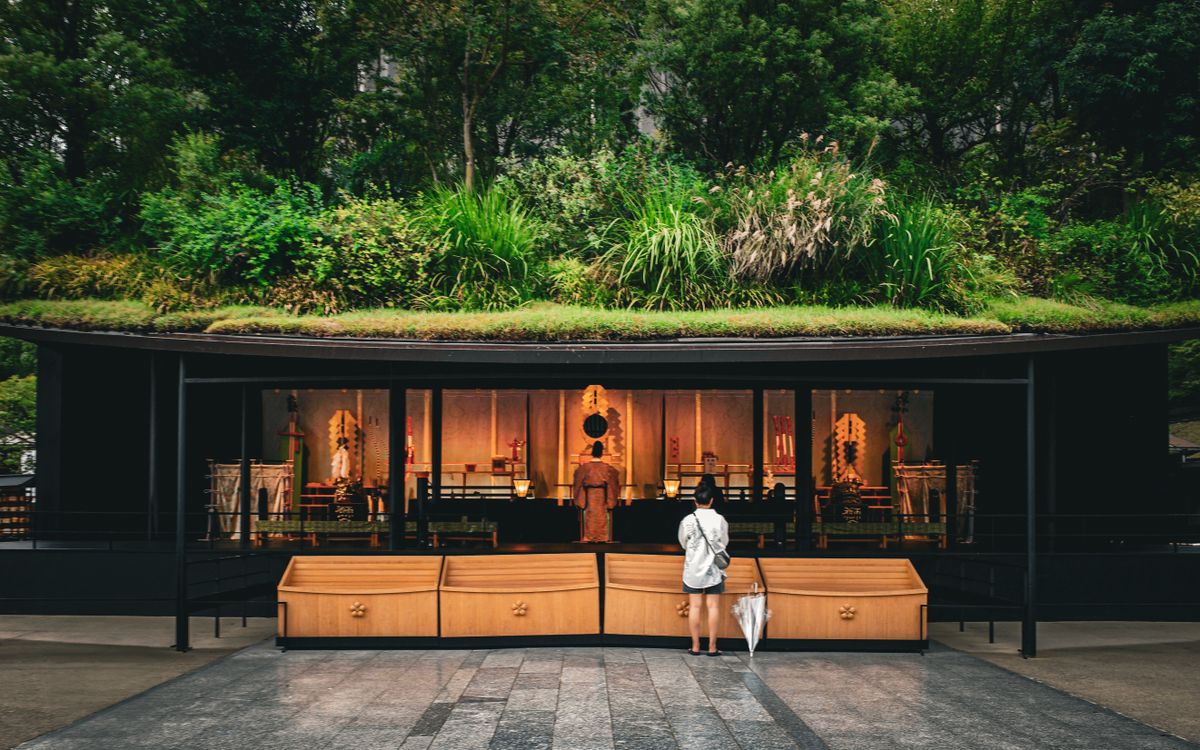
About 30 minutes from Tenjin by Nishitetsu train, Dazaifu Tenmangu is a 1,100-year-old shrine dedicated to the deity of learning, and one of Kyushu’s most important spiritual sites. Students come from across Japan to pray for exam success, and the grounds hold more than 6,000 plum trees that bloom in late February and early March. The approach street is lined with shops selling umegae mochi, a grilled rice cake stamped with a plum blossom. Don’t miss the striking, modern Kyushu National Museum a short walk uphill.
Shop and Slurp at Canal City Hakata

Canal City Hakata is a colorful shopping and entertainment complex built around a 180-meter artificial canal, with fountain shows on the hour. On the fifth floor, Ramen Stadium gathers eight regional ramen shops under one roof, so you can compare Hakata’s tonkotsu against styles from around the country. Even if you’re not shopping, the bold architecture and evening light-and-water shows make it worth a look, and it sits within walking distance of both Hakata Station and the Nakasu nightlife district.
Feel Old Hakata at Kushida Shrine
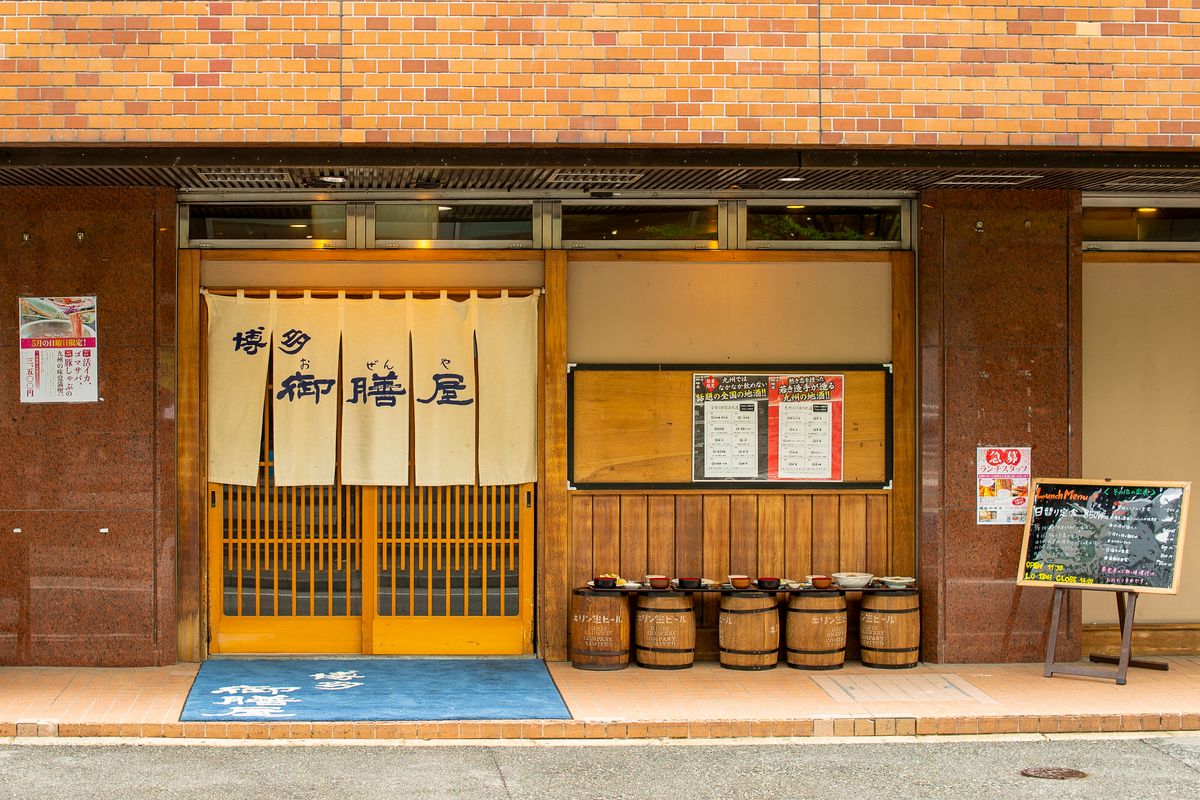
Tucked into the old merchant quarter, Kushida Shrine is the guardian shrine of Hakata and the spiritual home of the city’s famous summer festival, Hakata Gion Yamakasa. A towering, intricately decorated festival float is on display year-round, giving a sense of the July spectacle when teams race one-ton floats through the streets. The surrounding lanes, along with the nearby Hakata Machiya Folk Museum, are the best place to feel the city’s traditional, pre-modern character.
Take in the View from Fukuoka Tower and Momochi Seaside
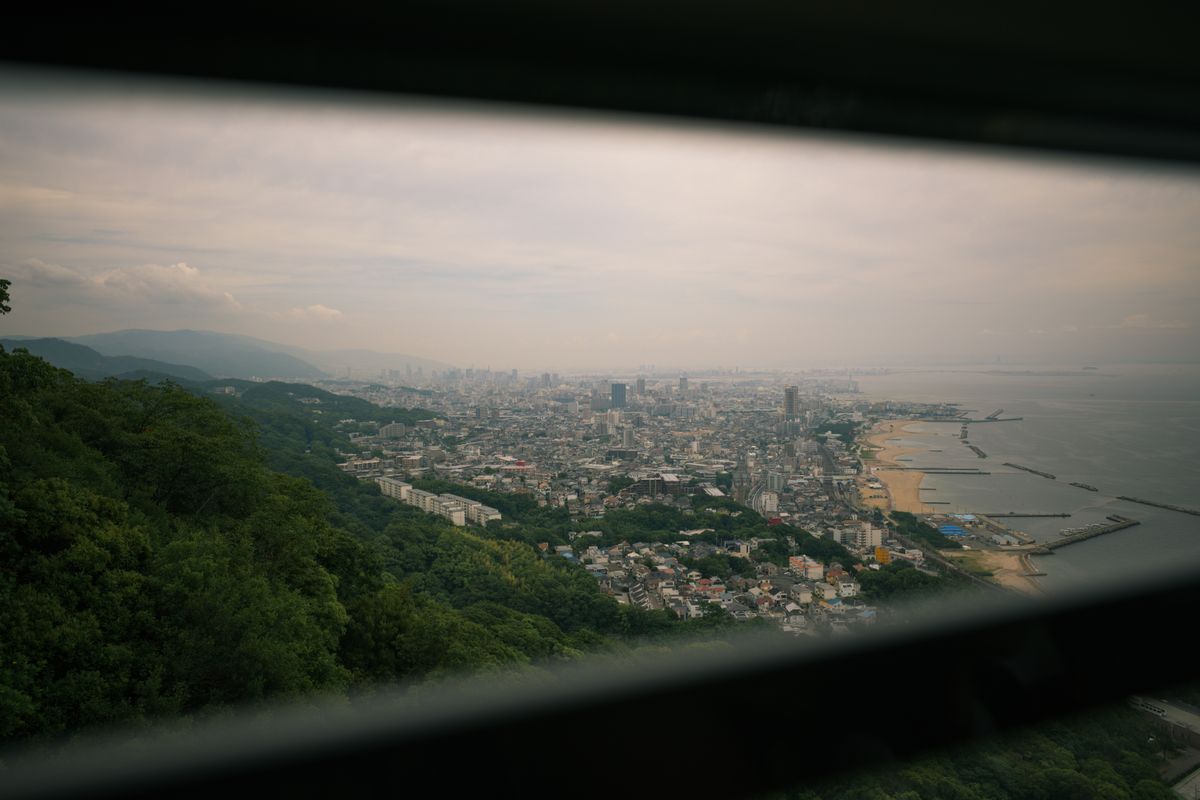
Out at the Momochi waterfront, the 234-meter Fukuoka Tower is the tallest seaside tower in Japan, with an observation deck offering sweeping views over the city and Hakata Bay, particularly at sunset. The surrounding Seaside Momochi district has a wide artificial beach, a boardwalk, and modern architecture, making it a pleasant place to walk in the late afternoon before the tower lights up after dark.
Eat at the Nakasu Yatai Food Stalls
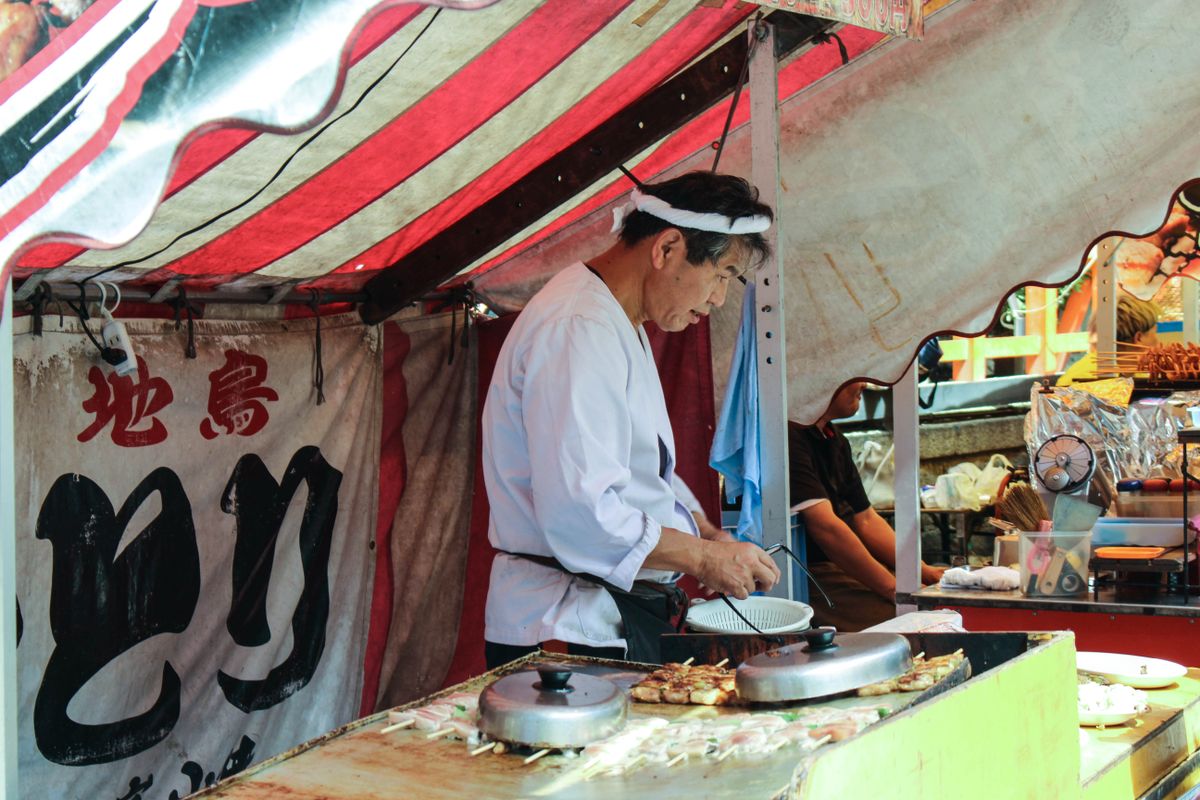
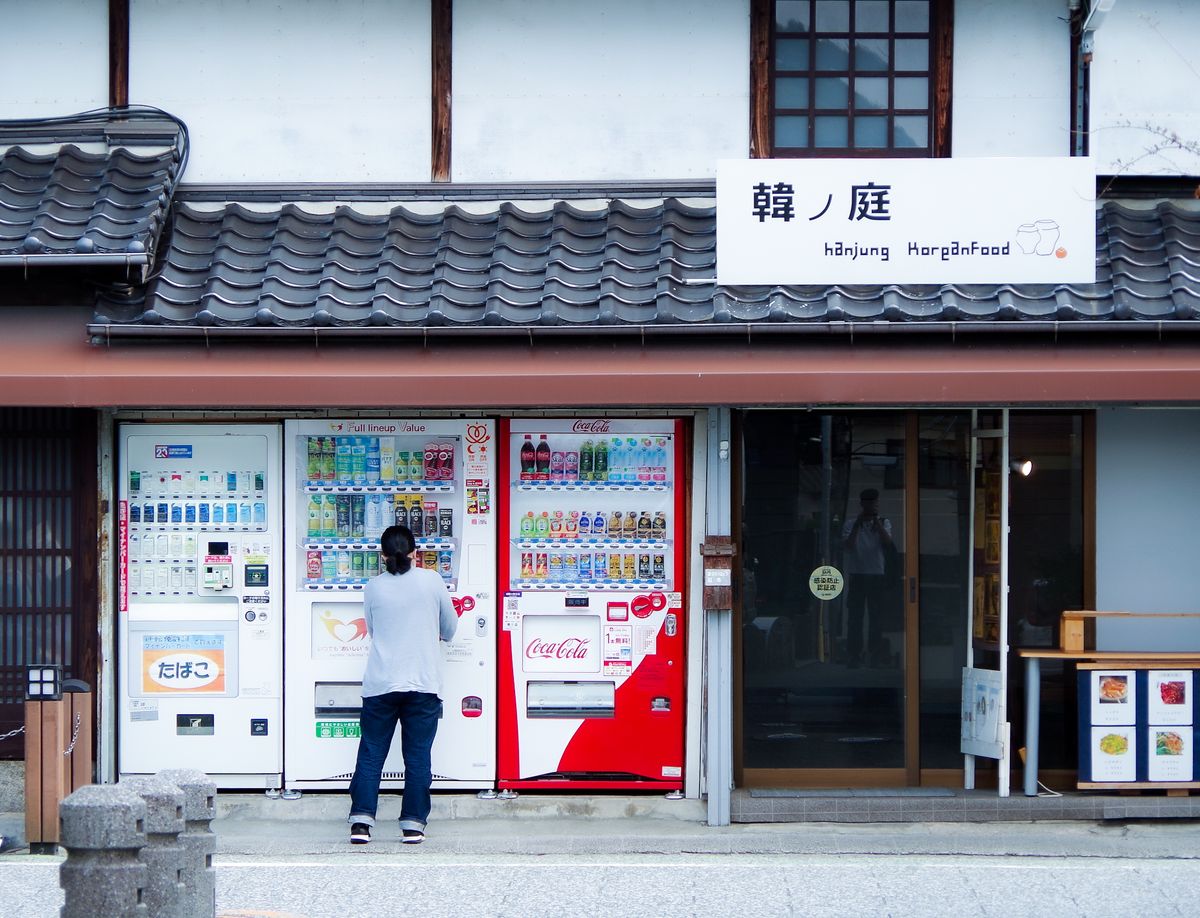
Fukuoka’s open-air yatai food stalls are a signature experience found nowhere else in Japan at this scale. Around 100 licensed stalls set up citywide each evening, clustered in three areas: the neon riverbank of Nakasu (the most atmospheric), the downtown streets of Tenjin, and the more local, working-class Nagahama. Pull up a stool for ramen, grilled skewers, oden, gyoza, and a beer, elbow to elbow with locals. Expect to spend roughly 2,000-3,000 yen per person. Stalls are cash-friendly and cozy, so go early on weekends to grab a seat.
What to Eat in Fukuoka
Fukuoka, historically known as Hakata, is widely considered one of Japan’s best food cities. These are the local specialties to seek out.
Hakata Ramen
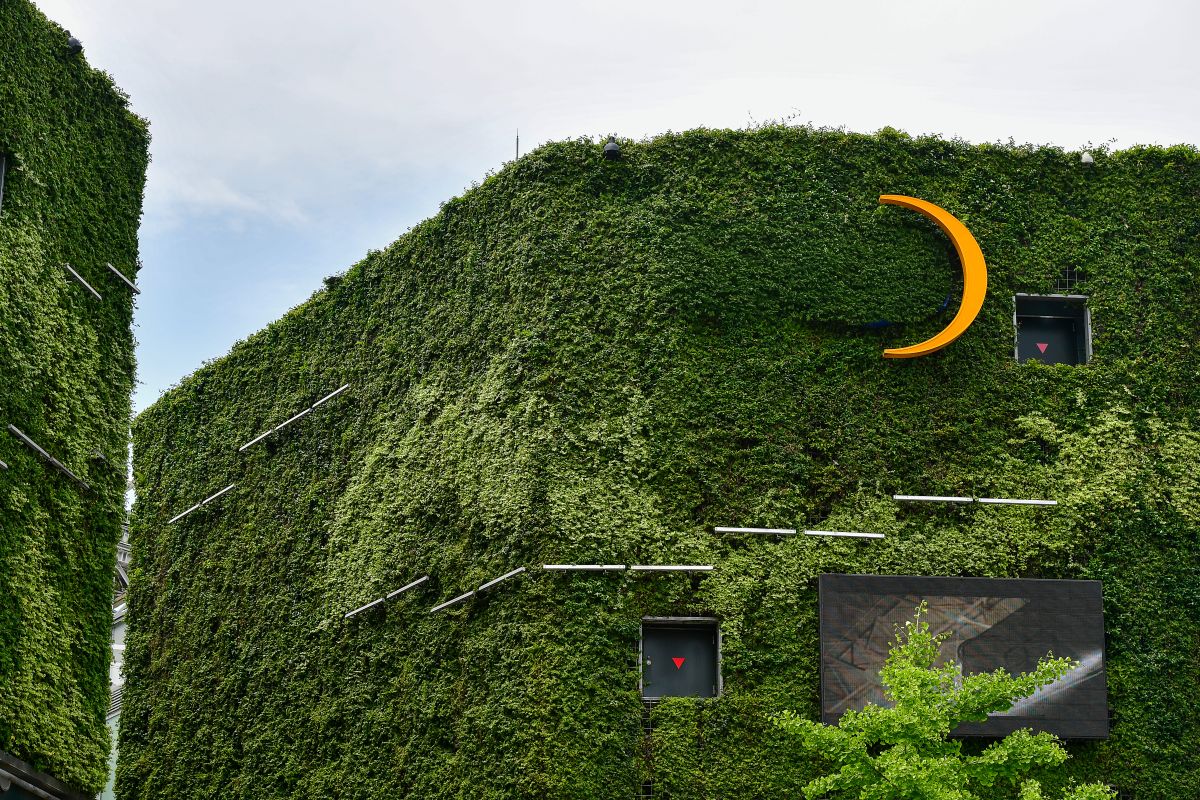
The city’s star dish is a rich, creamy tonkotsu (pork-bone) broth simmered for hours until milky white, served with thin, firm straight noodles. Order kaedama (an extra portion of noodles) to top up your bowl the way locals do.
Motsunabe
A comforting hot pot of beef or pork tripe, cabbage, garlic chives, and chili in a soy- or miso-based broth, cooked at your table. It is a winter favorite but served year-round.
Mentaiko
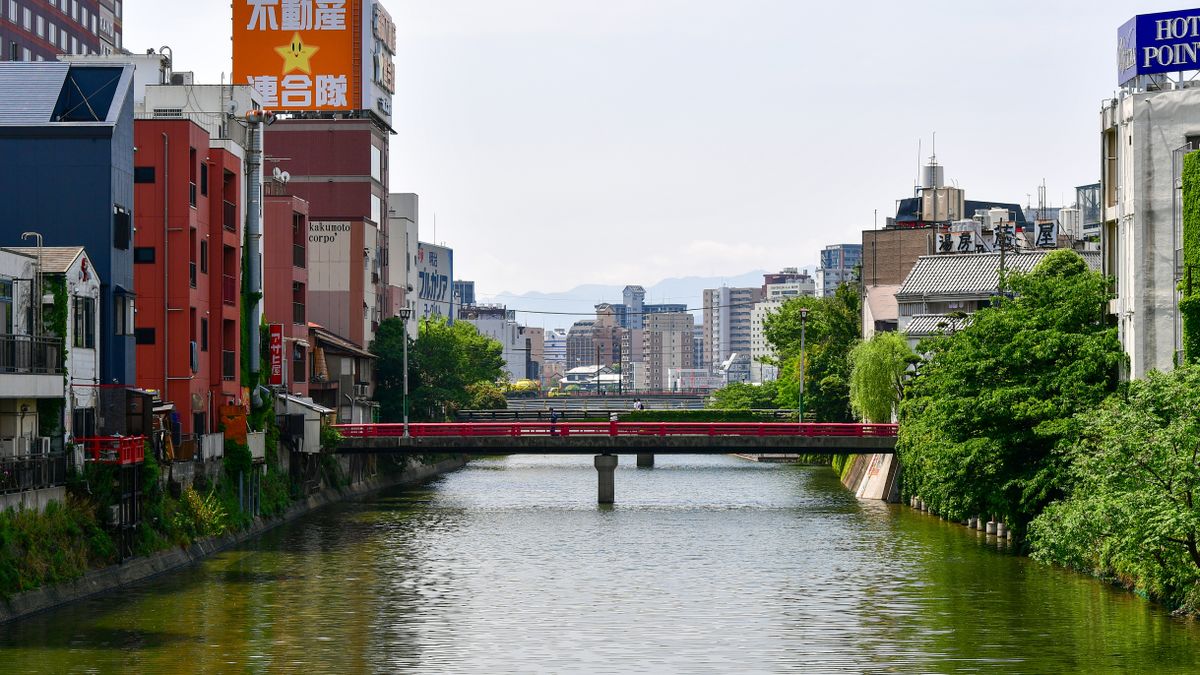
Spicy marinated cod roe that originated in Fukuoka by way of Korea. Eat it with rice, tucked into rice balls, or tossed through pasta; many shops sell beautifully packaged mentaiko as a souvenir.
Hakata Gyoza and Udon
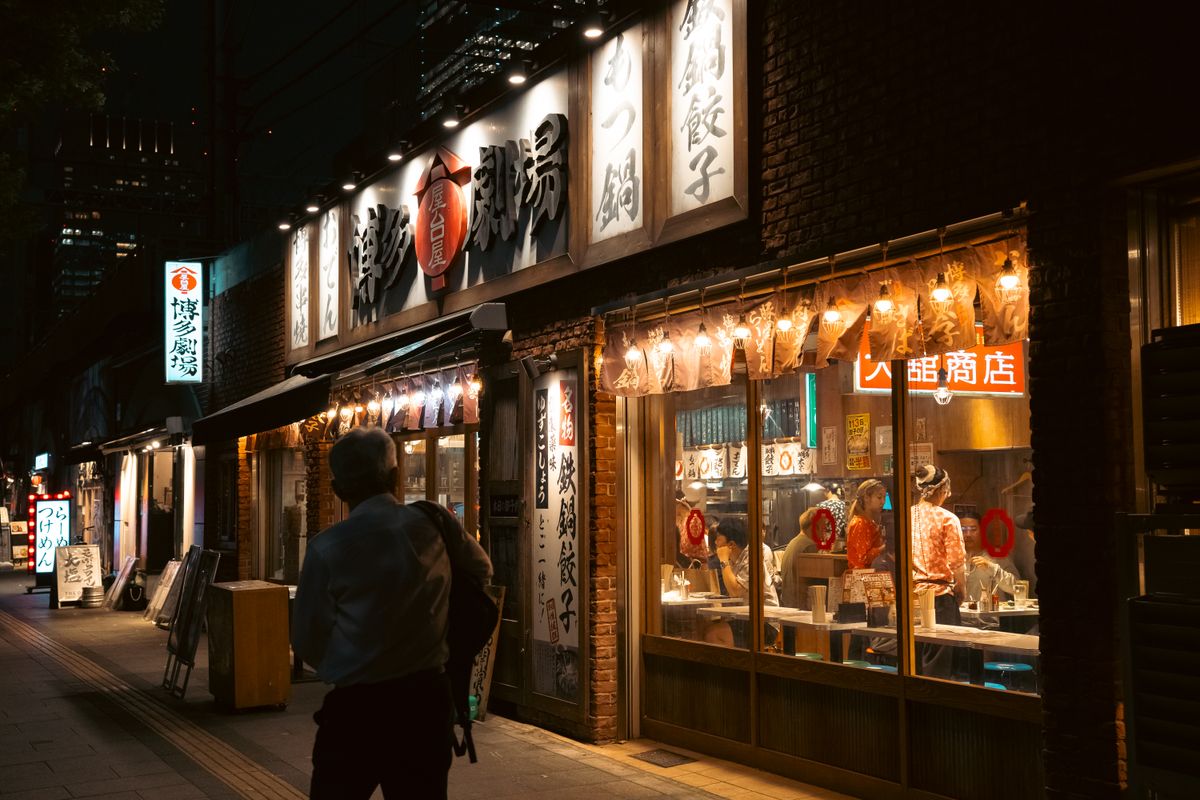
Fukuoka’s bite-sized gyoza are pan-fried in large batches and served sizzling on hot plates. Locals also love soft, comforting Hakata-style udon, which many say was first introduced to Japan here.
Best Day Trips from Fukuoka
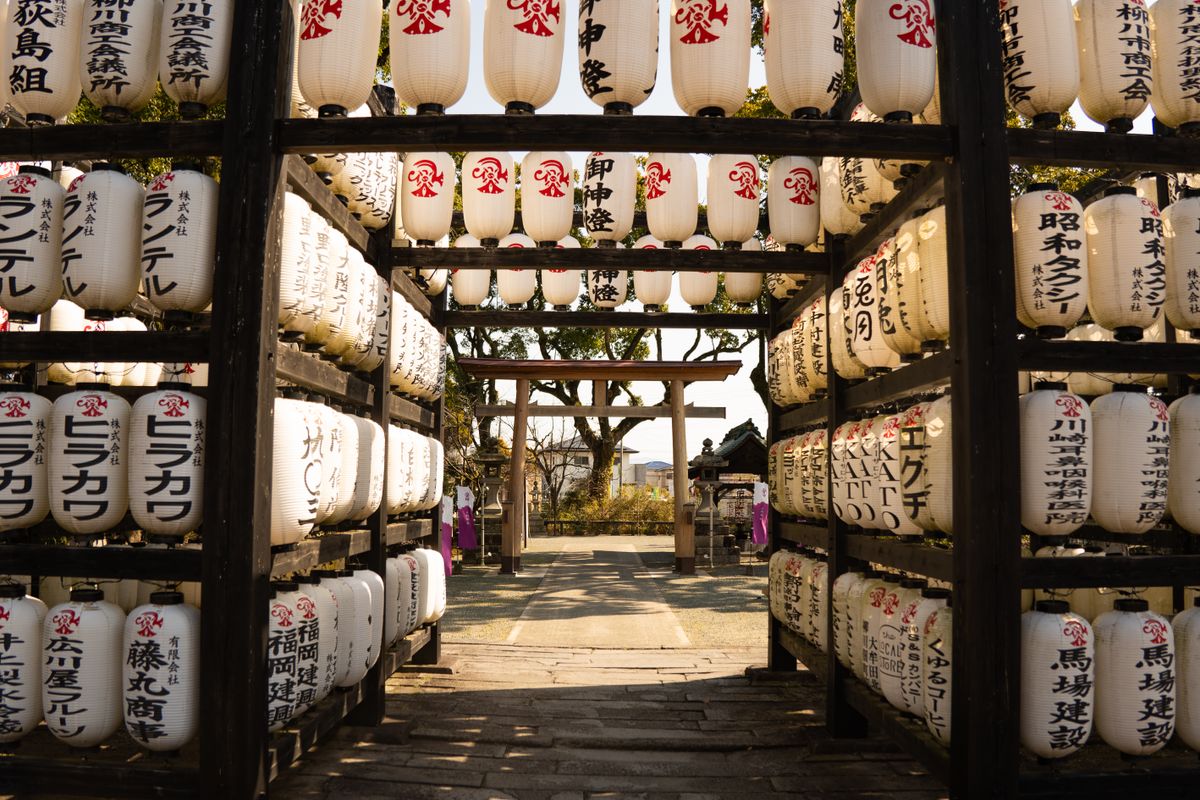
Itoshima
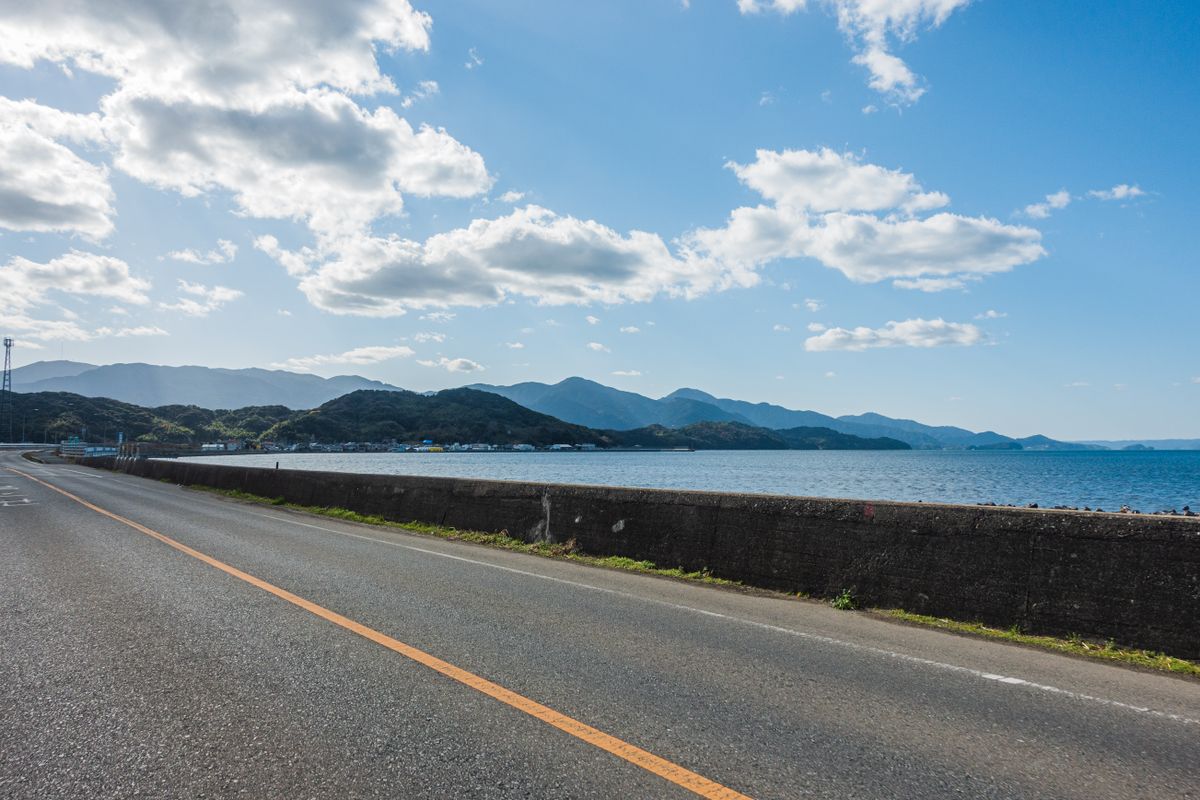
Nicknamed the “Hawaii of Fukuoka,” this coastal peninsula 40 minutes west of the city is dotted with cafes, seaside swings, the wedded rocks at Futamigaura, and the Shiraito Waterfall. It is best explored by rental car or on a half-day tour.
Yanagawa
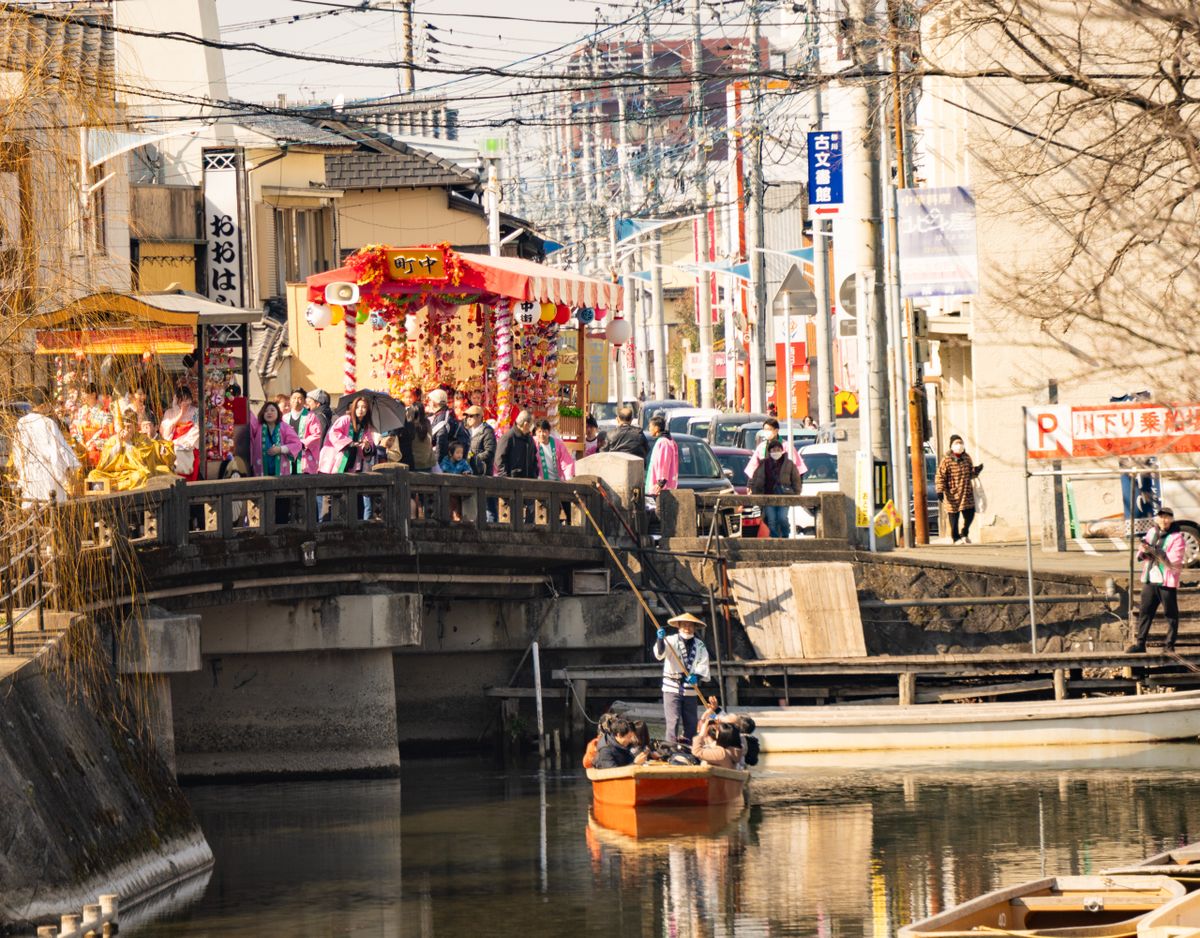
About 50 minutes south by Nishitetsu train, Yanagawa is a canal town nicknamed the “Venice of Kyushu.” Flat-bottomed donko boats punt visitors along willow-lined waterways past old merchant houses, and the town is famous for its grilled eel over rice.
Nokonoshima Island
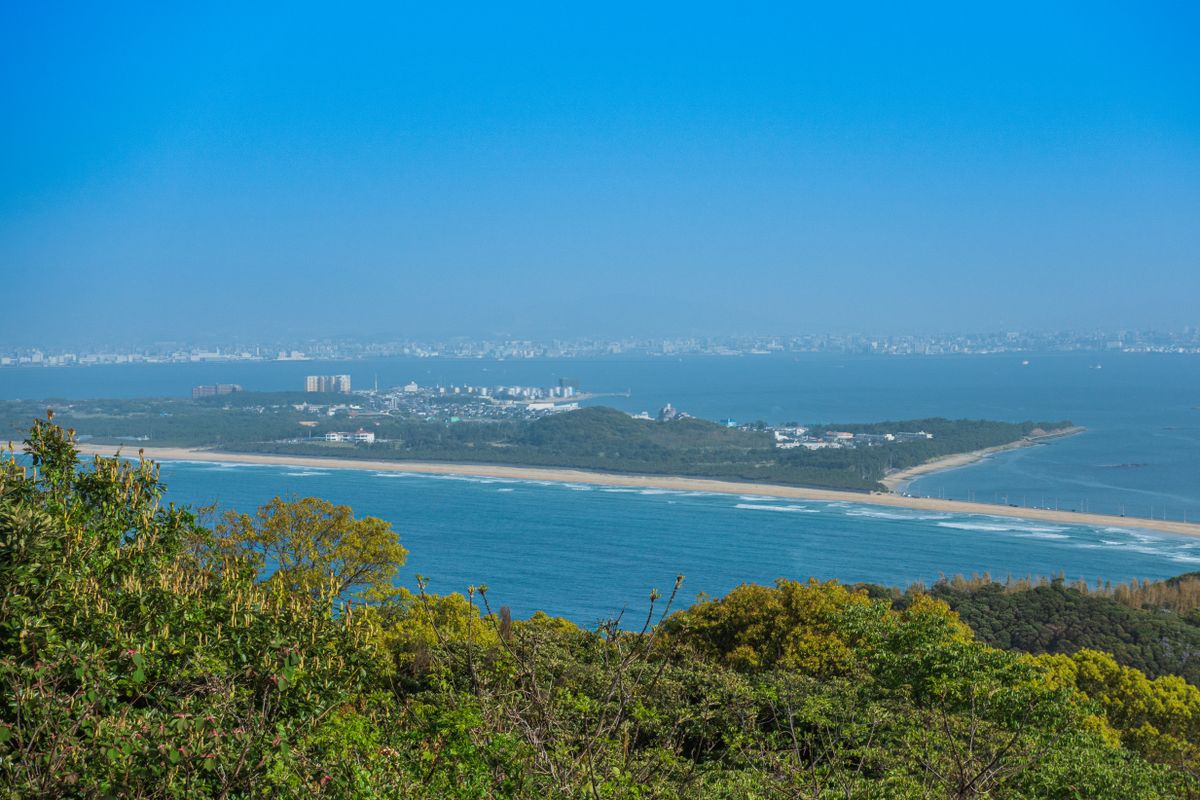
A quick 10-minute ferry from Meinohama leads to this laid-back island park, where seasonal flower fields blaze with canola in spring and cosmos in autumn. It is an easy, scenic half-day escape with bay views back toward the city.
Dazaifu
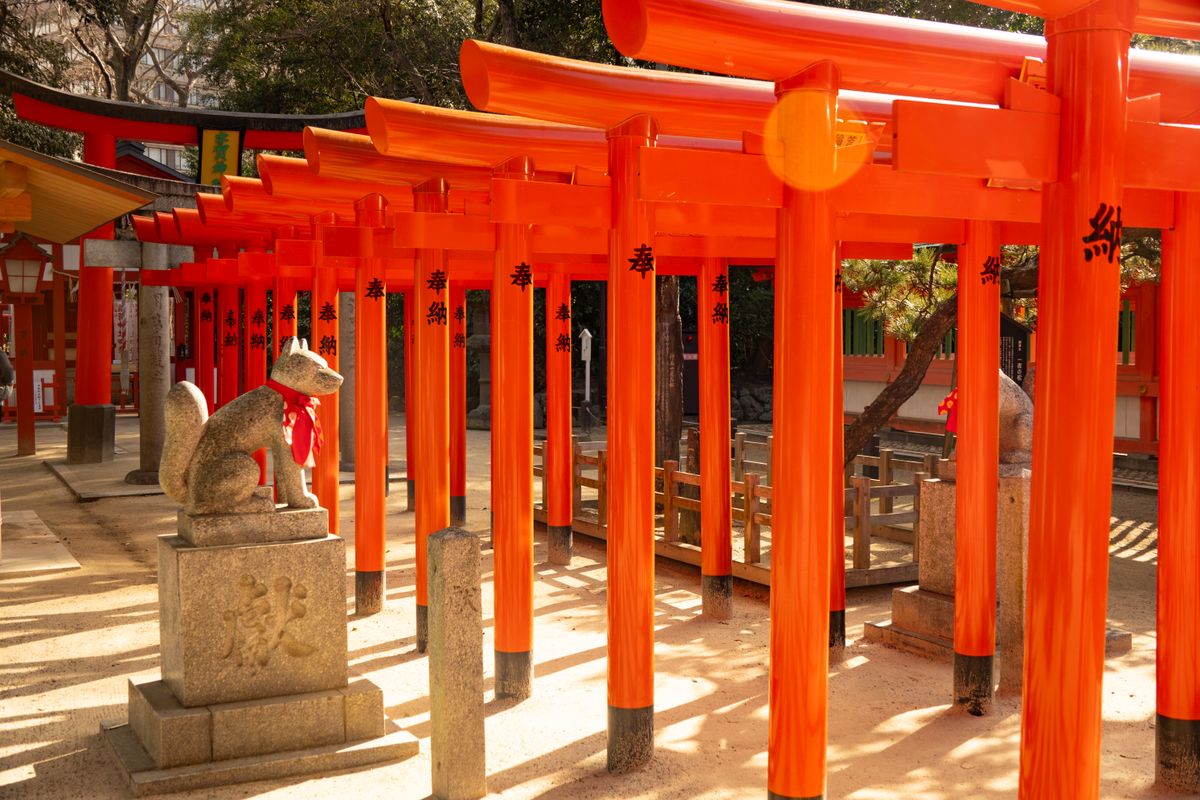
Covered above under things to do, Dazaifu also works perfectly as a relaxed half-day trip, easily combined with the Kyushu National Museum.
Getting Around Fukuoka
Fukuoka is one of the easiest Japanese cities to navigate. The Fukuoka City Subway is the backbone of local transit: the Kuko (Airport) Line links Fukuoka Airport to Hakata Station in about five minutes and to Tenjin in about eleven, running every few minutes. Because the airport is just two subway stops from downtown, transfers are effortless.
The private Nishitetsu railway, which departs from Nishitetsu-Fukuoka Station in Tenjin, is your route to day trips like Dazaifu and Yanagawa. Nishitetsu also runs an extensive, reliable bus network that reaches areas the subway misses, including the Momochi seaside. A rechargeable IC card (such as Suica, ICOCA, or the local Hayakaken) works across subways, buses, and trains, and can also be used at convenience stores. Tap in, tap out, and you are set.
Where to Stay in Fukuoka
Two central areas suit most visitors. Hakata, around the main station, is the most practical base, with the shinkansen, airport subway, and JR lines all converging there; it is ideal if you are arriving late, leaving early, or using Fukuoka as a hub for Kyushu day trips. Tenjin is the commercial and nightlife heart, packed with department stores, underground malls, restaurants, and the Nishitetsu railway for day trips. The two are one subway stop (or a 15-minute walk) apart, so either works well. Hakata leans slightly more toward business hotels and convenience, Tenjin toward shopping and evenings out.
Practical Tips for Visiting Fukuoka
Best time to visit: Spring (late March to April) brings cherry blossoms at Ohori and Maizuru parks, while autumn (October to November) is comfortably cool and clear. Summers are hot and humid, though the July Yamakasa festival is a spectacle if you can handle the heat.
How long to stay: Two to three days covers the city comfortably; add a day or two if you want to explore Kyushu more widely.
Money: Cards are widely accepted, but carry some cash for the yatai stalls, small shrines, and older shops. Convenience-store ATMs accept most foreign cards.
Connectivity: A travel eSIM or pocket Wi-Fi keeps you online for maps and translation; coverage across the city and on day trips is excellent.
Final Thoughts
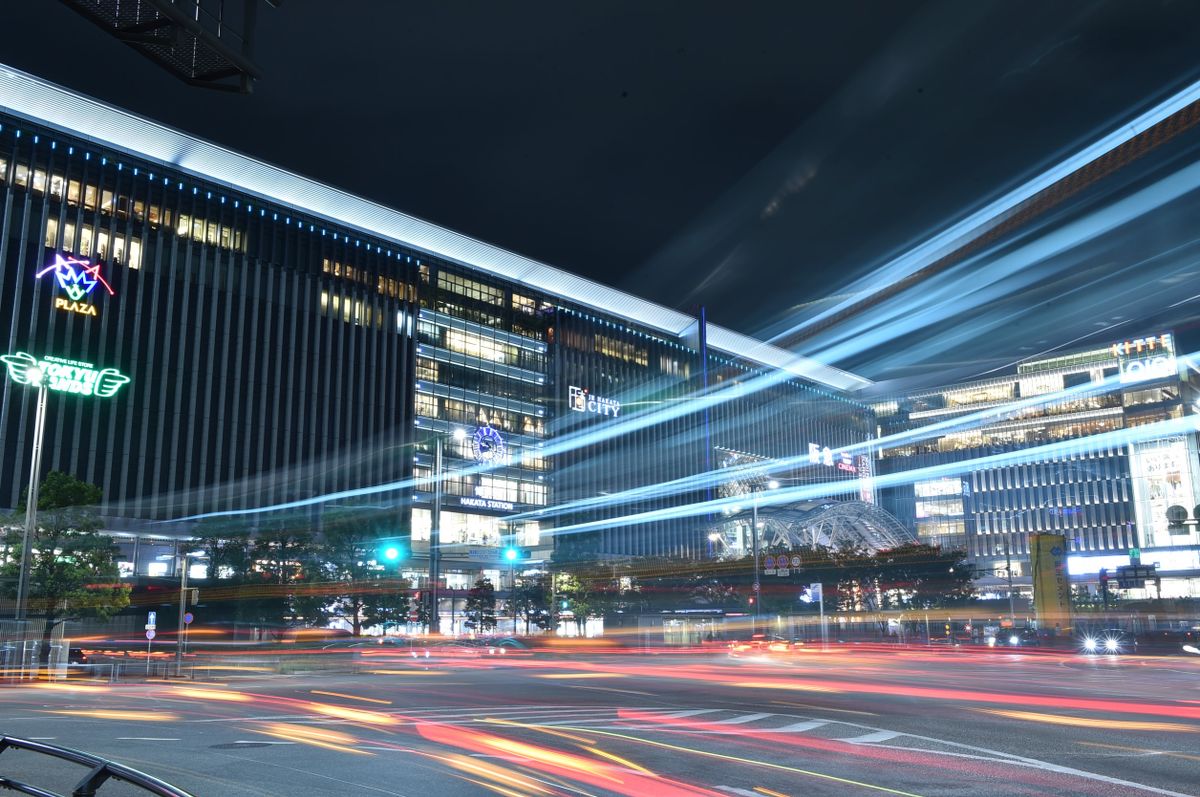
Fukuoka rewards travelers who value great food, easy logistics, and a friendly pace over sheer size. Spend your days at shrines, parks, and the seaside, your evenings at the glowing yatai stalls, and set aside a day for Dazaifu or the coast. With a record-breaking surge in visitors and an airport practically downtown, 2026 is a perfect time to see why Kyushu’s capital has become one of Japan’s most talked-about destinations.
This post contains affiliate links. If you book or buy through them, we may earn a small commission at no extra cost to you.
Related Guides
- Best Things to Do in Tokyo
- Best Things to Do in Nagasaki
- Best Things to Do in Tokyo
- Best Things to Do in Kanazawa
- How to Get and Use the JR Pass in Japan
- How to Ride Taiwan's High-Speed Rail
Related Guides
- Best Things to Do in Tokyo
- Best Things to Do in Nagasaki
- Best Things to Do in Tokyo
- How to Get and Use the JR Pass in Japan
- How to Ride Taiwan's High-Speed Rail
- How to Get from Narita and Haneda Airport to Central Tokyo
Related Guides
- Best Things to Do in Nagoya
- Best Things to Do in Kyoto
- Best Things to Do in Tokyo
- How to Get and Use the JR Pass in Japan
- How to Ride Taiwan's High-Speed Rail
- How to Get from Narita and Haneda Airport to Central Tokyo
🎟️ Book Tours, Activities & Food Experiences
Search and book top attractions, tours and food experiences on Klook — official best price, instant confirmation.
Klook.com