Last updated: July 2026
Disclosure: This post contains affiliate links. We may earn a commission if you book through them, at no extra cost to you. Hours and prices can change — always confirm on official sources before you visit.
Book Tours & Activities in Hahoe Folk Village
Skip the ticket-counter guesswork — here are a few ways travelers usually see Hahoe, from a straightforward day tour to a private KTX transfer.

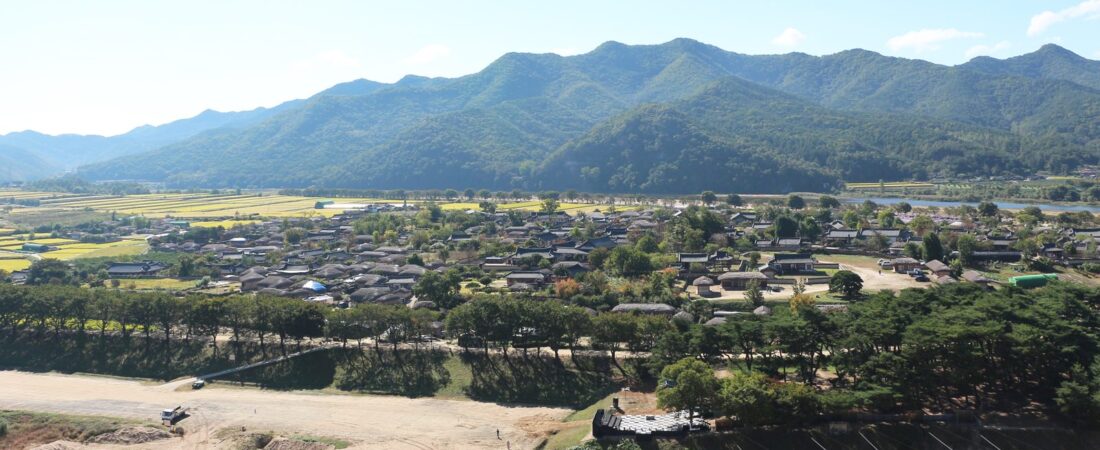
Hahoe Folk Village is the single most photographed reason to add Andong to a Korea itinerary, and for most visitors it also ends up being the highlight of the whole trip. If you are still mapping out the rest of the city, our Andong city guide covers where to eat, how to string together a full day, and how to get in and out by bus or train. This page focuses purely on Hahoe itself — what it actually costs, what you’ll see inside the gates, and how to avoid wasting half a day figuring out the shuttle bus.
A Little Context
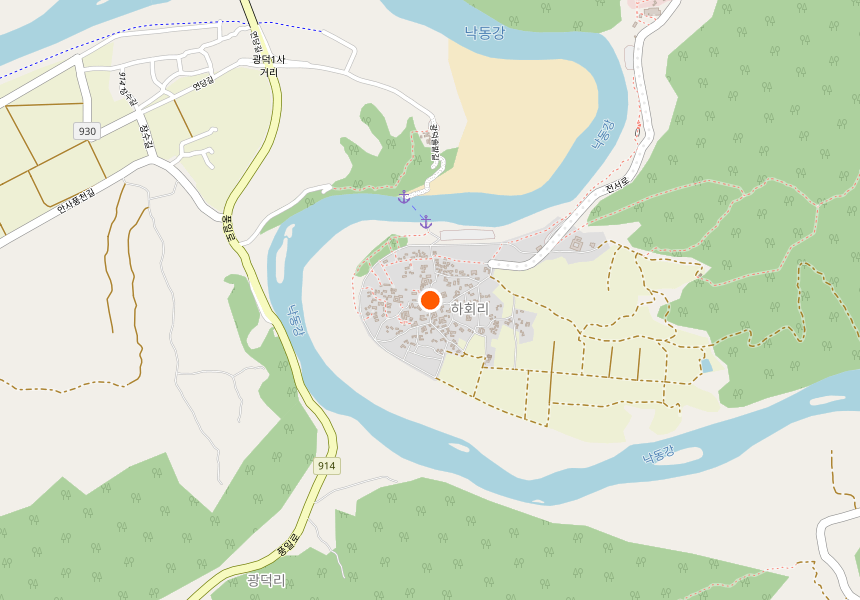
Hahoe means “river turning back,” and the name is literal — the village sits inside a near-360-degree loop of the Nakdong River, which curls around the settlement like a horseshoe and gives it a natural moat on three sides. That river geometry, combined with the surrounding low hills, is what feng shui readers in the Joseon dynasty called a textbook “auspicious site,” and it’s a big part of why the Pungsan Ryu clan (풍산 류씨) settled here roughly 600 years ago and never really left. Their descendants still live in many of the tile-roofed and thatched houses today, which is the detail that separates Hahoe from a folk museum — this is a working village, not a reconstruction.
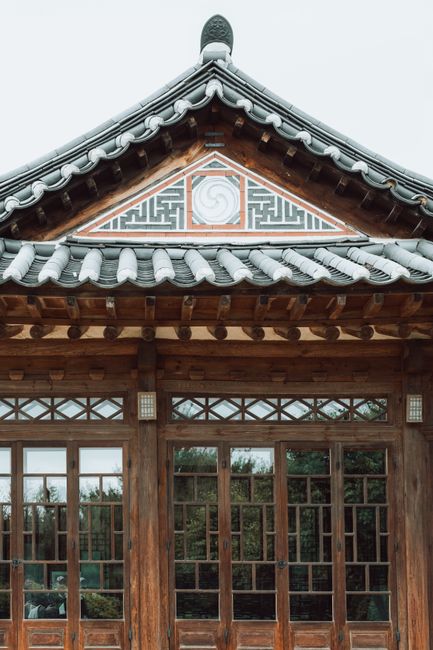
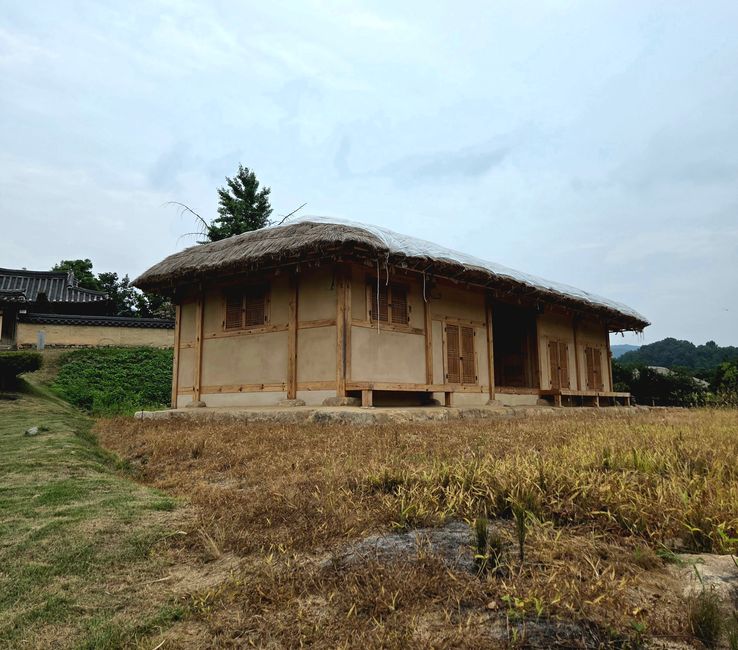
The clan’s most famous member is Ryu Seong-ryong (류성룡, 1542–1607), a scholar-official who rose to Chief State Councillor and helped steer Korea’s defense during the Japanese invasions of the 1590s. His family home, Chungyodang, and the adjacent Yeongmogak hall, which holds his writings and personal effects, are two of the more substantial buildings you can walk through inside the village. Alongside the Ryu family houses, Hahoe preserves a full cross-section of Joseon-era rural architecture: tile-roofed “gaok” homes that belonged to yangban (aristocratic) families, thatched “choga” homes that belonged to commoners and servants, narrow lanes of packed earth and stone walls, and communal wells that are still in use.
Hahoe is equally well known for a very different tradition — mask dance drama, or Hahoe Byeolsingut Talnori. Villagers have performed these satirical plays since at least the 12th century as part of a shamanistic ritual meant to keep the village safe and the harvest good. The wooden masks used in the ritual, called Hahoetal, are themselves designated a National Treasure of Korea, and the carved facial expressions — the leering aristocrat, the flirtatious young widow, the drunk monk — are instantly recognizable as one of Korea’s most-used cultural symbols, showing up on everything from tourism logos to snack packaging.
In 2010, UNESCO inscribed Hahoe together with Gyeongju‘s Yangdong Village under the joint listing “Historic Villages of Korea,” recognizing both as rare surviving examples of Confucian clan villages from the Joseon period. That listing is the reason Hahoe gets grouped with Gyeongju attractions in a lot of itineraries, even though the two towns are a couple of hours apart by car.
Quick Facts & Costs for 2026
💡 Prices checked on July 27, 2026. Admission fees are set by Andong City and rarely change mid-year, but always confirm the current rate on the official site before you visit.
| Category | Individual | Group (30+) |
|---|---|---|
| Adults (19–64) | ₩5,000 (≈ $3.4) | ₩4,000 (≈ $2.7) |
| Youths (13–18) & military | ₩2,500 (≈ $1.7) | ₩2,000 (≈ $1.4) |
| Children (7–12) | ₩1,500 (≈ $1.0) | ₩1,200 (≈ $0.8) |
| Under 6 / 65+ / disabled / national merit | Free | |
| Opening hours (Apr–Sep) | 09:00–17:30 daily | |
| Opening hours (Oct–Mar) | 09:00–16:30 daily | |
| Typical visit length | About 1 – 1.5 hours (longer if you linger) | |
| Closed days | None — open year-round | |
| Parking & shuttle | Both free | |
| Address | 2-1 Hahoejongga-gil, Pungcheon-myeon, Andong-si, Gyeongsangbuk-do | |
| Andong tourism info line | +82-54-840-3431 | |
A separate ticket covers the Hahoe Mask Museum near the entrance and the mask dance performances — see the “Mask Dance Performance” section below for that schedule, since it runs on its own calendar rather than the village’s general admission hours.
How to Get There

Hahoe sits about 24 km (a 30–40 minute drive) west of downtown Andong, and Andong itself sits roughly 3 hours from Seoul. There is no train station directly in the village, so almost every route funnels through Andong Station or Andong’s intercity bus terminal first.
| From | How | Approx. time |
|---|---|---|
| Seoul (Cheongnyangni / Suseo) | KTX/ITX train to Andong Station, then local bus or taxi to Hahoe | ≈3 hrs train + 40 min onward |
| Andong city center | City bus 46 from Andong Station/bus terminal area to Hahoe Folk Village stop | ≈40–50 min |
| Andong city center | Taxi (fastest, easiest with luggage) | ≈25–30 min |
| Village entrance to village core | Free shuttle bus from the visitor center parking lot (a short walk, not adjacent to the houses) | ≈5 min |
Bus 46 is infrequent — often close to hourly — so it’s worth checking Andong’s real-time bus information system before you plan around it, or simply build in extra buffer time. If you’re not renting a car, a day tour or the private taxi option above removes the guesswork entirely, since it bundles the Seoul–Andong transfer with the in-village logistics.
Must-See Highlights

Hahoe rewards slow walking more than a checklist, but a few stops are worth planning around:
Chungyodang & Yeongmogak — Ryu Seong-ryong’s family residence and the hall that houses his writings, robes, and personal artifacts. This is the closest the village gets to a formal “museum house,” and it’s usually open for a walk-through of the outer courtyard.
Yangjindang — one of the oldest and grandest houses in the village, built by an earlier generation of the Ryu clan and now a designated Treasure. Its raised wooden floor (daecheong) is a good example of how yangban houses were built to stay cool in summer.
The old pine grove & riverside path — a short walk from the village core to the bank of the Nakdong River, where the famous “meandering” shape of the water is easiest to appreciate at ground level.
Buyongdae Cliff — a rock cliff directly across the river from the village, reached by a short ferry crossing (weather- and water-level-dependent) or a longer walk/drive around. The view from the top, looking straight down at Hahoe cupped inside the river bend, is the single most iconic photo of the whole village and worth the detour if the ferry is running.
Hahoe Mask Museum — near the ticket gate, a compact but well-curated collection of Hahoetal masks and other Korean regional masks, useful context before or after watching a live performance.
Hahoe Mask Dance Performance

The Hahoe Byeolsingut Talnori performance is usually staged at a dedicated open-air theater near the village entrance (not inside the historic core itself), typically a few times a week rather than daily, with more frequent shows on weekends and during peak season. Schedules and ticket prices for the performance are set separately from general village admission and do change with the season, so check the official Andong tourism or Hahoe Village site for the current calendar before you build your day around it. If the timing doesn’t line up, the Hahoe Mask Museum near the entrance is a solid substitute for understanding the tradition, and several of the guided tours linked on this page include a scheduled viewing as part of the itinerary.
Map: Hahoe Folk Village at a Glance
Practical Tips
- Buy your ticket at the visitor center near the parking lot — the village core itself is a short shuttle ride or 15–20 minute walk further in.
- Wear shoes you don’t mind getting dusty; the lanes are packed earth and gravel, not paved.
- Spring (cherry blossoms along the approach road) and autumn (fall foliage) are the most popular — and most crowded — seasons. Weekday mornings are noticeably quieter than weekend afternoons.
- Many of the houses are still private residences. Photograph from the lanes and open courtyards, not through windows or doorways.
- Bring cash in small denominations — some snack stalls and the ferry to Buyongdae Cliff don’t always take cards.
- Pair Hahoe with nearby Byeongsan Seowon or Dosan Seowon (Confucian academies) if you have a car; both are a similar architectural era and roughly 20–30 minutes away.
- There’s minimal shade in the open parts of the village — bring a hat and water in summer, and layer up in winter since the river valley can be windy.
Where to Stay
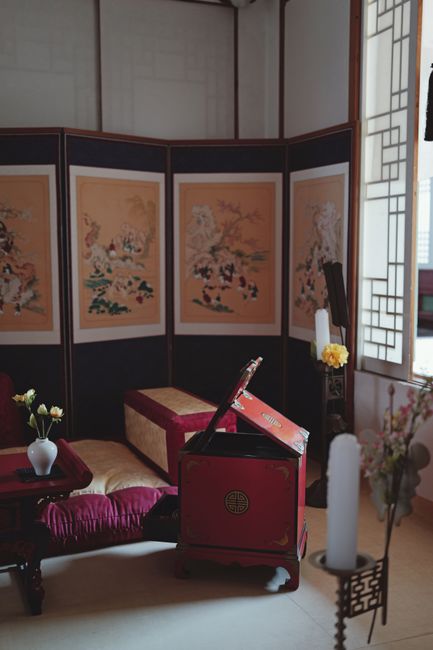
Most travelers see Hahoe as a half-day trip from Andong city center or as a stop on a longer Gyeongsangbuk-do loop, so staying in downtown Andong — close to the train and bus stations, restaurants, and the riverside Wolyeonggyo Bridge — is the easiest base. A smaller number of guesthouses and licensed homestays operate inside or near Hahoe itself, letting you experience the village after the day-trip crowds leave, though options are limited and simpler than a standard hotel room. Because Andong is a smaller city, hotel-search inventory here is thinner than in Seoul or Busan, so it’s worth comparing a few options directly rather than relying on a single site.
Frequently Asked Questions
Is Hahoe Folk Village worth the trip from Seoul?
If you have any interest in Korean history, Confucian architecture, or the mask dance tradition, yes — it’s the most complete surviving Joseon-era clan village in the country and a UNESCO World Heritage Site. The trade-off is time: budget a full day round-trip from Seoul, or stay overnight in Andong to make the most of it.
Do I need to book tickets in advance?
General village admission tickets are sold on-site and rarely sell out, so advance booking isn’t required for entry. If you specifically want to see the Hahoe Byeolsingut Talnori mask dance performance, check the schedule ahead of time since it doesn’t run every day.
How long should I plan to spend inside the village?
Most visitors spend about 1 to 1.5 hours walking the main lanes and a few open houses. Add extra time if you plan to cross to Buyongdae Cliff or want to linger by the river.
Can I visit Hahoe as a day trip without a car?
Yes — take a KTX or ITX train from Seoul to Andong Station, then a local bus or taxi to the village, or book a guided day tour that handles the whole route for you. A rental car or private taxi makes the trip noticeably faster and gives you more flexibility for nearby sites like Byeongsan Seowon.
Final Word
Hahoe isn’t a recreation of old Korea — it’s a village that simply kept going while the rest of the country modernized around it, and that authenticity is what makes the walk through its lanes feel different from a typical folk park. Give yourself the better part of a day, wear shoes that can handle dust, and if the mask dance performance schedule lines up with your visit, don’t skip it — it’s the same ritual drama the village has staged for the better part of a thousand years.
This post contains affiliate links. If you book or buy through them, we may earn a small commission at no extra cost to you. Hours and prices can change — always confirm on official sources before you visit.
Related Guides
🎟️ Book Tours, Activities & Food Experiences
Search and book top attractions, tours and food experiences on Klook — official best price, instant confirmation.
Klook.com