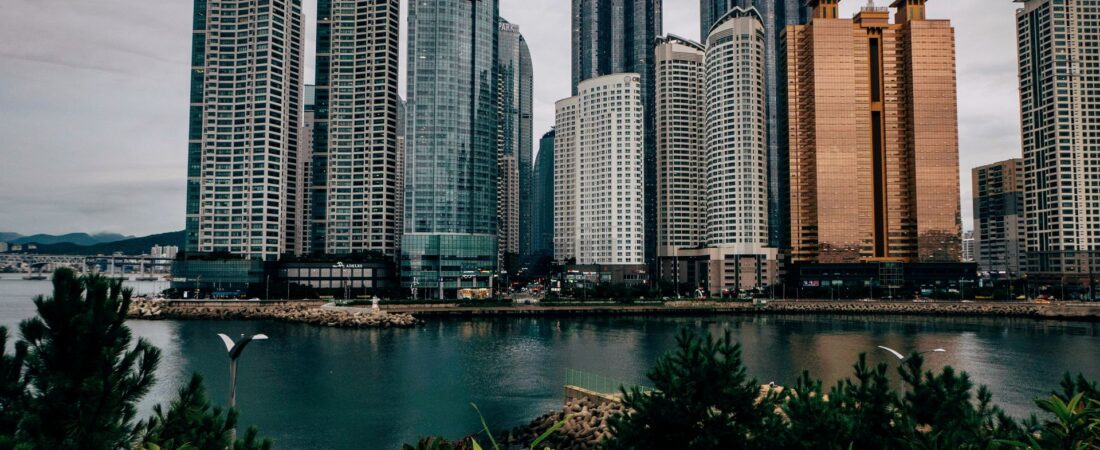
This post contains affiliate links. If you book or buy through them, we may earn a small commission at no extra cost to you.
Written from Korea, last updated July 2026
Seoul gets the headlines, but plenty of people come back from Korea saying Busan was their favorite. It is the country’s second city and its biggest port, a place where mountains drop straight into the sea and you are never far from a beach, a fish market, or a temple perched over the water. The pace is slower than Seoul, the seafood is some of the best in Asia, and the whole place feels a little more relaxed in its skin.
The catch is that Busan is spread out. The sights sit in clusters that can be an hour apart by subway, so the trick is to group your days by area rather than zigzagging across the city. Plan on three full days to see the highlights without rushing. Here is how I would spend them.
Please read before you book: Prices below were checked on 12 July 2026 from official and booking sources. Admission fees and fares change over time — treat these as a planning baseline and confirm the live price on the official site or the booking widget below before you go.
| Item | Price (adult) | Notes | Checked / source |
|---|---|---|---|
| KTX Seoul → Busan | ₩59,800 (≈ $40) | Standard class, one-way; about 2h40m. First class higher. | Jul 2026 · Korail Gyeongbu KTX (confirm on KorailTalk) |
| Gamcheon Culture Village | Free | Free entry; optional stamp map about ₩2,000 (≈ $1.3). | Jul 2026 |
| Haedong Yonggungsa Temple | Free | Seaside temple, free admission. | Jul 2026 |
| Haeundae Blueline Park — Sky Capsule | ₩40,000–50,000 (≈ $27–33) | One-way; price varies by number of passengers per capsule. | Jul 2026 · check official/booking |
| Busan Tower (Diamond Tower) observatory | ~₩12,000 (≈ $8.0) | On-site adult; often cheaper booked online. | Jul 2026 · confirm official |
Book Tours & Activities in Busan
Gamcheon Culture Village: Busan’s Postcard
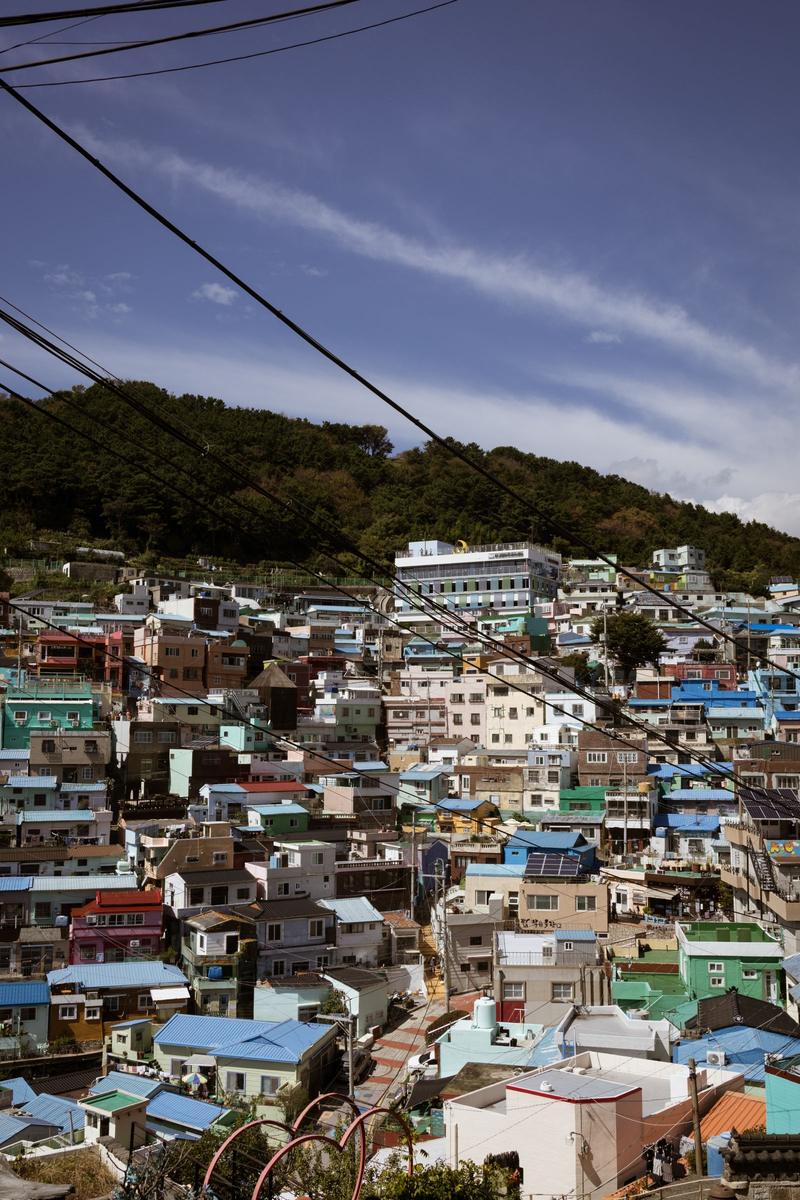
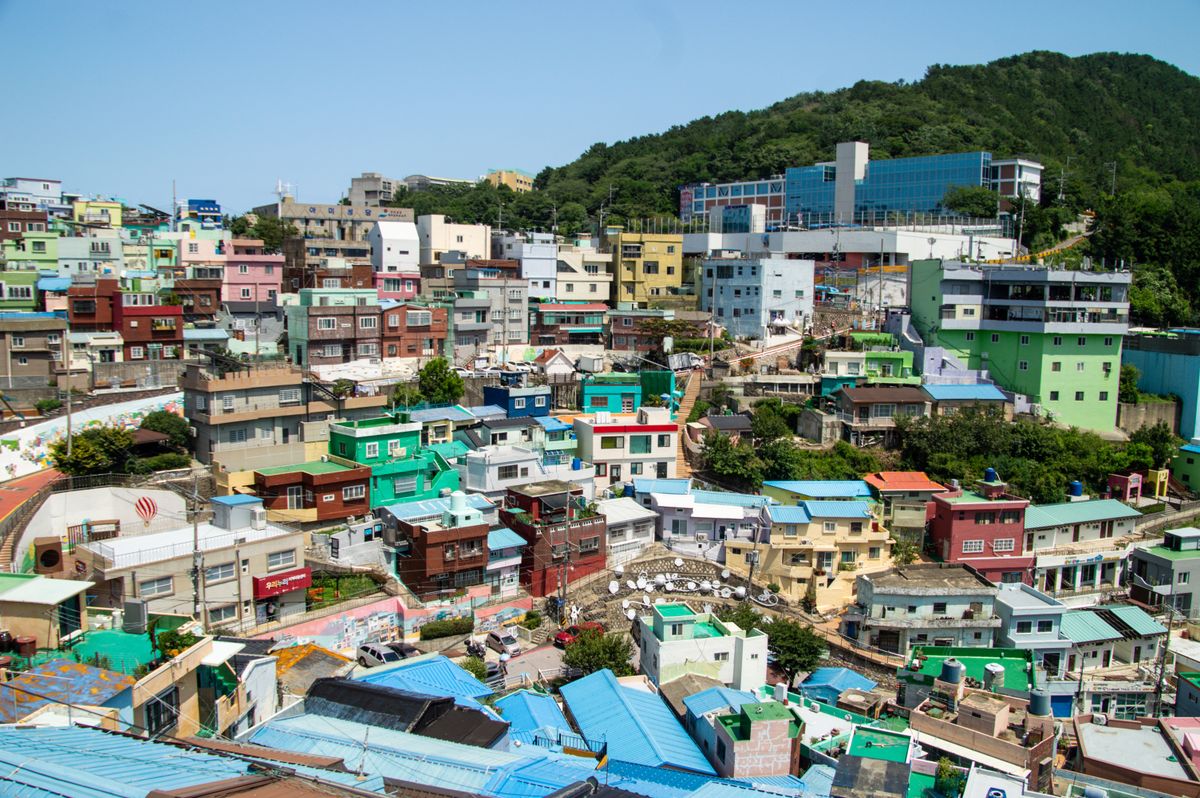
If you have seen one photo of Busan, it was probably this one. Gamcheon Culture Village is a hillside of pastel houses stacked in tight rows up a coastal mountain, threaded with narrow alleys, murals, and tiny galleries. It started in the 1950s as a refugee settlement and was reborn from 2009 as an open-air art project, and locals still live behind those bright facades, so keep your voice down and stick to the marked lanes.
Give yourself two to three hours. The fun is in getting a little lost, ducking down a staircase to a hidden cafe, and finding the famous Little Prince statue looking out over the rooftops. Go in the morning before the tour buses arrive and the light is better for photos anyway.
Haedong Yonggungsa: A Temple on the Sea
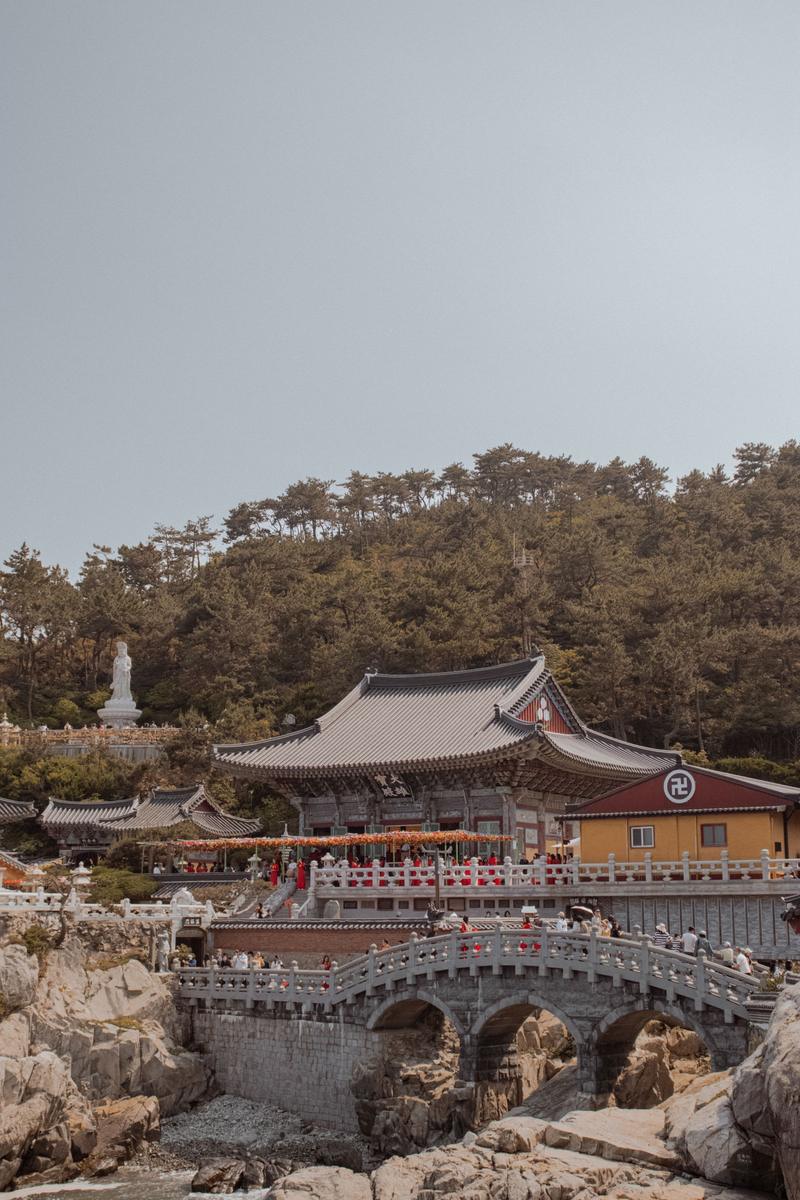
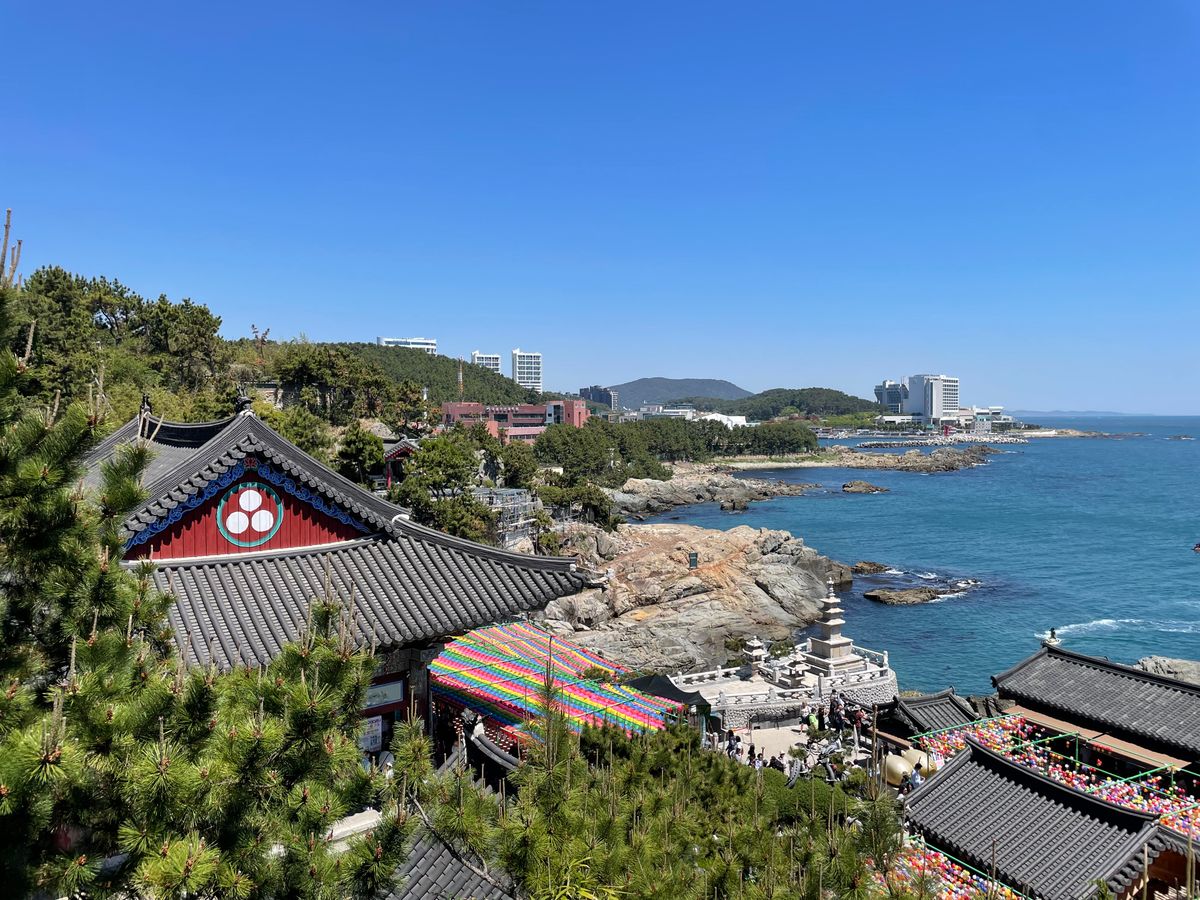
Most Korean temples sit deep in the mountains. Haedong Yonggungsa does the opposite, clinging to the rocks right above the crashing surf on Busan’s northeast coast. The approach takes you down a long stairway past stone lanterns and the smell of salt air, and the payoff is a temple complex with the waves breaking just below the prayer halls.
It is free to enter and open from early morning, which is exactly when you want to be there, before the crowds and in the soft light. It sits a bit outside the center near the coast, so pair it with a stop in the nearby Gijang area or combine it with an east-coast day.
Haeundae and the Blueline Park Coast
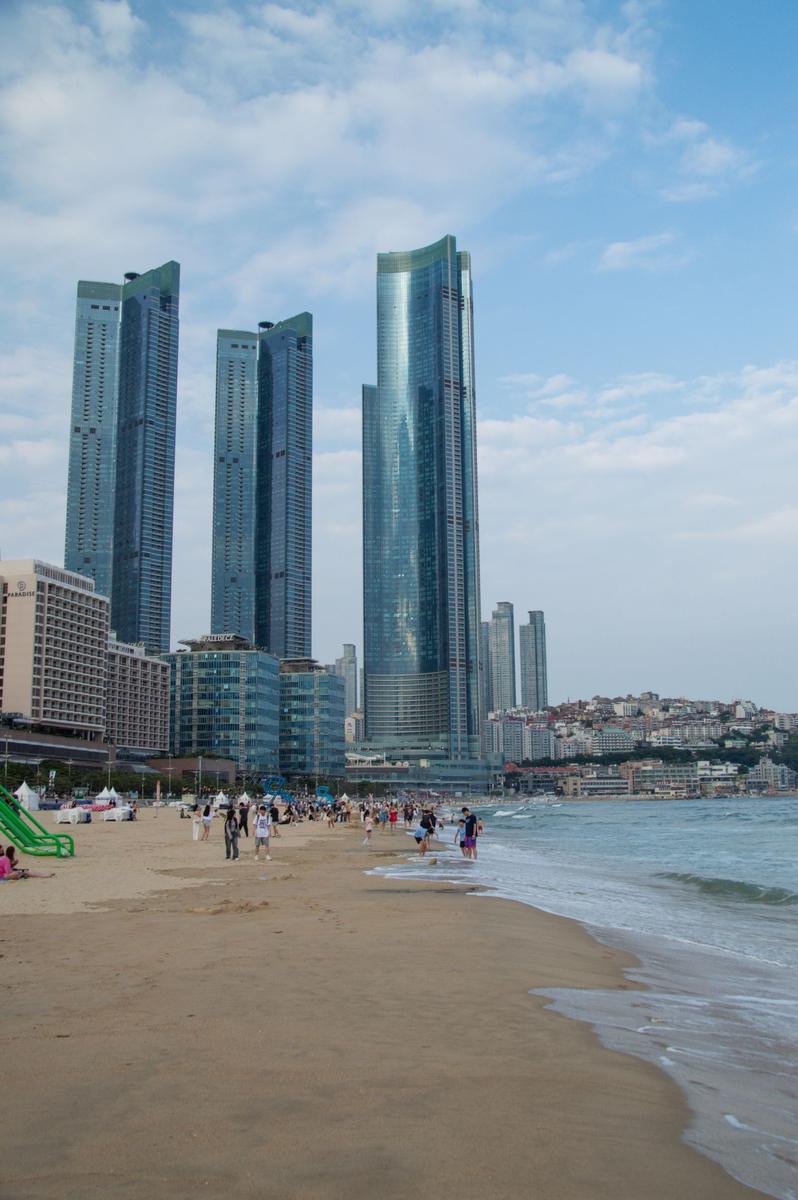
Haeundae Beach is the one everyone knows: a long, wide curve of pale sand backed by a wall of high-rise hotels. In July and August it is genuinely electric, packed with umbrellas and the busiest beach in the country. The rest of the year it is a pleasant place to walk, with seafood restaurants and cafes a block back from the water.
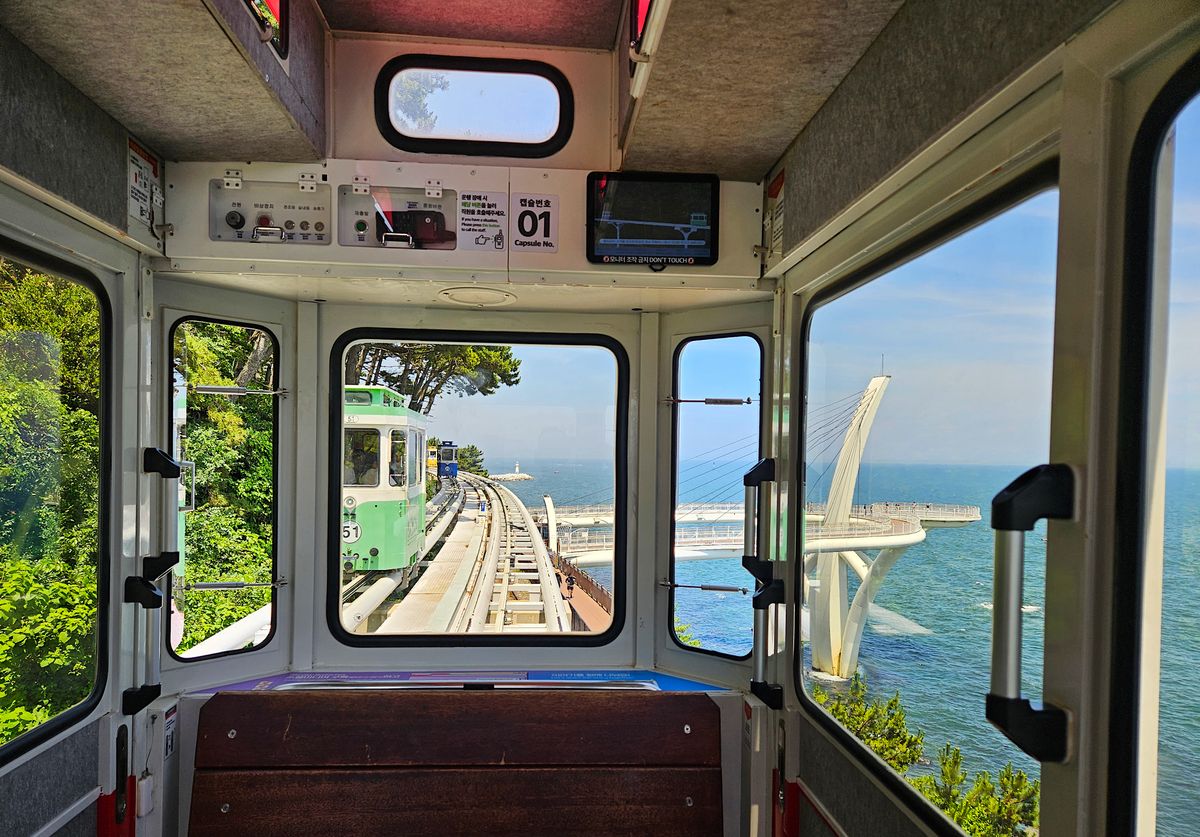
The real draw nearby is the Haeundae Blueline Park, built along a retired coastal railway. You can ride the open-air Beach Train along the shoreline or take the Sky Capsule, a little pastel pod that glides above the coast on elevated rails. The Sky Capsule is popular and the colored pods sell out, so book a time slot ahead online if you have your heart set on it.
Eat Your Way Through Jagalchi and Nampo
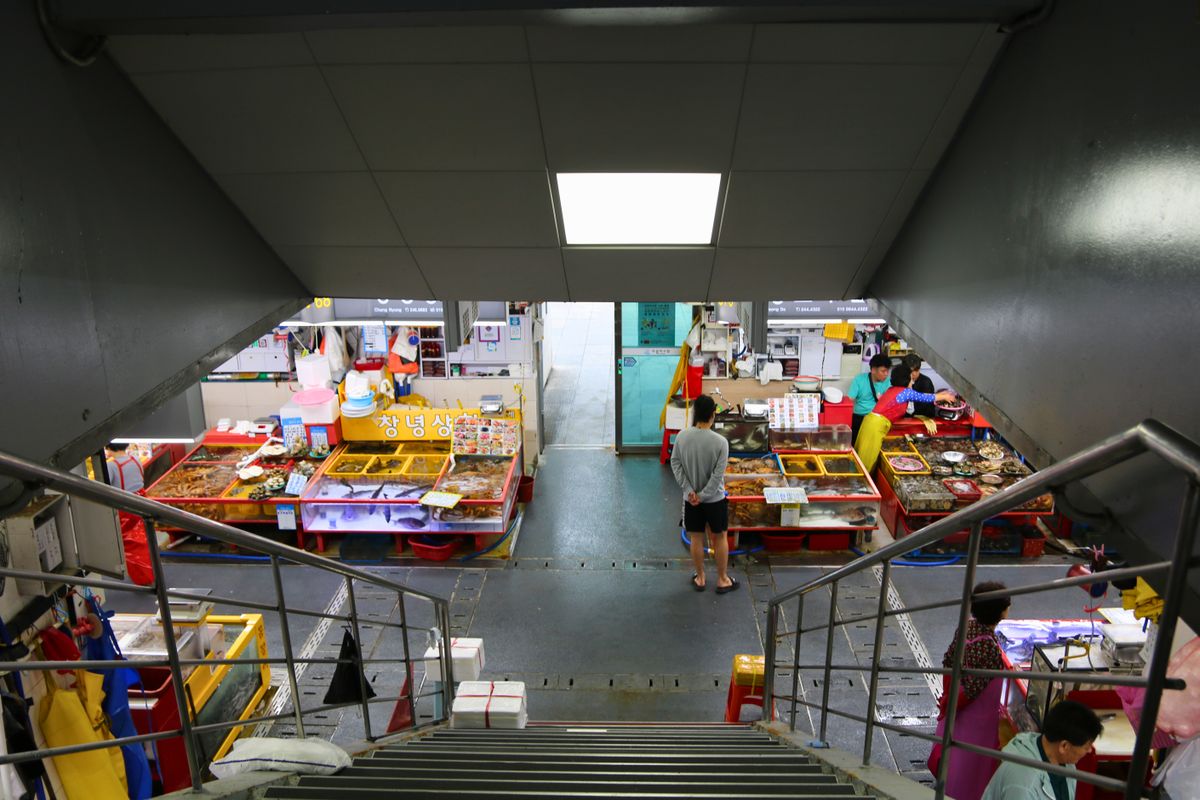
Busan runs on seafood, and Jagalchi Fish Market is the place to understand why. It is Korea’s largest seafood market, a noisy hall where vendors sell the morning’s catch downstairs and restaurants upstairs will cook whatever you point at. It is an experience as much as a meal, so go hungry and bring cash.
A few minutes away, BIFF Square in the Nampo-dong district is the heart of old Busan, home to the Busan International Film Festival and a street lined with directors’ handprints, snack stalls, and the famous sugar-and-seed hotteok pancakes. Wander over to Gukje Market next door, an enormous warren of stalls selling everything from clothes to street food, and you have an easy afternoon on foot.
Get Above It All: Busan Tower and Huinnyeoul
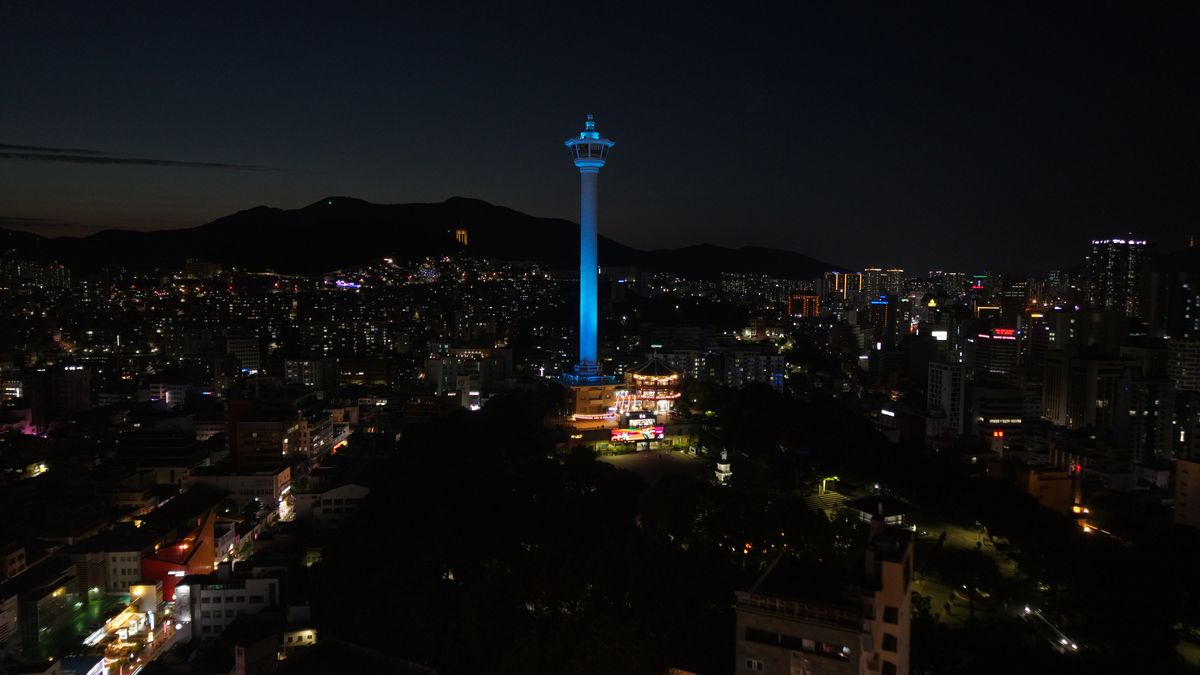
For the city-from-above moment, head to Busan Tower in Yongdusan Park, a short climb or escalator ride up from Nampo-dong, where the observation deck lays out the harbor and the hills. For something more atmospheric, the Huinnyeoul Culture Village on Yeongdo Island is a row of cliffside houses and cafes looking straight out to sea, often called Busan’s answer to the Amalfi Coast. It is quieter than Gamcheon and lovely at golden hour.
A small practical tip worth its weight: Busan involves a lot of walking, hills, and long subway hops, so keep your phone charged for maps and tickets. A compact power bank lives in my day bag here.
Beyond the Center: Coast, Parks, and Day Trips
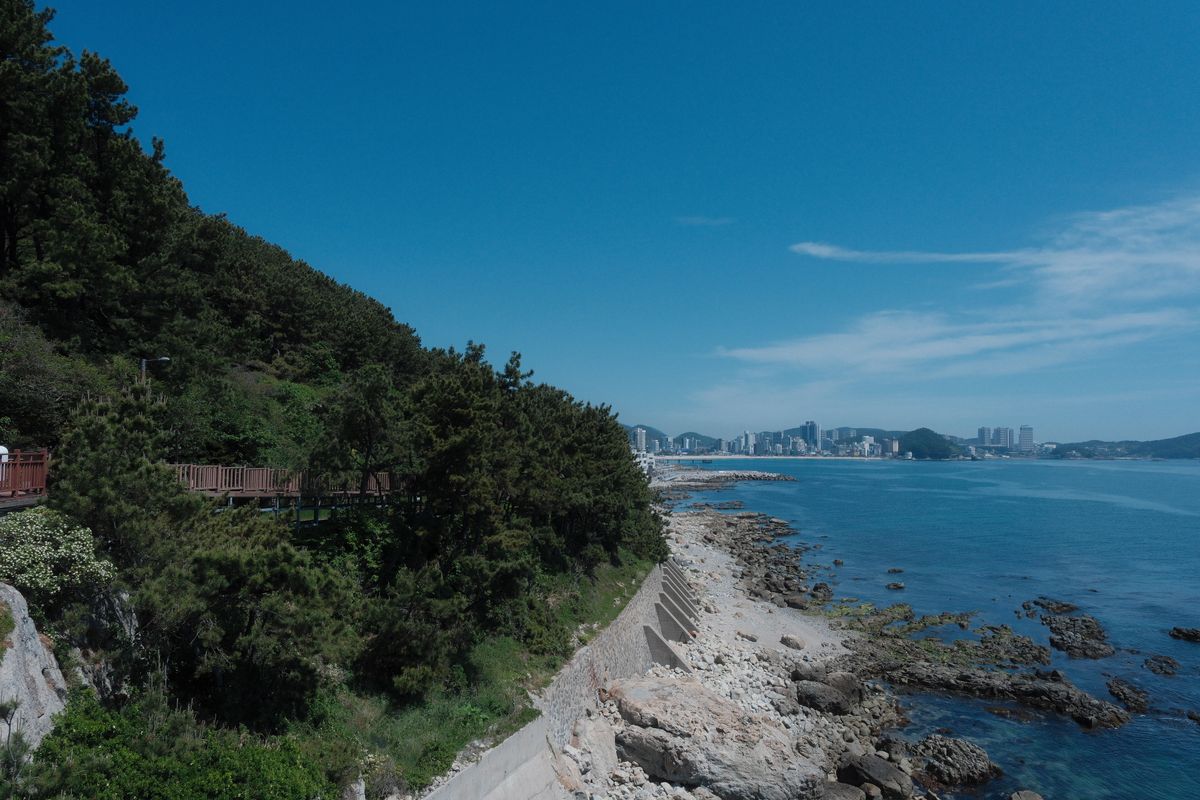
Busan keeps paying off the further you wander from the obvious spots. Taejongdae on the southern tip of Yeongdo is a forested park of sea cliffs and lighthouses, with a little road train that loops the headland and viewpoints over the open water and offshore islands. It is a half-day of fresh air and one of the best coastal walks in the city.
For something different, the Songdo Beach area has a cable car gliding out over the bay and a cliffside skywalk, while the up-and-coming Songjeong beach northeast of Haeundae draws surfers and a younger, mellower crowd than the main strip. And because the KTX bullet train makes the rest of the region easy, Gyeongju, Korea’s ancient Silla-dynasty capital full of royal tombs and temples, is barely an hour away by train and makes a superb day trip if you have a fourth day.
Do not leave thinking Busan is only about seafood, either. The city is famous for dwaeji gukbap, a hearty pork-and-rice soup born here, and the markets are full of fresh hotteok, fish cakes (eomuk), and milky shaved ice. Eating your way around is half the point of coming.
Where to Stay in Busan
Because the city is so spread out, where you sleep shapes your trip. Pick one base near a subway line and build your days around it.
Haeundae is the easy first-timer choice: the beach on your doorstep, the Blueline Park and Sky Capsule a walk away, and hotels in every price band. It is the most polished and most touristy part of the city, which is exactly what some people want and others find a little too packaged.
Seomyeon is the downtown core, the most central place to base yourself if you want a mix of shopping, food, cafes, and nightlife with two subway lines meeting under your feet. It is not pretty, but it is convenient and well priced, and you can reach the beaches or the markets in one ride.
Nampo-dong is old-school, cinematic Busan, walking distance to Jagalchi, Gukje Market, BIFF Square, and Busan Tower. Stay here if markets, street food, and harbor atmosphere are what you came for. It trades beach access for a stronger sense of place.
Whichever you choose, book ahead for summer and for the film festival in autumn, when the best-located rooms fill quickly.
Getting Around Busan
Two quick setups make the city painless. First, buy a T-money card at any convenience store and load it with cash; it works on the subway, buses, and taxis, and the Busan Metro is clean, cheap, and easy to navigate in English. Second, use Naver Map or KakaoMap rather than Google Maps, which only gives limited transit directions in Korea.
If you want to hit several far-flung districts in one go, the Busan City Tour Bus runs hop-on-hop-off loops to Haeundae, Taejongdae, and the west of the city, with a day pass that can save you a string of subway transfers.
Practical Tips for First-Timers
A few things smooth the way. Korea is a card-and-app society, but cash is still handy for street stalls and older markets, so carry some won; ATMs marked “Global” accept foreign cards. Most cafes, convenience stores, and hotels have fast, free wi-fi, but a local SIM or eSIM is cheap and worth it for maps and transit on the move, since you will lean on Naver Map constantly.
Busan is very safe, even late at night, and locals are used to lost-looking visitors; a translation app on your phone bridges almost any gap. Tipping is not expected anywhere and can even cause confusion, so skip it. Finally, mind the hills: Gamcheon, Huinnyeoul, and the temple stairways all involve real climbing, so comfortable shoes are not optional. Summers are humid enough that a small towel and water are smart additions to your day bag.
A Sample 3-Day Plan
- Day 1: Gamcheon Culture Village in the morning, then Nampo-dong, Jagalchi Market, Gukje Market, and sunset from Busan Tower.
- Day 2: Haedong Yonggungsa early, then the Haeundae area, the Blueline Park Beach Train or Sky Capsule, and dinner near the beach.
- Day 3: Huinnyeoul Village and Taejongdae on Yeongdo, or a day trip to Gyeongju for ancient history a short bus ride away.
Frequently Asked Questions
How many days do you need in Busan?
Three full days covers the main clusters: the Gamcheon and Nampo side, the Haeundae and east coast, and one island or day trip. Two days works if you are tight, but you will be moving fast.
Is Busan worth visiting if I am already going to Seoul?
Yes. It is only about two and a half hours from Seoul on the KTX high-speed train, and it offers something Seoul cannot: beaches, a major working port, fresh seafood, and a more laid-back coastal feel.
When is the best time to visit Busan?
Late spring (May to June) and autumn (September to October) bring mild weather and clear skies. July and August are hot, humid, and beach-packed; winters are cool but milder than Seoul.
Do I need to speak Korean?
No. Subway signs and major attractions include English, and a translation app covers the rest. A few polite words are always appreciated.
Final Word
Busan is the part of Korea where you slow down. Spend your mornings on hillsides and at temples over the sea, your afternoons in markets with a plate of something just off the boat, and your evenings watching the lights come up along the coast. Group your days by neighborhood, keep a transit card topped up, and the city opens up easily.
Planning the rest of your trip? See our guide to the best things to do in Seoul and our Korea first-timer travel tips for getting between the two.
This post contains affiliate links. If you book or buy through them, we may earn a small commission at no extra cost to you.
Related Guides
- Best Things to Do in Gangneung
- Best Things to Do in Suwon
- Best Things to Do in Seoul
- Best Things to Do in Gwangju
- How to Use the T-money Card and the Seoul Subway
- Do I Need a K-ETA to Visit Korea?
Related Guides
- Best Things to Do in Yeosu
- Best Things to Do in Seoul
- Best Things to Do in Daegu
- How to Use the T-money Card and the Seoul Subway
- Do I Need a K-ETA to Visit Korea?
- How to Stay Connected in South Korea
🎟️ Book Tours, Activities & Food Experiences
Search and book top attractions, tours and food experiences on Klook — official best price, instant confirmation.
Klook.com