Last updated: June 2026
Book Tours & Activities in Fushimi Inari Shrine
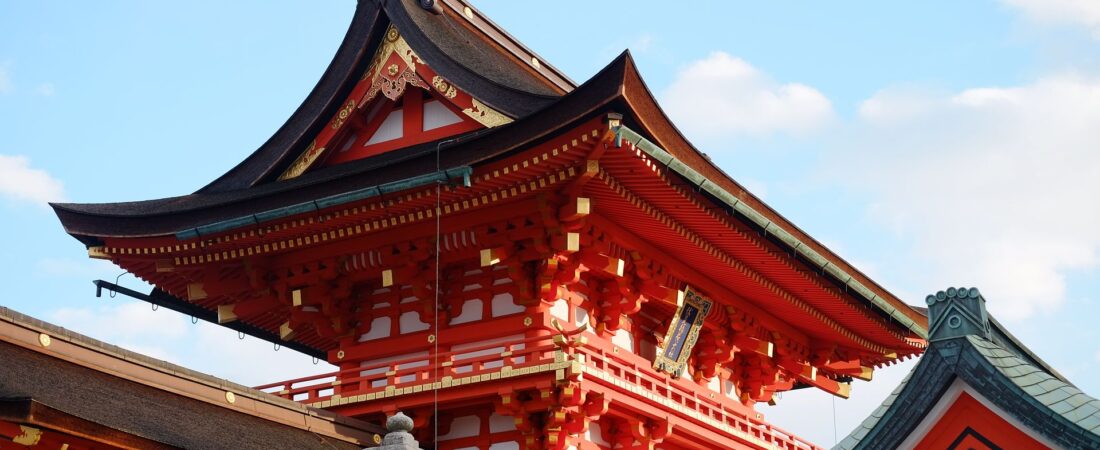
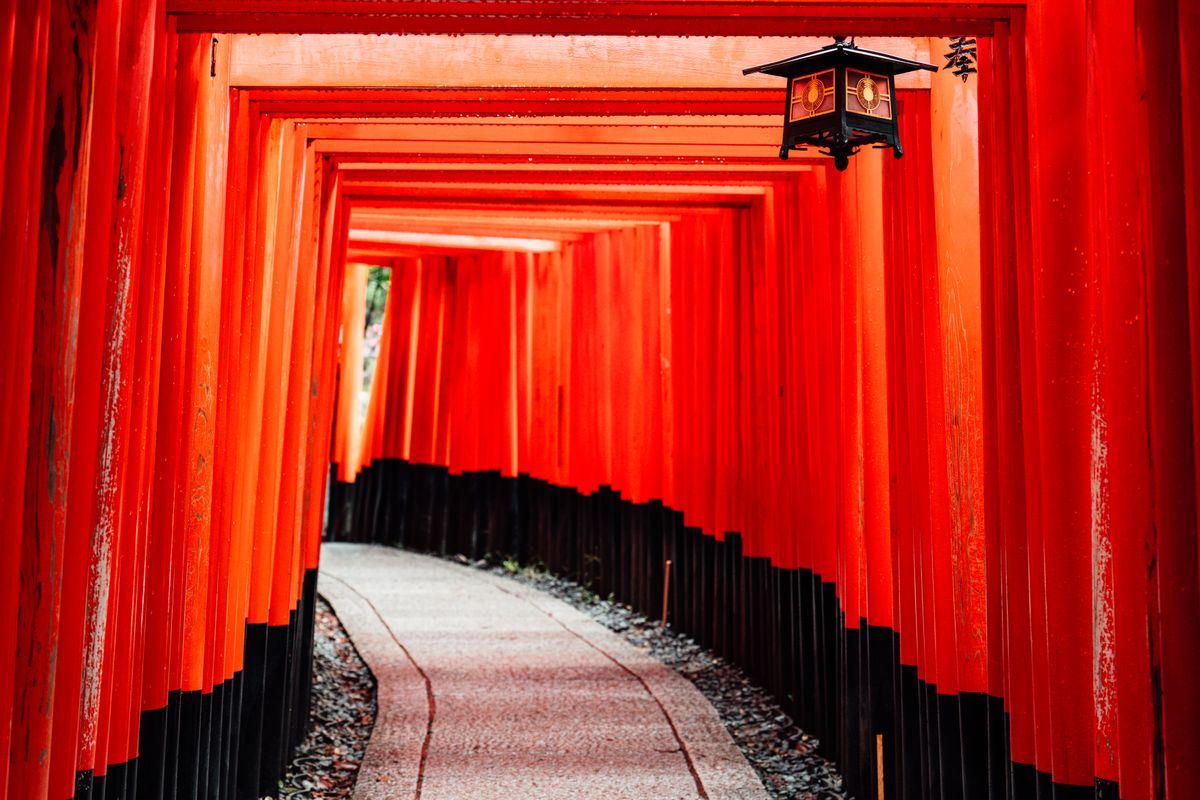
You’ve seen the photo even if you don’t know the name: an endless tunnel of vivid orange gates climbing a forested mountainside. That’s Fushimi Inari Taisha, the head shrine of some 30,000 Inari shrines across Japan and, for many visitors, the single most memorable thing they do in Kyoto. The torii gates number in the thousands, the mountain trail is open around the clock, and – the part people don’t expect – it costs nothing to walk through.
It’s also one of the most crowded sights in Japan, which means the difference between a magical visit and a shuffling queue comes down almost entirely to when you show up. Here’s how to time it and what to do once you’re there.
Quick Cost Overview — Fushimi Inari Prices at a Glance (as of July 20, 2026)
The shrine and trail are free, 24 hours a day. Below are the only real costs, with USD checked July 20, 2026 (¥162.5/$1, open.er-api.com; JR fare per kyotostation.com). Amounts can change – confirm before you visit.
| Item | Local price | ≈ USD | Source / checked |
|---|---|---|---|
| Shrine grounds & torii trail | Free | Free | Open 24h, no ticket, checked 20 Jul 2026 |
| JR Nara Line, Kyoto Station → Inari Station | ¥240 | ≈ $1.5 | kyotostation.com, checked 20 Jul 2026 |
| Goshuin temple stamp | ¥500 | ≈ $3.1 | espunisinjapan.com, checked 20 Jul 2026 |
| Goshuincho stamp book | ≈ ¥1,500–3,000 | ≈ $9–18 | linkinjapan.com, checked 20 Jul 2026 |
A Little Context
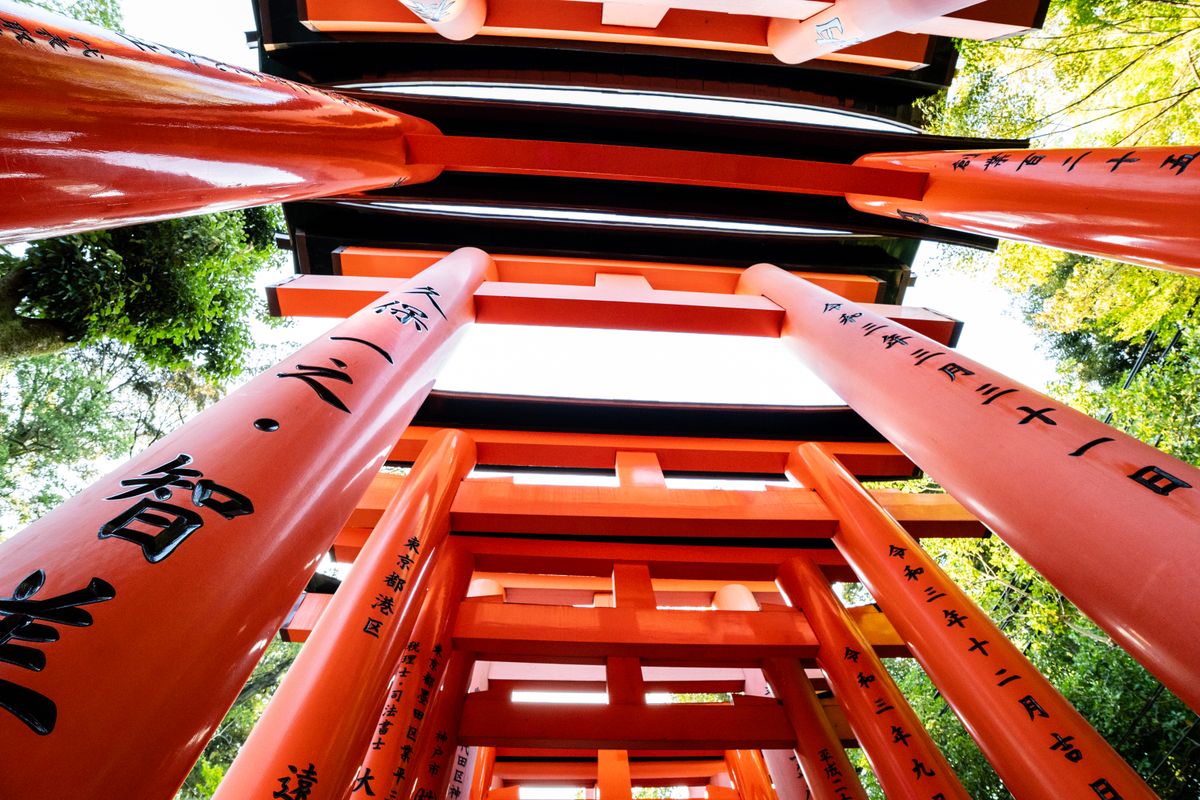
Fushimi Inari was founded in 711, which makes it older than Kyoto’s reign as Japan’s capital. It’s dedicated to Inari, the Shinto deity of rice and, by extension, of business and prosperity – which is why so many of the gates are funded by companies hoping for good fortune. Each torii is a paid offering: a small gate might cost a few hundred thousand yen, a large one several million, and donors range from corner sushi shops to national corporations. Walk slowly and you’ll notice the names and dates lacquered onto the back of every gate, a quiet ledger of decades of wishes. Understanding that the shrine is a working religious site, not a film set, changes how you move through it – and it’s the reason the place asks for a bit of reverence even at its most Instagrammed.
Quick Facts for 2026
Fushimi Inari is open 24 hours a day, every day, and there is no entrance fee and no ticket. The grounds never close, so you can walk the gates at dawn, at midnight, or anytime in between. The shrine office that sells omamori (good-luck charms), omikuji (paper fortunes), and goshuincho (stamp books) keeps shorter hours, typically 8:30 AM to 4:30 PM.
Because it’s free and always open, this is one sight where you should plan around the clock, not the calendar.
How to Get There
It could hardly be easier from central Kyoto. Take the JR Nara Line from Kyoto Station to Inari Station – about five minutes – and the main gate is directly across from the station exit. Alternatively, the Keihan Main Line stops at Fushimi Inari Station, a short walk from the shrine.
That five-minute hop from Kyoto Station is the key to beating the crowds: you can be standing under the gates not long after sunrise and still be back for breakfast.
What to See and Do
The Senbon Torii
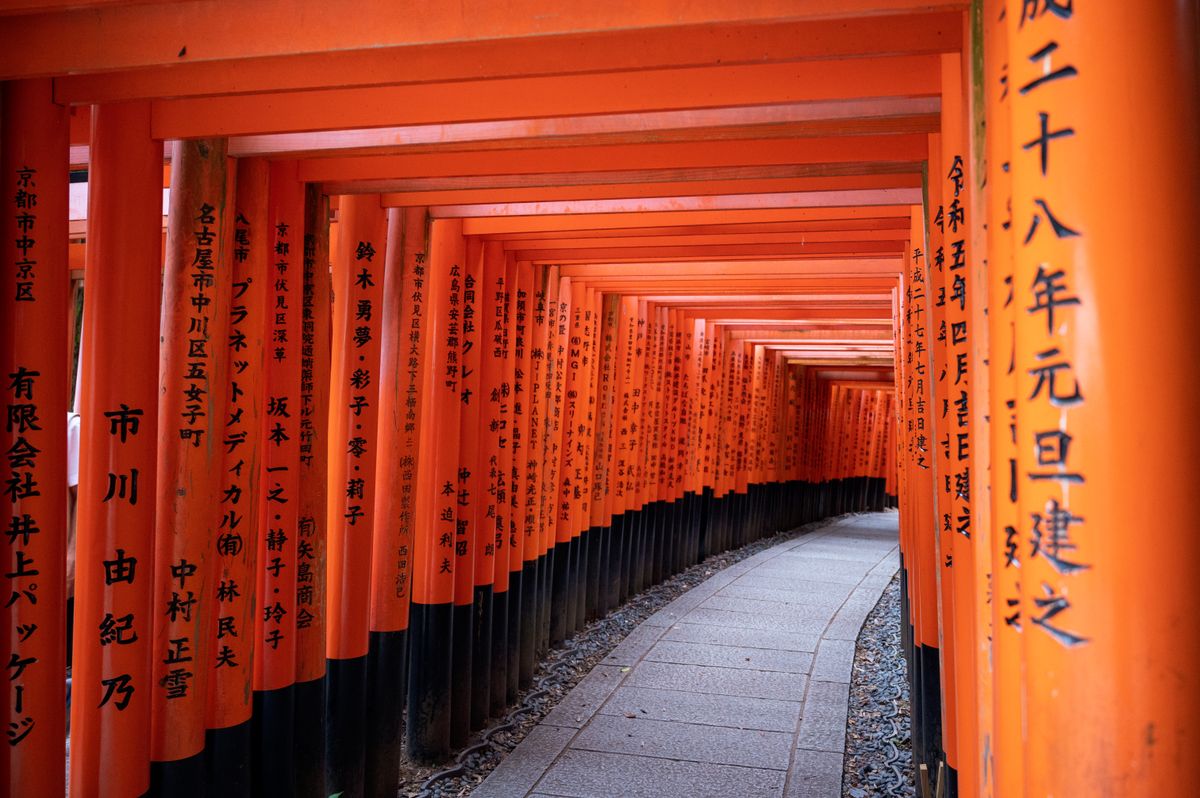
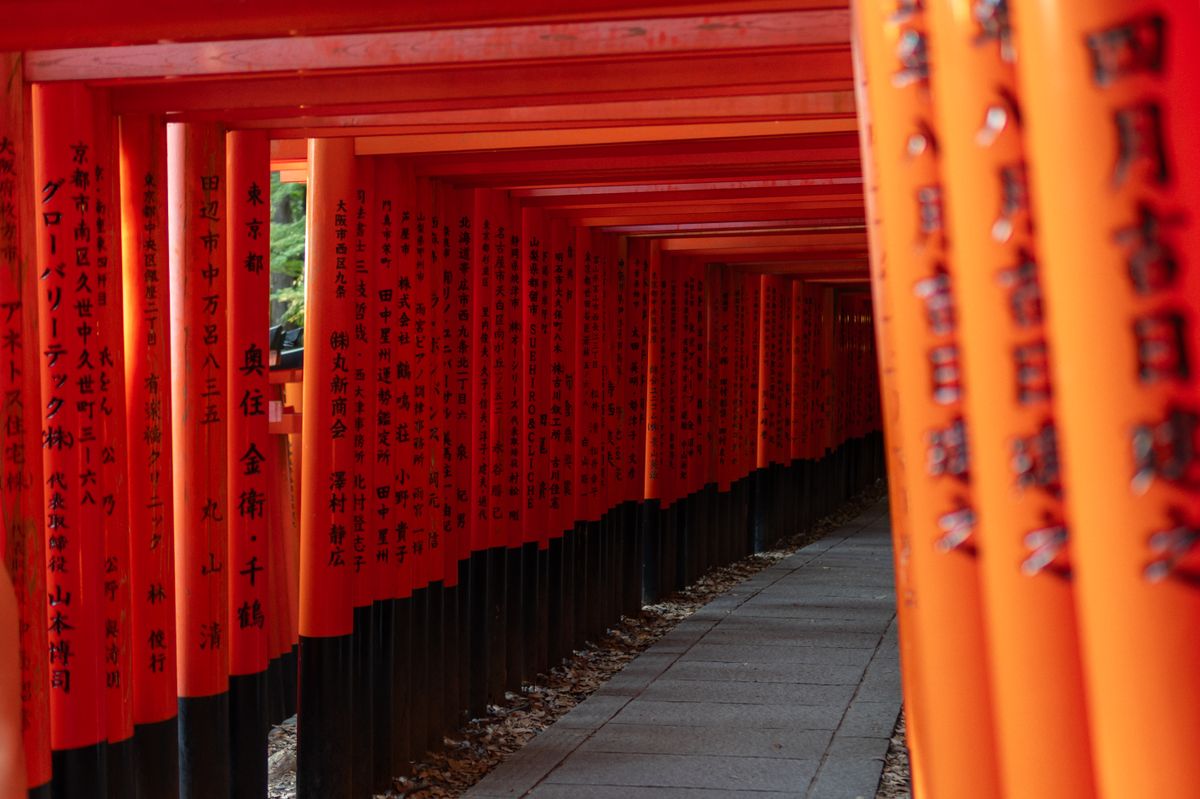
Just behind the main hall the path splits into two dense rows of closely spaced gates known as the Senbon Torii (“thousand torii”). This is the iconic stretch, and walking the lower loop takes only 30 to 45 minutes. Each gate is a donation from a business or individual, with the donor’s name and date inked on the back – which is why the view going up looks like pure orange and the view coming down is covered in black writing.
The Climb to Yotsutsuji
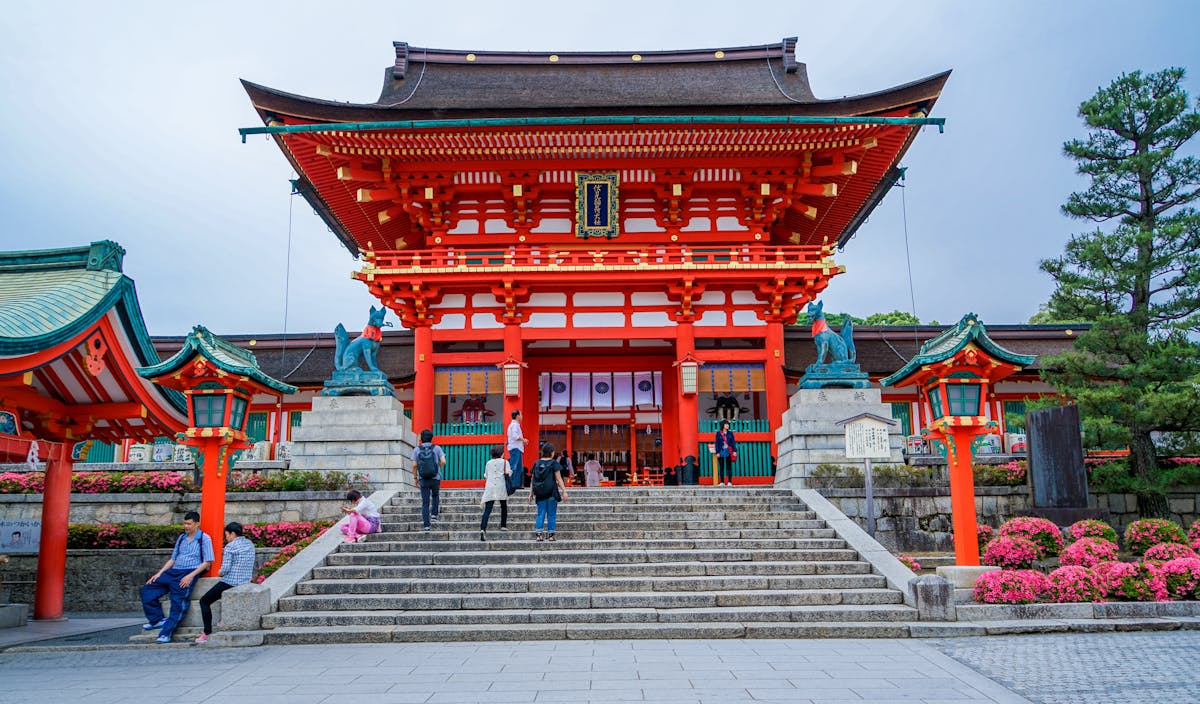
Keep going and the gates thin out as the trail climbs. The Yotsutsuji intersection, roughly halfway up, is where most people stop: it opens onto a genuine viewpoint over southern Kyoto and is a sensible turnaround if you’re short on time, about 1.5 to 2 hours round trip from the base.
The Full Summit Loop
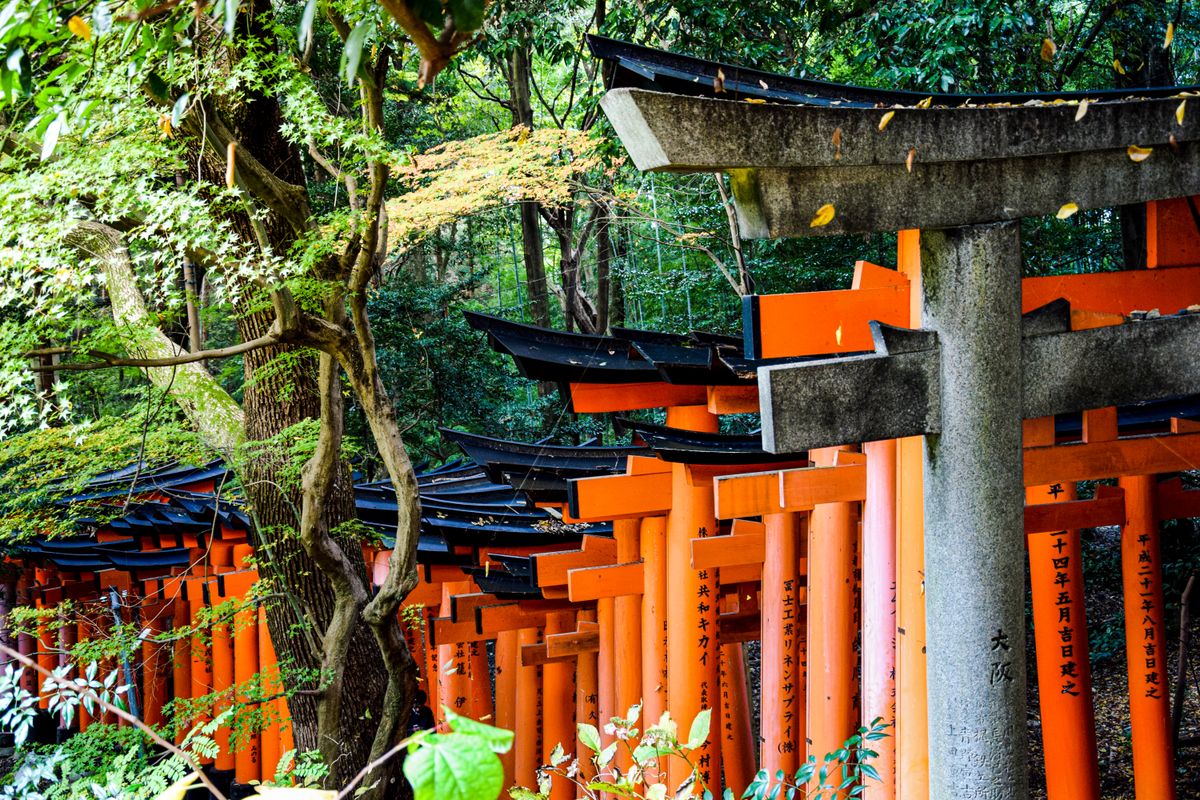
The committed can continue to the summit of Mount Inari (233 m). The full loop runs roughly 2.5 to 3 hours round trip and thins the crowds dramatically the higher you go – past the first twenty minutes you’ll often have whole stretches of gates to yourself. It’s a real walk on stone steps and packed earth, so wear shoes you’d hike in, not the sandals you wore for temples earlier in the day.
Foxes Everywhere
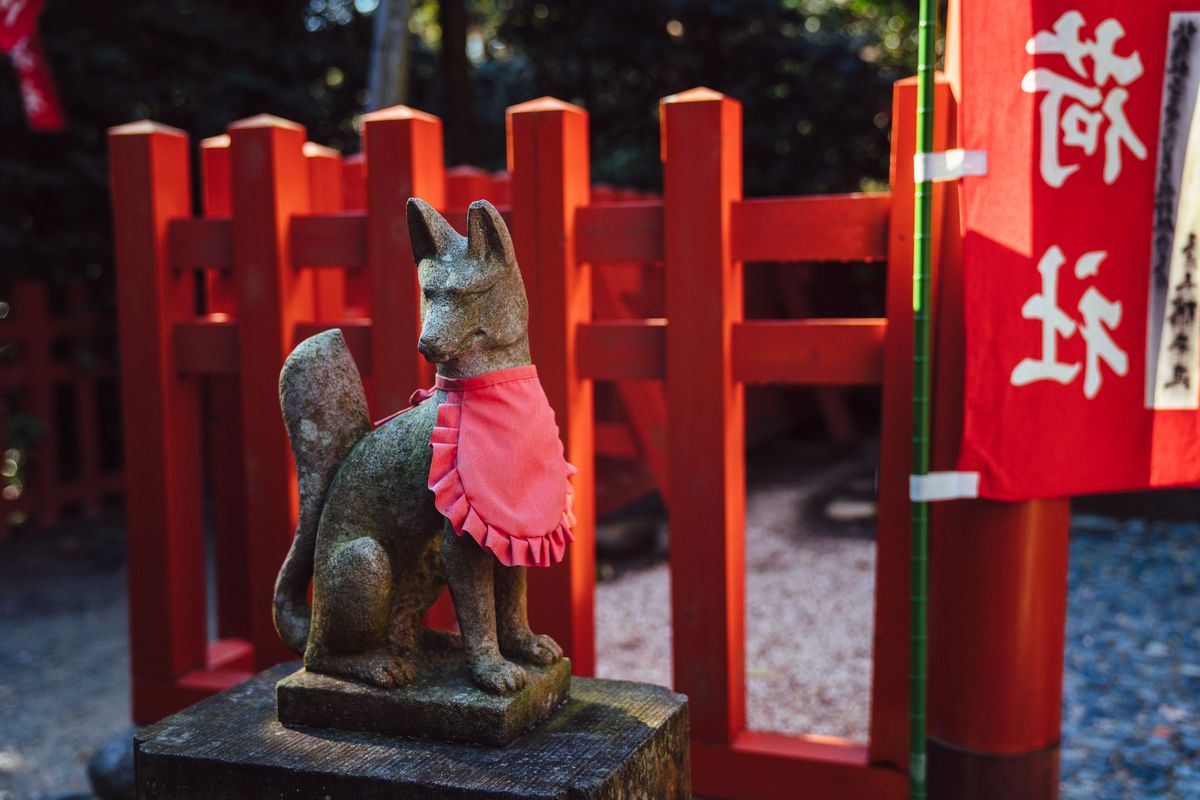
Look for the stone fox statues guarding the shrine. The fox (kitsune) is the messenger of Inari, the deity of rice, prosperity, and business, and you’ll spot them holding keys, scrolls, or sheaves of grain in their mouths.
Street Food at the Base
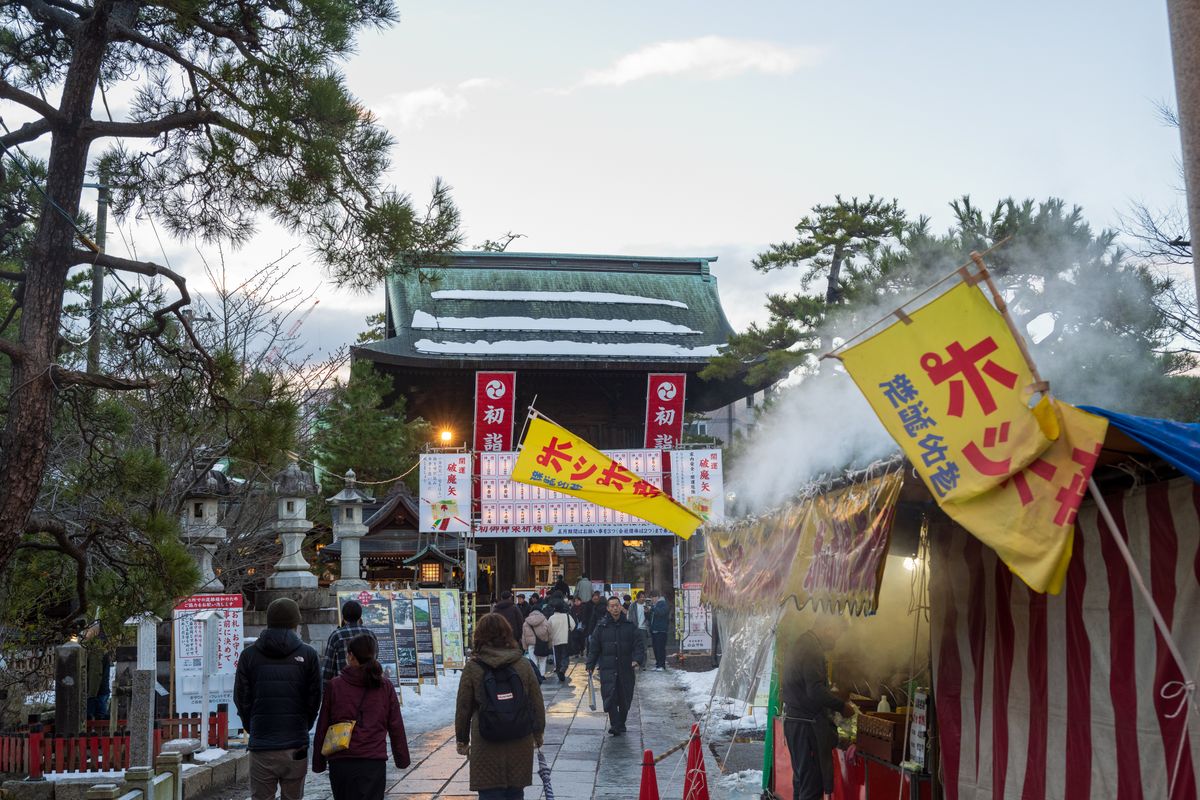
The approach to the shrine, between Inari Station and the main gate, is lined with small stalls and shops – this is a good place to refuel before or after the climb. Look for kitsune udon (named for the fox, topped with sweet fried tofu the fox is said to love), grilled sparrow or quail skewers that are a local specialty here, and soft-serve ice cream in matcha or sesame. It’s cheap, quick, and very much part of the experience, though the stalls keep daytime hours, so an after-dark visit means the food is closed.
Best Time to Visit
Beyond the time of day, the season shapes the visit. Autumn (November) is glorious, with maples flaring red along the upper trail, while spring brings mild weather and the occasional cherry blossom near the base. Summer is hot and seriously humid – the climb becomes a sweat-fest, so carry extra water – and the rainy season in June can make the stone steps slick. Winter is cold but uncrowded, and a light snow on the orange gates is one of Kyoto’s great rare sights. The New Year period is the single busiest time, when locals flood in for the first shrine visit of the year; come then for atmosphere, not for solitude.
When to Go: Timing Is Everything
This is the whole game at Fushimi Inari. The crowds are heaviest from mid-morning to late afternoon, when the lower gates become a slow river of people and selfie sticks.
For empty torii tunnels and soft light, aim to arrive between about 6:00 and 8:00 AM. The other sweet spot is after dark: the lower paths are lit by stone lanterns, the air is cool, and the atmosphere turns genuinely eerie in the best way. Both windows are possible precisely because the shrine never closes. The one time to avoid, if you can, is the late-morning-to-afternoon peak.
Getting the Best Photos
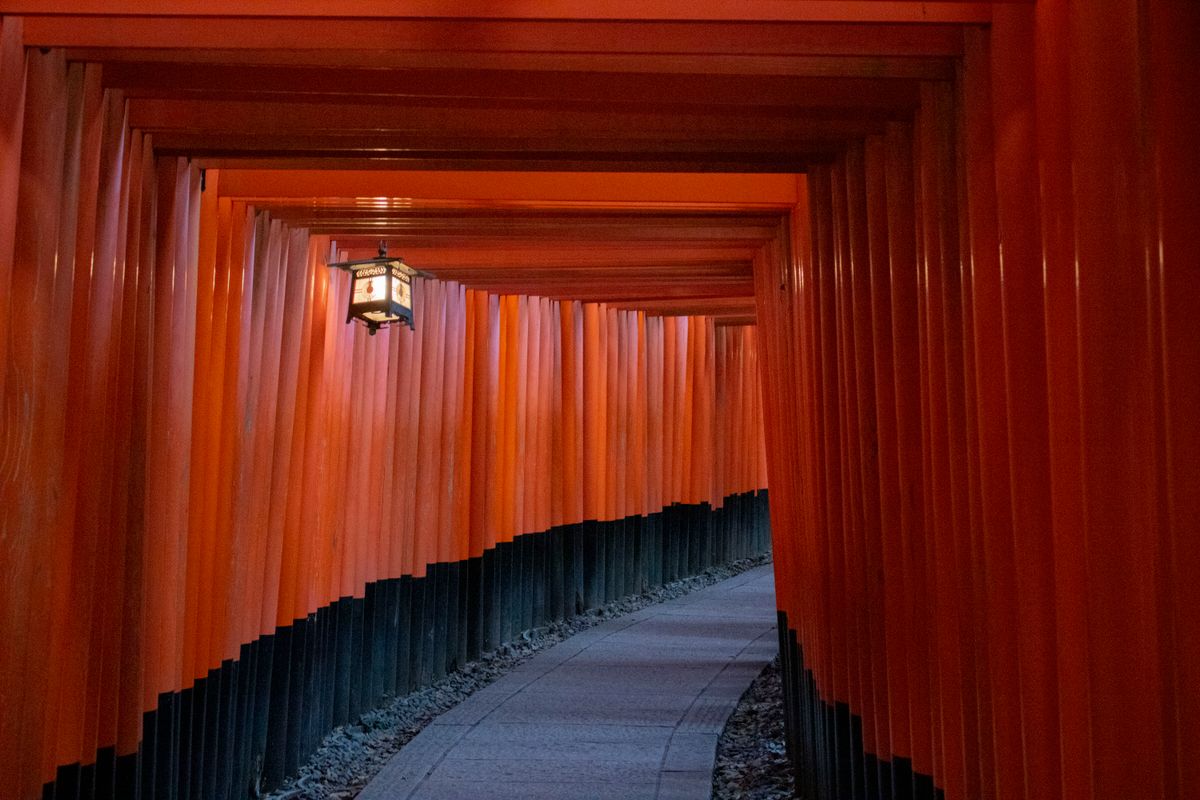
The dream shot is an empty corridor of orange gates receding into the distance, and it’s almost entirely about timing and patience. Right behind the main hall the Senbon Torii splits into two parallel rows – take the right-hand path going up, which is the wider, more photogenic one. To get a clean frame you’ll need to wait for gaps in the foot traffic, which is far easier at dawn than at noon. Shoot from a low angle to emphasize the tunnel effect, and remember that the back of each gate (covered in black calligraphy) makes a completely different, equally striking image on the way down. The light filtering through the gates is loveliest in early morning; after dark, the lantern-lit lower section gives a moody, atmospheric alternative that few visitors capture.
Etiquette and What to Bring
Fushimi Inari is an active shrine, so a few small courtesies matter. Bow slightly when passing through the main gate, don’t block the path for photos when it’s busy, and keep your voice down near the prayer halls. Practically, wear shoes you can climb in, bring water and a small towel in warm months, and carry some cash for charms, fortunes, and the food stalls at the base. There are restrooms near the entrance and partway up but few higher on the mountain, so plan accordingly. If you’re visiting at dawn or after dark, a phone with a good low-light camera and a portable charger will serve you better than any fancy gear.
Where to Stay Near Fushimi Inari
Most travelers visit Fushimi Inari as a quick trip from elsewhere in Kyoto, but where you base yourself decides how easily you can hit that early-morning window.
Around Kyoto Station is the smart, practical base: you’re a single five-minute train ride from the gates, well placed for day trips to Nara and Osaka, and surrounded by hotels at every price point.
Right by Fushimi Inari and Inari Station trades the buzz of central Kyoto for quiet local streets and the ability to literally walk to the gates before sunrise – ideal if dawn photos are your priority.
Combine It with the Rest of Kyoto
Fushimi Inari sits south of central Kyoto, so it pairs naturally with sights on that side of town. Many travelers do the shrine first thing, then head to Tofuku-ji (one stop away, spectacular in autumn) or carry on to the Arashiyama bamboo grove later in the day. For a full plan, see our Kyoto in two days itinerary and our guide to the Kyoto bus and train passes. Heading to the capital next? Our things to do in Tokyo guide picks up from there.
Practical Tips
- Go at dawn or after dark. Mid-day is the one stretch to avoid.
- Wear real shoes. The upper trail is a genuine hike on steps and dirt.
- Carry water, especially in summer – Kyoto gets hot and humid, and there are only a few vending machines on the climb.
- You don’t have to reach the top. Yotsutsuji is a satisfying turnaround with the best easy view.
- Be quiet and respectful – this is an active place of worship, not just a photo backdrop.
- It’s free, so there’s nothing to book; just confirm train times and any event closures on the official site before a special-occasion visit.
Frequently Asked Questions
How much does Fushimi Inari cost?
Nothing. There’s no entrance fee and no ticket, day or night.
What are the opening hours?
The shrine grounds are open 24 hours, 365 days a year. The office selling charms and stamps runs about 8:30 AM to 4:30 PM.
How long does it take to walk?
The iconic Senbon Torii loop is 30 to 45 minutes. Reaching the Yotsutsuji viewpoint is 1.5 to 2 hours round trip, and the full summit loop is 2.5 to 3 hours.
Do I need to climb all the way to the top?
No. Most visitors turn back at Yotsutsuji, and even the first loop captures the experience. Going higher is mainly for solitude.
When is the best time to visit?
Around 6 to 8 AM for empty gates and good light, or after dark for the lantern-lit atmosphere.
Is Fushimi Inari safe to walk at night?
Yes, the lower paths are lit and generally safe, and many locals walk there in the evening. The upper mountain trail is dark and unlit, though, so don’t attempt the full summit loop after sunset without a headlamp and company.
Can I visit with kids or limited mobility?
The lower shrine area and the start of the Senbon Torii are flat and accessible, so families and those with limited mobility can still enjoy the iconic gates. The climb higher up involves long flights of uneven stone steps.
How does it compare to other Kyoto shrines?
Fushimi Inari is unique for its scale and the tunnel of gates; it’s the most visually distinctive shrine in the city and, unlike many temples, free and open at all hours.
Pre-Visit Checklist
- Early-morning or evening visit planned
- JR Nara Line route to Inari Station noted
- Hiking-capable shoes packed
- Water for the climb
- Decided your turnaround point (Yotsutsuji vs summit)
- Cash for charms or omikuji if you want them
Final Word
Fushimi Inari is the easiest “wow” in Kyoto: free, open at any hour, and a five-minute train from the station. Beat the crowds with a dawn or after-dark visit, walk at least as far as Yotsutsuji for the view, and let the orange gates do the rest.
This post contains affiliate links. If you book or buy through them, we may earn a small commission at no extra cost to you. Hours and details can change – always confirm on official sources before you visit.
Related Guides
- Best Things to Do in Sendai
- Best Things to Do in Kobe
- Best Things to Do in Sapporo
- Best Things to Do in Tokyo
- How to Get and Use the JR Pass in Japan
- How to Ride Taiwan's High-Speed Rail
🎟️ Book Tours, Activities & Food Experiences
Search and book top attractions, tours and food experiences on Klook — official best price, instant confirmation.
Klook.com