Last updated: July 2026
Disclosure: This post contains affiliate links. We may earn a commission if you book through them, at no extra cost to you. Hours and prices can change — always confirm on official sources before you visit.
Book Tours & Activities in Bukchon Hanok Village
Book Tours & Activities in Bukchon Hanok Village
Hand-picked Bukchon and Seoul-hanok experiences you can book online — a hanbok walk from Changdeokgung into Bukchon, a small-group Bukchon walking tour, and a full-day cultural tour that swings through the village:
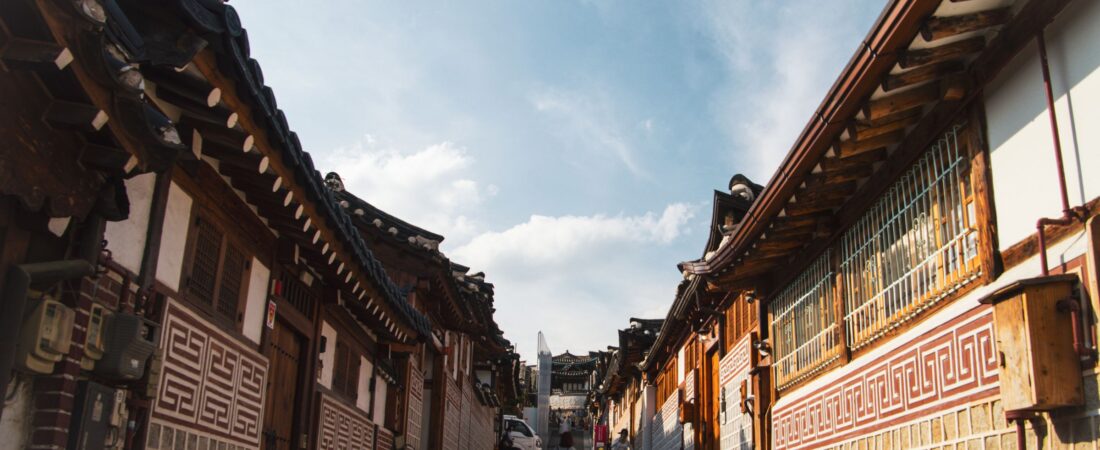
Bukchon Hanok Village (북촌한옥마을) is the best-known cluster of traditional Korean hanok houses left in Seoul — a hillside residential neighborhood of tile-roofed courtyard homes strung along narrow lanes between Gyeongbokgung and Changdeokgung palaces. It has been ranked among the top attractions in the capital for good reason: nowhere else in the city can you stand on one street and see centuries of Joseon-era urban planning cascading downhill toward the glass towers of downtown. It is also, importantly, a place where roughly six thousand people still live in ordinary houses — so this guide covers not just what to see, but how to visit respectfully, including the tourist curfew now enforced by law.
A Little Context
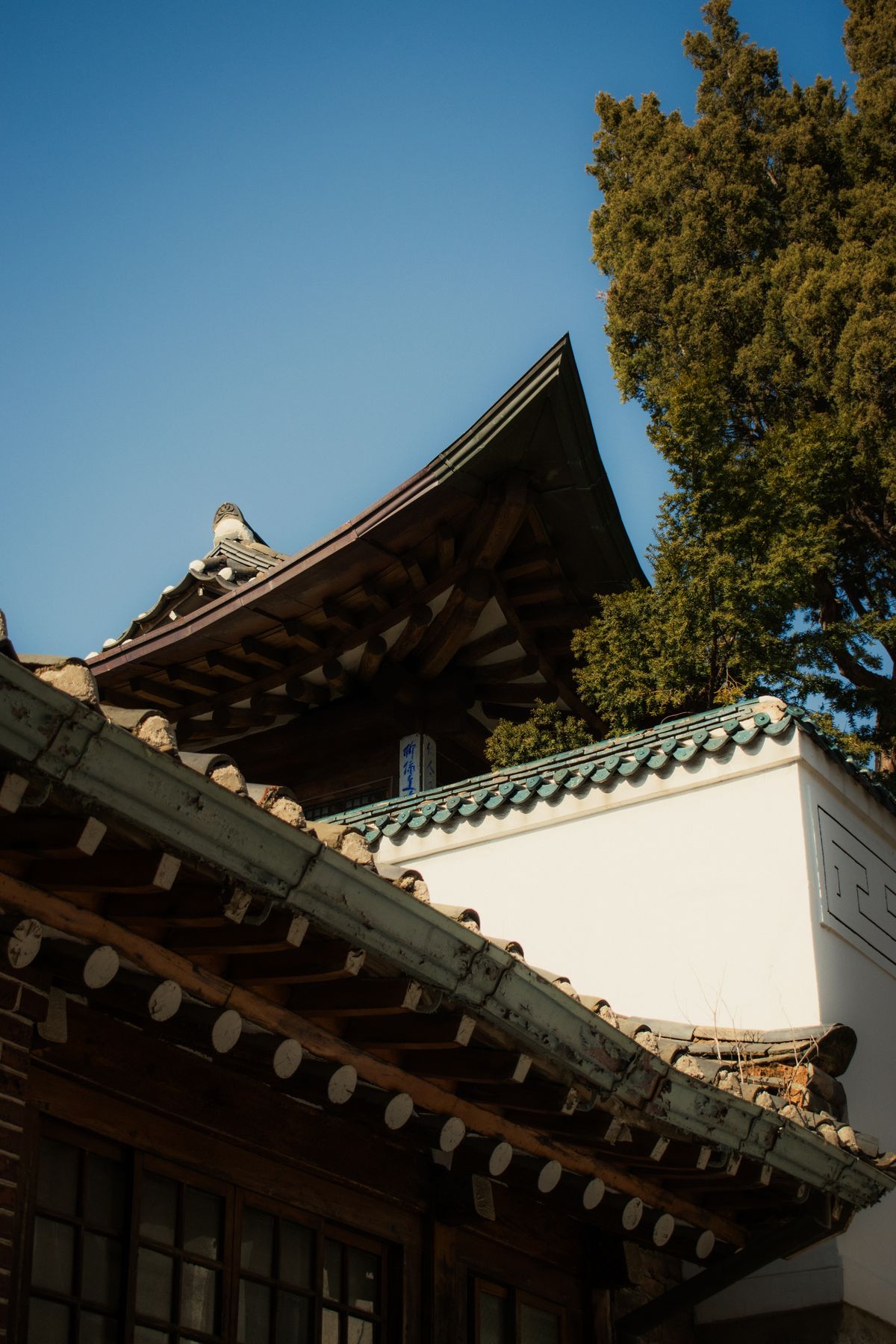
Bukchon means “north village” — the high ground north of the old Cheonggyecheon stream, between the two main royal palaces of the Joseon dynasty (1392–1910). After King Taejo moved the capital to Hanyang (present-day Seoul) in 1394, this hillside became prime real estate for the yangban — the hereditary class of scholar-officials who staffed the royal court — precisely because it sat close to both Gyeongbokgung and Changdeokgung. Large aristocratic compounds with their own gates, gardens and servants’ quarters filled the slope for centuries.
The dense grid of small hanok you see today is actually a younger, early-20th-century layer: as Joseon-era wealth broke up in the late dynastic period and through Japanese colonial rule, large yangban estates were subdivided into hundreds of smaller lots. A pioneering Korean developer, Jung Se-gwon, bought up parcels through the late 1920s and 1930s and built rows of compact hanok for Seoul’s growing middle class — partly, by his own account, to keep the neighborhood in Korean hands as the city modernized around it. That wave of construction is why Bukchon’s hanok, despite looking centuries old at a glance, mostly date to the 1930s.
By the late 20th century, redevelopment pressure nearly erased the neighborhood — many hanok were demolished for multi-unit housing before the Seoul city government stepped in with preservation subsidies and design guidelines starting in the 2000s. Today roughly 900 hanok survive, protected but very much lived-in, which is also the source of the neighborhood’s central tension: a designated cultural district that is simultaneously a functioning residential community. That tension is why the walking rules further down this page matter as much as the opening hours.
Quick Facts & Costs for 2026
💡 Prices checked on 26 July 2026. Bukchon is an open residential neighborhood, not a ticketed site, so most figures below are fees for optional sites and fines rather than an entrance ticket. Confirm current details on the official sources below before you visit.
| Item | Cost | Notes & source (checked) |
|---|---|---|
| Walking the village streets | Free | Bukchon’s lanes are public city streets, open access, no gate or ticket. — Seoul Metropolitan Government (english.seoul.go.kr), checked 26 Jul 2026 |
| Bukchon Traditional Culture Center | Free admission | Hours vary by day (roughly 09:00–18:00 weekdays, shorter on weekends); some craft classes charge a materials fee. — hanok.seoul.go.kr, checked 26 Jul 2026 |
| Gahoe Museum (private folk-art museum) | Paid, exact fee varies by source | This is a separately owned museum inside the village, not part of the free public streets — published fees are inconsistent online, so confirm the current adult/student price on-site or via the official Visit Seoul listing before you go. |
| Quiet-hours tourist restriction (Red Zone, incl. Bukchon-ro 11-gil) | No tourist entry 17:00–10:00; fine ₩100,000 (≈ $68.4) | In force since 1 Mar 2025 after a guidance period; enforced by Jongno-gu District Office to protect residents’ privacy overnight. — Korea Herald, Korea Times, checked 26 Jul 2026 |
| Address | Centered on Gahoe-dong & Samcheong-dong, Jongno-gu, Seoul | The “village” spans several dong (neighborhoods); Bukchon-ro is the main spine street. — Jongno-gu District Office, checked 26 Jul 2026 |
How to Get There
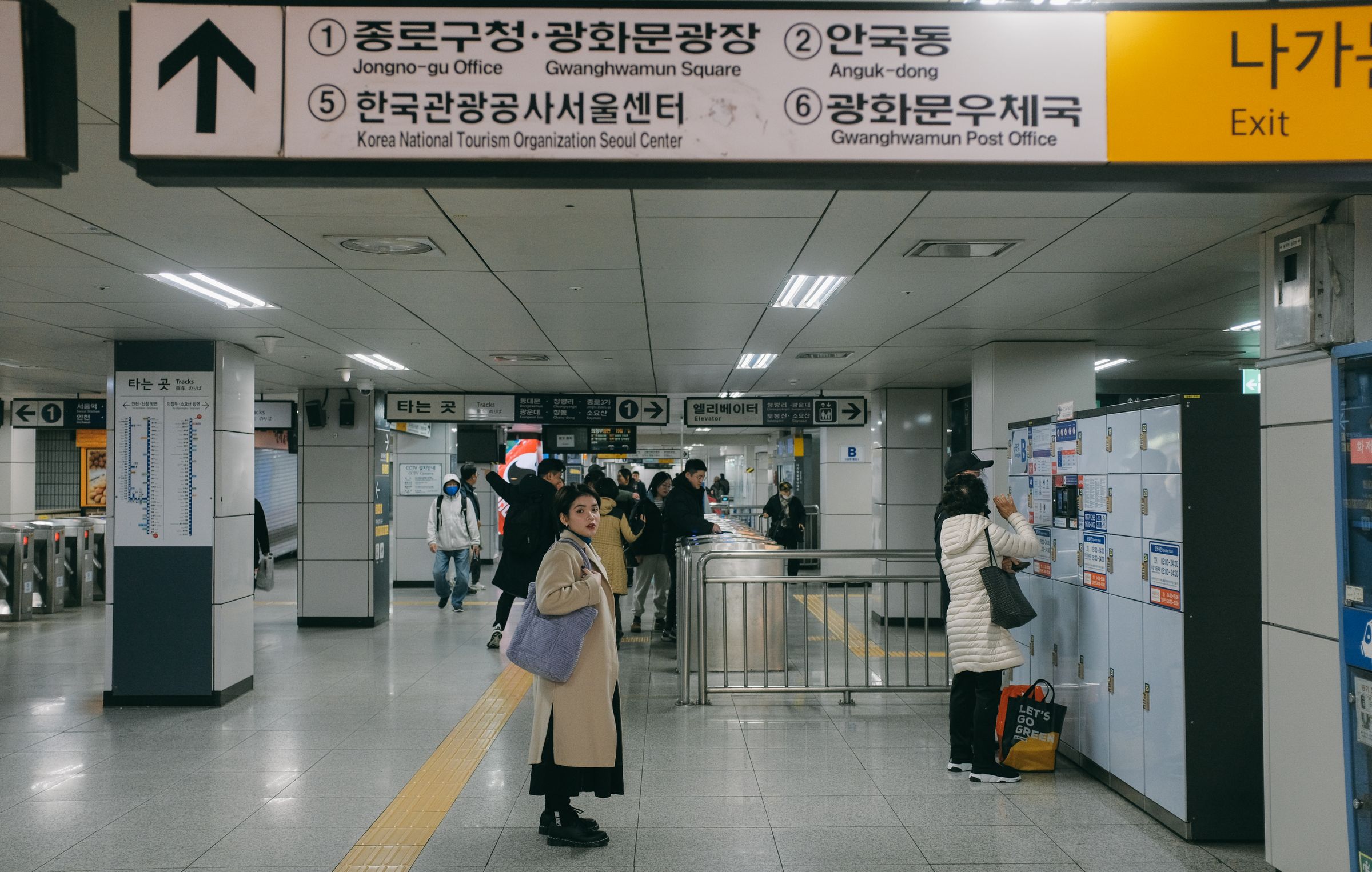
Bukchon sits directly between two palace subway stops, so almost everyone arrives on Seoul Metro Line 3.
| Getting there | Details (checked 26 Jul 2026) |
|---|---|
| Subway (most direct) | Anguk Station (Line 3), Exit 2 — walk north on Bukchon-ro; the first hanok lanes appear within about 5 minutes, and it’s roughly 12 minutes further uphill to the Bukchon-ro 11-gil viewpoint |
| Subway (for the Culture Center) | Anguk Station (Line 3), Exit 3 — walk straight, then turn onto the first left to reach the Bukchon Traditional Culture Center |
| Subway (alternative) | Jongno 3(sam)-ga Station (Lines 1, 3 & 5) — a longer, less direct walk of roughly 15–20 minutes; better if you’re already changing lines here |
| Taxi | From Myeongdong, Insadong or Gwanghwamun, roughly 10–15 minutes; ask to be dropped on Bukchon-ro or in Gahoe-dong, since taxis cannot enter the narrowest lanes |
| Area | Gahoe-dong & Samcheong-dong, Jongno-gu, Seoul · nearest tourist information: Anguk Station area |
Walking the Hanok Streets
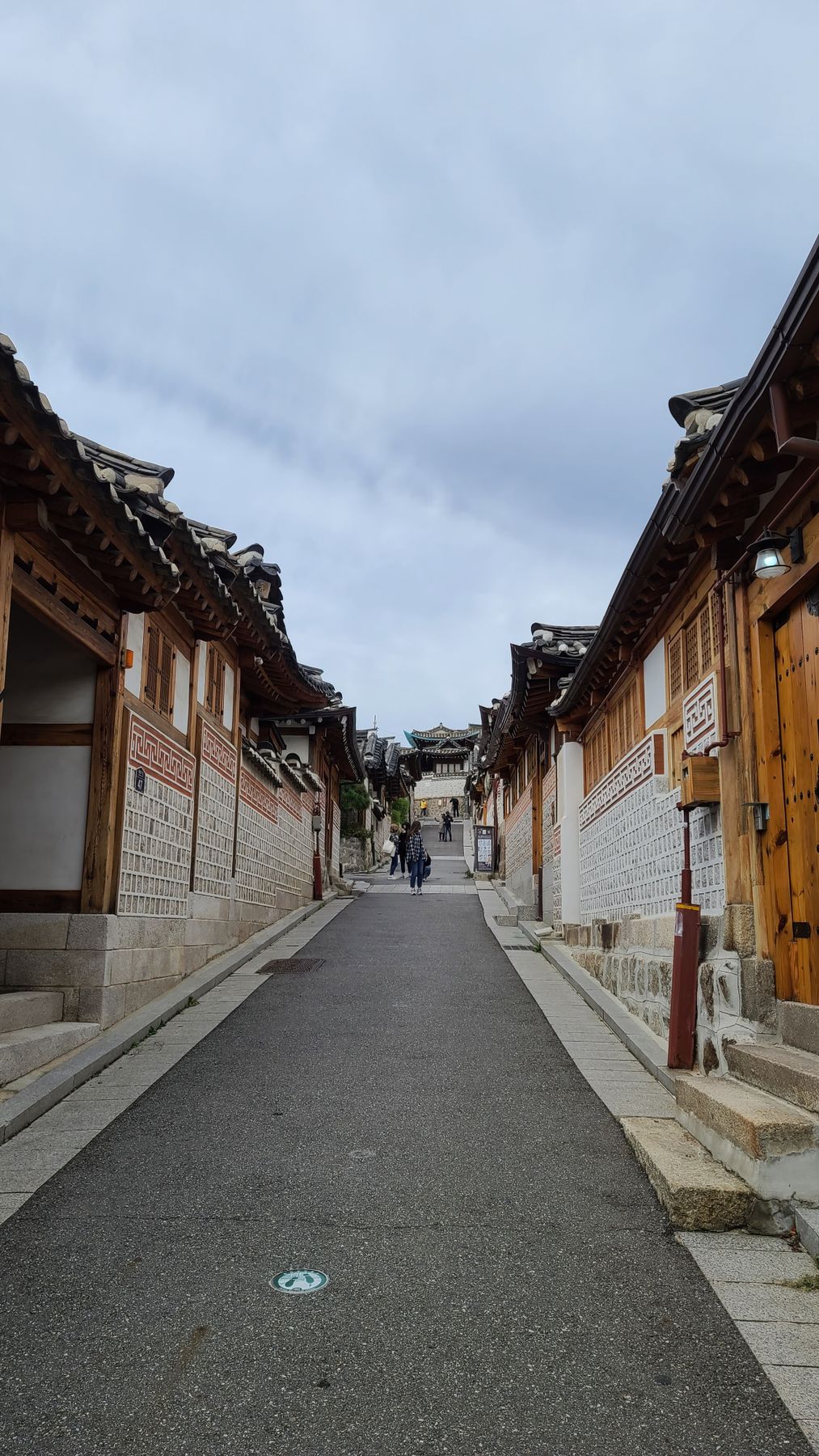
Bukchon has no single marked circuit or official interior map — it’s a real neighborhood grid, and most guides (this one included) describe a loose loop connecting the best-known lanes. A typical route works like this:
- Start at Anguk Station, Exit 2. Walk north up Bukchon-ro; you’ll pass a 7-Eleven at a junction near Nature Republic — this is the turn-off point for the lanes above.
- Bukchon-ro 11-gil (“Red Zone”). Turn up this lane for the neighborhood’s signature view — tiled hanok roofs stepping downhill with the modern skyline behind them. This is the most residential, densely packed lane, which is exactly why it now carries the strictest quiet-hours rule (see Practical Tips).
- Gahoe-dong & Bukchon-ro 12-gil. Continue past the Gahoe Museum and smaller side alleys, where hanok have been converted into galleries, tea houses and guesthouses.
- Bukchon-ro 5-gil & Gyedong-gil (“Orange Zone”). Loop back down through this mixed strip of cafes, restaurants and craft shops alongside still-occupied houses — visitor-friendly hours here, but staff patrol to keep noise down.
- Finish near the Bukchon Traditional Culture Center (Anguk Station Exit 3), a free public hanok you can actually step inside, which is the easiest way to see hanok construction up close without intruding on anyone’s home.
The whole loop is under 2 km and comfortably walkable in 60–90 minutes at a slow, photo-stopping pace — longer if you add the museums below.
Best Photo Spots & Viewpoints
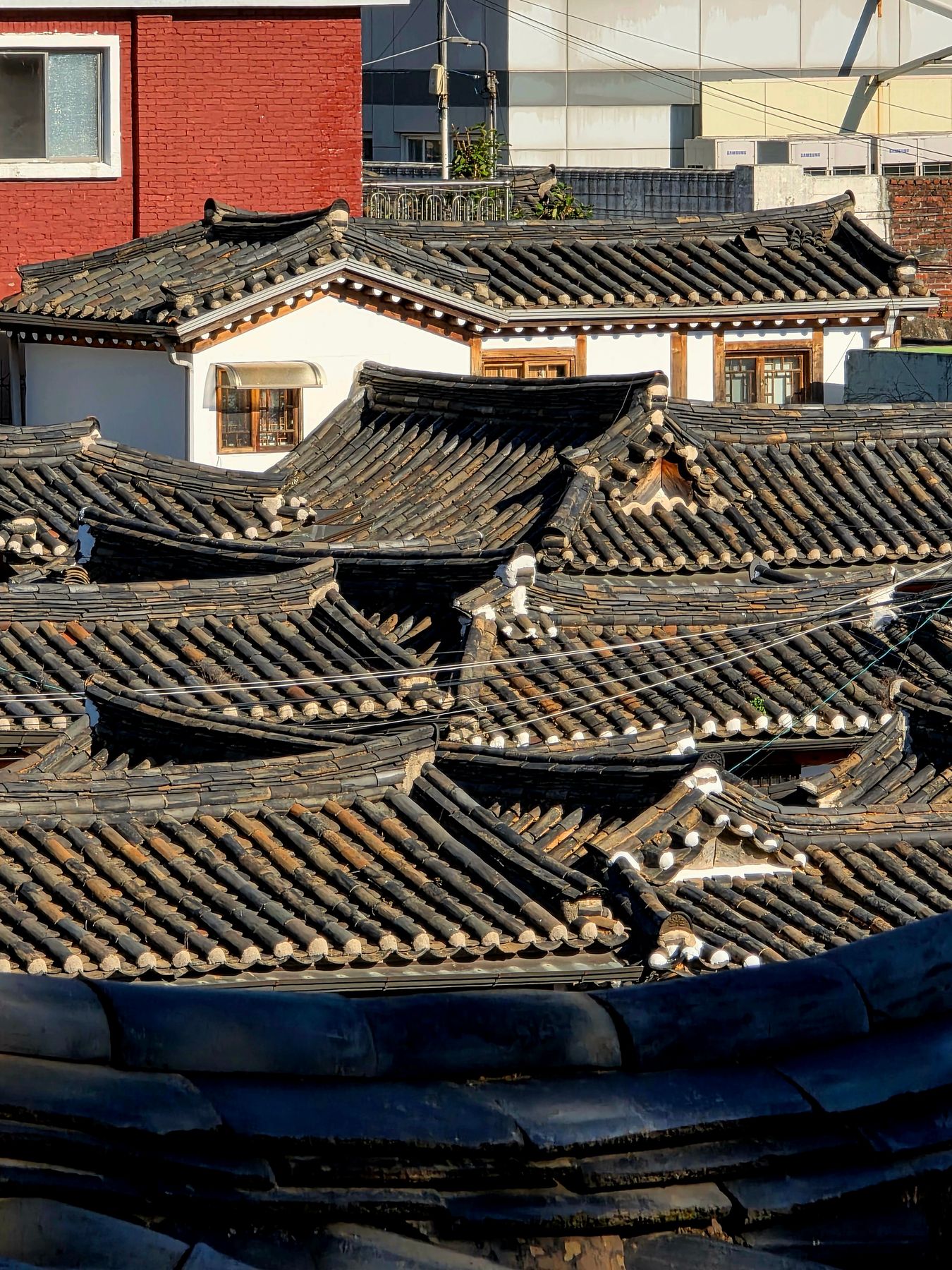
Locals number the classic photo stops “Views 1 through 8” along the main walking route; the most iconic cluster is Views 5 to 7 on Bukchon-ro 11-gil, where grey tiled eaves cascade downhill toward central Seoul’s high-rises — the image on almost every Bukchon postcard. Two paid vantage points add height above street level: the Bukchon Asian Art Museum terrace (76 Bukchon-ro 11-gil) and the Gahoe 2nd-floor observatory (33 Bukchon-ro 12-gil), both of which look down over rooftops that are otherwise hard to photograph from the narrow lanes. Early morning, right after the 10:00 a.m. end of quiet hours, is by far the quietest window for photos before tour groups arrive — sunset also works well, but note that Bukchon-ro 11-gil itself closes to tourists again at 5:00 p.m.
Prefer a local guide to point out the real viewpoints (and avoid straying into residents’ front doors)?
Museums & Cultural Experiences inside Bukchon
Beyond the streets themselves, a handful of sites let you step inside a hanok rather than just admire it from the lane:
- Bukchon Traditional Culture Center — a free public hanok (once a home of the Min family, prominent Joseon-era financiers) where you can see traditional room layouts up close and sometimes sit in on a calligraphy, tea-ceremony or craft class.
- Gahoe Museum — a private museum of Korean folk paintings (minhwa), amulets and everyday craft objects, one of the few places in the village to see historic interior collections rather than architecture alone.
- Bukchon Asian Art Museum — a small private gallery with a rooftop terrace overlooking the hanok streets.
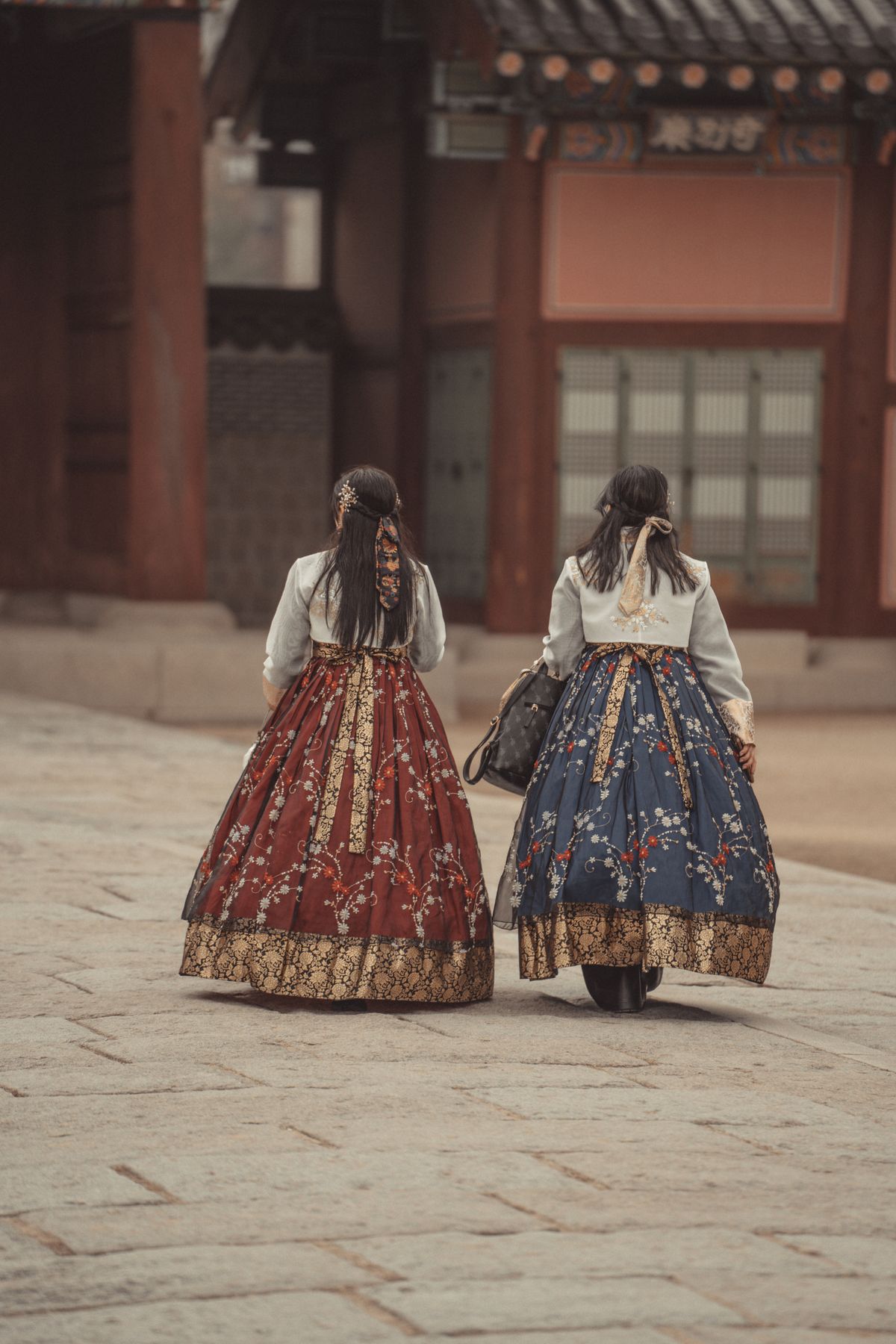
- Hanbok rental shops clustered near Anguk Station Exit 2 — renting a hanbok for a few hours is a popular way to photograph Bukchon, and it also gets you free or discounted admission at nearby Gyeongbokgung and Changdeokgung if you walk over in costume.
Combine a Bukchon walk with either of the neighboring palaces for a full day: Seoul’s biggest palace, Gyeongbokgung, sits about 15 minutes’ walk to the west, while Changdeokgung and its “Secret Garden” (Huwon) are about 10 minutes east.
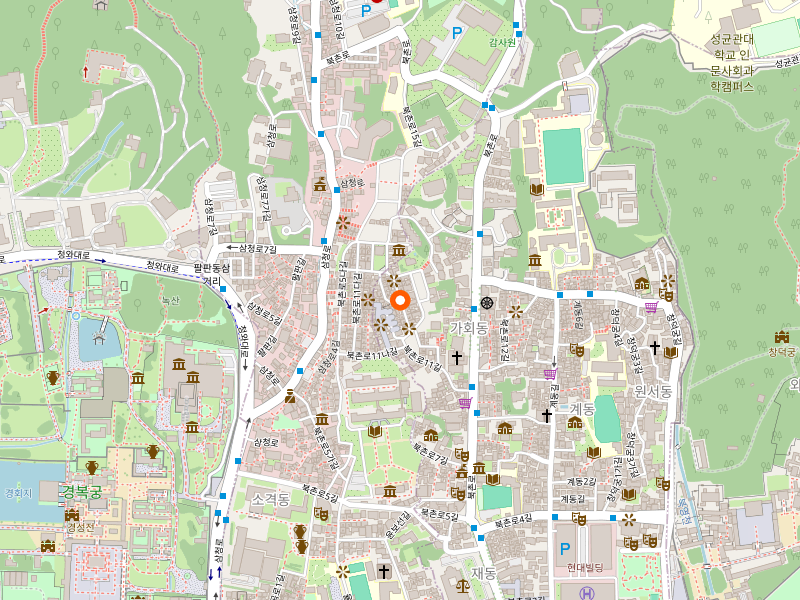
Map: Bukchon Hanok Village at a Glance
Practical Tips
- Respect the quiet hours. Tourist entry into the Red Zone (Bukchon-ro 11-gil and the densest residential lanes) is banned from 5:00 p.m. to 10:00 a.m., with a ₩100,000 (≈$68.4) fine for violations — this isn’t a suggestion, it’s enforced by Jongno-gu.
- Keep your voice down everywhere, all day. Even in the Orange Zone (Bukchon-ro 5-gil, Gyedong-gil) where hours aren’t restricted, these are people’s front doors — no loud group photos, no peering through gates or windows.
- Go early. Arrive right around 10:00 a.m. when quiet hours lift, or on a weekday, for the emptiest lanes and softest light.
- Wear flat, quiet shoes. The lanes are steep, narrow and sometimes cobbled; the neighborhood also asks visitors to avoid rolling suitcases through residential alleys.
- Pair it with a palace. Bukchon sits almost exactly between Gyeongbokgung and Changdeokgung — book one for the morning and walk Bukchon in the afternoon (before 5:00 p.m.).
- Check for closures before you go. Rules, zone boundaries and enforcement have changed more than once since 2024 — confirm current status with Jongno-gu or Visit Seoul if you’re planning around specific hours.
Where to Stay
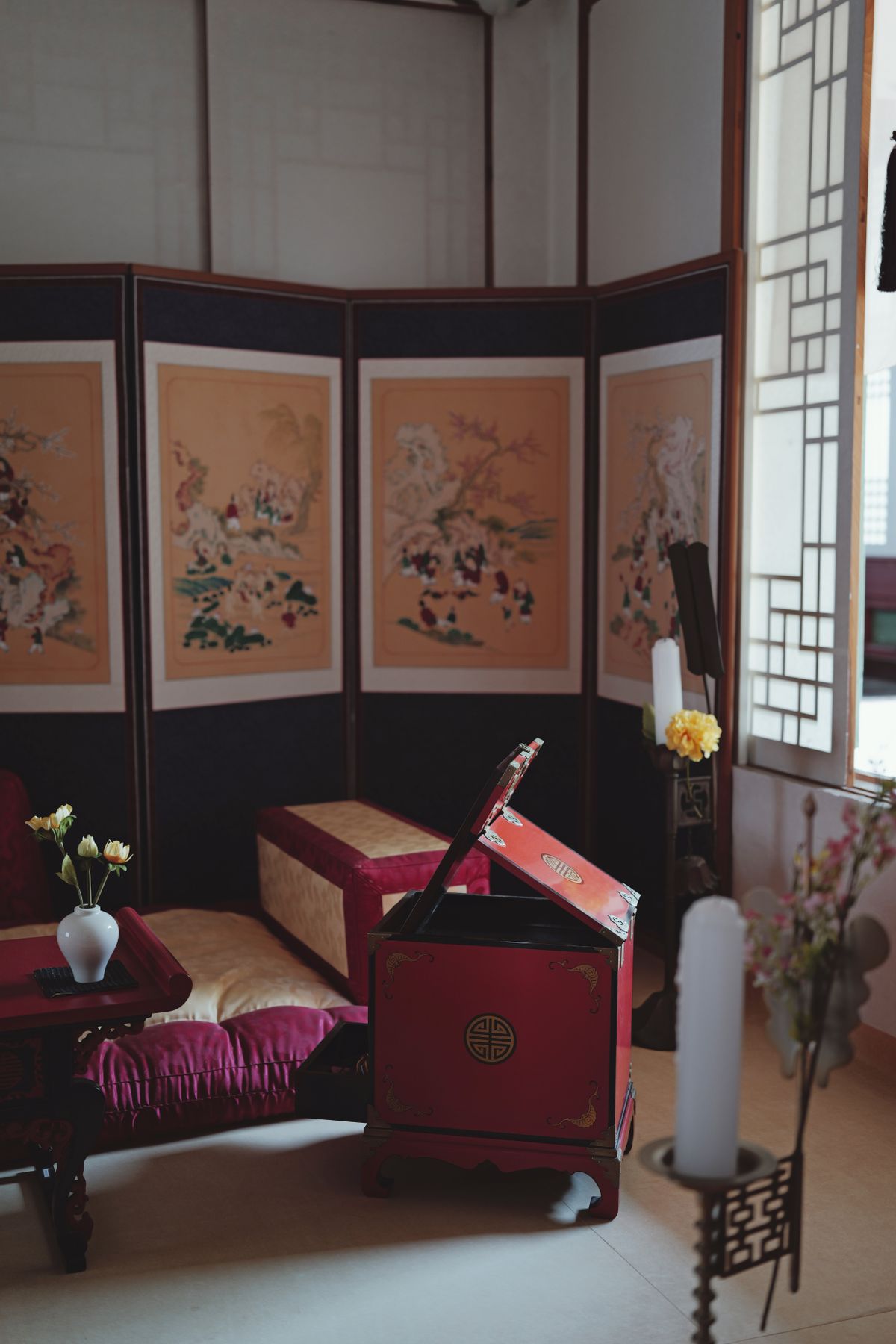
A few hanok in and around Bukchon operate as boutique guesthouses, letting you sleep on heated ondol floors inside the neighborhood itself — a genuinely different experience from a standard hotel room, though rooms are compact and it’s worth booking well ahead. Most visitors instead base themselves a short subway ride away in Seoul‘s Jongno, Myeongdong or Insadong areas, all of which put Bukchon, Gyeongbokgung and Changdeokgung within easy walking or one-stop-subway range.
Frequently Asked Questions
Is Bukchon Hanok Village free to visit?
Yes — the streets and lanes are public, with no gate or entrance ticket. A few individual sites inside the village, such as the Gahoe Museum, charge their own separate admission; the Bukchon Traditional Culture Center is free.
What are the Bukchon curfew hours?
Since 1 March 2025, tourist entry into the most residential lanes (the “Red Zone,” including Bukchon-ro 11-gil) is banned from 5:00 p.m. to 10:00 a.m., with a fine of ₩100,000 (≈$68.4) for violations — checked 26 July 2026 via Korea Herald and Korea Times reporting on the Jongno-gu District Office rule.
How do I get to Bukchon Hanok Village from the subway?
Take Seoul Metro Line 3 to Anguk Station, Exit 2, then walk north on Bukchon-ro; the first hanok lanes appear within about 5 minutes, with the Bukchon-ro 11-gil viewpoint roughly 12 minutes further uphill.
Can I combine Bukchon with Gyeongbokgung or Changdeokgung in one day?
Yes — both palaces are within a 10–15 minute walk of the village, and many hanbok-rental visitors wear their rented outfit between the palaces and Bukchon in the same afternoon.
Final Word
Bukchon Hanok Village packs a genuinely rare thing into a short walk: a working, lived-in slice of Seoul that still looks like the city did generations ago, framed against the skyline it grew alongside. See it in the morning after the quiet hours lift, pair it with whichever palace fits your schedule, and keep your visit polite — the hanok you are photographing is someone’s front door. This post contains affiliate links. If you book or buy through them, we may earn a small commission at no extra cost to you. Hours and prices can change — always confirm on official sources before you visit.
Related Guides
🎟️ Book Tours, Activities & Food Experiences
Search and book top attractions, tours and food experiences on Klook — official best price, instant confirmation.
Klook.com