Last updated: July 2026
Disclosure: This post contains affiliate links. We may earn a commission if you book through them, at no extra cost to you. Hours and prices can change — always confirm on official sources before you visit.
Book Tours & Activities in Seongsan Ilchulbong
Hand-picked Seongsan Ilchulbong experiences you can book online — a full-day UNESCO tour with Udo Island, a no-shopping East Jeju day trip with a Haenyeo diving show, and a combined Seongsan-Seopjikoji itinerary:


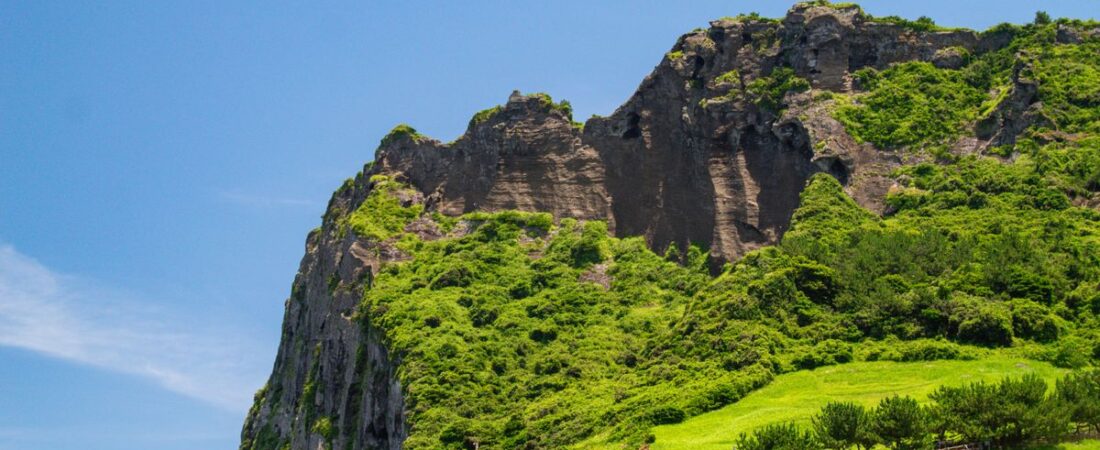
Rising 180 meters straight out of the Pacific on Jeju’s east coast, Seongsan Ilchulbong — literally “Sunrise Peak” — is the volcanic tuff cone that appears on every Jeju postcard and the anchor of any Jeju Island city guide. A UNESCO World Natural Heritage site since 2007, it draws travelers before dawn for the sunrise it is named for, and by day for the short but steep climb up its grassy crater rim. Here is what it costs, how to get there, and what to actually do once you arrive.
A Little Context

Seongsan Ilchulbong formed roughly 5,000 years ago, when a hydrovolcanic eruption — magma meeting shallow seawater — threw up ash and rock in a single explosive burst, building a broad crater cone on what was then a separate islet off Jeju’s east coast. Over the following centuries, sediment and lava flows connected the cone to the main island, leaving the broad, saucer-shaped crater and near-vertical cliff face that make it instantly recognizable today. The 99 jagged rock pinnacles ringing the crater rim gave rise to a folk tale that a giant goddess used them as stepping stones to build Jeju itself.
The site carries three separate protective designations: it was named a Korean Natural Monument on 19 July 2000, inscribed on the UNESCO World Natural Heritage List on 2 July 2007 as part of “Jeju Volcanic Island and Lava Tubes,” and recognized as a Global Geopark Network site in October 2010. Locally, the crater and surrounding cliffs are also tied to Jeju’s haenyeo — the island’s famous free-diving women who have harvested shellfish and seaweed by hand for generations. A haenyeo diving demonstration still runs on the cove beneath the peak, and the wider haenyeo tradition was inscribed on UNESCO’s Intangible Cultural Heritage list in 2016.
Quick Facts & Costs for 2026
💡 Prices checked 25 July 2026. Fees, hours and closure days can shift seasonally — always confirm on the official Visit Jeju site before you go.
| Item | Cost | Notes & source (checked) |
|---|---|---|
| Admission, adult | ₩5,000 (≈ $3.4) | Consensus figure across current Jeju visitor guides, checked 25 Jul 2026 — confirm on visitjeju.net before you go. |
| Admission, youth/child | ₩2,500 (≈ $1.7) | Same sources, checked 25 Jul 2026. |
| Standard opening hours | 7:00 AM–7:00 PM | The trail opens roughly an hour before sunrise year-round for early climbers — exact seasonal opening time shifts (as early as ~4:30–6:00 AM in summer); confirm current hours on visitjeju.net. |
| Regular closure | First Monday of each month | Shifts to the following day if that Monday is a public holiday — confirm before visiting. |
| Time to climb | 30–50 minutes round trip | Depends on fitness and photo stops; add time if visiting the Haenyeo show below. |
| Haenyeo diving show | Free to view | Runs roughly around 1:30 PM and 3:00 PM daily on the beach below the peak; weather-dependent and can be cancelled without notice — confirm locally. |
How to Get There

Seongsan Ilchulbong sits at the far eastern end of Jeju Island, roughly 45–60 minutes by road from Jeju City and about 40 minutes from Seogwipo. There is no rail on Jeju, so the trip is by public bus, rental car, taxi or organized tour.
| From | Details (checked 25 Jul 2026) |
|---|---|
| Jeju International Airport (CJU) | Express bus 111 or 112 runs directly toward Seongsan; travelers report roughly 1.5–2 hours depending on traffic and stops. Alight at the Seongsan Ilchulbong stop, across the road from the entrance. |
| Jeju Intercity Bus Terminal (Jeju City) | Bus 201 runs Jeju Bus Terminal → Seongsan → Seogwipo Bus Terminal roughly every 15–30 minutes. |
| Seogwipo | Same Bus 201 line in the opposite direction, or a taxi (roughly 30–40 minutes). |
| By car | Paid parking is available directly at the Seongsan Ilchulbong entrance; renting a car is the most flexible way to combine the peak with nearby Seopjikoji and Udo Island in one day. |
The Climb & Crater Trail

From the ticket gate, a paved and boardwalked path climbs the outer flank of the cone in a series of switchbacks, gaining most of its 180 meters in a compact, fairly steep 15–20 minute ascent (longer with crowds or photo stops). The trail ends at an observation platform on the rim, not inside the crater itself — the bowl-shaped crater floor, covered in silvergrass and roughly 200 recorded plant species, is protected and closed to hikers. From the rim, the view sweeps across the East China Sea, Udo Island offshore, Hallasan volcano in the island’s interior on a clear day, and the patchwork of volcanic cones (oreum) covering eastern Jeju. Bring water and wear shoes with grip — the steps can be slick after rain, and there is little shade on the way up.
Book a guided tour that includes the climb (live prices):
Book the Seongsan Ilchulbong & Udo Island tour on Klook — check price →
Sunrise, the Haenyeo Show & Best Time to Visit

True to its name, the single most popular reason to visit Seongsan Ilchulbong is the sunrise itself: the gate opens about an hour before dawn every day of the year, and the eastern-facing rim is considered one of the best sunrise viewpoints in Korea. New Year’s Day is the busiest sunrise of all — Jeju has held a dedicated Sunrise Festival at the peak since 1994, with crowds gathering overnight for the first sunrise of the year, said locally to bring good luck to whoever spots it first. Outside of New Year’s, weekday mornings are far quieter than weekends and Korean holiday periods. In the early afternoon, a free-to-watch haenyeo diving performance takes place on the cove directly below the cliff — the women divers sing, then demonstrate their traditional breath-hold harvesting technique in the open water, a rare and low-key way to see a UNESCO-recognized living tradition up close (schedule and weather-dependent — check locally on the day).
Udo Island & the Seongsan Area

Most visitors pair Seongsan Ilchulbong with nearby Udo Island, the small “island off an island” visible from the crater rim, known for white-sand and coral beaches, bicycle-friendly roads and peanut ice cream. Ferries run frequently during daylight hours from Seongsan Port, a short taxi or bus ride from the peak — schedules and fares shift seasonally, so check the current timetable at the ferry terminal or on the official Visit Jeju site rather than relying on older posted times. Also nearby is Seopjikoji, a dramatic clifftop point with a lighthouse and seasonal wildflower fields, and Gwangchigi Beach, a lava-rock shoreline that frames Ilchulbong from the water’s edge at low tide — both are common stops on the same half-day out on Jeju’s east coast.
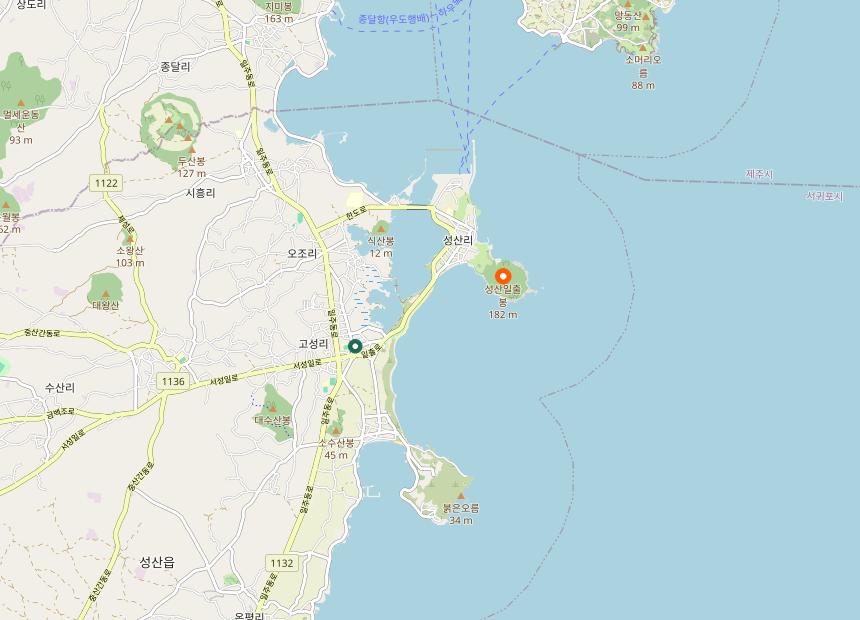
Map: Seongsan Ilchulbong at a Glance
Practical Tips
- Arrive at least 30–45 minutes before sunrise if that is your goal — gates open about an hour before dawn, and the walk up takes 15–20 minutes at a normal pace.
- The crater floor is off-limits; the trail leads to a rim-side viewing platform only, not down into the bowl.
- Wear closed, grippy shoes — the boardwalk steps can be slippery after rain or dew, and there is minimal shade.
- The free haenyeo diving show runs roughly around 1:30 PM and 3:00 PM on the beach below the peak, but is cancelled in bad weather without much notice.
- Combine the visit with Udo Island or Seopjikoji if renting a car — all three sit within about 15 minutes of each other on Jeju’s east coast.
- Always confirm current hours, admission and the monthly closure day on the official Visit Jeju site before you go.
Where to Stay

Staying in the Seongsan area itself — mostly small guesthouses and pensions — is the only way to reach the peak on foot for sunrise without an early taxi ride. Jeju City, near the airport, has the widest range of hotels and the most restaurants and nightlife, at the cost of a roughly hour-long drive each way. Seogwipo, on the south coast, splits the difference — about 40 minutes from Seongsan with easy access to the island’s southern waterfalls and coastline.
Frequently Asked Questions
Is Seongsan Ilchulbong free to enter?
No — admission is roughly ₩5,000 for adults and ₩2,500 for youth/children (checked 25 Jul 2026). The haenyeo diving show on the beach below is free to watch.
How long does the climb take?
Most visitors budget 30–50 minutes round trip, including time on the rim viewing platform; the ascent itself is 15–20 minutes at a normal pace.
Can you go inside the crater?
No — the crater floor is a protected habitat and closed to hikers. The trail leads only to a viewing platform on the outer rim.
What is the best time to visit for sunrise?
The gate opens roughly an hour before sunrise every day of the year; weekday mornings are quieter, while New Year’s Day draws large crowds for Jeju’s long-running Sunrise Festival.
Final Word
Seongsan Ilchulbong packs a 5,000-year-old volcanic story, a genuinely rewarding half-hour climb, and one of Korea’s best sunrise views into a single UNESCO-listed cone on Jeju’s east coast. Time it around dawn if you can, catch the free haenyeo show in the early afternoon, and pair it with a ferry over to Udo Island to make a full day of Jeju’s eastern coastline.
This post contains affiliate links. If you book or buy through them, we may earn a small commission at no extra cost to you. Hours and prices can change — always confirm on official sources before you visit.
Related Guides
🎟️ Book Tours, Activities & Food Experiences
Search and book top attractions, tours and food experiences on Klook — official best price, instant confirmation.
Klook.com