Top Attractions in Jeju Island
Tap a landmark for its full 2026 guide — tickets, hours and how to get there.
This post contains affiliate links. If you book or buy through them, we may earn a small commission at no extra cost to you.
Last updated: June 2026
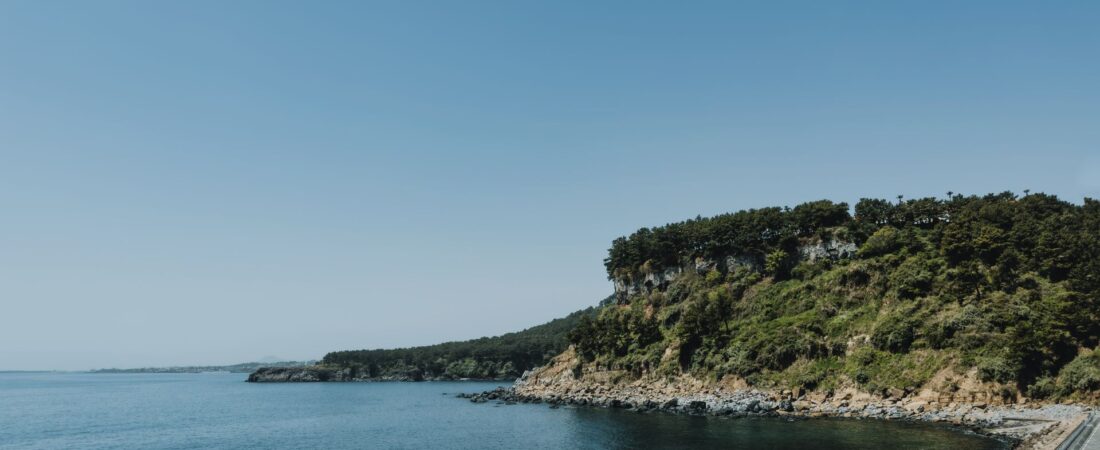
Jeju is the island Koreans escape to, and once you go you understand why. It sits about an hour’s flight south of Seoul, a volcanic island built around a single dormant peak, ringed by black-rock coastline and beaches that look more Mediterranean than East Asian. You come here for the outdoors first and the towns second. The short version: hike or walk a coastal trail in the morning, chase a waterfall or a lava tube in the afternoon, and eat black pork and fresh seafood at night. Three to four days is the sweet spot, and a rental car makes the whole thing easier.
Here is how I would spend the time, plus where to base yourself and a few things I wish someone had told me before the first trip.
💡 Prices checked on July 12, 2026. Fees and hours change seasonally — always confirm on the official site or the booking widget below before you visit.
| Item | Cost | Notes & source (checked) |
|---|---|---|
| Seongsan Ilchulbong (Sunrise Peak) | ₩5,000 (≈ $3.3) | Adult; youth/child ₩2,500 (≈ $1.7). Open ~07:00–19:00. — official / VisitJeju |
| Manjanggul Lava Tube | ₩4,000 (≈ $2.7) | Adult; teen/child ₩2,000 (≈ $1.3). Reopened May 2026 — confirm it is open. — Jeju operator listings |
| Hallasan National Park | Free | No entry fee; some summit trails need free advance reservation. — Korea National Park Service |
| Jeju Olle Trail | Free | Coastal walking routes; no ticket. — Jeju Olle Foundation |
| Jeju local bus base fare (T-money) | ₩1,200 (≈ $0.8) | Intra-island city & trunk buses; distance surcharge beyond base. — VisitJeju 2026 |
Book Tours & Activities in Jeju Island
Watch the Sunrise from Seongsan Ilchulbong
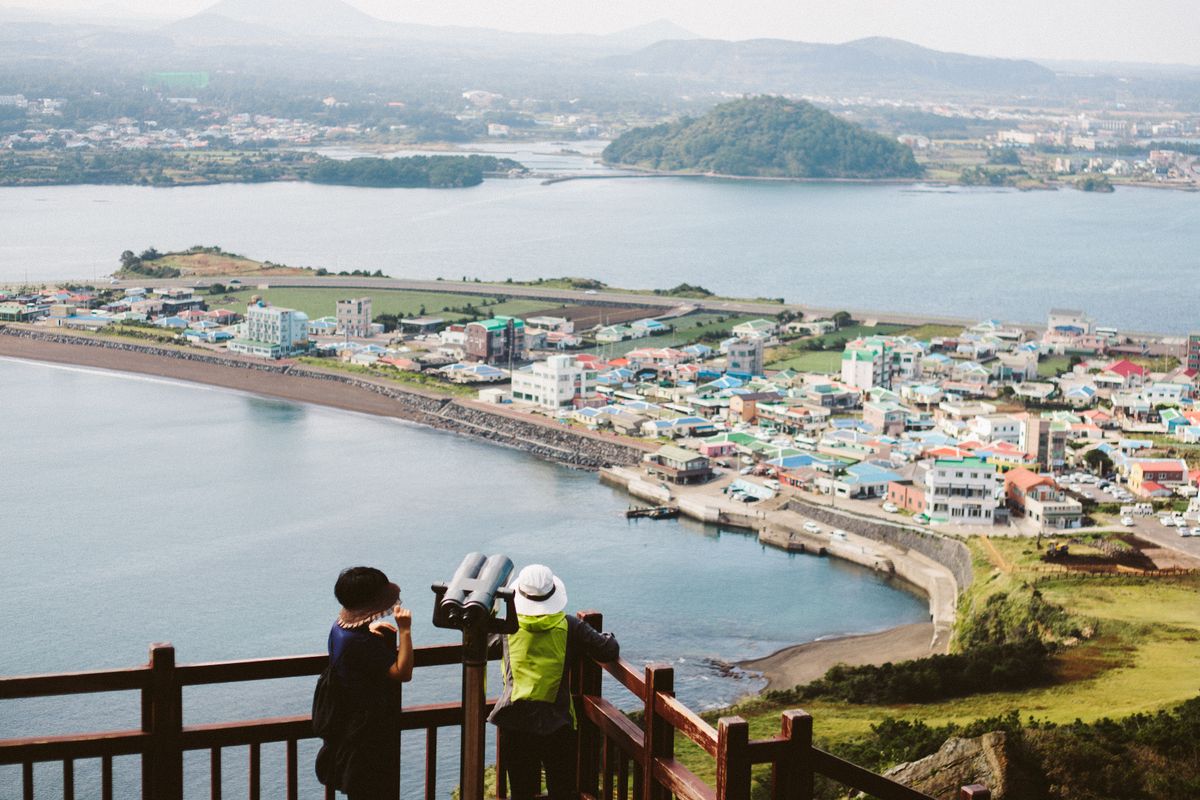
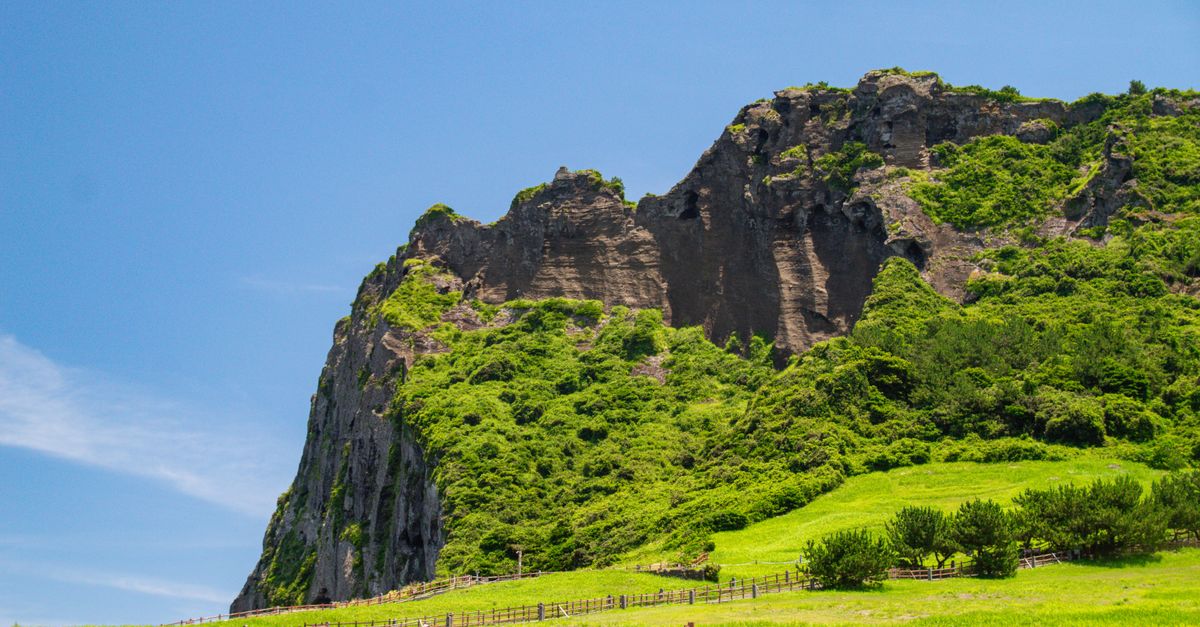
If you do one thing on the east coast, make it this. Seongsan Ilchulbong, or Sunrise Peak, is a tuff cone that erupted out of the sea around 5,000 years ago, and its crater rim is one of the few volcanic landforms you can climb in under half an hour. The name is literal – people come for sunrise, and on a clear morning it earns the early alarm. The walk up is a stepped path, fully paved, maybe 20 to 25 minutes at a normal pace.
Go early not just for the light but for the quiet. By mid-morning the tour buses arrive and the narrow viewing platforms get tight. If you time it with the haenyeo diving demonstrations held near the base, you get a bonus: a look at Jeju’s famous female free-divers, who still harvest shellfish by breath alone.
Hike Hallasan, or Just Part of It
Hallasan is South Korea’s highest mountain at 1,947 meters, and it sits dead center on the island – you can see it from almost everywhere when the clouds cooperate. Two trails, Seongpanak and Gwaneumsa, go all the way to the summit crater lake, and both are long full-day efforts that require an early start and a timed reservation in peak periods. Check the official Hallasan reservation system before you go, because the rules change by season and the summit trails have entry cutoffs as early as the morning.
Not up for a 19-kilometer round trip? You do not have to summit to enjoy the mountain. Shorter routes like Eorimok and Yeongsil get you into the alpine scenery and azalea fields without the full commitment, and they are spectacular in late spring and autumn. Whatever route you pick, start early, carry water and snacks, and pack a windproof layer – the summit is far colder and windier than the coast, and weather on the mountain turns quickly. There are no shops once you are on the trail, so stock up before you set out.
Walk a Stretch of the Olle Trail
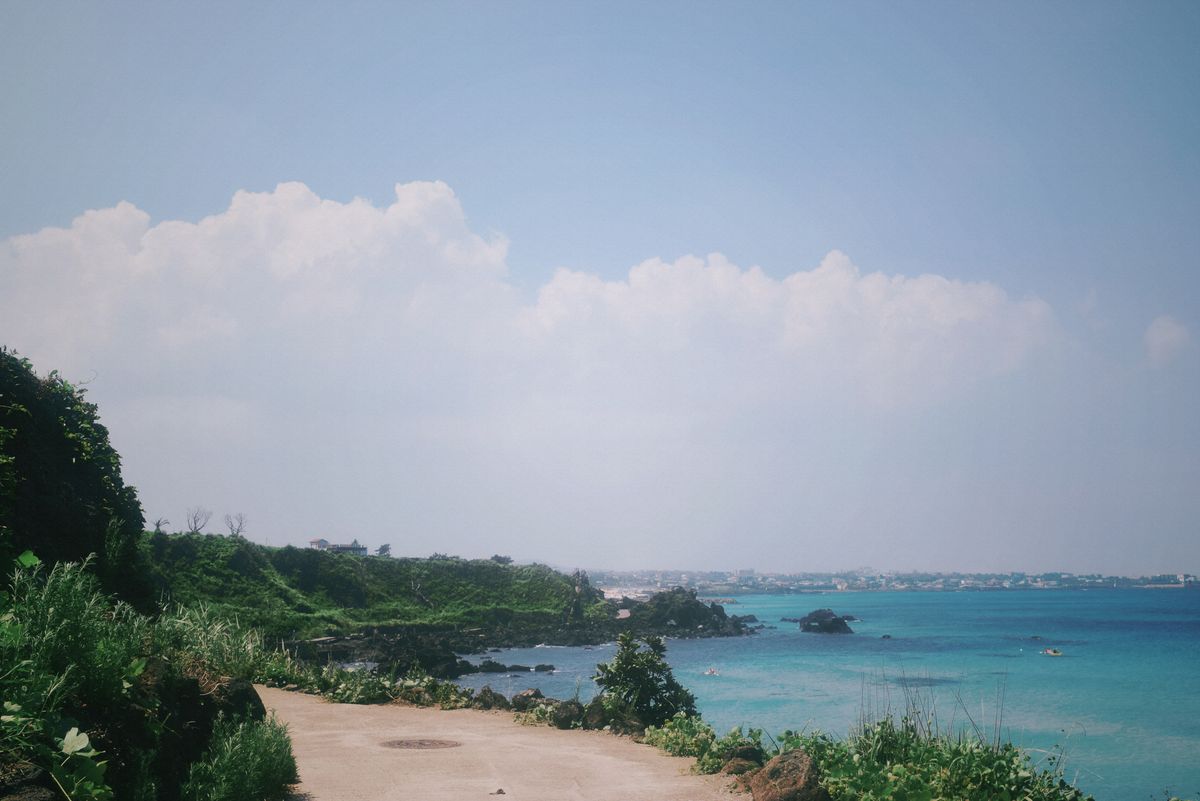
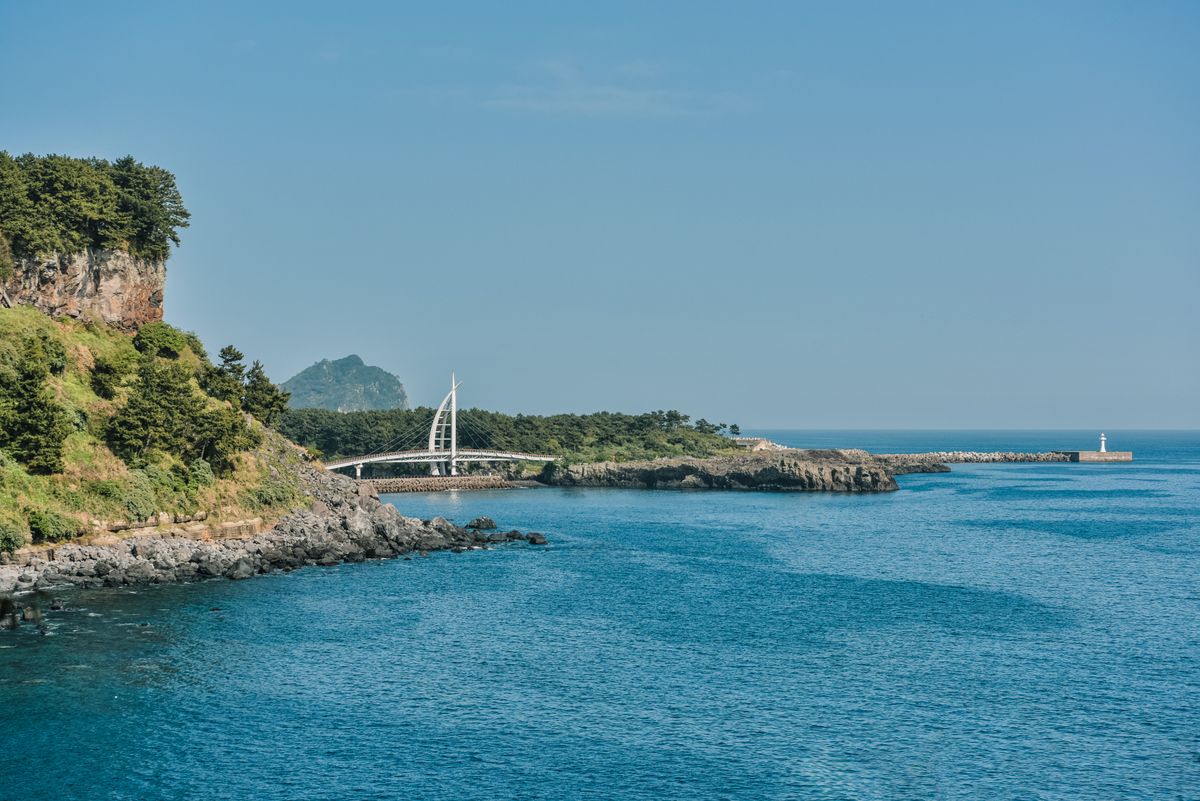
The Jeju Olle is a network of marked walking routes – 27 of them at last count – that thread around the entire coastline and through villages and farmland. You will not walk all 400-plus kilometers, but picking one route for a half day is the best way to see the island slowly. Route 7 along the southern coast near Seogwipo is the classic, hugging cliffs and fishing villages. Look for the blue-and-orange ribbons and the small horse figures that mark the path. Best of all, it costs nothing.
See the Coast: Waterfalls and Cliffs
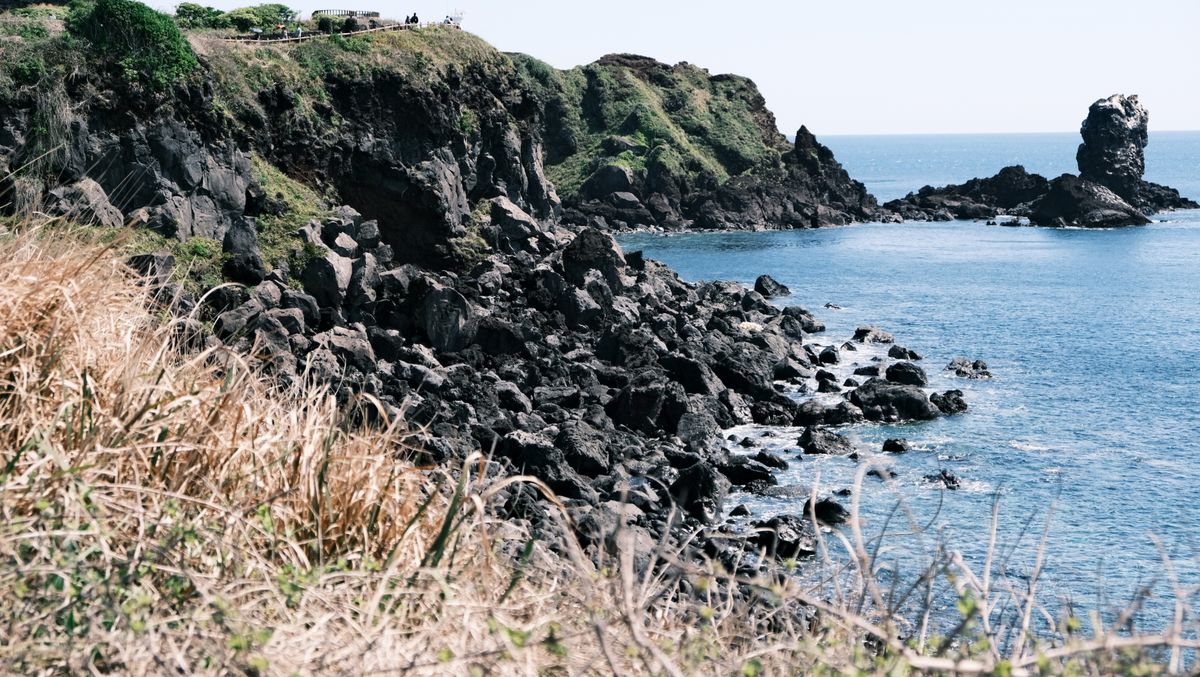
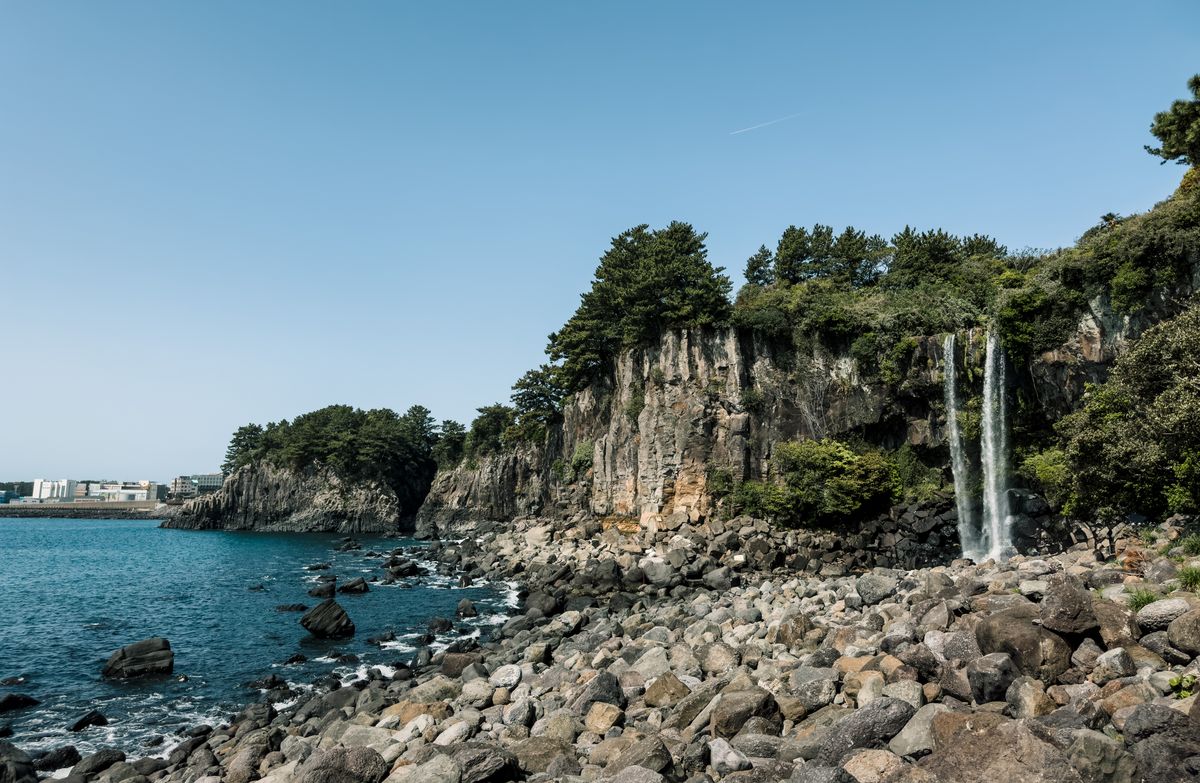
The south coast around Seogwipo is where Jeju’s water features cluster. Cheonjiyeon and Jeongbang waterfalls are both easy to reach, and Jeongbang is one of the few waterfalls in Asia that drops directly into the ocean. A short drive west, the Jusangjeolli Cliffs are a wall of hexagonal basalt columns formed by cooling lava, with waves crashing into the base – geology that looks almost too neat to be natural.
Go Underground at Manjanggul Lava Tube
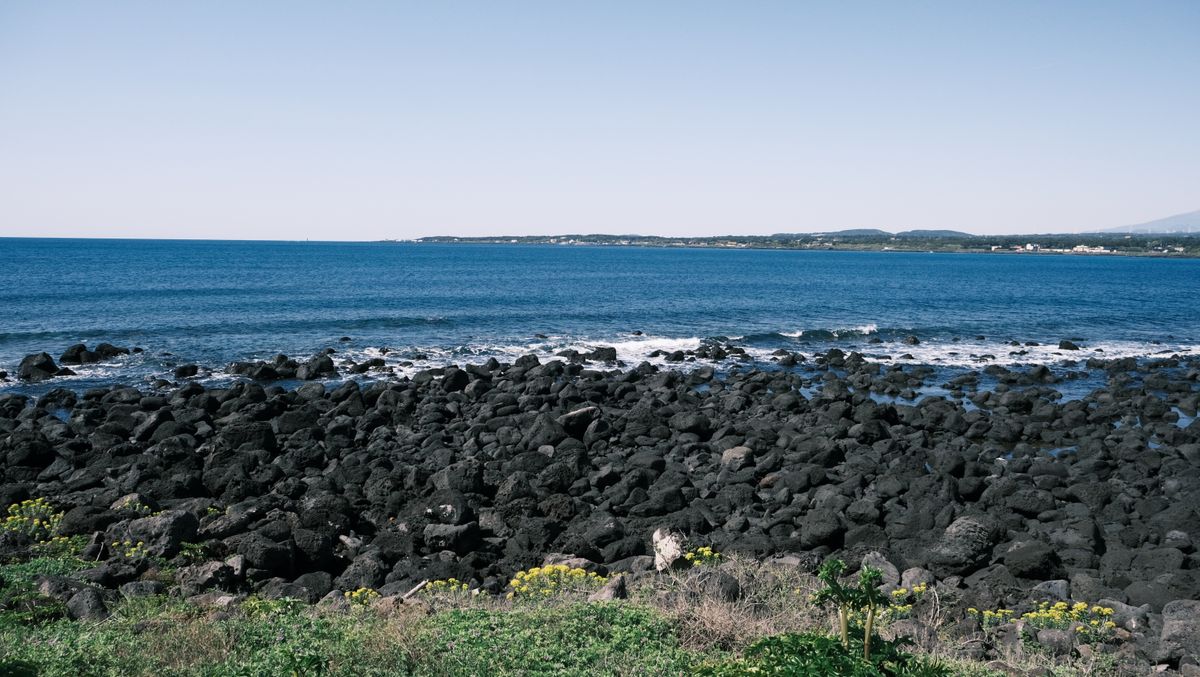
Jeju is volcanic to its core, and Manjanggul is the proof you can walk through. It is one of the longest lava tubes in the world, and a roughly one-kilometer section is open to visitors. Inside it is cool, dim, and dripping, ending at a towering lava column. Bring a light layer – it stays around 10 to 15 degrees Celsius year-round regardless of the weather outside. Check current opening status before driving out, as sections close periodically for conservation.
Hit the Beaches
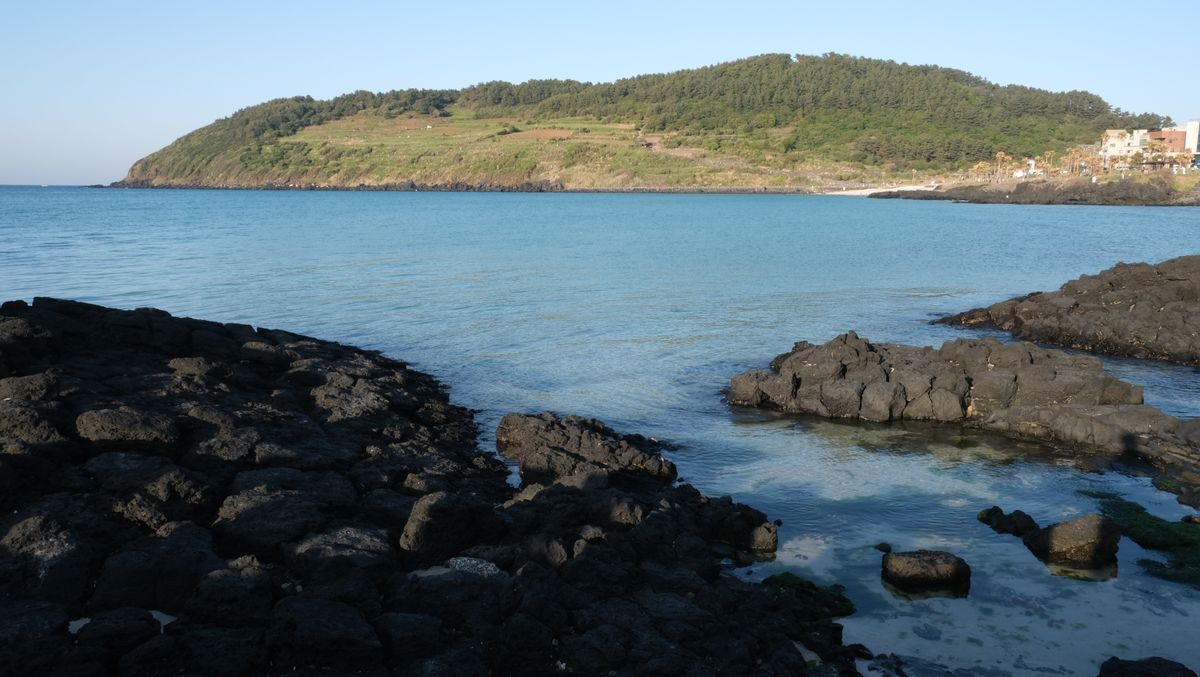
Jeju’s beaches surprise first-timers with their color – white or pale sand against turquoise water and black volcanic rock. Hyeopjae on the northwest coast is the postcard one, shallow and calm with Biyangdo island offshore. Hamdeok, closer to the airport, is a family favorite with an easy boardwalk and cafes. Jungmun Beach on the south coast has bigger waves and draws surfers. None of them are tropical-warm outside of high summer, but they are beautiful in any season.
Eat Like a Local: Black Pork and Haenyeo Seafood
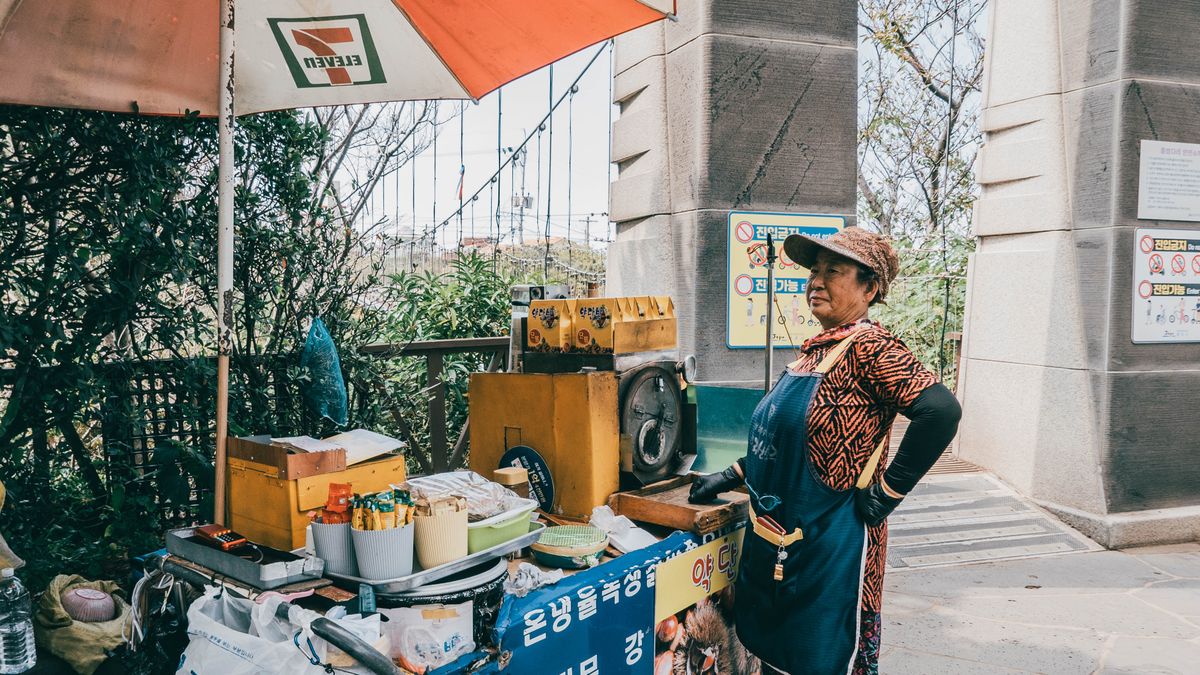
Jeju’s food is reason enough to visit. The island’s signature dish is heuk-dwaeji, black pork from a native breed, grilled over charcoal at restaurants clustered along Seogwipo’s “Black Pork Street” – rich, fatty, and best with the local soju. On the coast, look for tiny stalls run by the haenyeo themselves, where the day’s catch of abalone, sea urchin, and conch comes about as fresh as it gets. Other things to try: galchi (hairtail) hot and grilled, omegi-tteok rice cakes, and hallabong, the sweet orange-like citrus the island is known for. Markets like Seogwipo Maeil Olle and Dongmun in Jeju City are the easiest places to graze across all of it in one go.
Tea Fields and Quiet Corners in the West
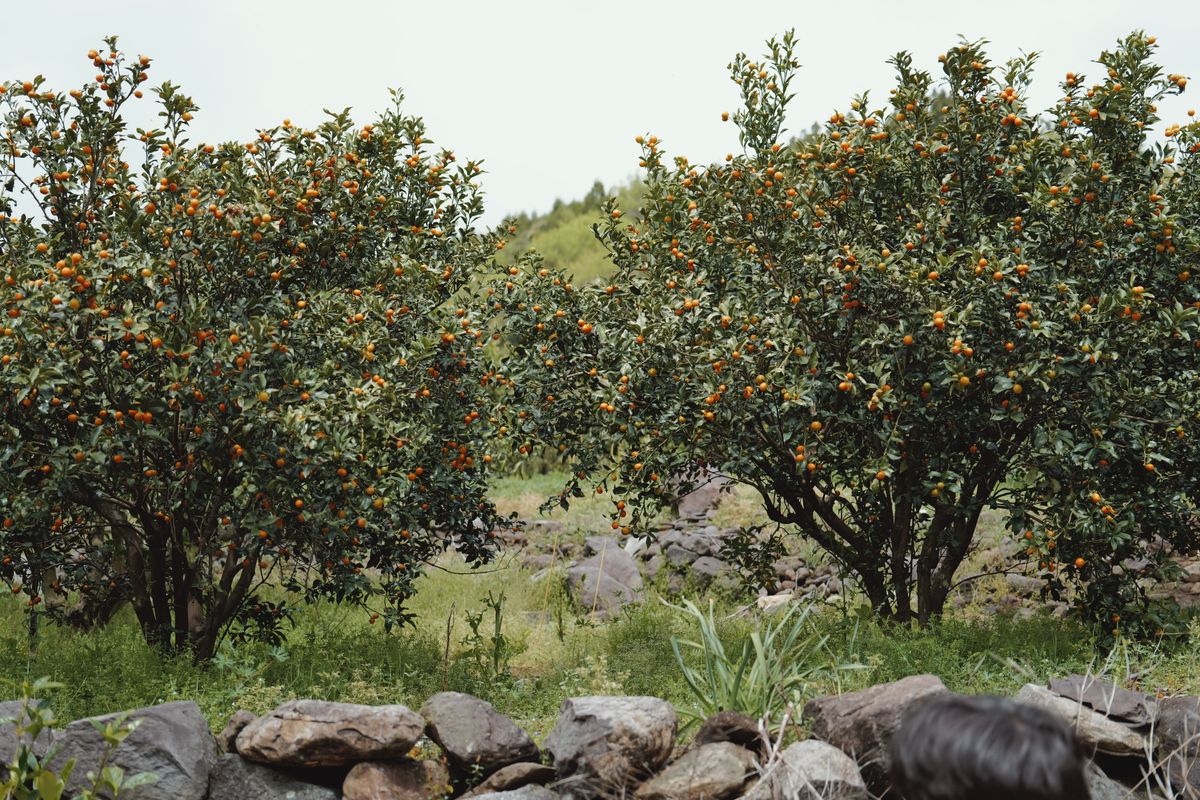
The southwest is gentler than the dramatic coast – rolling green tea fields, camellia gardens, and slow villages. The O’Sulloc tea fields make a calm, photogenic stop, with a tea museum and cafe where you can try matcha and green-tea desserts looking out over the rows. Nearby Camellia Hill blooms through winter and spring. It is a good half day to balance the hiking and the cliffs with something easy on the legs.
Book a Tour for the Hard-to-Reach Bits
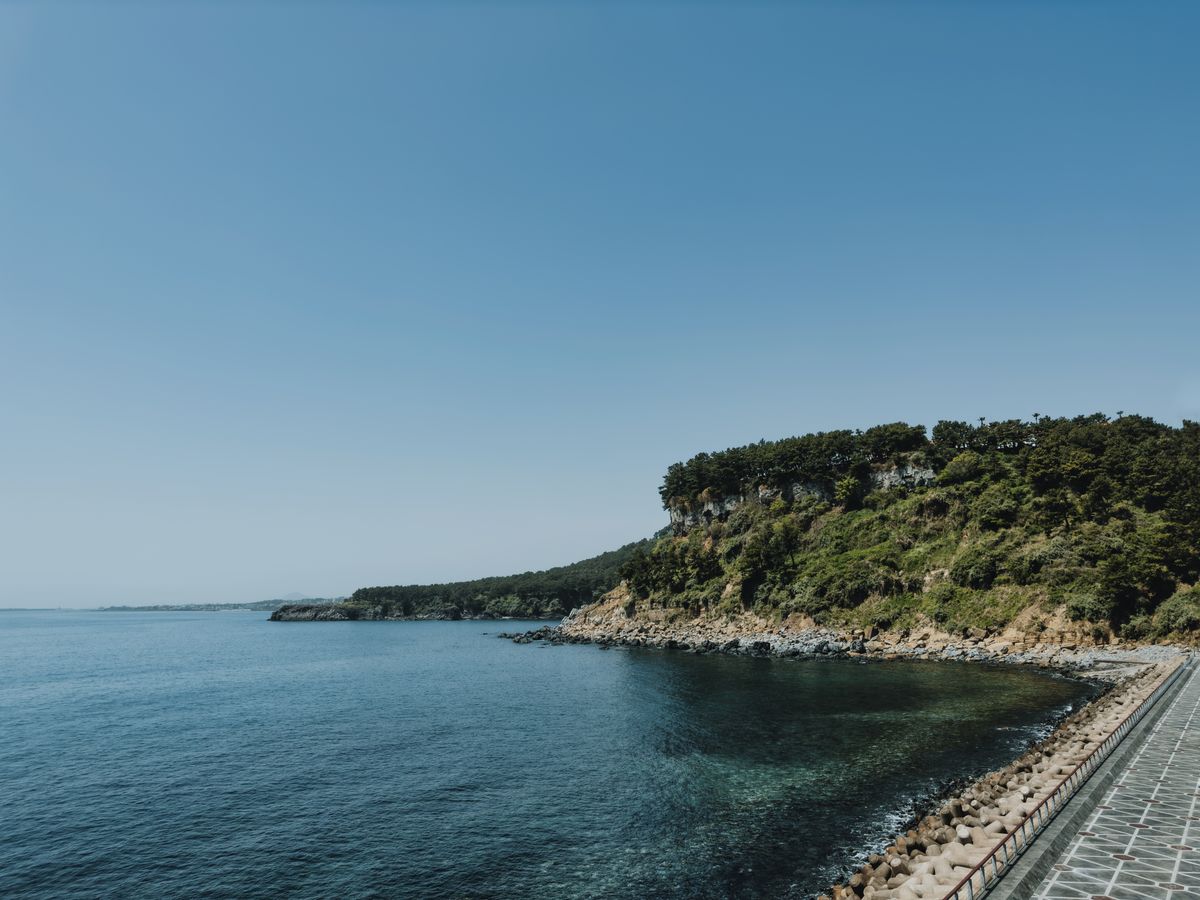
Jeju rewards a car, but if you are not driving – many visitors skip the rental because of the unfamiliar roads – a guided day tour is the practical way to string together the east-coast or west-coast highlights in one go. Day tours typically bundle Seongsan, Manjanggul, a waterfall, and a tea plantation with transport handled, which saves a lot of bus-timetable juggling.
See activities →
Where to Stay in Jeju
Jeju has two main hubs plus a resort zone, and where you sleep should match how you plan to move around. The island is bigger than people expect – roughly an hour by car from the north coast to the south – so pick a base near the side you will spend the most time on.
Seogwipo is the better base for most travelers. It sits on the south coast, closer to the waterfalls, Jusangjeolli, the best Olle routes, and the trailheads for Hallasan. The town itself is more relaxed and scenic than the island’s capital, and the Maeil Olle Market is great for an evening meal.
Jeju City is where you fly in, so it makes sense for a first or last night, or a short trip. It has the most restaurants, nightlife, and convenience, and quick access to the east coast and the airport.
Jungmun is the resort strip on the south coast – the biggest cluster of upscale hotels in Korea, with a beach, an arboretum, and a golf-and-spa atmosphere. Pick it if you want a relax-by-the-pool trip more than a base for exploring.
Spring and autumn rooms book up fast, so reserve ahead if you are coming for the azaleas or the fall color.
Getting Around
There is no subway or train on Jeju. Your realistic options are a rental car, taxis, or the public bus network, which is cheaper and more comprehensive than people assume but slow for crossing the island. Most independent travelers rent a car; an International Driving Permit is required, so arrange that at home before you fly. If you would rather not drive, combine intercity buses for the long hauls with the occasional taxi for the last stretch to a trailhead.
You will also want mobile data the moment you land – for maps, bus times, and translation, since English signage thins out fast once you leave the main towns. Sorting out a travel SIM or eSIM before arrival saves a scramble at the airport.
A quick note for navigation: Google Maps does not give driving directions in South Korea. Download Naver Map or Kakao Map instead – both have English interfaces and are what locals actually use.
Best Time to Visit
Spring (April to early June) and autumn (September to early November) are the two best windows – mild temperatures, clear skies, and either azaleas or fall foliage on Hallasan. Summer is warm, green, and busy, and it overlaps with the rainy season and the occasional typhoon, so watch the forecast. Winter is quiet and cold but has its own appeal: snow on Hallasan and early camellia blooms.
A Sample 4-Day Plan
- Day 1: Arrive Jeju City, east coast – Seongsan Ilchulbong and Manjanggul Lava Tube
- Day 2: Hallasan day hike (or a shorter Eorimok/Yeongsil route), drive to Seogwipo
- Day 3: South coast – Jeongbang Waterfall, Jusangjeolli Cliffs, and an Olle Route 7 walk
- Day 4: West coast – Hyeopjae Beach and a tea plantation, then back to the airport
Planning to pair the island with the mainland? See our Seoul guide and Busan guide for the city half of a Korea trip.
Frequently Asked Questions
How many days do you need in Jeju?
Three to four days covers the highlights without rushing. Add a day if you want to summit Hallasan, since that is a full-day outing on its own.
Do I need a car in Jeju?
It helps a lot, since attractions are spread around the coast and the bus is slow. If you would rather not drive, base yourself in one town and use a mix of buses, taxis, and a guided day tour.
Is Jeju expensive?
Less than you might expect. Many of the best things – Olle trails, beaches, Hallasan – are free or nearly so. Accommodation and a rental car are usually the biggest costs.
When is the best time to visit Jeju?
April to early June and September to early November, for mild weather and either spring blooms or autumn color. Avoid the midsummer rainy season if you can.
Quick Checklist
- Reserve a Hallasan summit slot in advance if you plan to hike to the top
- Arrange an International Driving Permit at home if renting a car
- Download Naver Map or Kakao Map (Google Maps will not route you)
- Sort a SIM or eSIM before you land
- Pack a layer for the lava tube and the mountain, even in summer
- Book spring and autumn accommodation early
Jeju is best taken at the island’s own pace – one coast at a time, with the windows down and the mountain in the rearview. Plan loosely, eat the black pork, and let the weather decide the rest.
This post contains affiliate links. If you book or buy through them, we may earn a small commission at no extra cost to you.
Related Guides
- Best Things to Do in Gwangju
- Best Things to Do in Pohang
- Best Things to Do in Yeosu
- Best Things to Do in Daegu
- How to Use the T-money Card and the Seoul Subway
- Do I Need a K-ETA to Visit Korea?
Related Guides
- Best Things to Do in Sokcho
- Best Things to Do in Gyeongju
- Best Things to Do in Suwon
- How to Use the T-money Card and the Seoul Subway
- Do I Need a K-ETA to Visit Korea?
- How to Stay Connected in South Korea
🎟️ Book Tours, Activities & Food Experiences
Search and book top attractions, tours and food experiences on Klook — official best price, instant confirmation.
Klook.com