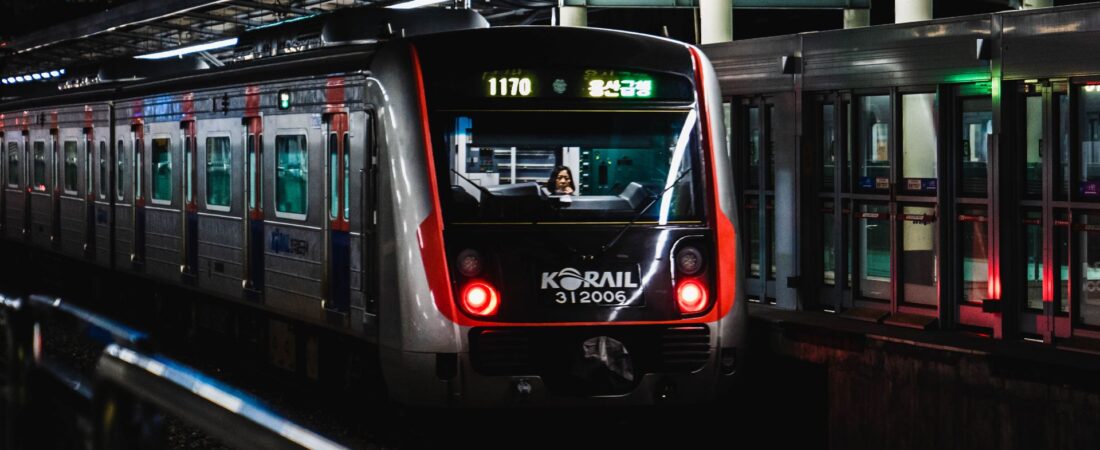
Korea is one of the easiest countries in Asia to travel without a car. The subways run on time, the high-speed trains cross the country in a couple of hours, and a single tap-card works on almost everything. The catch is that nobody explains the small stuff before you land – which card to buy, why your foreign credit card sometimes gets rejected at the ticket machine, and when a taxi actually beats the train.
Last updated: July 19, 2026 — fares below (KTX, T-money, subway, airport transfers) are current as of this update; always confirm before booking.
This guide walks through every option a first-time visitor will touch, with real 2026 fares so you can budget before you go.
Quick summary
If you only remember three things: buy a T-money card at any convenience store the moment you arrive, use the subway in cities and KTX between them, and download Naver Map or KakaoMap because Google Maps does not give walking and transit directions properly in Korea. Everything else below is detail.
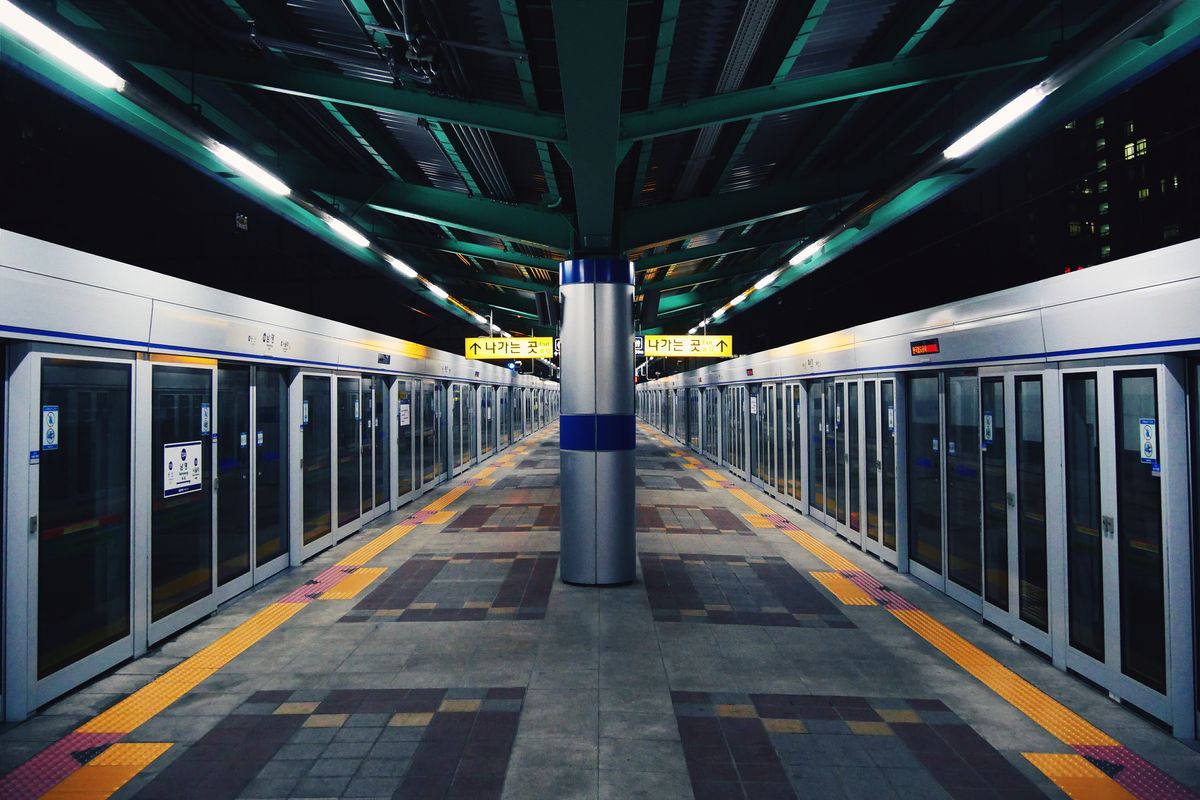
Getting from the airport into the city
Most visitors land at Incheon International Airport (ICN), which sits about an hour west of central Seoul. You have three sensible ways into town.
The AREX Airport Railroad is the one I recommend for anyone not loaded down with luggage. The Express train runs nonstop to Seoul Station in about 43 minutes and costs roughly 11,000 won. There is also an All-Stop AREX service that does the same route for around 4,750 won if you tap in with a transit card; it takes closer to an hour and stops along the way. Honestly, for most people the All-Stop is fine and the savings are real.
Airport limousine buses are the move if your hotel is not near a subway line. They drop you closer to specific neighborhoods and handle suitcases in the cargo bay, though traffic can stretch the trip past 90 minutes during rush hour.
A taxi from Incheon to central Seoul will run somewhere in the 70,000 to 90,000 won range depending on traffic and time of day, plus a small expressway toll. Worth it late at night or in a group, hard to justify otherwise.
You will want mobile data working the second you step off the plane, both for maps and for the taxi apps. The simplest fix is an eSIM you activate before the flight so you are connected on landing.
If you want data ready before you even leave home, this travel eSIM covers Korea without swapping out your physical SIM.
The transit card question: T-money, WOWPASS and Climate Card
Korea runs on tap-cards, and you have a few to choose from.
T-money
The default. A T-money card costs 3,000 to 5,000 won for the card itself, then you load cash onto it at any convenience store (CU, GS25, 7-Eleven) or station machine. It works on subways, city buses, most intercity buses, taxis, and even some convenience-store purchases. Tapping with T-money also shaves about 100 won off each subway ride versus a single paper ticket, and it gives you free or discounted transfers between bus and subway within 30 minutes. For a 3 to 4 day Seoul trip, loading 30,000 to 50,000 won is about right.
WOWPASS
WOWPASS is a newer all-in-one card aimed squarely at tourists. It combines a T-money transit function with a prepaid debit card you top up in foreign currency at WOWPASS machines, which sidesteps the foreign-card rejection problem at some kiosks. If you would rather load dollars or euros once and stop thinking about exchange rates, it is a tidy option.
Climate Card (new for tourists in 2026)
Seoul’s Climate Card now sells short-term tourist passes: 1-day for 5,000 won, 3-day for 10,000 won, and 5-day for 15,000 won, all giving unlimited rides on Seoul subways and most city buses. Do the math against your itinerary. If you are riding the subway six or seven times a day around Seoul, the 3-day pass pays for itself. If you are taking it slow or splitting time between cities, plain T-money is more flexible.
Riding the subway
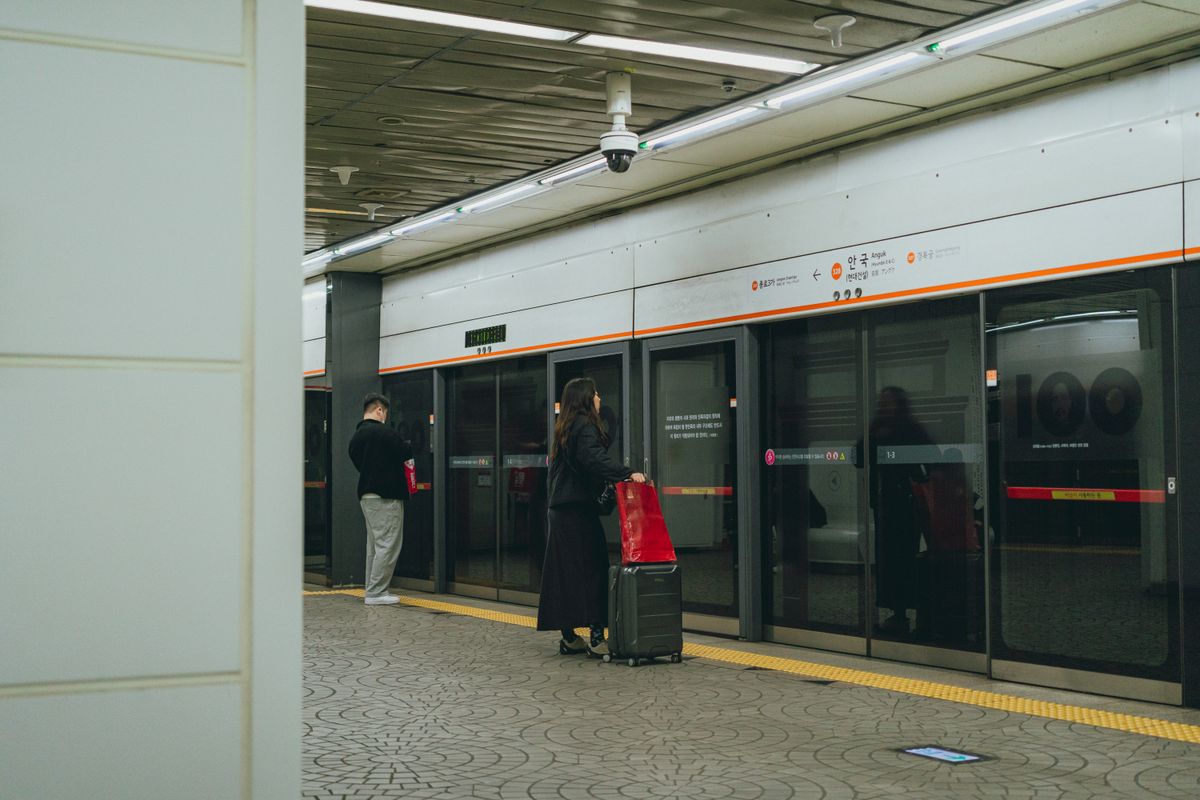
Seoul’s subway is enormous, clean, and almost stress-free once you know the rhythm. The base fare is 1,550 won (raised in mid-2025), with small distance-based add-ons for longer trips. Stations have English signage, every line has a color and number, and the cars announce stops in English.
Two habits will save you grief. First, follow the exit numbers, not just the station name – large stations have a dozen exits spread over several blocks, and picking the right one is the difference between a two-minute walk and a fifteen-minute detour. Second, check the platform direction by the terminal-station name posted overhead rather than guessing left or right.
Busan, Daegu, Daejeon and Gwangju all have their own subway systems, and your T-money card works on every one of them. No need to buy a separate card city to city.
If you would rather have a few neighborhoods mapped out before you go, our Seoul itinerary breaks the city down by district.
Intercity travel: KTX and the trains
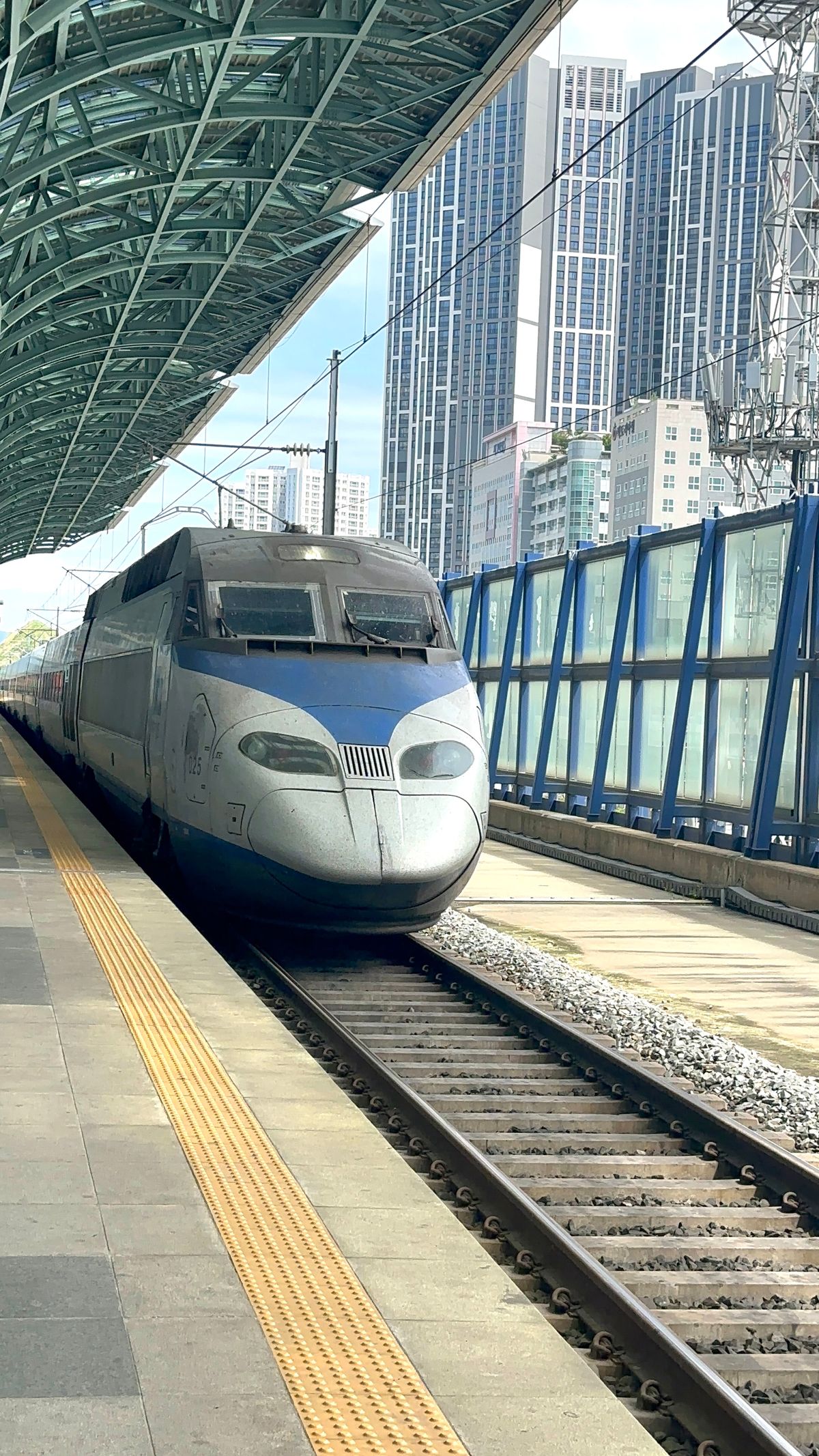
This is where Korea shows off. The KTX high-speed network connects Seoul to Busan, Gangneung, Mokpo and most major cities at up to 300 km/h.
The headline route, Seoul to Busan, takes about 2 hours and 15 minutes on the fastest services, with economy fares starting around 59,800 won. There are roughly 69 KTX departures a day on that line from early morning to late at night, so you rarely need to plan far ahead outside of holidays.
A few practical notes. KTX tickets are not paid for by tapping T-money – you buy them separately at station counters, ticket machines, or through the Korail Talk app. If you are doing several intercity legs, a Korea Rail Pass (KR Pass) sold to foreign visitors can work out cheaper than buying tickets one at a time, and it covers unlimited KTX rides for a set number of days. Book popular routes a day or two ahead during cherry blossom season (early April) and the autumn foliage weeks (late October), when seats genuinely sell out.
For slower scenic routes and smaller towns, the ITX and Mugunghwa trains cost less and stop more often. They are comfortable and a nice way to see the countryside if you are not in a rush.
If you would rather have day trips and rail-based tours arranged for you instead of booking each leg yourself, this is a simple way to compare them.
Buses between cities
Express and intercity buses reach places trains do not, including smaller coastal towns and the mountain national parks. They are cheap, frequent, and surprisingly comfortable – the premium “udeung” buses have wide reclining seats with only three across. You can pay with T-money on many routes or buy tickets at the terminal. For somewhere like Sokcho or a national park, the bus is often the only direct public option.
Getting to Jeju and the islands
Jeju Island is the one major destination you cannot reach by train. The Seoul-Jeju air route is famously one of the busiest in the world, with flights every half hour from Gimpo Airport (Seoul’s domestic hub, separate from Incheon) for as little as 30,000 to 60,000 won if you book ahead on a budget carrier. There are also overnight ferries from Busan and other ports if you want the slower, cheaper route with a car, but for most visitors the short flight is the obvious choice. On Jeju itself, public buses cover the island but run infrequently, so many travelers rent a car or join a day tour to see the coastline and Hallasan.
Renting a car: when it makes sense
For city travel, skip it. Seoul and Busan are dense, parking is scarce and expensive, and the public transit is faster than fighting traffic. A car earns its keep only when you are exploring rural regions – the Jeolla countryside, the east-coast drive around Gangneung and Sokcho, or Jeju – where buses are sparse. You will need an International Driving Permit issued in your home country before you travel, alongside your home license. Korean drivers are orderly but quick, road signs are bilingual on major routes, and navigation apps handle the rest. If your trip is city-focused with one or two nature side-trips, you are better off pairing trains with the occasional taxi or tour than committing to a rental for the whole stay.
Taxis and ride apps
Regular taxis are metered and reasonable, with a base fare around 4,800 won in Seoul that ticks up by distance and time. The thing to know is that hailing on the street can be hit or miss, and not every driver speaks English. The fix is the Kakao T app, which works like a local Uber: you set pickup and destination by map pin, so there is no language barrier, and you can pay by registered card or cash. It is the single most useful app for getting around late at night or out in the suburbs.
International ride-hailing as you know it from home is limited here, so Kakao T is the one to install.
A few things that trip people up
Foreign credit cards sometimes get declined at unattended ticket machines and recharge kiosks, which is exactly why a cash-loaded T-money or a WOWPASS saves the day. Keep some cash on hand for topping up.
Rush hour on the Seoul subway, roughly 8 to 9 am and 6 to 7 pm, is genuinely packed. If you can shift your sightseeing to mid-morning, do.
Most subway systems stop running around midnight. After that it is night buses or Kakao T, so plan your last ride or budget for a late taxi.
For longer KTX rides, a few small comforts go a long way. A compact neck pillow makes the early-morning departures much easier.
Sample transit budget (per person, 4 days in Seoul + 1 Busan day trip)
A realistic estimate: T-money top-ups of about 40,000 won for in-city travel, a round-trip KTX to Busan at roughly 120,000 won, and a couple of late-night Kakao T rides at maybe 20,000 won. Call it 180,000 won for transport across five days, before you start optimizing with passes. Swap in a Climate Card and skip a taxi or two and you will come in well under that.
If you are still mapping out where to base yourself, our guide to Korean neighborhoods covers which areas keep you close to the subway lines.
Quick checklist before you go
- Buy a T-money card (or WOWPASS) on arrival and load 30,000 to 50,000 won
- Decide whether a Climate Card or KR Pass beats pay-as-you-go for your route
- Download Naver Map or KakaoMap (not Google Maps) and Kakao T for taxis
- Set up mobile data before you fly so maps work on landing
- For KTX, book ahead during cherry blossom and autumn foliage weeks
- Keep some cash for machines that reject foreign cards
Korea Transport Prices at a Glance — as of July 19, 2026 (USD)
Airport transfers (Incheon → Seoul)
| Option | Local price | ≈ USD |
|---|---|---|
| AREX Express (nonstop, ~43 min) | ≈₩11,000 | ≈$7.4 |
| AREX All-Stop (~60 min, tap transit card) | ≈₩4,750 | ≈$3.2 |
| Taxi to central Seoul | ₩70,000–90,000 | $47–$61 |
Transit cards
| Card / pass | Local price | ≈ USD |
|---|---|---|
| T-money card (purchase only, basic design) | ≈₩2,500–4,000 | $1.7–$2.7 |
| Climate Card, 1-day (Seoul) | ₩5,000 | $3.4 |
| Climate Card, 3-day (Seoul) | ₩10,000 | $6.8 |
| Climate Card, 5-day (Seoul) | ₩15,000 | $10 |
Subway, KTX/SRT & taxis
| Item | Local price | ≈ USD |
|---|---|---|
| Seoul subway base fare (T-money) | ₩1,550 | $1.0 |
| Seoul subway single paper ticket | ₩1,650 (+₩500 refundable card deposit) | $1.1 |
| Seoul taxi base fare | ₩4,800 | $3.2 |
| KTX Seoul → Busan, standard class (2h15m) | ₩59,800 | ≈$40 |
| SRT Suseo → Busan, standard class | ₩52,600 | ≈$36 |
| Seoul–Jeju budget flight | ₩30,000–60,000 | $20–$41 |
Sample 5-day transport budget (1 person, Seoul + 1 Busan day trip): ≈₩180,000 (≈$122).
Fares change with season, day of week, and demand — confirm the current price before booking. (Checked July 19, 2026.)
Book your trip with live prices
Frequently Asked Questions
Do I need to buy separate transit cards for each city?
No. A single T-money card works on subways, buses and taxis in Seoul, Busan, Daegu and other cities. Just keep it topped up.
Can I use my phone to tap instead of a card?
Some Korean phones and certain mobile wallets support transit, but for most foreign visitors a physical T-money or WOWPASS card is far simpler and avoids compatibility headaches.
Is the KTX worth it over flying Seoul to Busan?
Usually yes. City-center to city-center, the KTX (₩59,800, ≈$40) or the slightly cheaper SRT (₩52,600, ≈$36) is competitive on total time once you factor in airport transfers and security, and it drops you right downtown.
Why is my credit card getting rejected at the ticket machine?
Many unattended Korean kiosks do not accept foreign cards. Use cash to load a T-money card, or carry a WOWPASS you top up in your home currency.
What is the cheapest way to get from Incheon Airport to Seoul?
The All-Stop AREX train at around ₩4,750 (≈$3.2), tapped with a transit card. The nonstop Express is faster at about ₩11,000 (≈$7.4).
What is the difference between KTX and SRT?
Both are Korean high-speed trains covering similar routes at similar speeds. SRT departs from Suseo (southern Seoul) and tends to run slightly cheaper than the equivalent KTX fare from Seoul Station — worth comparing both before booking.
This post contains affiliate links. If you buy or book through them, we may earn a small commission at no extra cost to you.
Related Guides
- Best Things to Do in Gangneung
- Best Things to Do in Pohang
- Best Things to Do in Yeosu
- Best Things to Do in Sokcho
- How to Use the T-money Card and the Seoul Subway
- Do I Need a K-ETA to Visit Korea?
🎟️ Book Tours, Activities & Food Experiences
Search and book top attractions, tours and food experiences on Klook — official best price, instant confirmation.
Klook.com