Last updated: July 20, 2026. Disclosure: this guide contains affiliate links – if you book through them we may earn a small commission at no extra cost to you. Prices below are checked estimates and can change with the season and exchange rate – confirm before you book.
South Korea has a reputation for being one of Asia’s more expensive destinations, and that is half true. Flights and a few splurge meals will dent your wallet, but the day-to-day stuff – subway rides, a bowl of kimchi jjigae, a night in a clean guesthouse – costs far less than people expect. The trick is knowing where the money actually goes so you can plan a realistic number instead of guessing.
This guide breaks down a Korea trip the way I wish someone had broken it down for me before my first visit: by category, with real 2026 prices, and with the small decisions that quietly swing your total up or down.
Quick summary
A shoestring traveler can get by on roughly 60 to 75 USD a day in Korea. A comfortable mid-range trip runs closer to 115 to 150 USD a day. Go luxury and you can spend 290 USD a day without trying hard. The single biggest lever is accommodation, followed by how often you eat at sit-down restaurants versus convenience stores and street stalls. Transport, by contrast, is almost absurdly cheap.
One currency note before we dig in: in early 2026 one US dollar is worth roughly 1,400 to 1,500 Korean won, so 10,000 won is about 7 USD. Exchange rates move, so treat every won figure below as a guide, not gospel.
Quick Cost Overview — Korea Trip Prices at a Glance (as of July 20, 2026)
Figures below are per person, per day, based on the ranges detailed in this guide. Exchange rate checked July 20, 2026 (₩1,487/$1, open.er-api.com) – prices vary by season and travel style, so use this as a planning guide, not a fixed quote.
| Travel style | Per day (USD) | 7-day trip, per person (USD) | What’s included |
|---|---|---|---|
| Budget / backpacker | $60–75 | $450–550 | Hostel dorm, street food + 1 cheap meal, subway/bus, 1 free/cheap sight |
| Mid-range | $115–150 | $800–1,050 | Private guesthouse/hotel room, 3 meals incl. Korean BBQ, transport, 1 paid activity |
| Luxury | $290+ | $2,000+ | 4-star+ hotel, unrestricted dining, taxis, premium experiences |
Daily budget at a glance
Here is how a typical day shakes out across three styles of travel. These are per-person figures and assume you are already in the country, so they exclude international flights.
Budget day, around 60 to 75 USD: a hostel dorm bed, two convenience-store or street-food meals plus one cheap restaurant meal, subway and bus transport, and one free or low-cost sight.
Mid-range day, around 115 to 150 USD: a private room in a guesthouse or a modest hotel, three proper meals including a Korean BBQ dinner, transport, and one paid attraction or activity.
Luxury day, 290 USD and up: a four-star hotel, restaurant meals without checking prices, taxis instead of trains, and premium experiences.
Most first-time visitors land somewhere in the mid-range band, and a 7-day trip in that band tends to total 800 to 1,050 USD per person on the ground, plus flights.
Accommodation: your biggest single cost
Where you sleep decides your budget more than anything else.
Hostel dorm beds run about 20,000 to 30,000 won a night (roughly 14 to 21 USD) in Seoul and Busan, a little less in smaller cities. They are clean, safe, and a good way to meet people.
A private double room in a guesthouse or budget hotel typically costs 60,000 to 100,000 won (about 44 to 72 USD). Split between two people that is very reasonable. The average double-occupancy hotel room across the country works out to roughly 88 USD for two, or about 44 USD per person.
Mid-range and four-star hotels in central Seoul sit in the 150,000 to 250,000 won range (110 to 180 USD), and the famous five-star towers go well past that.
One uniquely Korean money-saver: jjimjilbang, the 24-hour bathhouses. For 10,000 to 20,000 won you get a soak and a place to sleep on the heated floor. Not glamorous, but a genuine experience and a budget lifeline between cities.
If you want to lock in a good rate, it pays to compare a couple of booking sites and book the refundable option a few weeks out, especially for spring and autumn travel when rooms in Seoul fill fast.
Food: from 4 USD to 40 USD
Korea is where a tight food budget and a great food experience can coexist.
Street food and market stalls are the floor: tteokbokki, gimbap, hotteok, and fish cakes run 2,000 to 6,000 won (under 5 USD) and make a real meal. Convenience stores (CU, GS25, 7-Eleven) sell surprisingly good triangle kimbap, instant ramyeon you cook at the in-store machine, and lunchboxes for 3,000 to 6,000 won.
A casual sit-down meal – bibimbap, a stew, a noodle bowl – usually lands at 8,000 to 12,000 won (6 to 9 USD). Korean BBQ, the meal everyone wants, is the splurge: figure 18,000 to 35,000 won per person (13 to 25 USD) depending on the cut, more at premium beef houses.
Coffee culture is strong and not cheap: a latte at a nice cafe is 4,500 to 6,500 won. Convenience-store coffee is a fraction of that if you are watching the total.
A practical daily food number: 25,000 to 35,000 won (18 to 25 USD) eats well if you mix street food, one restaurant meal, and the odd cafe. Double it if every dinner is barbecue.
Getting around: the cheapest part of your trip
Transport is where Korea quietly rewards you.
Buy a T-money card (3,000 to 5,000 won for the card) at any convenience store and tap it everywhere. A single subway or city-bus ride is about 1,400 to 1,500 won (a bit over 1 USD), and transfers within 30 minutes are free or discounted. Budget around 10 to 12 USD a day for all your local transport and you will likely come in under.
Between cities, the KTX high-speed train is the headline option: Seoul to Busan in about 2.5 hours costs roughly 60,000 won (43 USD) one way. Slower intercity buses cover the same routes for half that and are very comfortable.
Taxis are reasonable by Western standards. A short city hop is 5,000 to 9,000 won, and base fares start around 4,800 won in Seoul. Use the Kakao T app to hail and pay without language friction.
To use the maps and taxi apps that make all of this easy, you need data the moment you land. The cleanest fix is an eSIM you activate before your flight so you are online at the gate.
A travel eSIM with Korea data means your maps and Kakao T work from the second you step off the plane.
Attractions, activities and the fun budget
This is the category you control most.
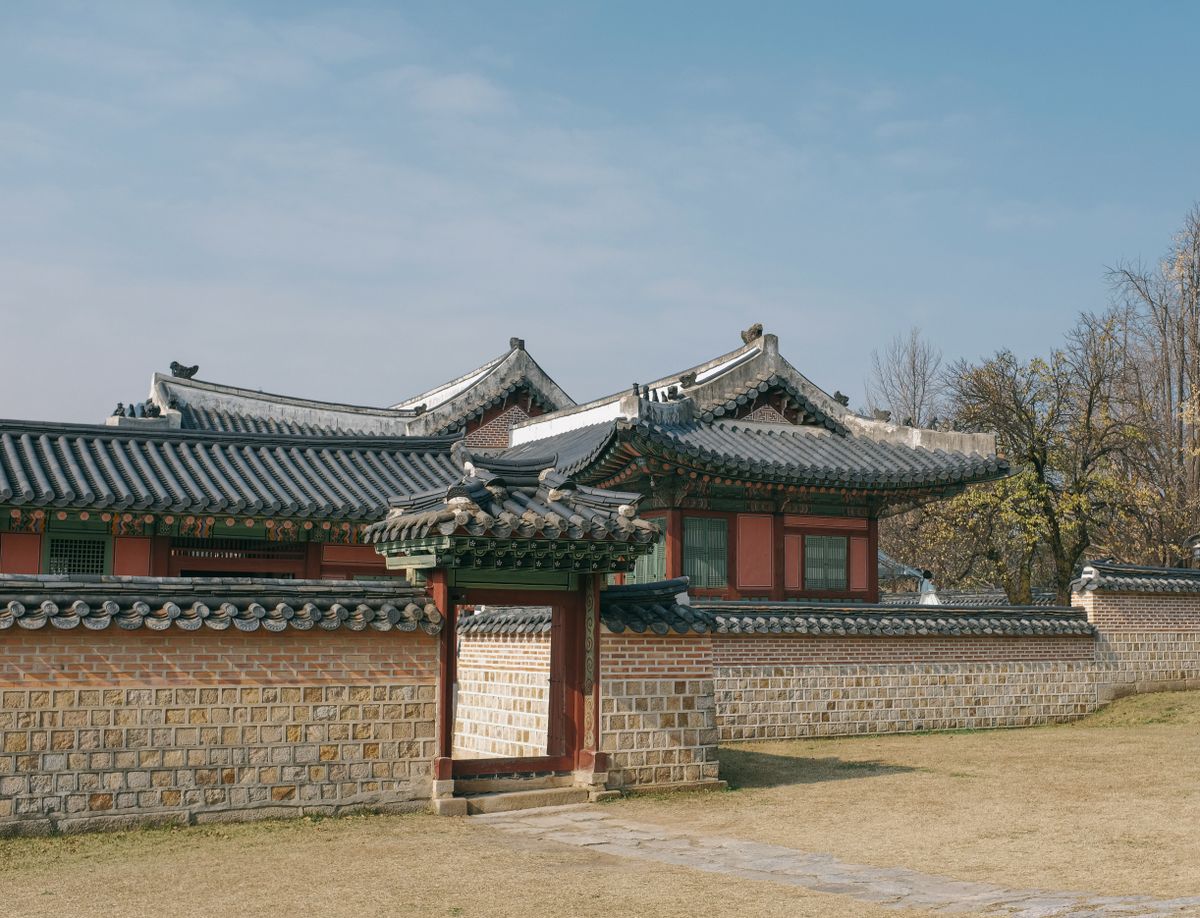
Plenty of Korea’s best experiences are free or nearly so: the palaces cost about 3,000 won (and are free if you rent a hanbok), hiking Bukhansan costs nothing, and wandering neighborhoods like Bukchon, Ikseondong, or Gamcheon in Busan is free. For a deeper look at how to fill your days, our guide to a first-timer’s Seoul itinerary lines up the must-sees by neighborhood.
Paid experiences add up if you book a lot: a DMZ day tour runs 50,000 to 90,000 won, theme parks like Everland are around 60,000 won, and cooking classes or night tours land in the 40,000 to 80,000 won range. Budget one paid activity every couple of days and you keep this category sane.
If you would rather have the logistics handled – especially for the DMZ, which is hard to reach independently – booking a guided tour is usually worth it.
For day trips and skip-the-line tickets, comparing a few organized tours saves time and often money.
The costs people forget
A few line items sneak up on travelers.
Travel insurance is not optional in my book. Korean hospitals are excellent but you pay upfront as a foreigner, and a single clinic visit or a lost phone can cost more than a week of careful budgeting saved. A standard short-trip policy is usually 30 to 70 USD.
Worth sorting before you fly, a basic travel insurance policy covers medical bills and trip hiccups for less than the price of one nice dinner.
Other small ones: tipping is not expected anywhere in Korea, which helps. But factor in a SIM or eSIM (5 to 25 USD), the occasional luggage locker (2,000 to 4,000 won), and souvenirs. A universal travel adapter is a smart 10-USD buy since Korea uses the European-style 220V Type C/F plug.
If you do not already own one, a compact universal adapter handles Korea’s outlets and every other country you will visit after.
A sample 7-day budget (mid-range, per person)
Accommodation: 6 nights of private rooms at about 80,000 won = 480,000 won.
Food: 7 days at 35,000 won = 245,000 won.
Local transport: 7 days at 13,000 won = 91,000 won.
One KTX round trip to Busan: about 120,000 won.
Activities and entry fees: about 200,000 won.
Insurance, SIM, extras: about 120,000 won.
That lands near 1,256,000 won, or roughly 900 USD per person on the ground for a week, before international flights. Trim accommodation and BBQ frequency and you can pull it under 700 USD; add comfort and it climbs past 1,300.
For a city-by-city sense of what to actually do with those days, our Busan guide and our roundup of things to do in Seoul both slot neatly into this budget.
FAQ
How much should I budget for a week in Korea, excluding flights?
Plan on roughly 700 to 1,050 USD per person for a mid-range week. Backpackers can do it for 450 to 550 USD; luxury travelers will spend 2,000 USD or more.
Do I need a K-ETA to enter Korea in 2026?
For most Western visitors, no. South Korea has extended its temporary K-ETA exemption through December 31, 2026, covering nationals of 67 countries and territories including the US, UK, EU members, Australia, New Zealand, and Canada. You can still apply voluntarily to skip the paper arrival card. Always confirm your nationality’s current status on the official K-ETA site before you fly, since these rules change.
Is Korea cheaper than Japan?
Day to day they are close, but Korea tends to edge out Japan on food and intercity transport, while accommodation is roughly comparable. Neither is a true budget destination, but both reward travelers who eat local.
What is the best way to handle money?
Cards are widely accepted, but carry some cash for markets and small eateries. A WOWPASS or a no-foreign-fee debit card saves you from poor exchange rates and ATM charges.
Is tipping expected?
No. Tipping is not part of Korean culture, in restaurants, taxis, or hotels. Prices are what you see.
Pre-trip budget checklist
- Set a daily number (budget, mid-range, or luxury) and multiply by your days
- Book accommodation early for spring and autumn; compare refundable rates
- Buy a T-money card on arrival and load 30,000 to 50,000 won
- Confirm your K-ETA exemption status on the official site
- Arrange an eSIM before departure so maps and apps work on landing
- Get a travel insurance policy that covers medical costs
- Pack a universal adapter for Korea’s 220V outlets
- Leave room for one paid activity every two days
Korea rewards a little planning with a lot of value. Nail down accommodation and your food rhythm, keep using that T-money card, and the rest of the trip tends to cost less than the guidebooks led you to fear.
This post contains affiliate links. If you buy or book through them, we may earn a small commission at no extra cost to you.
Related Guides
- Best Things to Do in Andong
- Best Things to Do in Daegu
- Best Things to Do in Suwon
- Best Things to Do in Sokcho
- How to Use the T-money Card and the Seoul Subway
- Do I Need a K-ETA to Visit Korea?
🎟️ Book Tours, Activities & Food Experiences
Search and book top attractions, tours and food experiences on Klook — official best price, instant confirmation.
Klook.com