This post contains affiliate links. If you book or buy through them, we may earn a small commission at no extra cost to you.
Last updated: July 2026
Book Tours & Activities in Kinkaku-ji
Book Tours & Activities in Kinkaku-ji
Hand-picked Kinkaku-ji and Kyoto experiences you can book online – guided pavilion tours, panoramic day trips and Arashiyama combos:
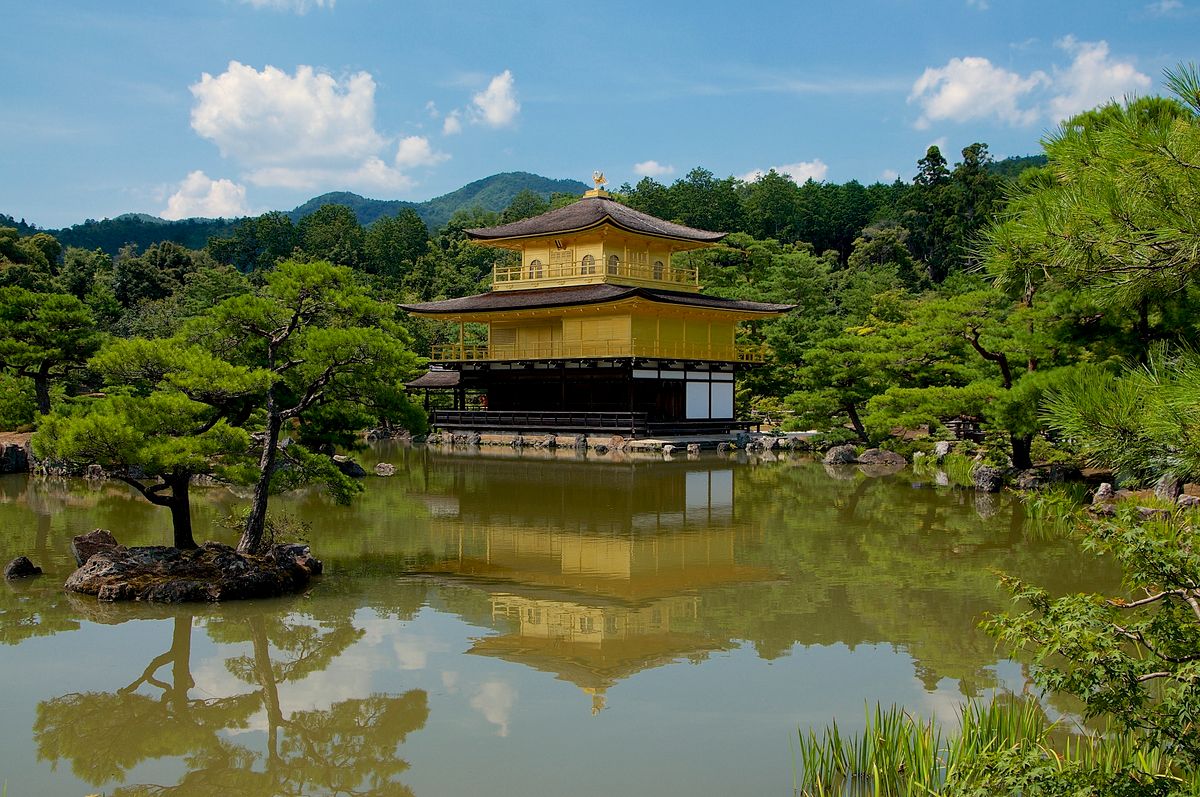
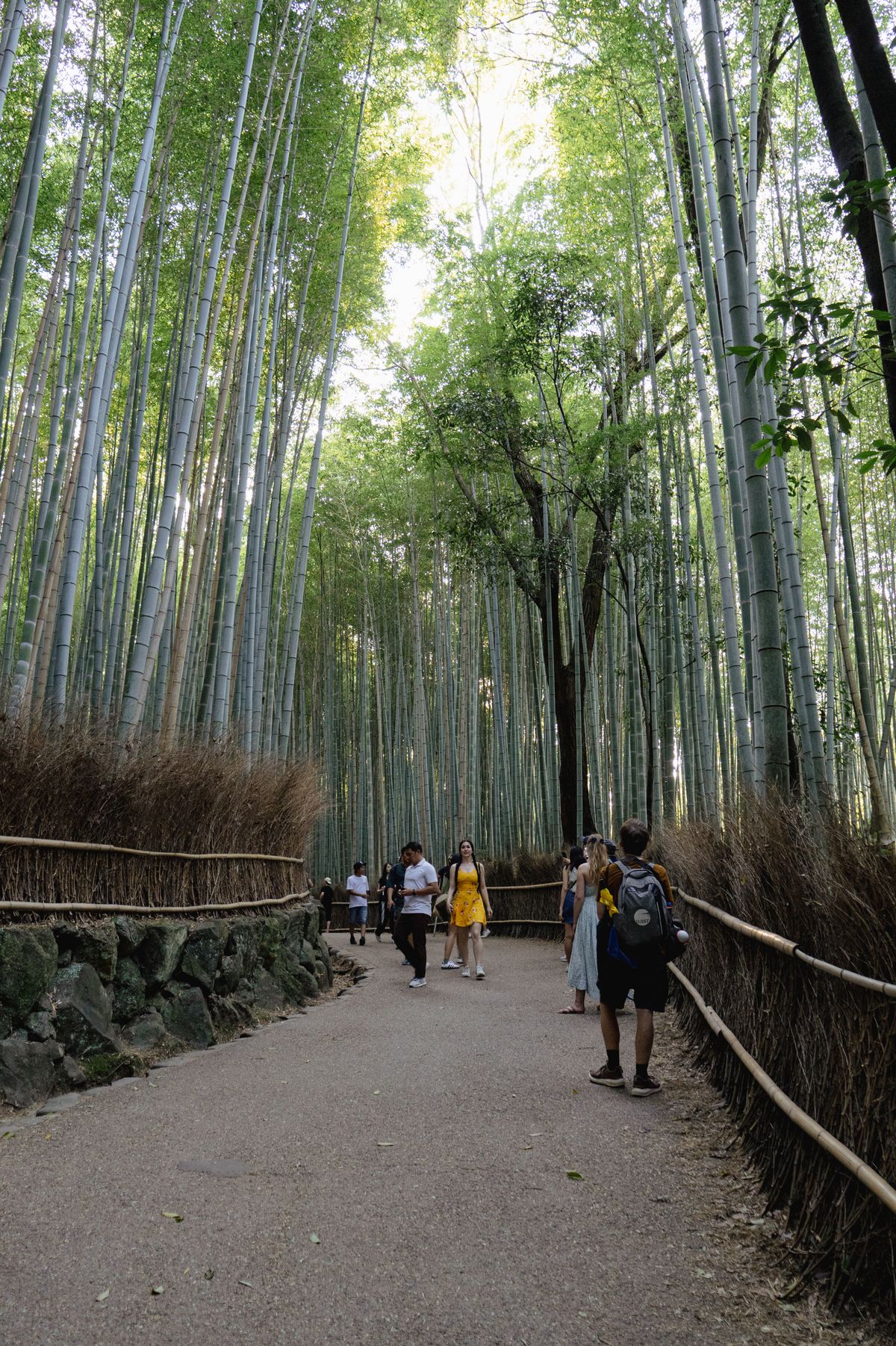
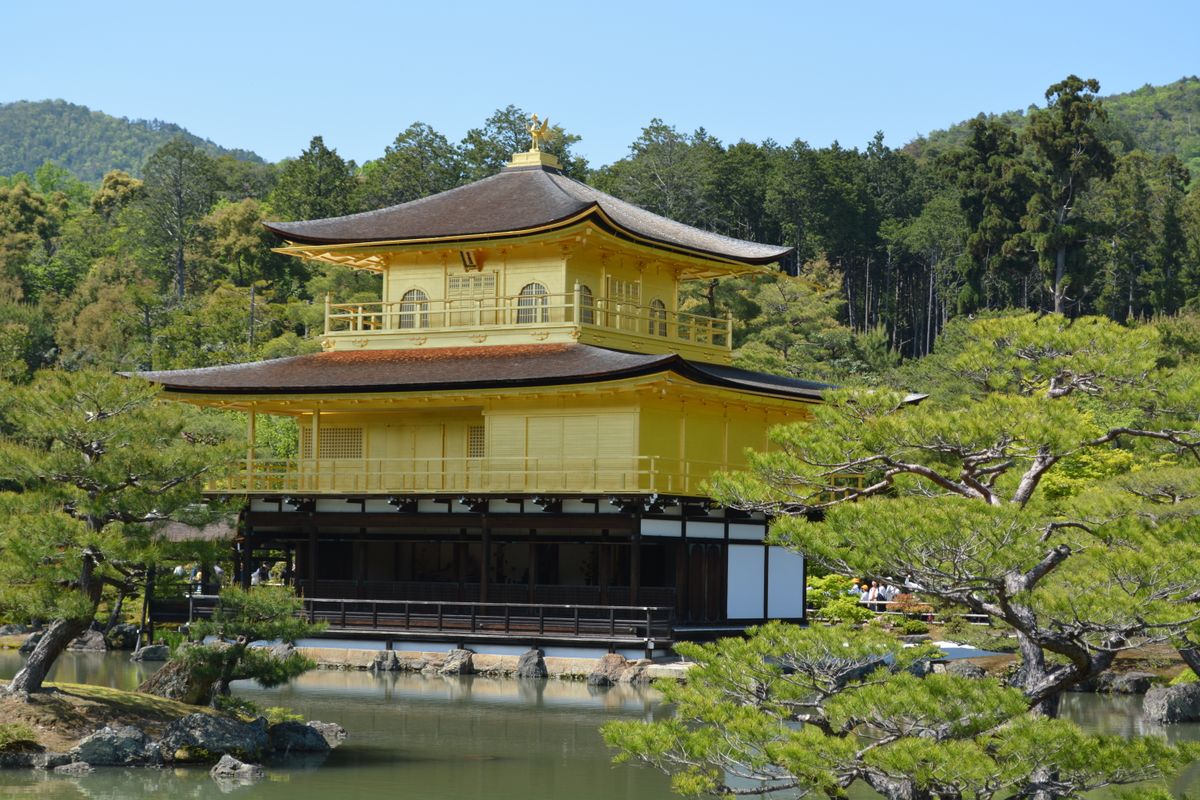
Officially named Rokuon-ji (“Deer Garden Temple”), Kinkaku-ji is far better known by its nickname: the Golden Pavilion. Its top two floors are wrapped in real gold leaf, and the whole three-story structure sits at the edge of a still pond so that on a calm day it appears to float twice – once in wood and gold, once in reflection. It is the single most photographed building in Kyoto, part of the UNESCO World Heritage-listed “Historic Monuments of Ancient Kyoto,” and, despite the crowds, still genuinely worth the trip. Here’s what it costs, how to get there, and how to make the most of your visit.
💡 Prices checked July 23, 2026 (¥163.0/$1, open.er-api.com). Fees and bus fares change – always confirm on the official site (shokoku-ji.jp/en/kinkakuji) before you visit.
| Item | Cost | Notes & source (checked) |
|---|---|---|
| Admission, general (incl. high school) | ¥500 (≈ $3.1) | Ticket doubles as a temple charm/goshuin – keep it. Shokoku-ji official site, checked 23 Jul 2026 |
| Admission, primary/middle school | ¥300 (≈ $1.8) | No group discount, but groups of 30+ enter together. Shokoku-ji official site |
| Kyoto City Bus, flat fare (adult) | ¥230 (≈ $1.4) | Single ride, any distance within the flat zone. kyotostation.com, checked 23 Jul 2026 |
| Kyoto City Bus, flat fare (child) | ¥120 (≈ $0.7) | kyotostation.com, checked 23 Jul 2026 |
| Subway & Bus 1-Day Pass (adult) | ¥1,100 (≈ $6.7) | Worth it if combining Kinkaku-ji with 3+ other bus/subway rides that day. kyotostation.com |
| Parking, passenger car (first 60 min) | ¥400 (≈ $2.5) | ¥200 (≈ $1.2) per extra 30 min. 250-space on-site lot, 8:40 AM-5:10 PM. Shokoku-ji official site |
Please read before you go: Kinkaku-ji is open 9:00 AM to 5:00 PM, every day of the year, with no closing days – though hours can shift for special exhibitions, so it’s worth a quick check on the official site if your visit falls on a holiday. There is no advance booking; tickets are sold only at the entrance gate on the day.
A Shogun’s Retirement Villa, Then a Temple
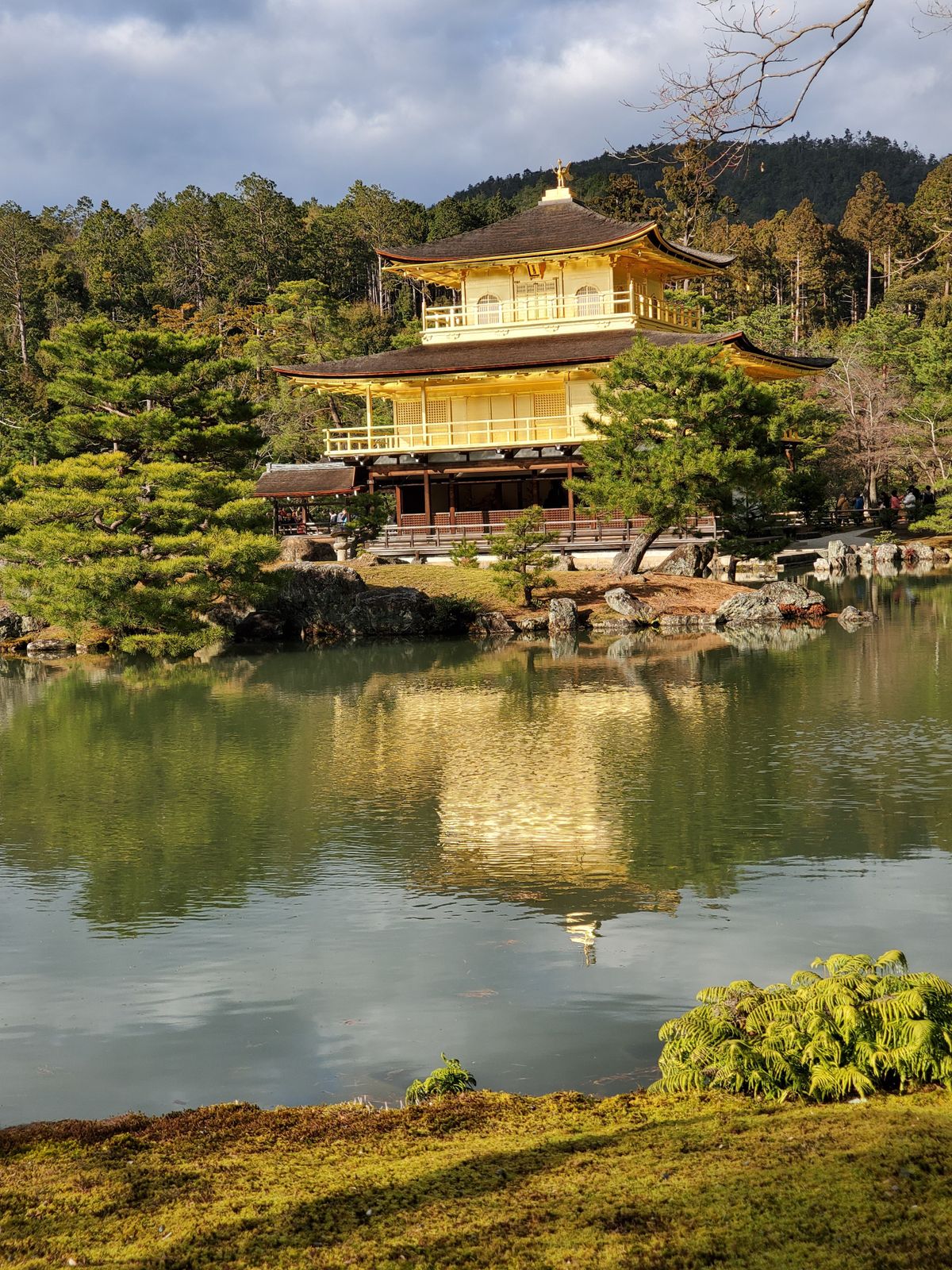
The site began life not as a temple but as a retirement estate. In 1397, the powerful shogun Ashikaga Yoshimitsu bought the villa – then called Kitayama-dai – from the aristocratic Saionji family and rebuilt it into the lavish complex you see the outline of today. When Yoshimitsu died, his son honored his wishes and converted the estate into a Zen Buddhist temple of the Rinzai sect’s Shokoku-ji school, which is why it’s formally named Rokuon-ji. During the Onin War (1467-1477), the conflict that devastated much of Kyoto, every building on the grounds burned down except the pavilion itself – a first close call it would not always survive.
On July 2, 1950, a 22-year-old novice monk deliberately set fire to the pavilion, destroying it completely along with the original statue of Yoshimitsu inside. The event shocked the country and later inspired Yukio Mishima’s novel The Temple of the Golden Pavilion. The current structure is a faithful reconstruction completed in 1955, and in 1986-1987 its gold leaf was fully redone – five times thicker than the original coating – giving the pavilion the brilliant finish visitors see today. In 1994, Kinkaku-ji was inscribed by UNESCO as part of the Historic Monuments of Ancient Kyoto World Heritage listing.
Three Floors, Three Architectural Styles
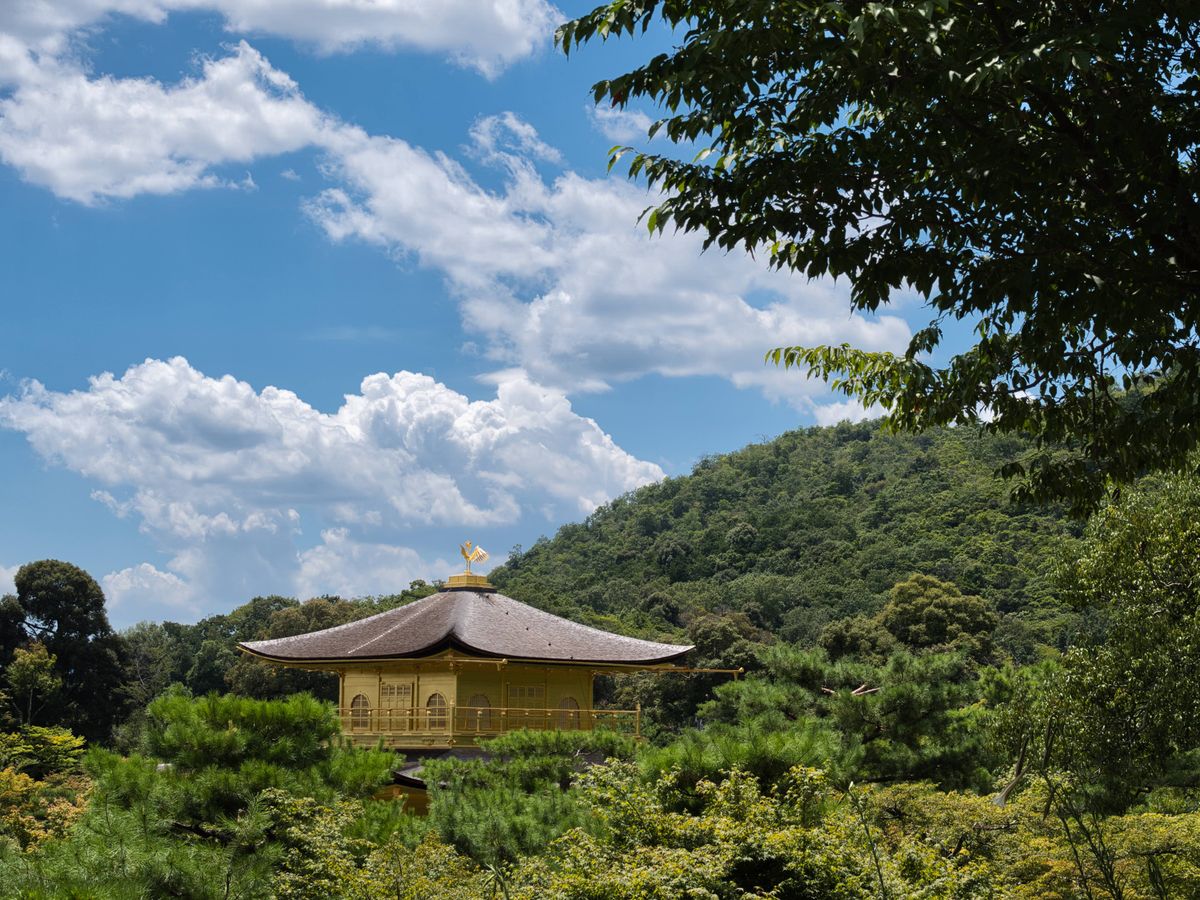
Part of what makes the pavilion so striking up close is that each of its three floors is built in a completely different style, a deliberate design choice rather than an accident of history. The first floor, the Chamber of Dharma Waters (Ho-sui-in), uses unpainted wood and white plaster in the shinden-zukuri style of 11th-century Heian aristocratic residences – it’s the only floor left unclad in gold, so you can see the natural timber against the gilded stories above it. The second floor, the Tower of Sound Waves (Cho-on-do), is built in buke-zukuri, the style of samurai residences, and houses a Buddha hall and a shrine to Kannon, the goddess of mercy. The third floor, the Cupola of the Ultimate (Kukkyo-cho), follows Chinese Zen (zenshu-butsuden) style. A bronze phoenix ornament – a hoo – tops the thatched pyramid roof, watching over the whole ensemble.
The pavilion sits on the edge of Kyoko-chi (Mirror Pond), a strolling garden pond dotted with ten small islands arranged to represent famous scenes from Japanese and Chinese literature, in the go-round style typical of Muromachi-period garden design. The reflection you see in photos isn’t a coincidence – the whole layout was designed around the mirrored image.
Getting There
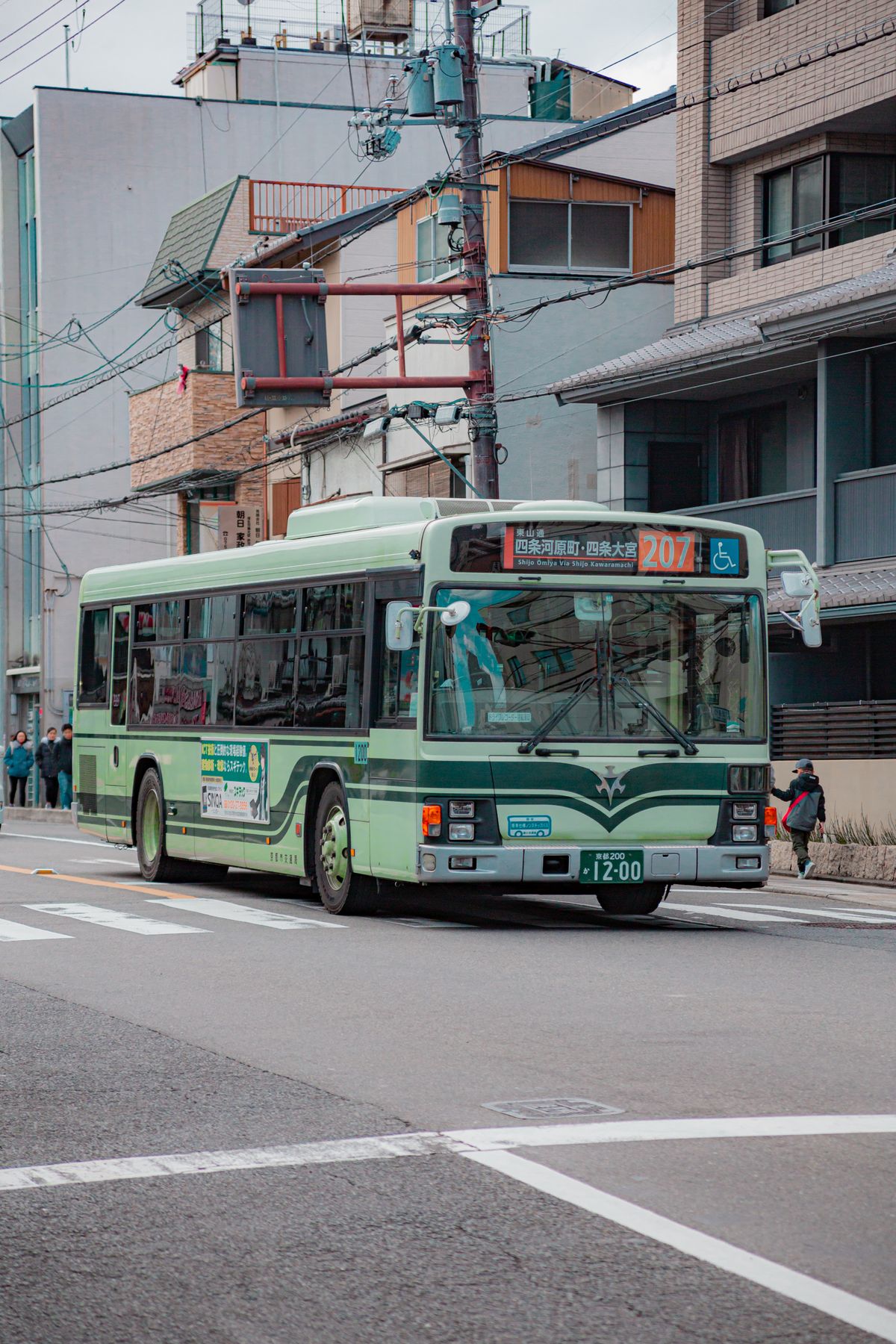
Kinkaku-ji sits in northwest Kyoto, away from the subway and JR lines, so bus is the normal way to reach it – not a taxi-only oddity, just how the city is laid out. Get off at the Kinkakuji-michi stop; it’s a short, well-signposted walk from there to the entrance.
| From | Route (checked July 2026) |
|---|---|
| Kyoto Station | City Bus #205 direct to Kinkakuji-michi, about 40 minutes in light traffic (can run longer). Flat fare ¥230. |
| Kyoto Station (faster option) | Subway Karasuma Line to Kitaoji Station (about 15 min), then City Bus #204 or #205 from the Kitaoji Bus Terminal, about 11 minutes to Kinkakuji-michi, plus a 5-minute walk. |
| Shokoku-ji / Karasuma Imadegawa | City Bus #59 or #102 to Kinkakuji-michi. |
| Ginkaku-ji (Silver Pavilion) | City Bus #204 or #102 to Kinkakuji-michi – an easy way to link Kyoto’s “golden” and “silver” pavilions in one day. |
Do not board City Bus #101 from Kyoto Station expecting to reach Kinkaku-ji – that route heads toward Kiyomizu-dera instead. If you’re unsure, staff at the Kyoto Station bus terminal information counter can point you to the right stand.
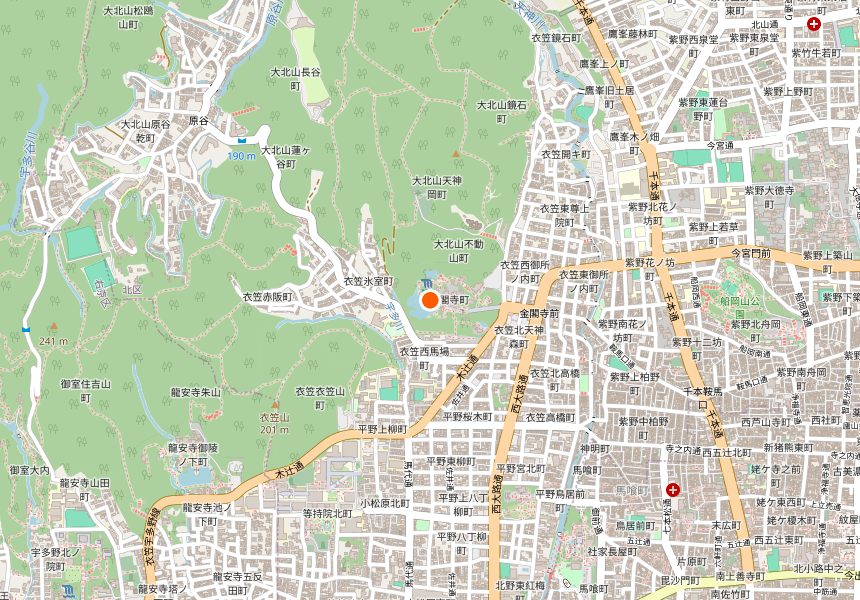
Suggested Route Through the Grounds
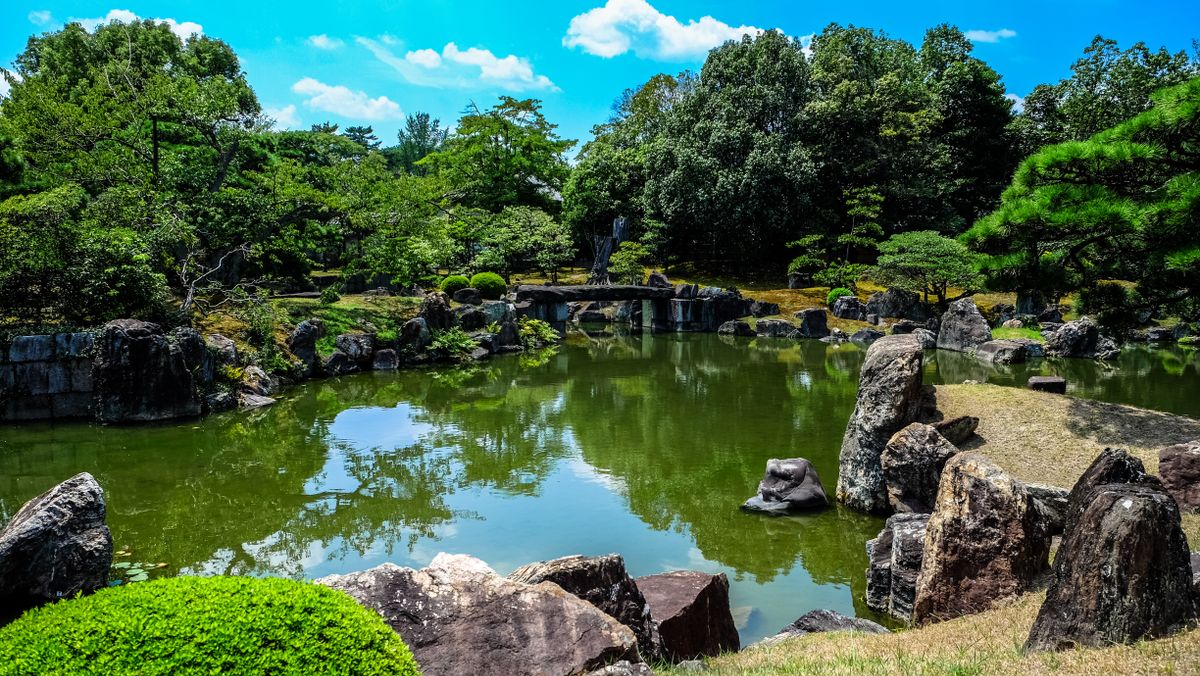
Kinkaku-ji is a strolling garden, and the path is one-directional – you can’t backtrack, so it helps to know the order:
- Entrance gate & ticket booth – your ¥500 ticket is itself a printed goshuin-style charm, worth keeping as a souvenir
- Kyoko-chi (Mirror Pond) viewpoint – the classic photo spot, just past the entrance, where the pavilion and its reflection line up together
- Path around the pond – the trail curves along the water’s edge, giving changing angles on the pavilion as you walk
- Ryumon Waterfall & Rikushu-no-matsu pine – a small carp-shaped waterfall stone and a centuries-old shaped pine tree along the path
- Sekkatei teahouse – an Edo-period teahouse partway up the hill, added after the pavilion itself
- Fudo-do Hall – a small hall near the exit enshrining a statue of Fudo Myo-o, open to the public on set days
- Exit through the garden shop – matcha, charms and goshuincho stamp books are sold here on your way out
Budget 30-45 minutes for an unhurried walk through; there’s no re-entry once you exit, and, per the official FAQ, the path is wheelchair-accessible only as far as the main pavilion viewpoint – the garden beyond it has steps and is not barrier-free, in order to preserve grounds that have looked essentially the same for roughly 600 years. Wheelchairs are available to borrow at the entrance, no reservation required. Note too that there’s no luggage storage on site, so leave bags at your hotel or a station locker beforehand.
Best Time to Visit
Kinkaku-ji opens at 9:00 AM, and arriving at or just after opening is the single best way to beat the crowds – by mid-morning, the pond-side viewpoint fills in with tour groups. Weekday mornings are consistently quieter than weekends. Seasonally, the pavilion is stunning against autumn maples (mid-to-late November) and equally striking dusted in winter snow on a clear cold morning, when visitor numbers drop noticeably. Spring brings cherry blossoms near the grounds, while summer is hot, humid and the busiest stretch for group tours – go as early as possible if visiting between June and August.
Getting the Best Photos
The signature shot is the pavilion mirrored in Kyoko-chi, taken from the viewing area directly across the pond – arrive early for a clear line of sight before the crowd builds three or four rows deep. Stillest water (and the best reflection) tends to be in the first hour after opening, before wind picks up. A polarizing filter cuts glare off the gold leaf on bright days, and overcast light actually flatters the gold more evenly than harsh midday sun. If you visit after a snowfall, aim to arrive as close to opening as possible – fresh snow on the roofline doesn’t last long once foot traffic and sun get to it.
Etiquette and What to Bring
Kinkaku-ji remains an active Zen temple, so keep noise down near the halls and don’t step off the marked path onto the moss or garden beds. Comfortable shoes are enough – there’s no serious climbing, just a gentle uphill loop. Carry cash in small denominations for the entrance, the garden shop, and any tea service; card acceptance is inconsistent at smaller temple counters. Because there’s no luggage storage, travel light. And because the exit is one-way with no re-entry, use the restrooms near the entrance before you start the loop if you’ll need them.
Where to Stay
Kinkaku-ji sits in a quiet, mostly residential part of northwest Kyoto with few hotels of its own, so most visitors base themselves elsewhere and bus or taxi in for a morning visit.
Around Kyoto Station is the most practical base: every bus and train line radiates from there, including the #205 direct to Kinkakuji-michi, and it puts you within easy reach of day trips to Osaka and Nara. Downtown Kyoto (Karasuma/Shijo) trades a slightly longer bus ride for being closer to restaurants, shopping and nightlife. If you’re planning to combine Kinkaku-ji with Arashiyama, Ryoanji or the Kitano-Hakubaicho area, staying somewhere along the Keifuku Randen tram line can shorten your day considerably.
Combine It with the Rest of Kyoto
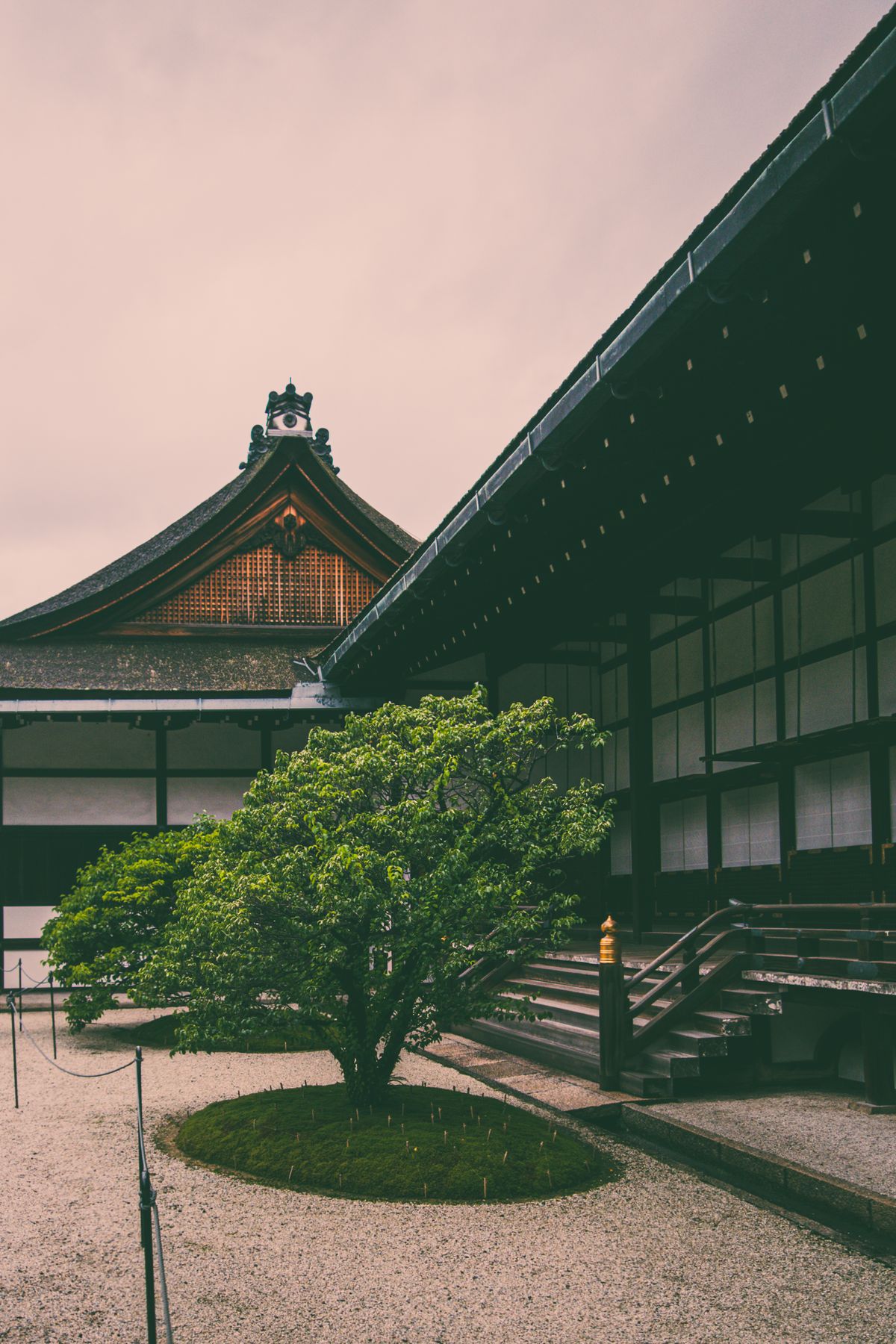
Kinkaku-ji pairs naturally with the rest of northwest Kyoto. From Kinkakuji-michi, many visitors continue west through the Kinukake-no-michi area to Ryoanji Temple and its famous rock garden, or connect onward via the Keifuku Randen tram line toward Arashiyama and its bamboo grove. If you’re crossing the city the same day, Ginkaku-ji (the Silver Pavilion) is a straightforward bus ride away on routes #204 or #102, letting you see both of Kyoto’s “metal pavilions” in one trip. For everything else the city has to offer, see our full Best Things to Do in Kyoto guide, and if temple-hopping is your thing, our Fushimi Inari Shrine guide covers Kyoto’s other unmissable sight, on the opposite side of town.
Practical Tips
- Arrive at or near 9:00 AM opening. This is the single biggest lever against crowds.
- Take bus #205 from Kyoto Station, or the faster subway-to-Kitaoji-then-bus combo if traffic looks heavy.
- Bring cash – the entrance, shop and any tea service are more reliable with yen than cards.
- There’s no luggage storage and no re-entry once you leave, so travel light and use the restroom before starting the loop.
- Pair it with Ryoanji or Ginkaku-ji the same day using the tram or bus connections above.
- It’s a same-day, no-booking ticket, so there’s nothing to reserve in advance – just confirm hours if visiting around a holiday.
Frequently Asked Questions
How much does Kinkaku-ji cost?
¥500 (≈ $3.1) for general admission, including high school students; ¥300 (≈ $1.8) for primary and middle school students. No advance booking – tickets are sold at the gate.
What are the opening hours?
9:00 AM to 5:00 PM, every day of the year, though hours can change for special exhibitions.
How long should I plan for a visit?
Most visitors walk the full loop in 30-45 minutes. It’s a one-way path with no re-entry, so budget accordingly.
Is Kinkaku-ji worth visiting if I’ve already seen photos of it?
Yes – the scale of the gold leaf, the setting on Kyoko-chi pond, and the surrounding garden come through far better in person than in any photo.
Can I go inside the pavilion?
No, the interior is not open to the public; visitors view it from the garden path around the pond.
Is it accessible for wheelchairs or strollers?
The path is wheelchair-accessible as far as the main pavilion viewpoint. Beyond that the garden has steps and is not barrier-free, to protect grounds essentially unchanged for 600 years. Free wheelchair loans are available at the entrance.
Final Word
Kinkaku-ji earns its reputation the moment the path opens onto Kyoko-chi and the gold-leafed pavilion appears across the water. It survived war, arson and a full reconstruction to still look, seven decades later, exactly like the postcard. Get there at opening, budget an hour including the bus ride, and pair it with Ryoanji or Ginkaku-ji if you have the afternoon free.
This post contains affiliate links. If you book or buy through them, we may earn a small commission at no extra cost to you. Hours and prices can change – always confirm on official sources before you visit.
Related Guides
- Best Things to Do in Kyoto
- Fushimi Inari Shrine Travel Guide
- Top 100 Places to Visit in Japan
- Itsukushima Shrine (Miyajima) Travel Guide
🎟️ Book Tours, Activities & Food Experiences
Search and book top attractions, tours and food experiences on Klook — official best price, instant confirmation.
Klook.com