Last updated: July 2026
Disclosure: This post contains affiliate links. We may earn a commission if you book through them, at no extra cost to you. Hours and prices can change — always confirm on official sources before you visit.
Book Tours & Activities in Longshan Temple
Book Tours & Activities in Longshan Temple
Hand-picked Longshan Temple experiences you can book online — a guided half-day walking tour of the temple and Bopiliao, an English-language deep dive into temple worship culture, and an evening walking tour through Wanhua’s night market streets:
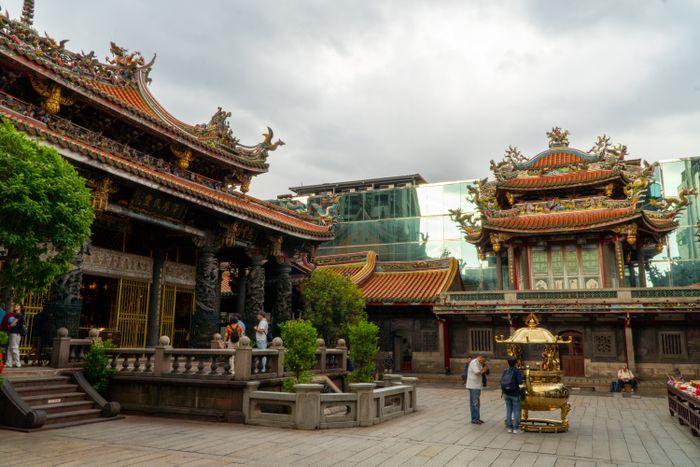
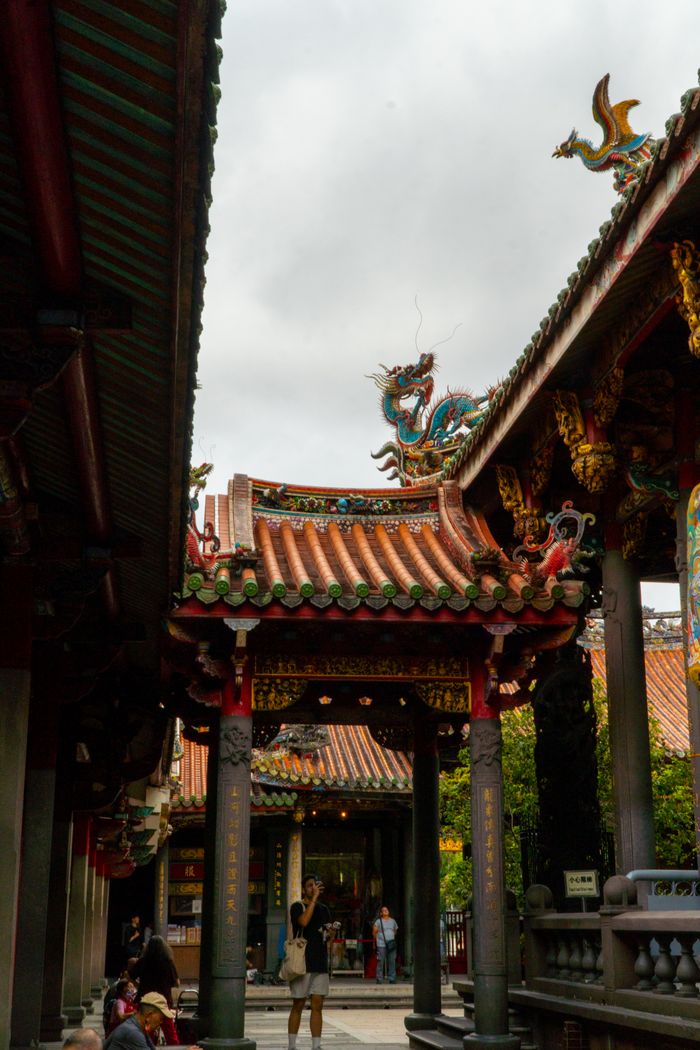
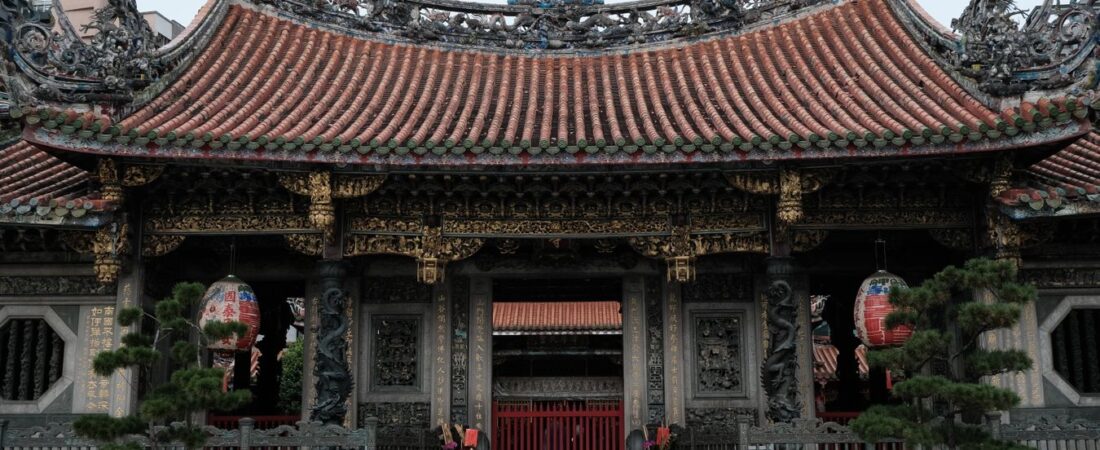
Long before Taipei 101 or the National Palace Museum existed, worshippers were already burning incense at Longshan Temple, in what was then a muddy river port called Bangka. Built in 1738 by Chinese settlers from Fujian, this temple in Taipei’s Wanhua District is the spiritual heart of the city’s oldest neighborhood — a working house of worship where locals still come daily to pray, not a museum piece kept behind glass. As the 8th-ranked attraction in our Taipei city guide, it earns its place through sheer staying power: nearly 300 years of earthquakes, fires and a World War II bombing raid haven’t stopped it from being rebuilt, again and again, by the people who worship there. Here is what to know before you go — the history behind the halls, how to visit respectfully, and what not to miss.
A Little Context
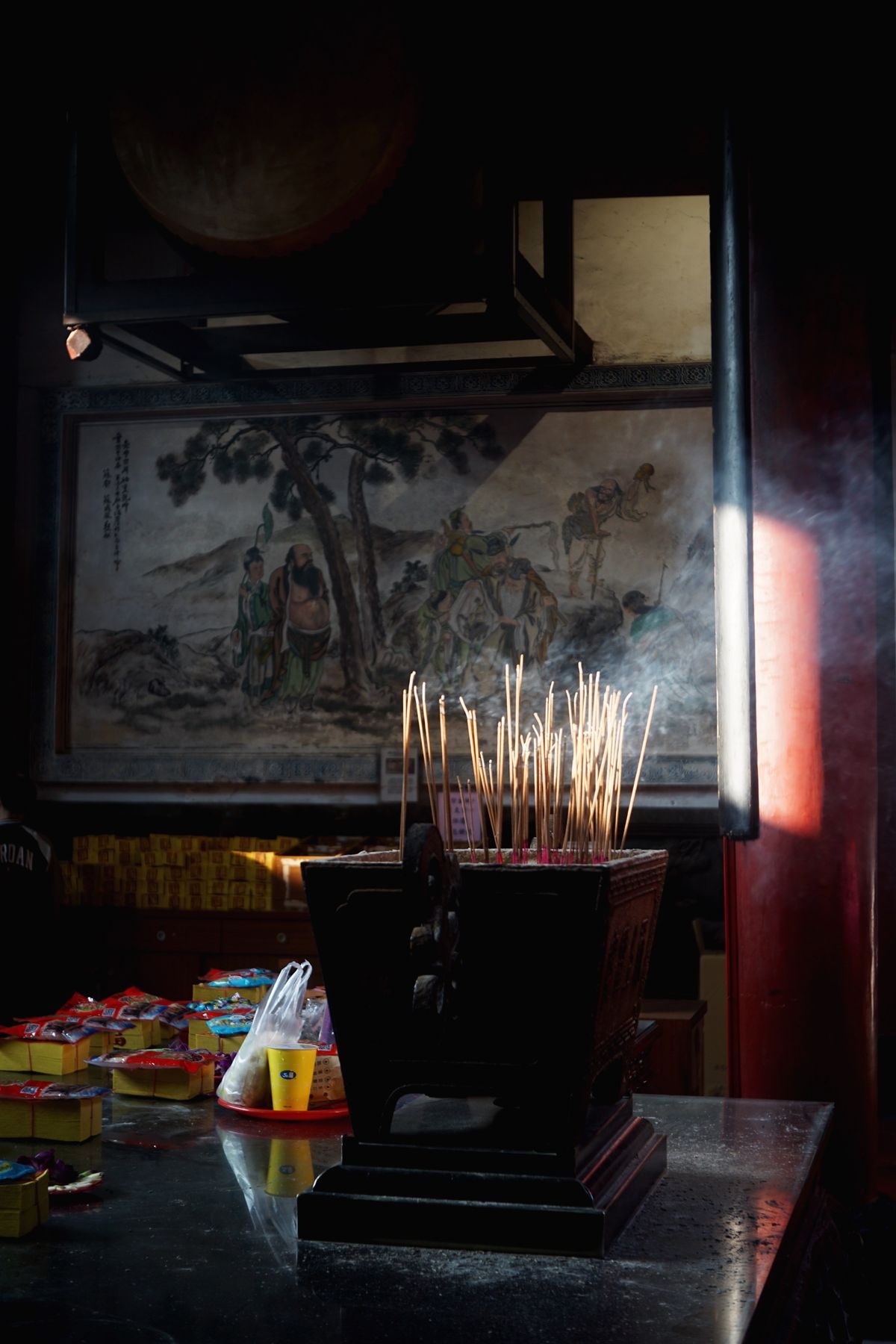
Longshan Temple was founded in 1738 by immigrants from three counties in Fujian province — Jinjiang, Nan’an and Hui’an, collectively known as the Sanyi (“Three Yi”) settlers — who had crossed the Taiwan Strait to farm and trade around the port district then known as Bangka (艋舺), now Taipei’s Wanhua District. Devout followers of an ancient Longshan Temple back in their home town of Jinjiang, whose own roots trace to the 7th century, the settlers built a branch temple in their new settlement and named it after the original, enshrining a statue of Guanyin — the Bodhisattva of Mercy — brought over from Fujian as the temple’s central deity. Construction finished around 1740, and the temple quickly became more than a place of prayer: it doubled as a courthouse, a school, a militia headquarters and a general meeting hall, the true center of civic life in old Bangka.
That civic importance came at a cost. Longshan Temple has been damaged and rebuilt more times than most temples in Taiwan, felled repeatedly by earthquakes, fires and typhoons over nearly three centuries. The most extensive rebuild ran from 1919 to 1924, when a local business leader funded a full reconstruction that gave the temple most of the ornate three-hall layout still standing today. Then, on 31 May 1945, American bombers struck the temple during the Taihoku Air Raid — Japanese forces were reportedly storing weapons inside — destroying the main hall and left corridor and a prized Ming-dynasty statue of Shakyamuni Buddha. Locals rebuilt the main hall after the war, and the front-hall Guanyin statue, which survived the bombing largely intact, is still regarded locally as a sign the temple has always been protected.
What sets Longshan Temple apart from a typical Buddhist temple is its religious blending. Alongside Guanyin in the main hall, the rear hall houses altars to major Taoist and folk deities: Mazu, the sea goddess who protected Fujian’s seafaring immigrants; Guan Yu, the deified general associated with loyalty and business; Wenchang Wang, patron of literature and exams; Hua Tuo, god of medicine; and Yue Lao, the matchmaker god who draws long queues of single visitors hoping for luck in love. That mix of Buddhist, Taoist and Confucian worship under one roof is typical of how folk religion actually functions in Taiwan, and it’s one reason Longshan Temple has been designated a national second-grade historic site, with periodic proposals to elevate it to full national monument status.
Quick Facts & Costs for 2026
💡 Facts checked on 26 July 2026. Longshan Temple charges no admission fee, so there is no ticket price to convert — the Klook tours above are optional guided add-ons, priced in USD at checkout. Hours and access can change around Lunar New Year and major festivals; always confirm on the official site before you visit.
| Item | Detail | Notes & source (checked) |
|---|---|---|
| Admission | Free | No entry fee for any visitor. — Taiwan Tourism Administration (taiwan.net.tw) & Taipei Travel (travel.taipei), checked 26 Jul 2026 |
| Opening hours | Daily, 6:00 AM–10:00 PM | Administrative/incense office hours run shorter, roughly 7:00 AM–9:00 PM. — Taiwan Tourism Administration & local government listings, checked 26 Jul 2026 |
| Address | No. 211, Guangzhou St., Wanhua District, Taipei City, Taiwan | — Taipei Travel official attraction listing (travel.taipei), checked 26 Jul 2026 |
| Phone | +886-2-2302-5162 | — Taiwan Tourism Administration (taiwan.net.tw), checked 26 Jul 2026 |
| Nearest MRT | Longshan Temple Station (Bannan/Blue Line), Exit 1 | About a 2–3 minute walk to the temple gate. — Taiwan Tourism Administration, checked 26 Jul 2026 |
| Official website | lungshan.org.tw | — Longshan Temple official site, checked 26 Jul 2026 |
How to Get There
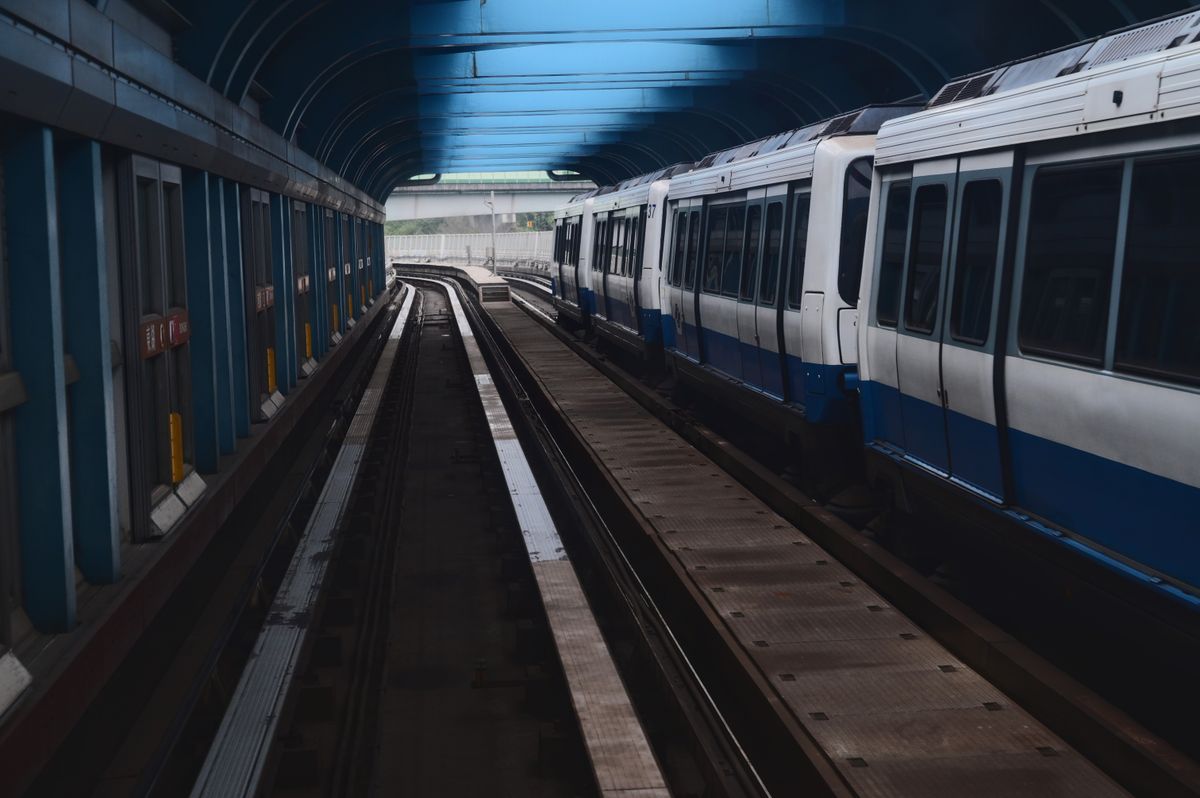
Unlike some of Taipei’s outlying sights, Longshan Temple has an MRT station named after it right outside the door — there is no bus transfer or long walk required from the nearest station.
| From | Details (checked 26 Jul 2026) |
|---|---|
| MRT Longshan Temple Station (Bannan/Blue Line), Exit 1 | The temple’s Dragon Gate entrance is about 200m north of the exit, roughly a 2–3 minute walk — you’ll see the archway from the street. |
| MRT Ximen Station (Bannan & Songshan-Xindian Lines) | About a 15–20 minute walk west through Ximending, or a short bus ride if you’d rather not walk. |
| TRA Wanhua Station | About 400m/5 minutes on foot, useful if you’re arriving by regular rail rather than the MRT. |
| City bus | Multiple routes stop at the “Longshan Temple (Xiyuan)”, “(Kangding)” and “(Bopiliao)” stops, all within about 70–175m of the entrance. |
| YouBike | A YouBike 2.0 docking station sits roughly 190m from MRT Exit 1 — handy for combining the temple with nearby Huaxi Street or Bopiliao. |
Must-See Highlights
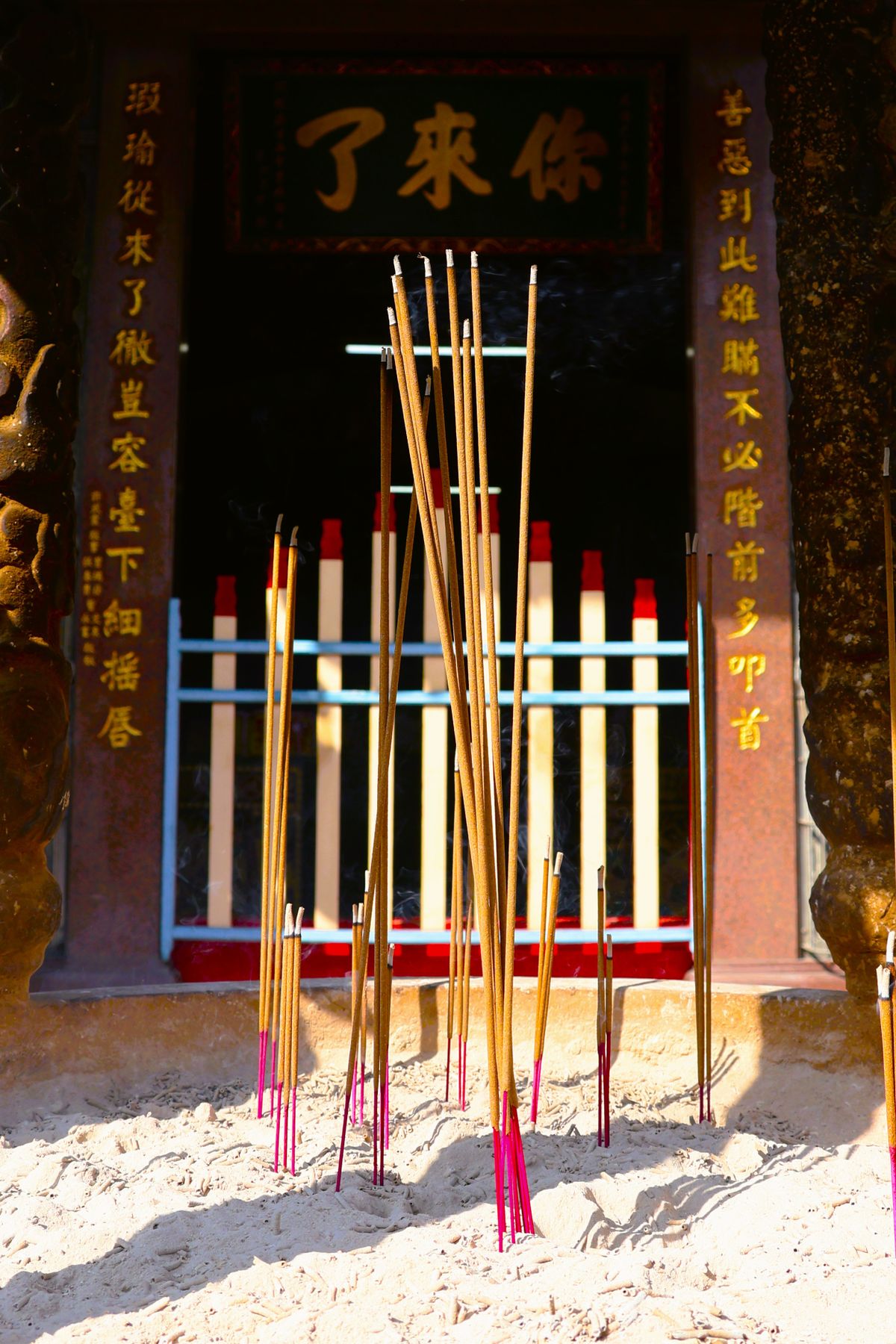
Longshan Temple rewards a slow, structured visit more than a quick photo stop. A few things to prioritize:
- Dragon Gate entrance & Tiger Gate exit — by tradition, visitors enter through the Dragon Gate (龍門) on the right side of the front hall and leave via the Tiger Gate (虎門) on the left, taking care never to step directly on the raised threshold beam at each doorway, which is considered disrespectful.
- Front Hall (三川殿) — the temple’s ornate entrance hall, famous for its pair of stone pillars carved with coiling bronze-toned dragons and dense stone and wood relief work; this is the traditional first stop for prayer.
- Main Hall (正殿) — home to the central Guanyin statue that has anchored the temple since 1738. Worshippers pray here first to Guanyin, then turn around to face the front hall and pray to the Jade Emperor, believed to preside from the open sky above the courtyard.
- Rear Hall (後殿) — five separate shrine halls, arranged right to left, dedicated to Hua Tuo (medicine), Wenchang Wang (literature and exams), Mazu (the sea goddess, Tianshang Shengmu), Guan Di (Guan Yu) and Yue Lao (matchmaking and love). Yue Lao’s altar is consistently the busiest, drawing visitors — Taiwanese and international, especially from Thailand — hoping to find a partner.
- Roof and roofline decoration — look up for a dense cast of dragons, phoenixes and mythical creatures built with jianzhan (剪黏), a Taiwanese cut-porcelain mosaic technique, alongside carved wooden beams and brackets joined entirely without metal nails or braces.
- How to pray — pick up a bundle of incense sticks near the entrance (a small donation is customary), light them, and follow the fixed route from front hall to main hall to rear hall, bowing at each altar. For a wish at Yue Lao’s altar, worshippers traditionally state their full name, birth date and address before making a request, then throw a pair of crescent-shaped jiaobei blocks to ask the god a yes/no question — one flat face and one curved face landing together is read as a “yes”.
Longshan Temple After Dark & Huaxi Street
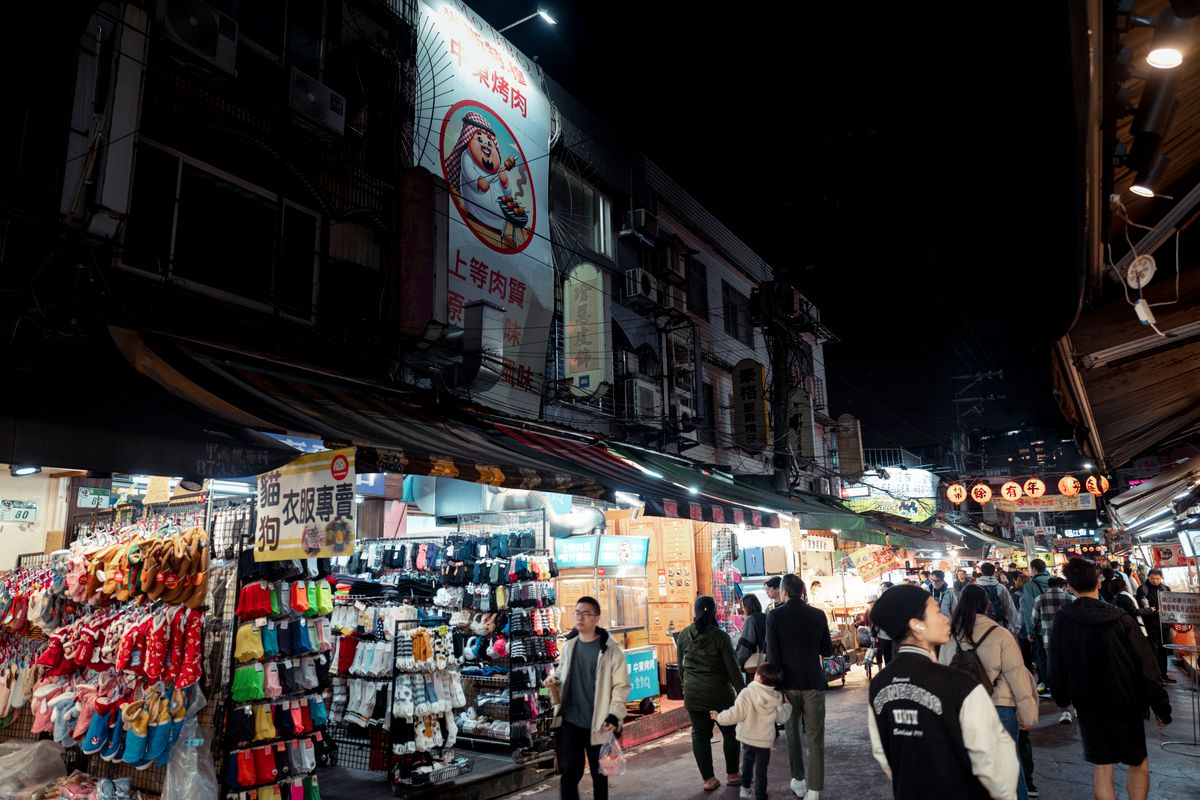
Longshan Temple looks different after sunset. Its lanterns come on and the ornate roofline gets picked out against the night sky, while the crowd thins from daytime tour groups to a steadier stream of evening worshippers lighting incense on their way home from work. If your schedule allows, it’s worth timing at least one visit for early evening, an hour or two before the 10:00 PM closing.
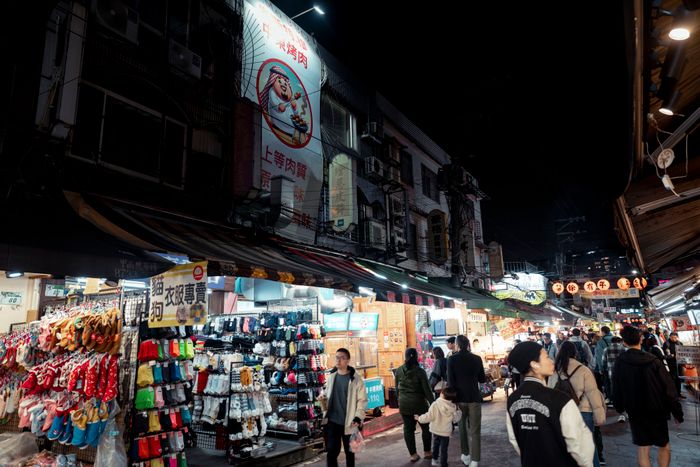
Step out through the temple’s south side and you’re at the edge of Huaxi Street (also known as Snake Alley), the covered market that made Wanhua notorious in the mid-20th century for its exotic street food. Today it’s a tamer but still atmospheric night market strip known for herbal soups, seafood stalls and traditional snacks. Bopiliao Historical Block, a restored row of Qing- and Japanese-era shophouses, sits a few minutes’ walk south and makes a good add-on stop before or after the temple — several of the guided walking tours above combine all three in a single evening.
Map: Longshan Temple at a Glance
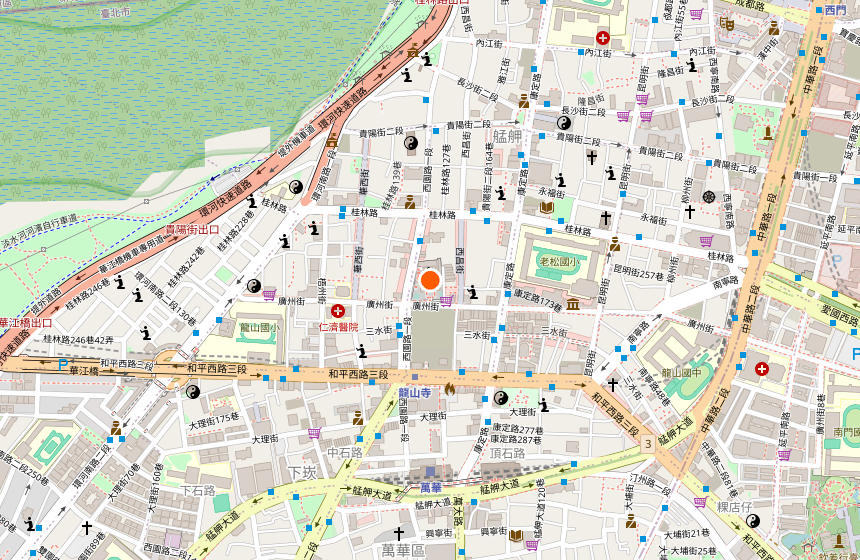
Practical Tips
- Dress modestly — shoulders and knees covered is appreciated, though there is no strict enforcement like at some temples elsewhere in Asia.
- Enter through the Dragon Gate and exit through the Tiger Gate; avoid stepping directly on the raised threshold at each doorway.
- Photography is generally allowed in the courtyards and halls, but be discreet, skip the flash, and avoid blocking worshippers who are actively praying — this is a working temple first, a sightseeing stop second.
- Free incense is not always available; small bundles are sold near the entrance for a modest donation if you want to take part in the prayer ritual yourself.
- The temple is busiest on the 1st and 15th days of the lunar calendar month, when regular worshippers turn out in force — a fascinating time to visit if you don’t mind crowds, or one to avoid if you want a quiet look around.
- Early morning, soon after the 6:00 AM opening, and weekday visits are noticeably quieter than weekends and lunar festival dates.
- Combine your visit with nearby Bopiliao Historical Block and Huaxi Street — both are an easy walk from the temple and included on most guided Longshan Temple tours.
Where to Stay
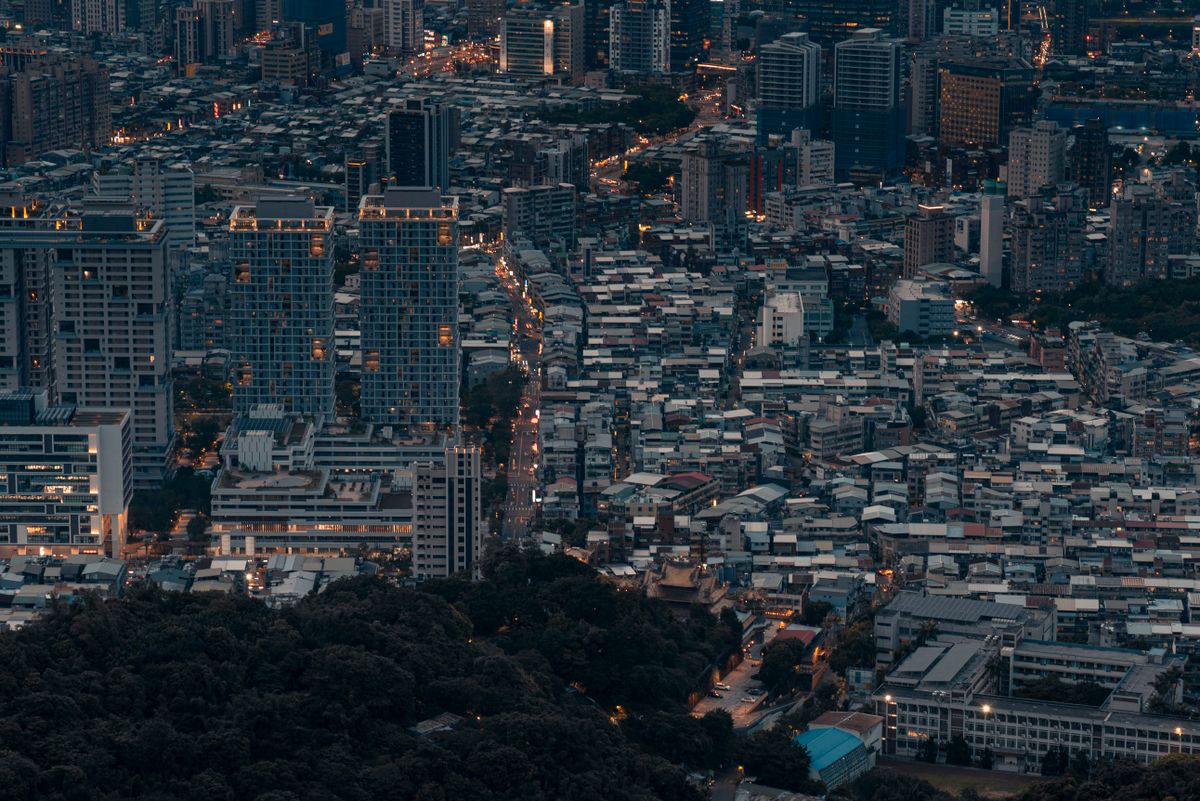
Wanhua itself has a growing crop of budget and boutique hotels within walking distance of the temple — a good base if easy access to Longshan Temple, Bopiliao and Huaxi Street is your priority. Ximending, a 15–20 minute walk or one MRT stop away, adds far more restaurants, shopping and nightlife while staying close. For a more central base with easy access to the rest of Taipei — including day trips out to the National Palace Museum or Taipei 101 — Zhongshan or the area around Taipei Main Station, both a short MRT ride from Longshan Temple Station, are worth considering.
Frequently Asked Questions
Is there an entrance fee for Longshan Temple?
No. Admission is completely free for everyone, at all hours the temple is open — see the quick facts table above for full hours and address details.
How long should I spend at Longshan Temple?
Most independent visitors spend 30–60 minutes walking through the front, main and rear halls. A guided walking tour, which adds historical context and nearby Bopiliao Historical Block, typically runs 1–2 hours.
What is Longshan Temple best known for?
Its blend of Buddhist and Taoist worship under one roof, its history surviving a WWII bombing raid, and — among visitors specifically — the rear-hall altar to Yue Lao, the matchmaker god believed to help single worshippers find love.
Can I take photos inside the temple?
Generally yes, in the courtyards and halls. Avoid flash photography and be respectful of people who are actively praying or making offerings — treat it as an active place of worship rather than a photo backdrop.
Is Longshan Temple worth visiting if I’m not religious?
Yes — beyond its religious function, it is one of the best-preserved examples of Qing-era Taiwanese temple architecture in Taipei, and a window into how Buddhist, Taoist and Confucian traditions coexist in everyday Taiwanese life.
Final Word
Longshan Temple has outlasted earthquakes, fires and an American bombing raid, and it is still, nearly three centuries after it was founded, exactly what its Fujianese settlers built it to be: a working house of worship at the center of its neighborhood. Come with a little time to spare, follow the Dragon Gate-to-Tiger Gate route through the halls, and don’t skip the rear hall — that’s where Longshan Temple stops being a stop on an itinerary and starts feeling like the living temple it actually is.
This post contains affiliate links. If you book or buy through them, we may earn a small commission at no extra cost to you. Hours and prices can change — always confirm on official sources before you visit.
Related Guides
🎟️ Book Tours, Activities & Food Experiences
Search and book top attractions, tours and food experiences on Klook — official best price, instant confirmation.
Klook.com