Top Attractions in Gyeongju
Tap a landmark for its full 2026 guide — tickets, hours and how to get there.
Last updated: July 13, 2026. Disclosure: this guide contains affiliate links — if you book through them we may earn a small commission at no extra cost to you. Fees, hours and schedules change, so confirm before you go.
Gyeongju (경주) is Korea’s open-air museum — a city with roughly 2,000 years of history, one of the oldest continuously important cities in the country. It was the thousand-year capital of the Silla kingdom, whose first settlement (Saro-guk) was founded here in 57 BC. Today royal burial mounds rise between the streets, an ancient stone observatory still stands, and two UNESCO masterpieces — Bulguksa Temple and the Seokguram Grotto — sit in the hills above town. This hub guide covers how to get there, the must-see sights, prices and tours.
Book a Gyeongju tour
Sights are spread out, so a guided tour or private car is a great way to see the highlights in a day. Tap for live prices:
Where is Gyeongju & how to get there
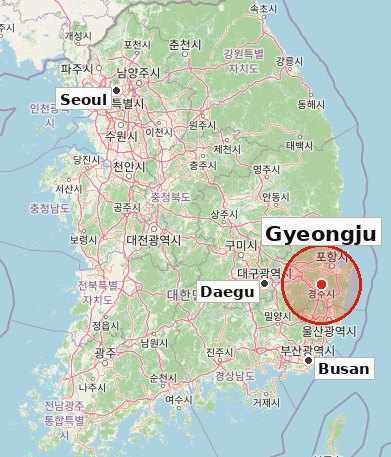
Gyeongju sits in southeastern Korea, between Daegu and the coast, close to Busan, Ulsan and Pohang (see map).
By KTX high-speed train: the fastest option — Seoul to Singyeongju Station in about 2 hours, or just ~20 minutes from Dongdaegu and ~30 minutes from Busan. Singyeongju Station is west of the center, about 25–30 minutes away by bus (routes 50/60/70) or taxi. By bus: intercity/express buses run from Seoul (~4 hours), Busan and Daegu to Gyeongju’s bus terminals near downtown. Getting around: city buses 10 and 11 loop to Bulguksa and Seokguram; the compact, flat center is great for cycling; and the Gyeongju City Tour bus links the scattered sights.
Major attractions — pick where to start
Tap any sight to jump to the details:
Bulguksa Temple
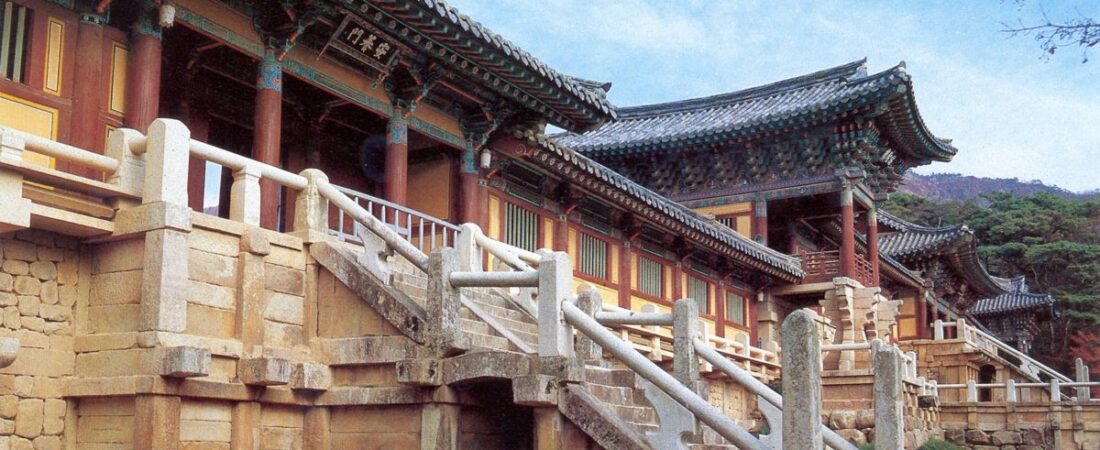
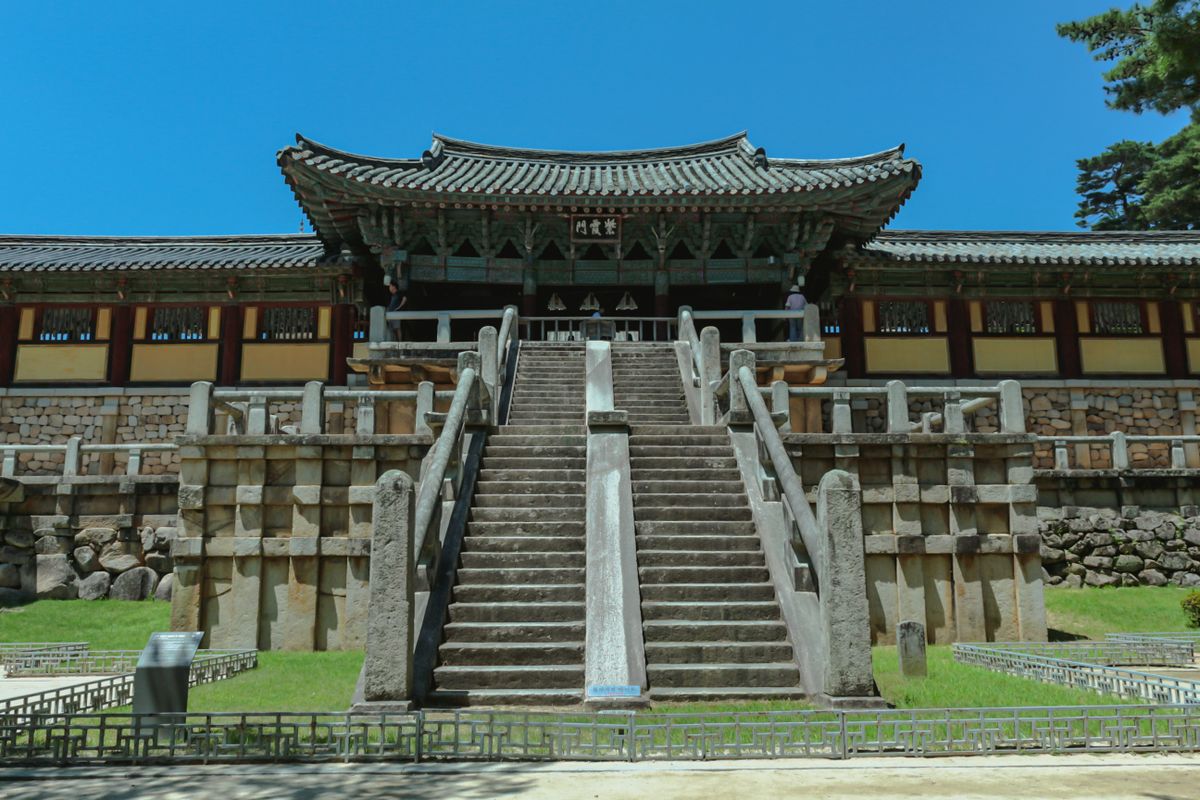
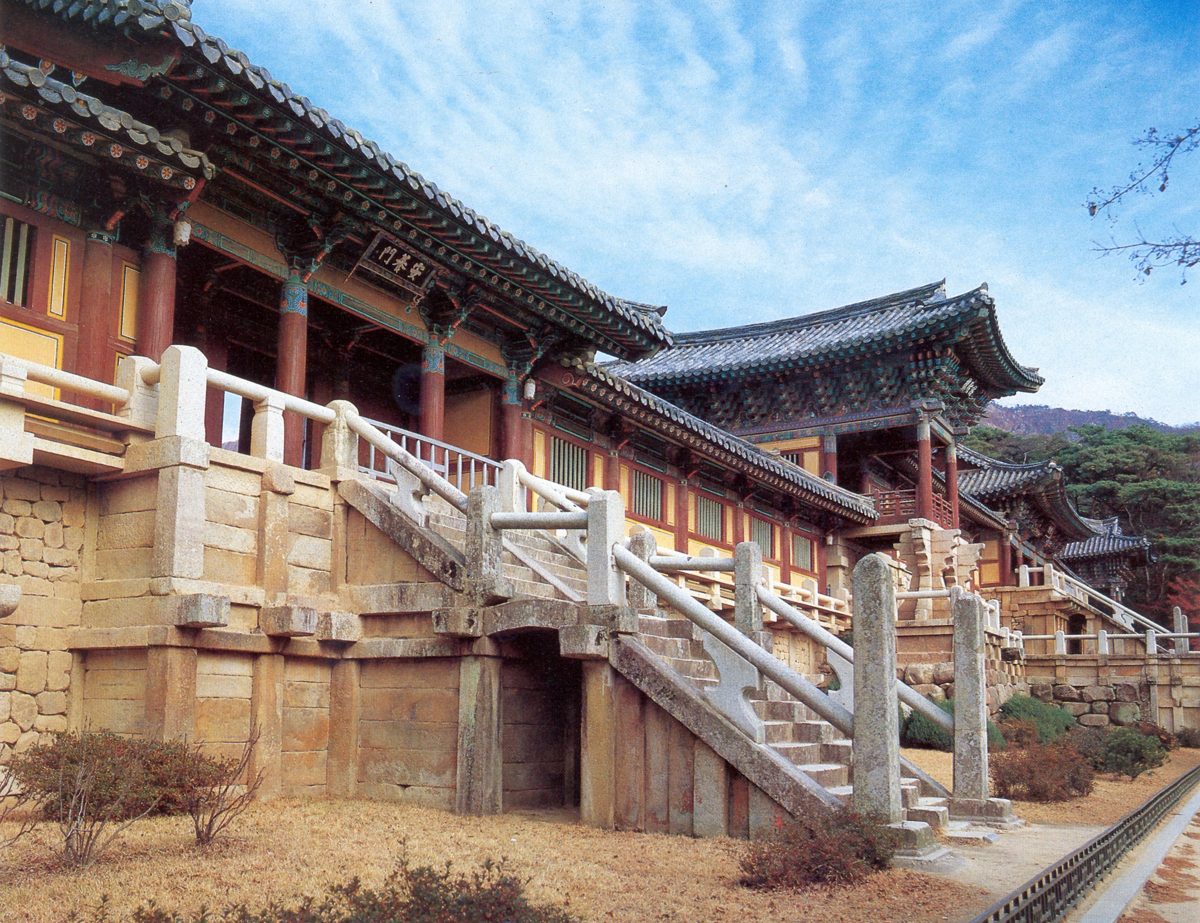
A masterpiece of Silla Buddhist art and a UNESCO World Heritage site, Bulguksa (built in its grand form in 751) is famous for its stone terraces, the twin pagodas Dabotap and Seokgatap, and elegant bridges. It sits on the slopes of Tohamsan, a 20-minute bus ride east of the center. Allow 1–2 hours.
Seokguram Grotto
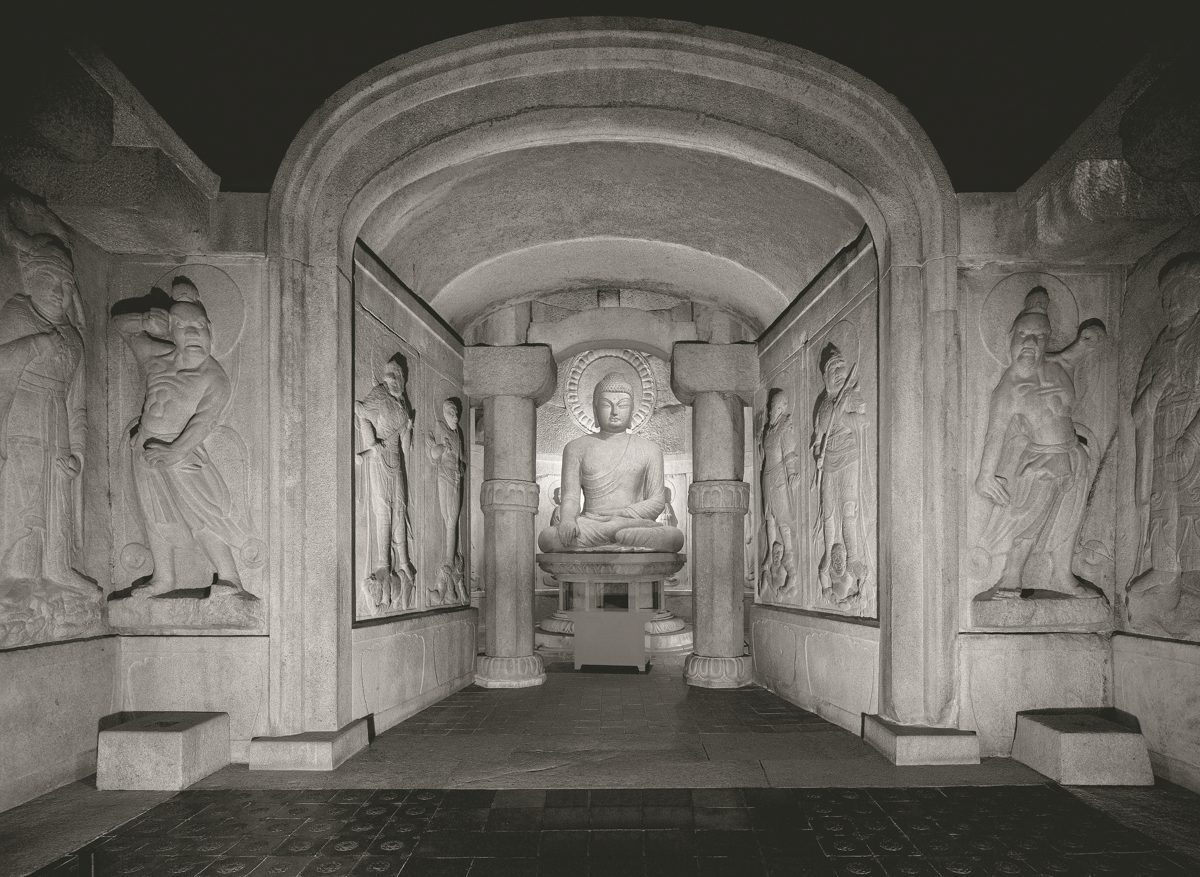
High above Bulguksa, this man-made granite grotto shelters a serene 8th-century seated Buddha gazing toward the East Sea — one of Asia’s finest Buddhist sculptures and also UNESCO-listed. A short bus or hike connects it with Bulguksa; go early for the calmest atmosphere.
Daereungwon Tomb Complex
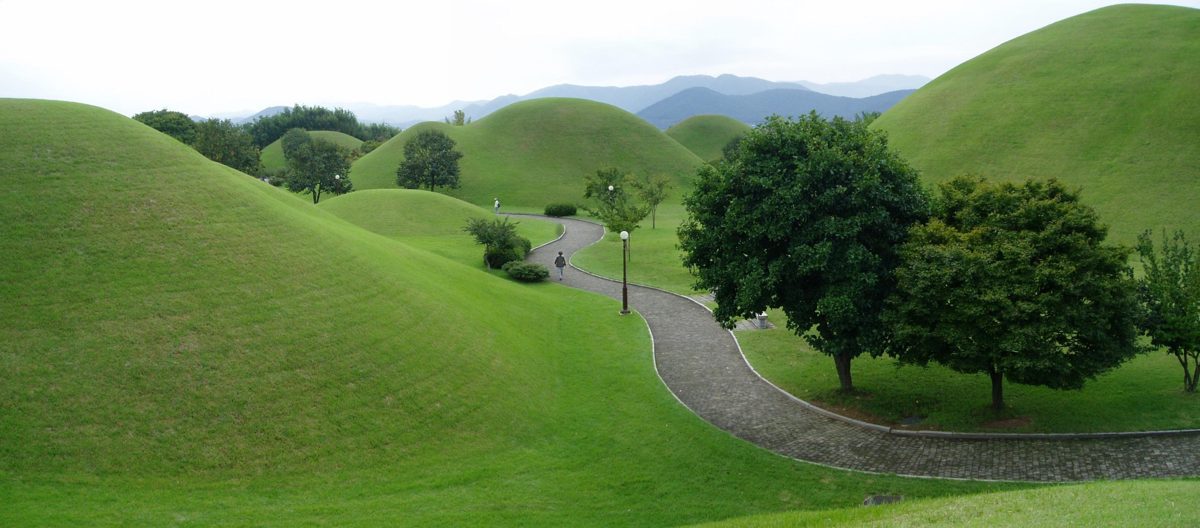
Grassy royal burial mounds rise like green hills right in the city. Inside Cheonmachong (the “Heavenly Horse Tomb”) you can walk into an excavated tomb and see replicas of the gold crown and artifacts found here. Beautiful at dawn and dusk.
Cheomseongdae Observatory
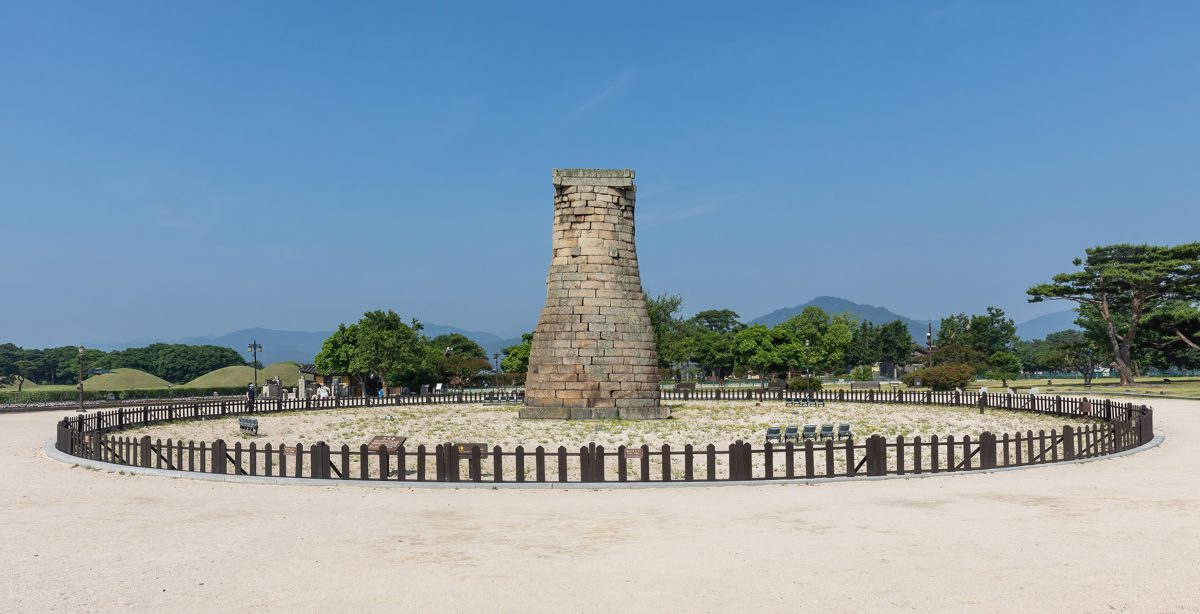
Built in the 7th century under Queen Seondeok, Cheomseongdae is one of the oldest surviving astronomical observatories in East Asia. The bottle-shaped stone tower stands in a flower-filled field that’s especially pretty in spring and at night.
Donggung Palace & Wolji Pond (Anapji)
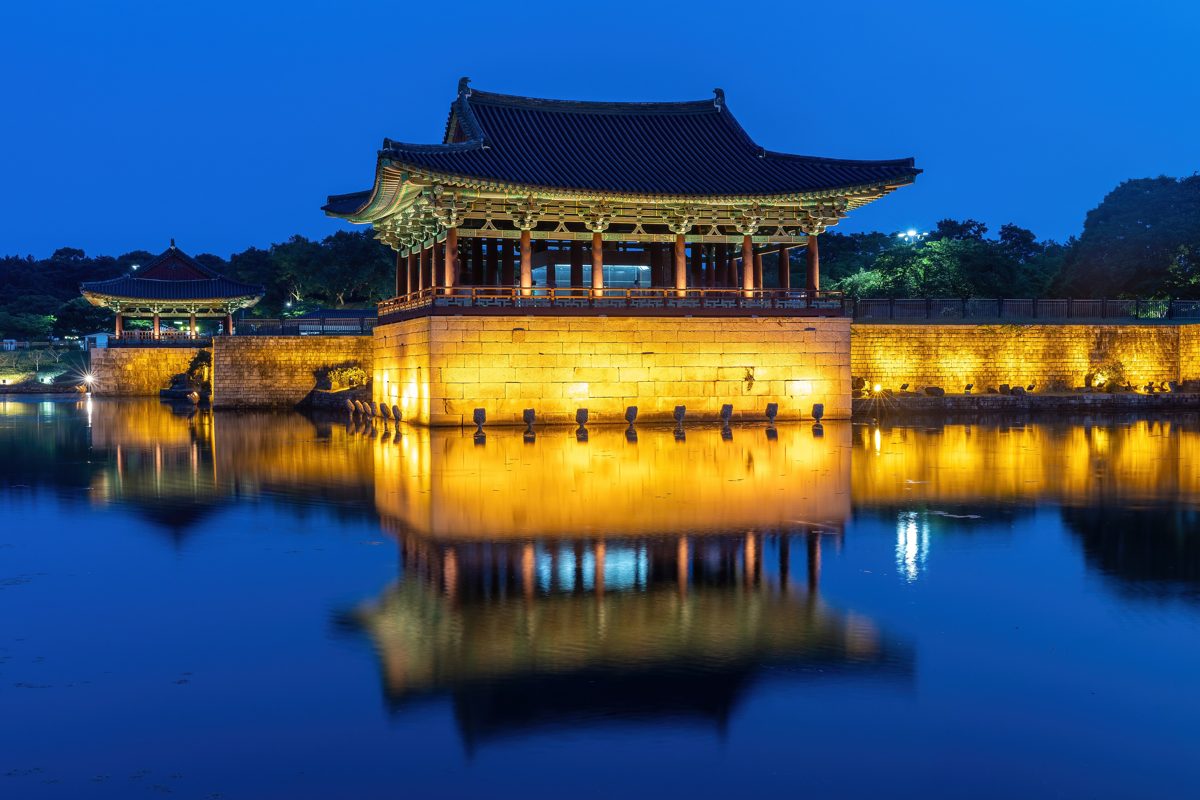
A reconstructed Silla palace and pleasure garden around a reflecting pond. Come at night, when the pavilions light up and mirror perfectly in the water — Gyeongju’s most photographed after-dark scene.
Woljeonggyo Bridge
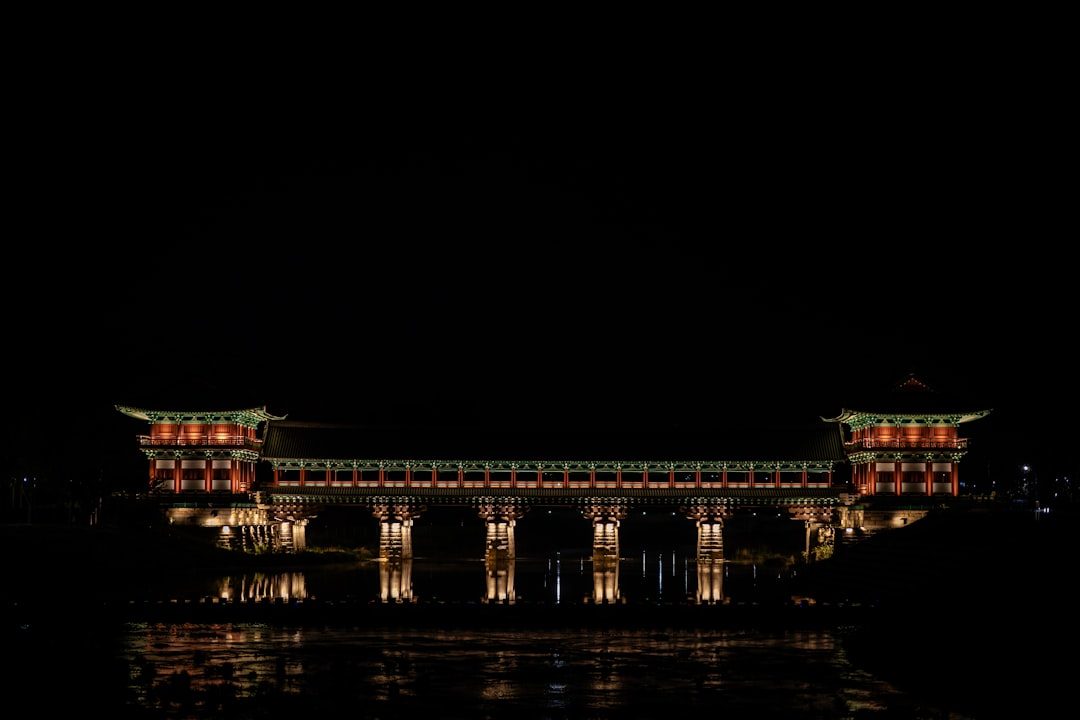
A faithfully rebuilt Silla-era covered wooden bridge over the Namcheon river. Free to visit and stunning when illuminated after sunset — an easy stroll from the tomb park and Gyochon hanok village.
Gyeongju National Museum
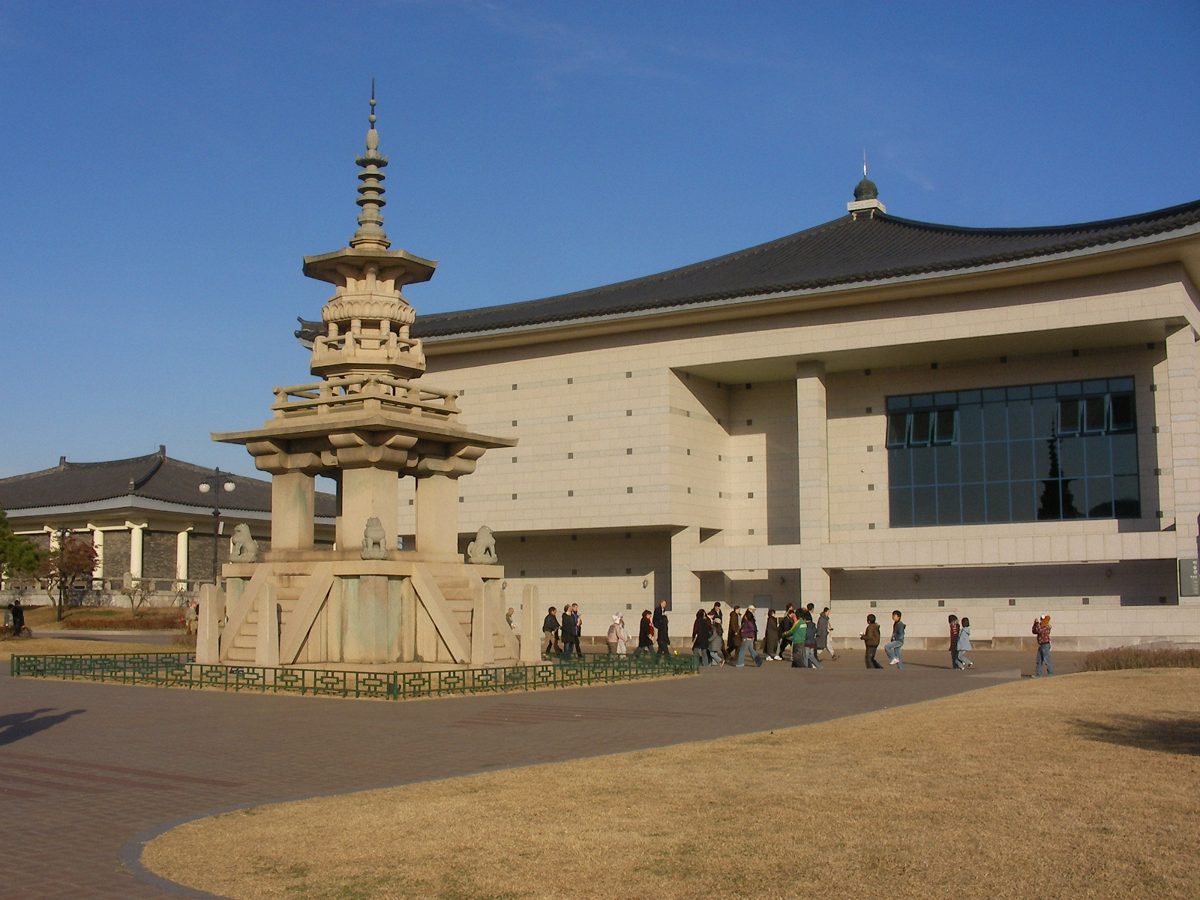
The best place to understand Silla — free admission and packed with gold crowns, the giant Emille Bell (Divine Bell of King Seongdeok), and treasures excavated across the city. Give it 1–2 hours.
Hwangnidan-gil & Gyochon Village
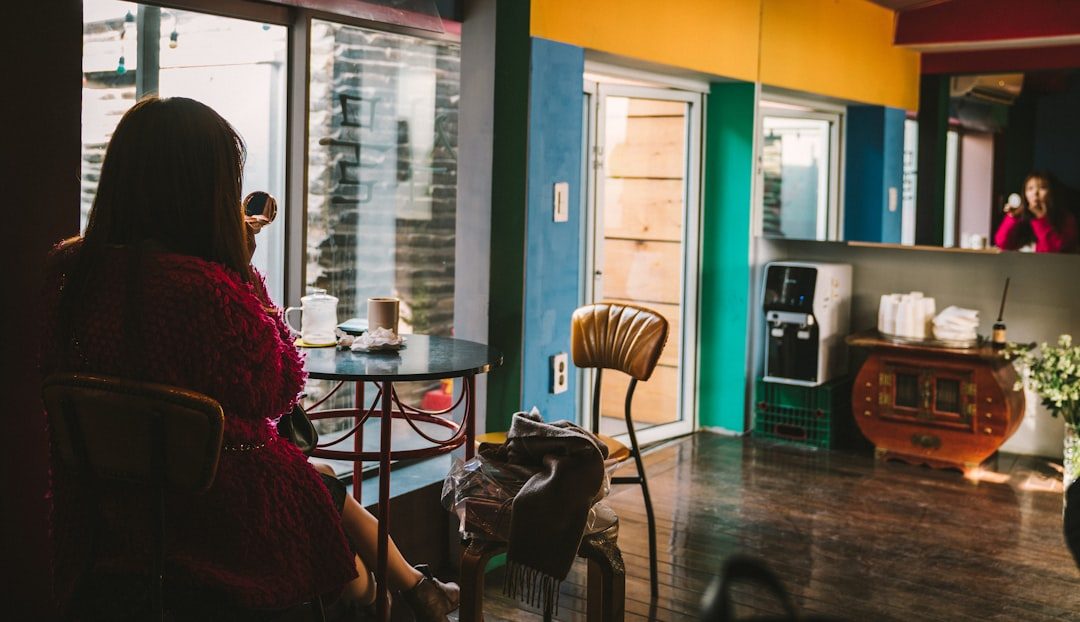
Gyeongju’s trendiest lane, Hwangnidan-gil, lines old hanok houses with cafes, dessert shops and boutiques near Daereungwon — perfect for hanbok photos. Nearby Gyochon Hanok Village preserves the historic Choi family houses and Gyeongju beopju rice wine.
Also worth your time: Gyeongju Namsan (a mountain dotted with Buddhist carvings and pagodas), the Bomun Lake resort area, and Yangdong Folk Village (UNESCO) north of the city.
Quick Cost Overview — Gyeongju Admission Prices
Prices checked directly from official sources on July 25, 2026. Fees, hours and free-entry rules can change — always confirm on the official site before you visit.
| Item | Price (adult) | Notes | Checked / source |
|---|---|---|---|
| Bulguksa Temple | Free | Admission was abolished nationwide on May 4, 2023 under the revised Cultural Heritage Protection Act. Parking: small car ₩2,000 (≈ $1.4), bus ₩4,000 (≈ $2.7). | Jul 25, 2026 · bulguksa.or.kr |
| Seokguram Grotto | Free | Covered by the same 2023 fee-abolition policy for state-designated heritage temple sites. | Jul 25, 2026 · gyeongju.go.kr official listing |
| Cheonmachong tomb (inside Daereungwon) | ₩3,000 (≈ $2.1) | Youth/soldier ₩2,000 (≈ $1.4) · Child ₩1,000 (≈ $0.7). Walking around Daereungwon park itself is free — only the excavated Cheonmachong tomb charges admission. | Jul 25, 2026 · gyeongju.go.kr official fee table |
| Donggung Palace & Wolji Pond | ₩3,000 (≈ $2.1) | Youth/soldier ₩2,000 (≈ $1.4) · Child ₩1,000 (≈ $0.7). Parking free. | Jul 25, 2026 · gyeongju.go.kr official fee table |
| Cheomseongdae Observatory | Free | Use the Daereungwon parking lot nearby. | Jul 25, 2026 · gyeongju.go.kr |
| Gyeongju National Museum | Free | Paid special exhibitions are excluded from free admission. | Jul 25, 2026 · gyeongju.go.kr |
| Woljeonggyo Bridge | Free | Public footbridge; lit up nightly after dark. | Jul 25, 2026 |
| Yangdong Folk Village (UNESCO) | ₩4,000 (≈ $2.7) | Youth ₩2,000 (≈ $1.4) · Child ₩1,500 (≈ $1.0). Free parking. | Jul 25, 2026 · gyeongju.go.kr official fee table |
| Hwangnidan-gil / Namsan | Free | Open street and hillside; no admission charged. | Jul 25, 2026 |
Eat & stay
Don’t leave without trying Hwangnam bread (red-bean pastry born in Gyeongju), ssambap (rice with leaf wraps and dozens of side dishes), and traditional Gyeongju beopju rice wine. For a base, the Bomun Lake resort area has big hotels, downtown puts you near the tombs and Hwangnidan-gil, and hanok stays in Gyochon offer old-Korea charm.
Tips for your visit
- Give it two days — one for the in-town sights (tombs, Cheomseongdae, Wolji, museum) and one for Bulguksa/Seokguram and Namsan.
- See Wolji Pond and Woljeonggyo after dark for the best photos.
- Rent a bike — the historic core is flat and wonderfully bike-friendly.
- Spring (cherry blossoms) and autumn are the prettiest, but summers are hot — Gyeongju is one of Korea’s warmest cities.
- Buy KTX tickets ahead for weekends and holidays.
FAQ
How old is Gyeongju? About 2,000 years — its first state, Saro-guk, was founded in 57 BC, and it served as Silla’s capital for nearly a thousand years.
How do I get there from Seoul? KTX to Singyeongju Station in about 2 hours, then a short bus or taxi into town.
How many days do I need? Two days covers the highlights comfortably; one long day is possible with a tour.
Is Gyeongju walkable? The historic center is compact and flat — great on foot or by bike — but Bulguksa and Seokguram need a bus or car.
Related Guides
- Best Things to Do in Pohang
- Best Things to Do in Seoul
- Best Things to Do in Gangneung
- Best Things to Do in Sokcho
- How to Use the T-money Card and the Seoul Subway
- Do I Need a K-ETA to Visit Korea?
Related Guides
FAQ
How many days do you need in Gyeongju to see the main Silla sites?
Two full days is the common baseline: one for the central cluster (Daereungwon tumuli park, Cheomseongdae, Woljeonggyo, Donggung Palace and Wolji Pond) and one for the Bulguksa and Seokguram area on Tohamsan, which sits outside the city center. Add a third day if you want Yangdong Folk Village or the Gyeongju National Museum at an unhurried pace. Opening hours, ticket prices and any seasonal closures for each site should be confirmed on the official site before you finalize the itinerary — no verified current source was available here, so treat any figures you find elsewhere as unconfirmed.
Is Gyeongju walkable, or do you need a car?
The historic core is genuinely walkable and flat, and bicycles are a popular way to link the tumuli park, Cheomseongdae and Wolji Pond. Bulguksa, Seokguram and Yangdong Folk Village are spread out and require a bus, taxi or car. For current bus routes, fares and timetables, check the official Gyeongju city tourism site or the operator’s site — schedules change seasonally and are not confirmed here.
What is the best time of year to visit Gyeongju?
Spring for cherry blossoms along the Bomun Lake area and the historic district, and autumn for foliage around the temples, are the two peak windows — both also bring the largest crowds and the tightest accommodation. Summer is hot and humid; winter is quiet and cold but the tumuli and temple sites stay atmospheric. If you are planning around a specific festival or a night-opening period at sites such as Donggung Palace and Wolji Pond, verify the dates and any separate evening admission rules on the official site, as these vary year to year.
Related Guides
- Best Things to Do in Pohang
- Best Things to Do in Seoul
- Best Things to Do in Gangneung
- How to Use the T-money Card and the Seoul Subway
- Do I Need a K-ETA to Visit Korea?
- How to Stay Connected in South Korea
🎟️ Book Tours, Activities & Food Experiences
Search and book top attractions, tours and food experiences on Klook — official best price, instant confirmation.
Klook.com